
Discoveries
Accidental breakthroughs, lost knowledge, and paradigm-shifting innovations.
 6 min read
The Discovery of Neptune: Found With Mathematics
On September 23, 1846, astronomers found Neptune within a degree of a position calculated on paper — the only planet ever predicted before it was seen.
Read Article 7 min read
Edison, Swan, and the Invention of the Light Bulb
Edison didn't invent the light bulb — Davy, Swan and dozens of others got there first. What Edison actually invented was the system that made light practical.
Read Article 7 min read
How Alexander Graham Bell Invented the Telephone
Bell won the 1876 patent race for the telephone — but rivals like Elisha Gray were hours behind him. The true story of how a teacher of the deaf invented it.
Read Article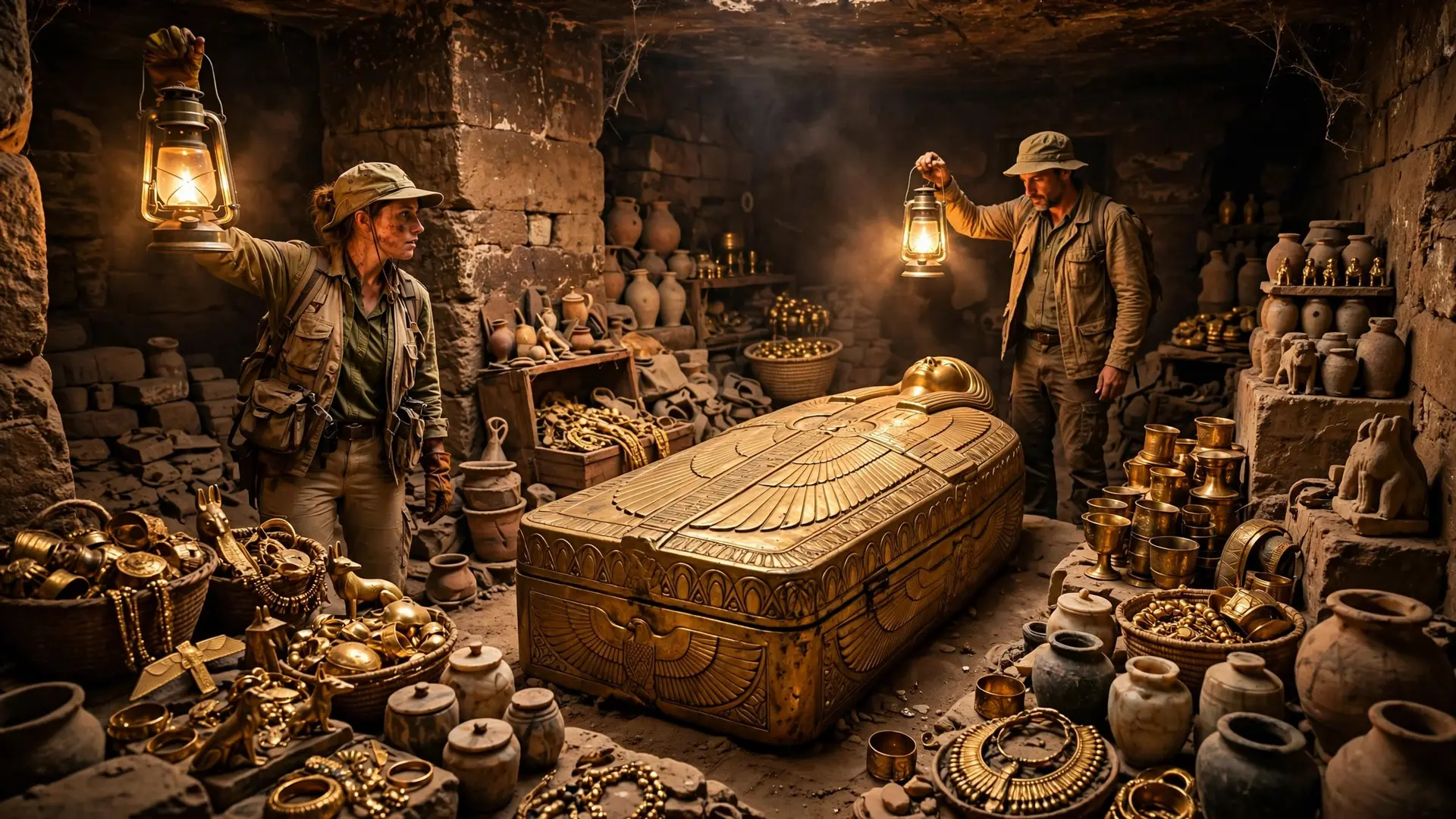 7 min read
How Howard Carter Found Tutankhamun's Sealed Tomb
On November 4, 1922, Howard Carter's workers found sealed stairs in the Valley of the Kings: Tutankhamun's near-intact tomb, treasures sealed for 3,200 years.
Read Article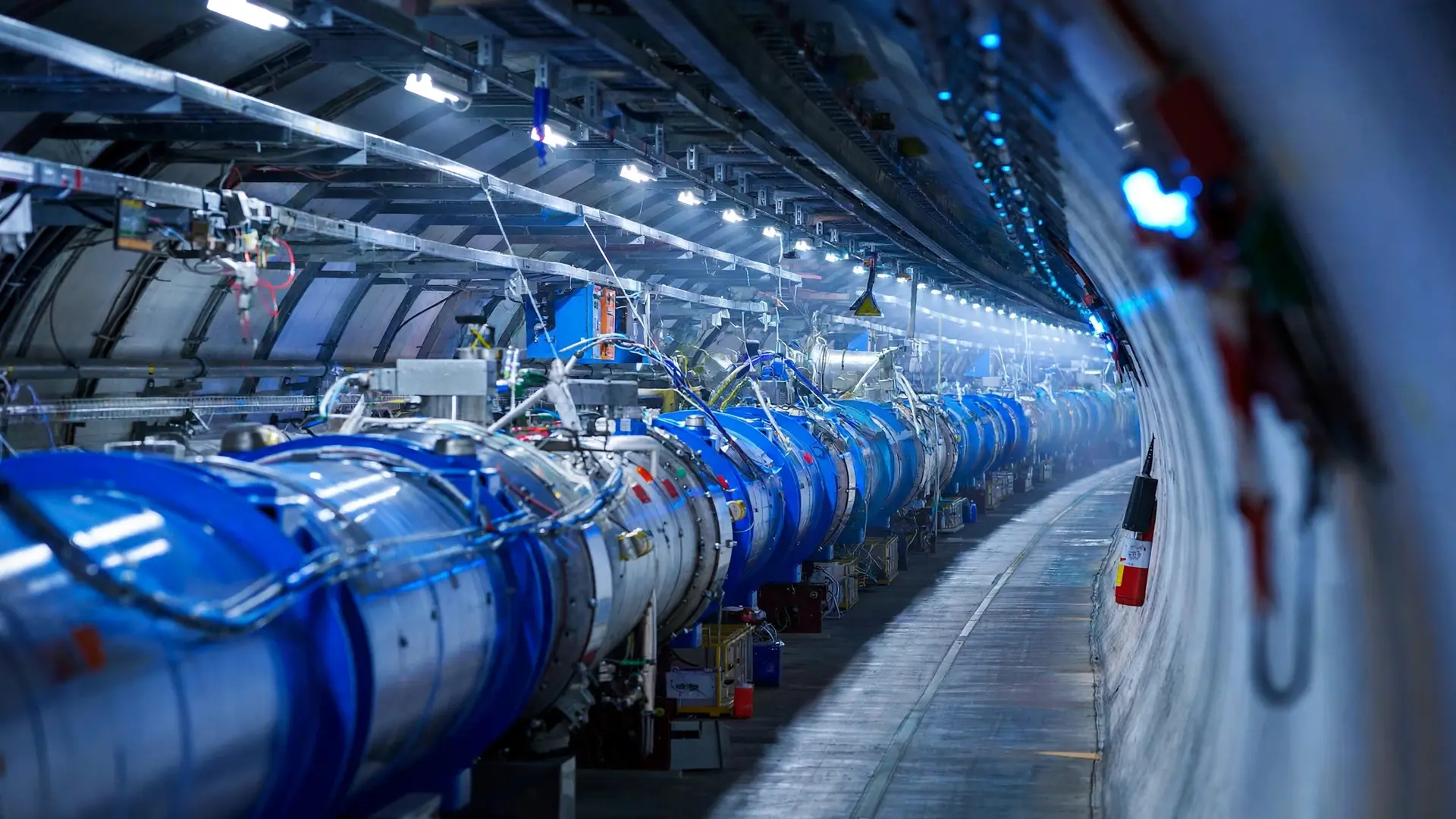 7 min read
The Higgs Boson: What CERN Found in 2012 and Why It Matters
In 2012 CERN announced a new particle of about 125 GeV: the Higgs boson. What the Higgs field is, how it gives matter mass, and what's still unknown.
Read Article 6 min read
How the Smallpox Vaccine Became the First Vaccine
Edward Jenner proved in 1796 that cowpox protected against smallpox. His experiment invented vaccination, the tool that eradicated a deadly disease by 1980.
Read Article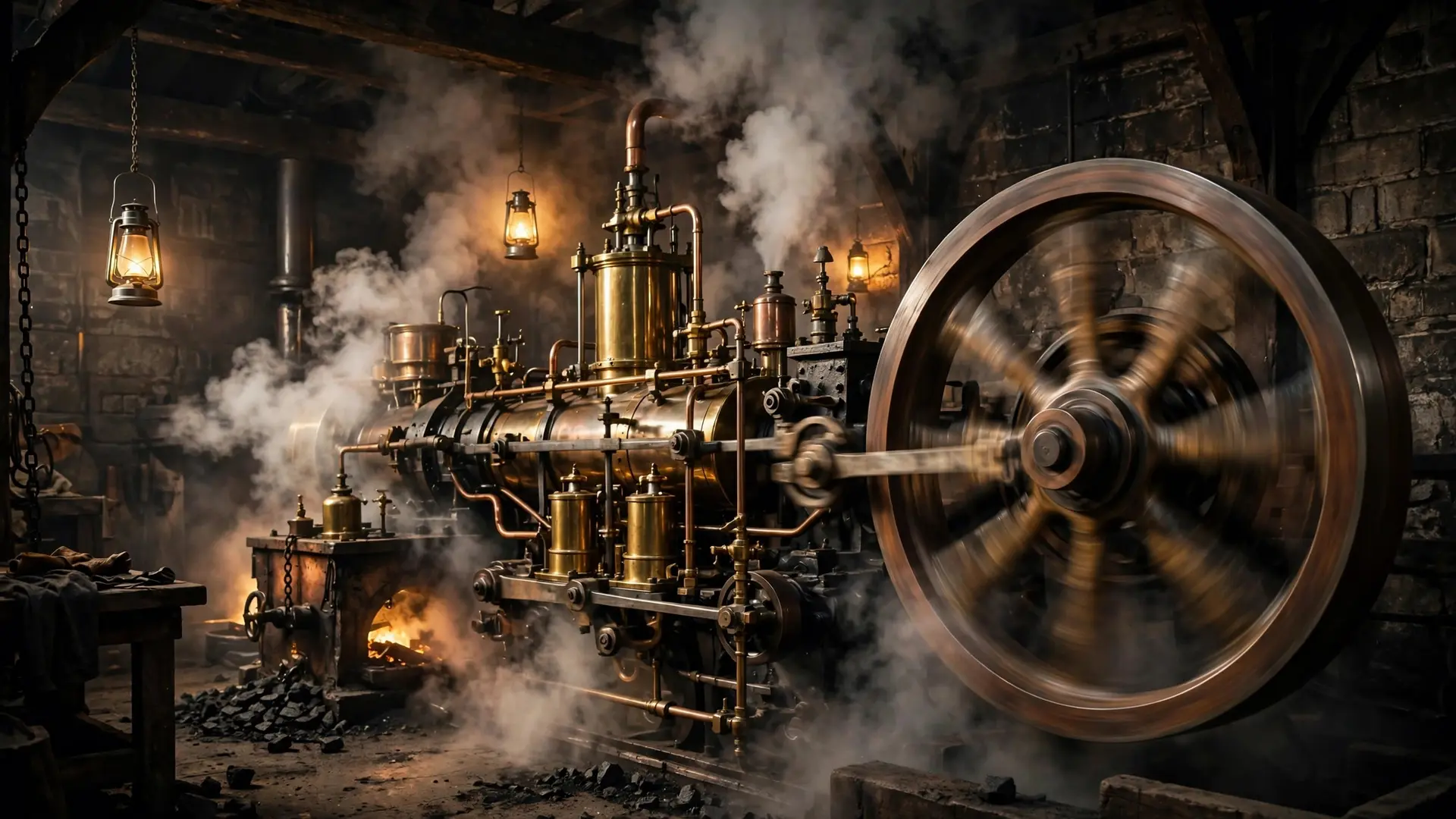 6 min read
The Invention of the Steam Engine: Mine Pumps to Mills
Thomas Newcomen built the first practical steam engine in 1712; James Watt’s separate condenser made it efficient — and drove the Industrial Revolution.
Read Article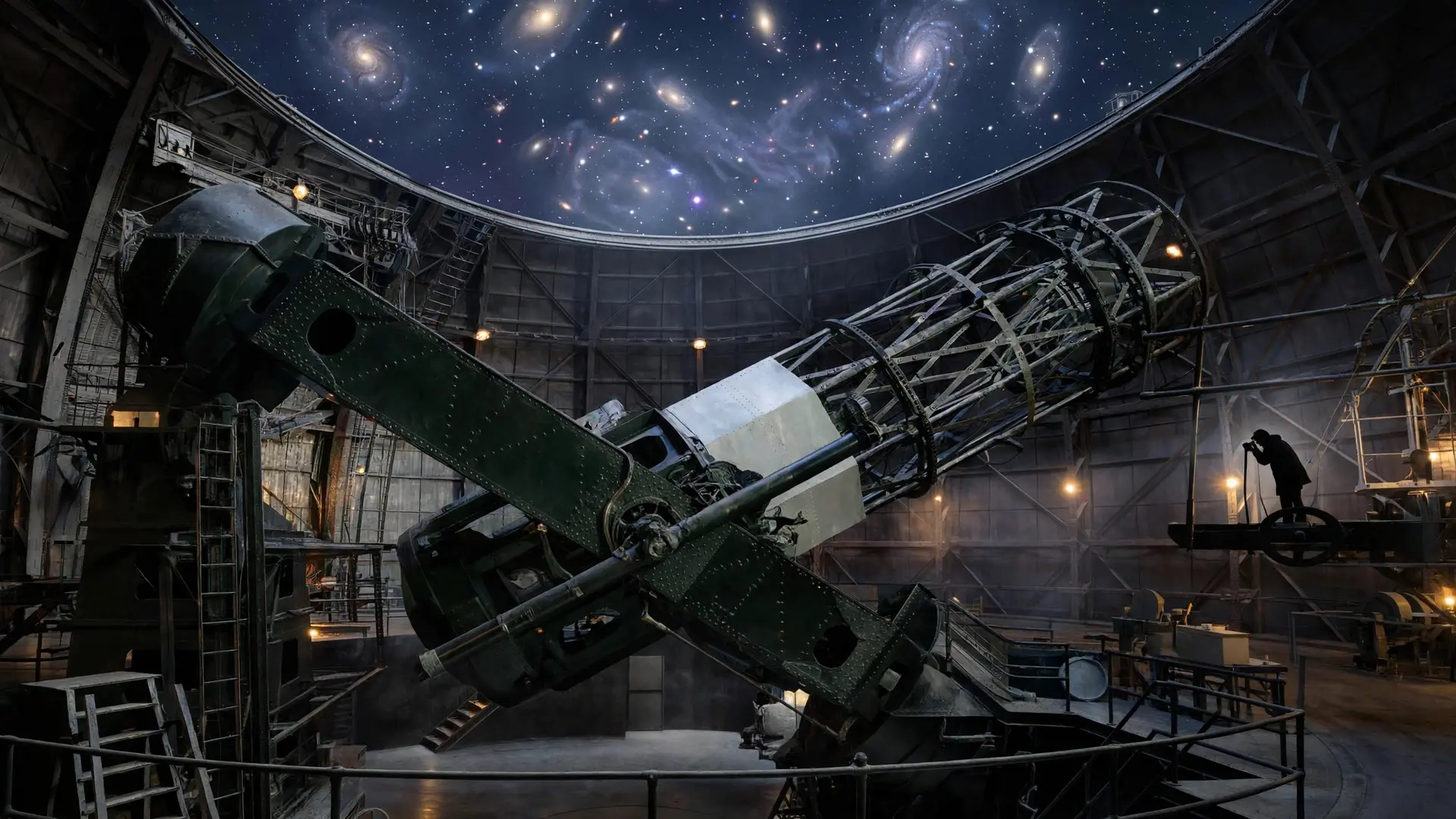 7 min read
How Hubble Discovered the Expanding Universe
Edwin Hubble used the 100-inch Hooker telescope to show that spiral nebulae were distant galaxies — and that the farther they are, the faster they recede.
Read Article 8 min read
How Mendeleev Created the Periodic Table
In 1869, while writing a chemistry textbook, Mendeleev sorted the elements on cards by atomic weight — leaving blank spaces for elements nobody had found yet.
Read Article 7 min read
How Anesthesia Made Painless Surgery Possible
In 1846 a Boston dentist proved ether could end surgical pain: the story of anesthesia, from ether frolics and Ether Day to chloroform and painless surgery.
Read Article 6 min read
The Discovery of Oil and the Petroleum Age
In 1859 a retired railroad conductor struck oil at 69 feet in Pennsylvania. How petroleum went from lamp fuel to the fuel that powers the modern world.
Read Article 6 min read
How the Wheel Was Really Invented: Beyond the Myth
The potter's wheel came centuries before carts. Archaeology reveals the wheel's real story: infrastructure, axles, and the slow march of transport innovation.
Read Article 6 min read
The Columbian Exchange: Crops That Changed the World
Crosby's Columbian Exchange rebuilt global diets: potatoes and maize fueled Europe's growth, sugar and wheat conquered the Americas — at devastating human cost.
Read Article 7 min read
How Germ Theory Rewrote the Rules of Medicine
Before germ theory, doctors blamed bad air for infections they carried on their own hands. This is how microbes finally dethroned miasma — and remade surgery.
Read Article 6 min read
The Telescope: How We Learned to See the Universe
In 1608 a Dutch spectacle-maker sought a patent for a simple tube with two lenses. Within two years, it would dethrone Earth from the center of the universe.
Read Article 6 min read
How the Structure of the Atom Was Discovered
From Dalton's solid balls to Rutherford's empty-space atom: how Thomson's electron, a gold-foil experiment, and Bohr's orbits revealed what matter is made of.
Read Article 6 min read
The Discovery of CRISPR: From Salt Marsh to Nobel Prize
Nobody invented CRISPR. Odd DNA repeats in a salt-marsh microbe and a yogurt-culture firm's virus problem led to the 2012 gene editor that won a Nobel Prize.
Read Article 6 min read
The Glue That Failed: How the Post-it Note Was Born
In 1968, 3M chemist Spencer Silver made a glue that wouldn't stick — and five years later a church-choir frustration turned that failure into the Post-it Note.
Read Article 6 min read
Dmanisi Hominins: Humans Left Africa Earlier Than Thought
Beneath a medieval Georgian village, fossils show hominins reached Eurasia 1.8 million years ago — far earlier than thought. The story of the Dmanisi people.
Read Article 7 min read
How X-Rays Were Discovered by Accident in 1895
November 1895: a glowing screen in a dark Würzburg lab revealed invisible rays. How Röntgen turned that flicker into X-rays — and why he refused to patent them.
Read Article 6 min read
Chauvet Cave: Art Twice as Old as Lascaux
Discovered by chance in 1994, France's Chauvet Cave holds 36,000-year-old paintings experts once doubted were real. One sealed cavern rewrote art's history.
Read Article 6 min read
Teflon: The Refrigerant Accident That Made History
In 1938, chemist Roy Plunkett found a refrigerant had turned into a slippery mystery. How Teflon went from lab accident to wartime secret to kitchen staple.
Read Article 7 min read
Finding the Titanic: The 1985 Wreck Discovery
On September 1, 1985, a towed camera found the Titanic at 12,500 feet. How a secret Navy submarine mission, 12 days, and a debris-field gamble solved the hunt.
Read Article 8 min read
The Tunguska Event: The 1908 Blast That Left No Crater
On June 30, 1908, a fireball flattened 2,150 km² of Siberian forest without leaving a crater. Inside the century-long quest to explain the Tunguska blast.
Read Article