France's 730 km Border With Brazil: The Full Story
Why does France share a border with Brazil? Because French Guiana is part of France, its 730 km Amazon border is France's longest land border.
Key takeaways
- France's longest land border (about 730 km, or 450 miles) is with Brazil, via French Guiana in South America.
- French Guiana is a full overseas department and region of France (since 1946), inside the EU and using the euro.
- The Oyapock River forms most of the border; a 378-metre bridge opened in 2017 as the first road link between the two countries.
- The line was set by the 1713 Treaty of Utrecht and finalized by the 1900 Geneva arbitration between France and Portugal.
- French Guiana hosts Europe's spaceport at Kourou, where ESA's Ariane 6 first launched on 9 July 2024.
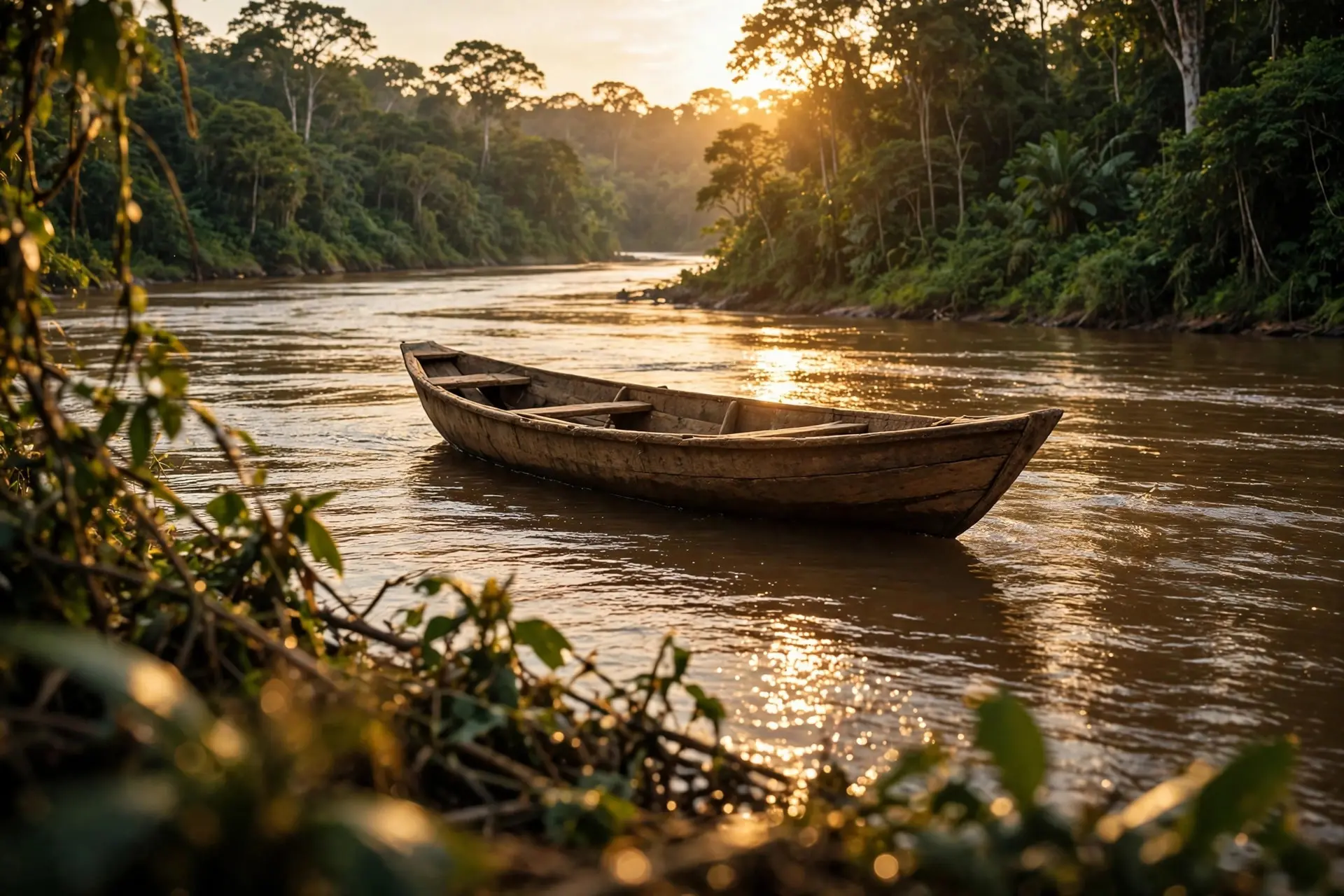
France shares a border with Brazil because French Guiana, on South America's northern coast, is no colony: it is a full overseas department and region of France and part of the EU. At about 730 km (450 miles), this Amazon border is France's longest land border, longer than its border with Spain.
- The border runs about 730 km (450 miles) between French Guiana and Brazil's Amapá state, making it the longest of France's 10 land borders. (source)
- French Guiana has been an overseas department of France since 1946, uses the euro, and sits inside the EU: it is France, not a possession. (source)
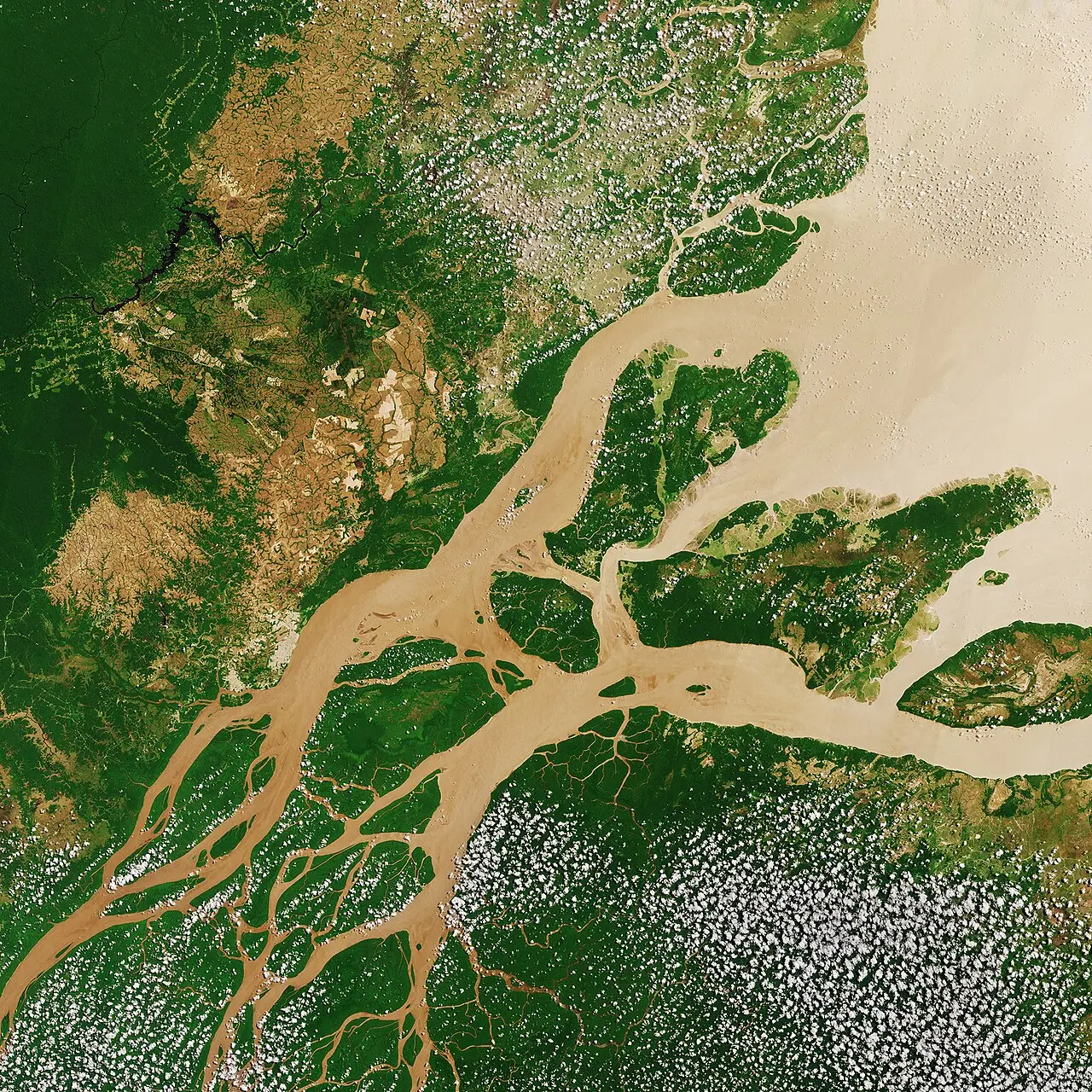
- The Oyapock River forms most of the boundary, flowing from the Tumuc-Humac Mountains to the Atlantic Ocean. (source)
- The final line was fixed by the 1900 Arbitration of Geneva, settling a long dispute between France and Portugal. (source)
- The 378-metre Oyapock River Bridge between Saint-Georges-de-l'Oyapock and Oiapoque opened in 2017 as the first road connection between France and Brazil. (source)
- French Guiana hosts the Guiana Space Centre near Kourou, Europe's spaceport, where ESA's Ariane 6 first launched on 9 July 2024. (source)
How does France end up with a border in South America?
The answer is French Guiana (Guyane), a territory on the north Atlantic coast of South America, between Brazil to the east and south and Suriname to the west. Since 1946 it has been an overseas department of France, and since a 2003 constitutional reform, an overseas department and region (DROM). The word département matters: in French administration it means the same standard territorial unit used across mainland France. French Guiana is not a colony, a protectorate, or a loosely attached territory. French law applies there, its residents are French citizens, they vote in French presidential and parliamentary elections as well as European Parliament elections, and the currency is the euro. As one of the EU's outermost regions, it is inside the European Union, which is why this corner of the Amazon is also, legally, Europe's only land border with Brazil. This is the same class of oddity that gives the world other map surprises: exclaves and enclaves that leave countries touching in unexpected places, like Russia's Kaliningrad exclave or Lesotho, the country entirely enclosed by South Africa.
Just how long is the border, and how does it rank?
The France–Brazil border stretches about 730 km (450 miles) through Amazon rainforest, separating French Guiana from the Brazilian state of Amapá. It is the longest land border France shares with any country, a claim backed by independent sources: France's next-longest border, with Spain, runs roughly 623 km (387 miles). France has terrestrial borders with 10 sovereign states in all (8 touching mainland France and 2, Brazil and Suriname, touching French Guiana), for a combined total of about 3,959 km (2,460 miles).
| Rank | Neighbor | Approximate length |
|---|---|---|
| 1 | Brazil (via French Guiana) | 730 km (454 miles) |
| 2 | Spain | 623 km (387 miles) |
| 3 | Switzerland | 573 km (356 miles) |
| 4 | Belgium | 556 km (345 miles) |
| 5 | Suriname (via French Guiana) | 510 km (317 miles) |
| 6 | Italy | 488 km (303 miles) |
| 7 | Germany | 451 km (280 miles) |
| 8 | Luxembourg | 73 km (45 miles) |
| 9 | Andorra | 57 km (35 miles) |
| 10 | Monaco | 5.5 km (3.4 miles) |
| Figures are approximate and rounded; published totals vary slightly by source and survey method, but the ranking holds across them. The surprise is durable: most people would guess Spain or Germany, yet the winner lies some 7,000 km from Paris, across the Atlantic. |
How was the border drawn?
Like many colonial-era frontiers, this one was sketched by treaty long before anyone walked it. The Treaties of Utrecht, concluded between April 1713 and September 1714 to end the War of the Spanish Succession, included a Franco-Portuguese settlement in South America: Portugal's sovereignty on both banks of the Amazon was recognized, and France's Guiana colony was restricted in size. Portugal ruled Brazil at the time, so the 1713 settlement set the earliest legal frame for a French–Brazilian boundary (the same treaty-driven logic that left other borders as ruler-straight lines).
The paper line did not settle the ground. France and Portugal disputed the zone between their claims through the 19th century, and the matter was finally resolved in Brazil's favor by the Arbitration of Geneva in 1900, which fixed the boundary between French Guiana and the Brazilian state of Amapá. For most of the 20th century the Oyapock River that traces much of that line could only be crossed by boat. The modern chapter opened in 2017, when the Oyapock River Bridge was inaugurated between Saint-Georges-de-l'Oyapock in French Guiana and Oiapoque in Brazil. At 378 metres long, it is the first, and still the only, road connection between France and Brazil anywhere on earth. Immigration posts on both sides operate daily, generally from 08:00 to 12:00 and from 14:00 to 18:00, except on French and Brazilian holidays. A traveler can now walk from the eurozone into South America's largest country in about ten minutes, without a boat.
What do most people get wrong about French Guiana?
First, that it is a colony or a vague "French territory." It is an integral part of France, with the same departmental status as, say, the Bouches-du-Rhône. Second, that it sits outside European institutions. It does not: as an EU outermost region it follows EU law, uses the euro, and elects members of the European Parliament, which is why crossing the Oyapock Bridge means stepping out of the European Union. Third, that it is nothing but jungle. Much of it is rainforest, true, but French Guiana is also where Europe goes to space: the Guiana Space Centre near Kourou, chosen for its near-equatorial position, is ESA's main launch site, and the new Ariane 6 rocket flew its first mission from there on 9 July 2024. These confusions are understandable. A European country with a South American border sounds like a trivia trick, and it does sit alongside other genuine oddities — the Diomede Islands, where the US and Russia nearly touch across the date line, or the long, painful history of redrawing the India–Bangladesh border. But the France–Brazil border is not a loophole or a technicality. It is an ordinary national frontier, policed and stamped like any other — it just happens to run through the Amazon, thousands of kilometers from the country whose flag flies over it. How we made this article: FactSpire researched and drafted it with AI assistance and checked every fact against the sources listed above.
Frequently asked questions
Why does France share a border with Brazil?
Because French Guiana, on South America's northern coast, is an overseas department and region of France, fully part of the country and the EU. Its roughly 730 km (450-mile) border with Brazil's Amapá state is therefore a French national border, and the longest one France has.
Is French Guiana a French colony?
No. French Guiana has been an overseas department of France since 1946, with the same legal status as departments in mainland France. French law applies, residents are French citizens, the euro is the currency, and it is an outermost region of the European Union.
How long is the France–Brazil border, and is it France's longest?
The border runs about 730 km (450 miles) between French Guiana and Brazil's Amapá state. That makes it France's longest land border, ahead of the border with Spain at roughly 623 km (387 miles). France has land borders with 10 sovereign states in total.
Can you cross from France to Brazil by road?
Yes, since 2017. The 378-metre Oyapock River Bridge linking Saint-Georges-de-l'Oyapock in French Guiana with Oiapoque in Brazil is the first and still only road connection between the two countries. Immigration posts on both sides operate daily, generally 08:00 to 12:00 and 14:00 to 18:00.
Sources
- With Which Country Does France Share Its Longest Border?, Bharat Articles
- How long is the border between France and Brazil?, StudyCountry
- Saint-Georges-de-l'Oyapock Oiapoque Border Crossing, Border Crossing Hub
- Treaties of Utrecht | Peace, War & European History, Britannica
- ESA - Ariane - Archive, European Space Agency
- DOM-TOM: France's Overseas Territories Explained, Live French