Why Does the Sky Turn Orange at Sunset Time?
Sunsets glow orange because sunlight takes a longer path through the air at day's end. Learn how scattering, dust and clouds paint the evening sky.
Key takeaways
- At sunset, sunlight crosses a much thicker slice of atmosphere than at midday, so most short blue wavelengths are scattered away.
- Red and orange wavelengths scatter far less, so they survive the long journey and dominate the light reaching the eye.
- Dust, smoke and other particles can deepen sunset colours, while clouds catch and spread the remaining warm light.
- The same scattering that makes the daytime sky blue is what leaves the evening sky orange and red.
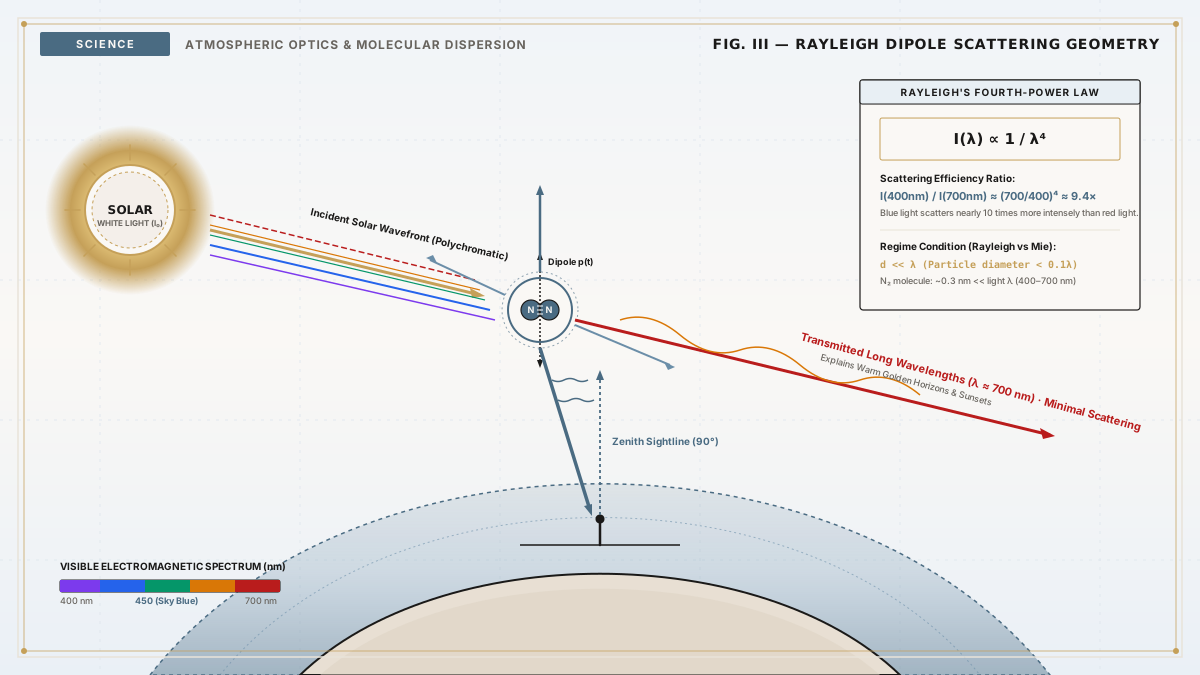
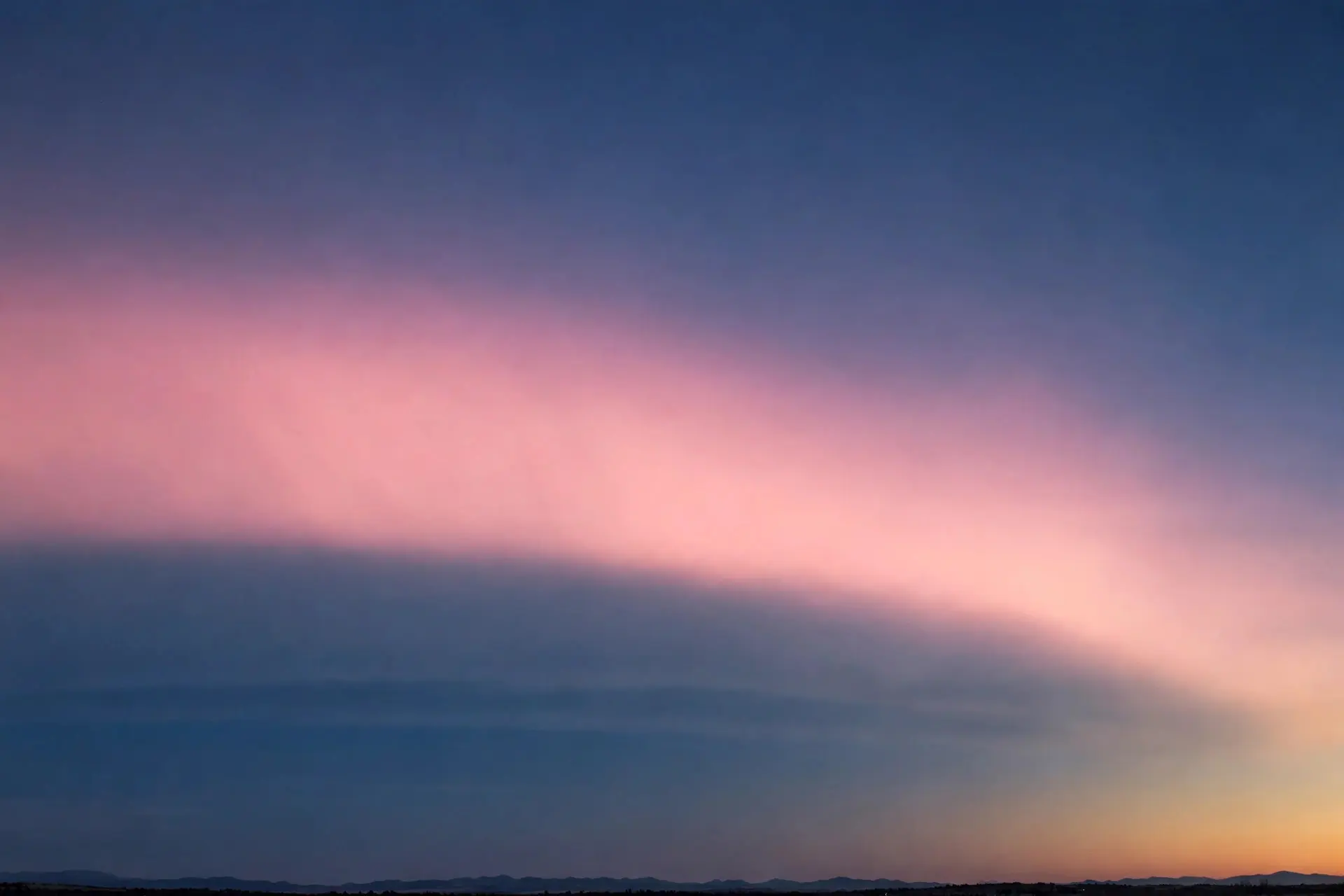
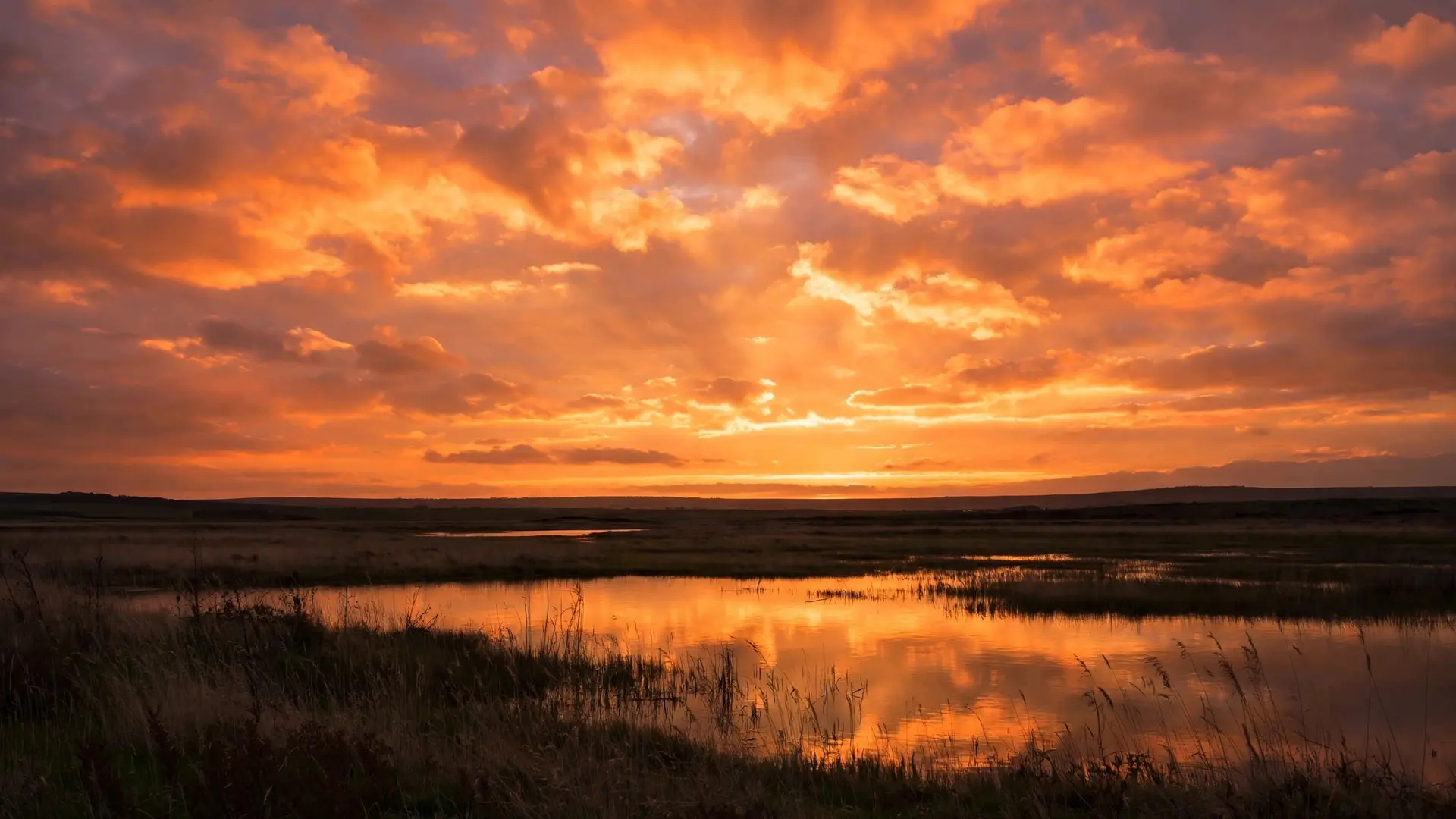
At sunset, the Sun does not change colour. What changes is the journey its light must make to reach your eyes. At midday, sunlight dives down through the atmosphere on a short, steep path. At sunset, it skims in almost sideways, travelling through a far thicker layer of air. Along that long, slanting route, the short blue wavelengths are scattered away in all directions, and the longer red and orange wavelengths are the ones left to arrive. The orange sky is what remains after the atmosphere has filtered the daylight.
What is scattering, and why does it favour blue?
Sunlight looks white, but it is a mixture of colours, each with its own wavelength. Red light has the longest wavelength in the visible range, while blue and violet have much shorter wavelengths. When sunlight enters the atmosphere, it meets gas molecules, mostly nitrogen and oxygen, that are far smaller than the wavelength of visible light. Those tiny molecules deflect the light, a process called Rayleigh scattering, and they deflect short wavelengths far more strongly than long ones. The Met Office explains the daytime result simply: blue and violet light is scattered more than other colours because it travels as shorter, smaller waves. That scattered blue light reaches our eyes from every direction, which is why the daytime sky looks blue overhead. Violet is scattered even more strongly, but our eyes are more sensitive to blue, and sunlight contains less violet to begin with, so blue wins the contest for what we perceive. The same rule, applied over a longer distance, explains the sunset. Scattering is not a one-time event. Every extra stretch of air gives the atmosphere another chance to knock blue light out of the direct beam. By the time the Sun sits low, so much blue has been diverted that the beam arriving at your eyes is depleted of it. What survives is weighted toward yellow, orange and red, the colours least disturbed by the journey.
Why does the low Sun make such a difference?
Geometry is the key. When the Sun is overhead, its light passes through roughly the depth of the atmosphere once. When the Sun is near the horizon, the same light must cross the atmosphere at a shallow angle, passing through a much greater thickness of air before it reaches an observer. The Met Office puts it plainly: at sunrise and sunset, the Sun is low, so its light passes through a thicker layer of atmosphere, and the shorter blue light is scattered further over that greater distance, leaving the longer red and orange wavelengths to be seen.
NASA's account of light scattering seen from orbit tells the same story from the other side. Astronaut photographs show that the effect becomes especially noticeable at low Sun angles precisely because the incoming light must pass through much more atmosphere than at high noon. As a result, more of the shorter blue wavelengths are scattered compared with the longer orange and red wavelengths, and clouds caught in that light take on a golden hue that matches the sunset itself. There is a related reason the sky near the horizon looks paler even before sunset. Light arriving from the horizon has already travelled through more air than light arriving from overhead, so it has been scattered and re-scattered more often, mixing in more white light and softening the blue. The sunset is the extreme version of that everyday horizon effect, pushed to the point where the blue is essentially gone from the direct beam.
What role do dust, smoke and clouds play?
Gas molecules alone would give us orange sunsets, but particles in the air decide whether a given evening is soft or spectacular. Dust, sea salt, smoke and pollution are larger than air molecules, and they scatter light in a less selective way. NASA notes that small aerosol particles, such as sea salt and dust, can colour the lower atmosphere orange, because some of them scatter shorter wavelengths more than others, enriching the light that remains with reds and oranges. After major wildfires, smoke lofted high into the atmosphere has been photographed colouring the edge of the planet in exactly this way. That is why evenings after volcanic eruptions or heavy wildfire smoke are often remembered for unusually vivid skies. The extra particles give the atmosphere more material to work with, and they can spread the warm light over a wider area. It is not that pollution is required for a beautiful sunset; clean air produces lovely ones too. But a sky carrying a little extra dust or smoke often produces deeper, longer-lasting colour, and the effect can linger after the Sun itself has dropped below the horizon, as the remaining light keeps bouncing through the particle-laden air.
Clouds are the second amplifier. A clear sky gives you a coloured band near the horizon. A sky with high, thin clouds gives that warm light something to land on. Clouds reflect and scatter the surviving red and orange light across a much larger canvas, which is why the most photographed sunsets usually have clouds in them. Low, thick cloud can have the opposite effect, blocking the light entirely, but mid-level and high clouds, lit from below or from the side by the low Sun, are what turn a pleasant sunset into a dramatic one. The same scattering that makes rainbows appear after rain and mirages shimmer over hot ground is at work here too, only with a different geometry: light bending and bouncing through air, shaped by what it meets.
Why do sunsets vary from night to night?
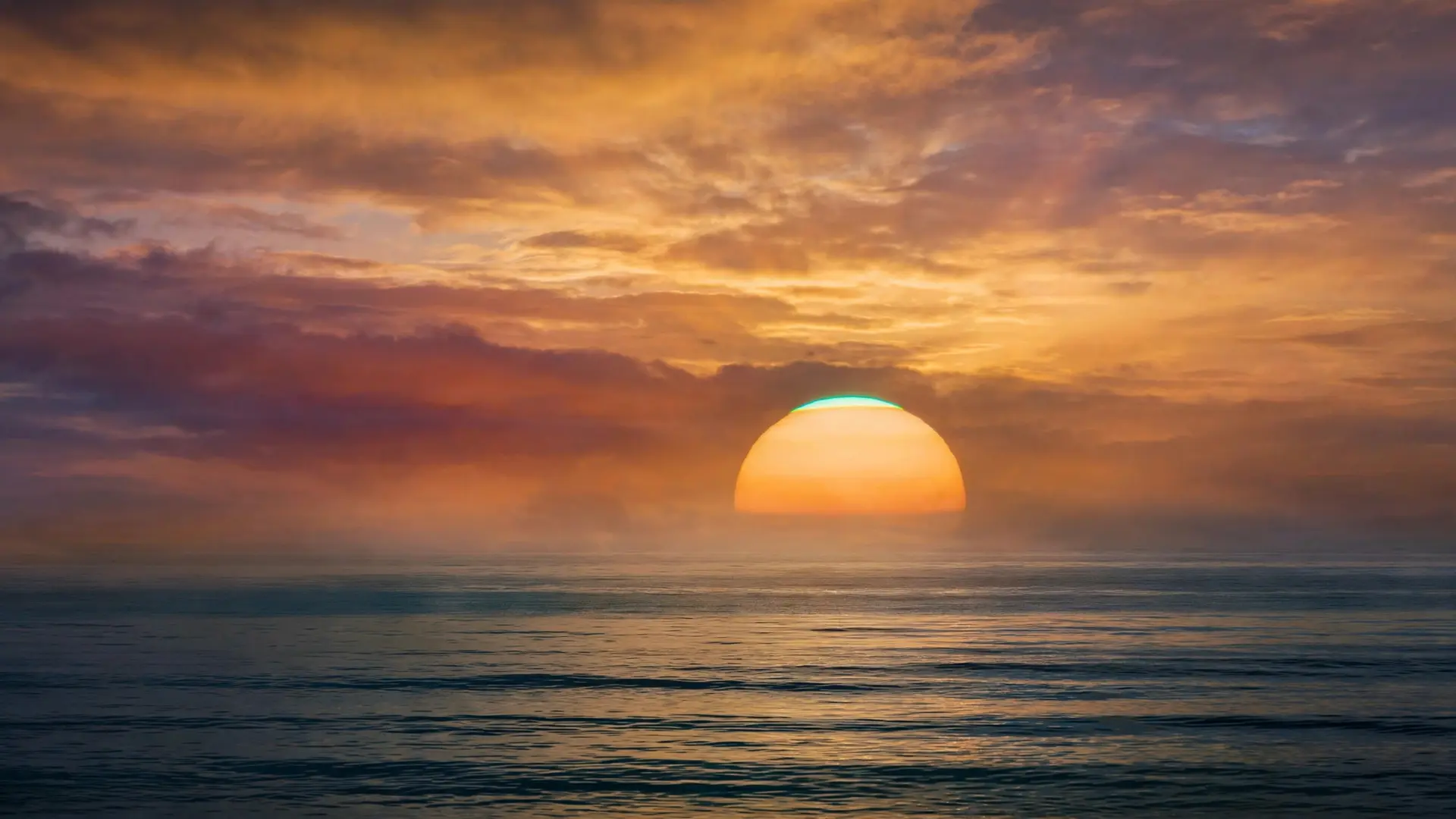
If the geometry is the same every evening, the variation must come from the atmosphere itself, and it does. Three things change from day to day: how much air the light crosses, which is set by the Sun's angle and therefore by latitude and season; how many particles are floating in that air; and where the clouds sit. A dry, clear winter evening, when the Sun stays low for longer, can produce a long, slow fade through gold into red. A humid summer evening with towering cloud may give a brief, brilliant burst before the cloud deck swallows the light. Season and latitude also change the Sun's path. In higher latitudes in winter, the Sun approaches the horizon at a shallow angle and spends more time low in the sky, stretching out the coloured phase. Near the equator, the Sun drops more steeply, so the transition from daylight to darkness is quicker and the orange phase is shorter. None of this requires the Sun to behave differently. It is the same light, filtered through a different thickness and mixture of air. There is a common misconception to clear up: the orange colour is not caused by the Sun getting cooler or redder as it sets, nor by the atmosphere acting like a simple coloured filter, such as a piece of orange glass. The atmosphere does not add orange to the light. It removes blue, green and violet from it, and the orange is what was already present in the sunlight, revealed once its cooler companions have been scattered away. That is why the Sun itself looks flattened and reddened near the horizon, while the sky overhead may already be darkening to blue-grey: you are looking at different paths through the same air, one long and heavily filtered, the other shorter and less so. So the next time the western sky ignites, remember what you are actually seeing. It is not the Sun changing. It is daylight running a longer obstacle course, losing its blue along the way, and arriving at your eyes as the warm remainder. The blue sky of midday and the orange sky of evening are two views of one process, and the difference between them is simply how much atmosphere the light had to cross. Even the brief green flash at the Sun's last edge belongs to the same family of atmospheric tricks, a reminder that the air above us is not empty space but an active, light-shaping medium.
Frequently asked questions
Why is the sunset orange but the midday sky blue?
Both colours come from the same scattering process. At midday the path through the air is short, so scattered blue light fills the sky. At sunset the path is far longer, so the blue is scattered away before it reaches you and only warm colours remain.
Do clouds make sunsets more colourful?
Often, yes. High and mid-level clouds intercept the warm light that survives the long atmospheric journey and reflect it across the sky, which is why a partly cloudy evening can look far more dramatic than a clear one.
Why are some sunsets pale and others fiery red?
It depends on what the light meets on its way: the amount of air, the dust and smoke in it, and the clouds in its path. Clean, clear air tends to give softer colours, while extra particles can intensify the reds and oranges.
Sources
- Why the sky is blue and sunsets red, Met Office
- Smoke in the Stratosphere, NASA Science
- Crepuscular Rays and Light Scattering, NASA Earth Observations