How Do Mirages and Fata Morgana Trick the Eye?
A mirage never lies — your brain does. One rule of physics, that light bends toward colder air, explains desert water, floating ships, and phantom castles.
Key takeaways
- A mirage forms when light bends toward colder, denser air; the brain assumes light travels straight and projects the ray to the wrong place.
- Inferior mirages make hot desert ground show the sky as fake water; superior mirages make ships look like they float.
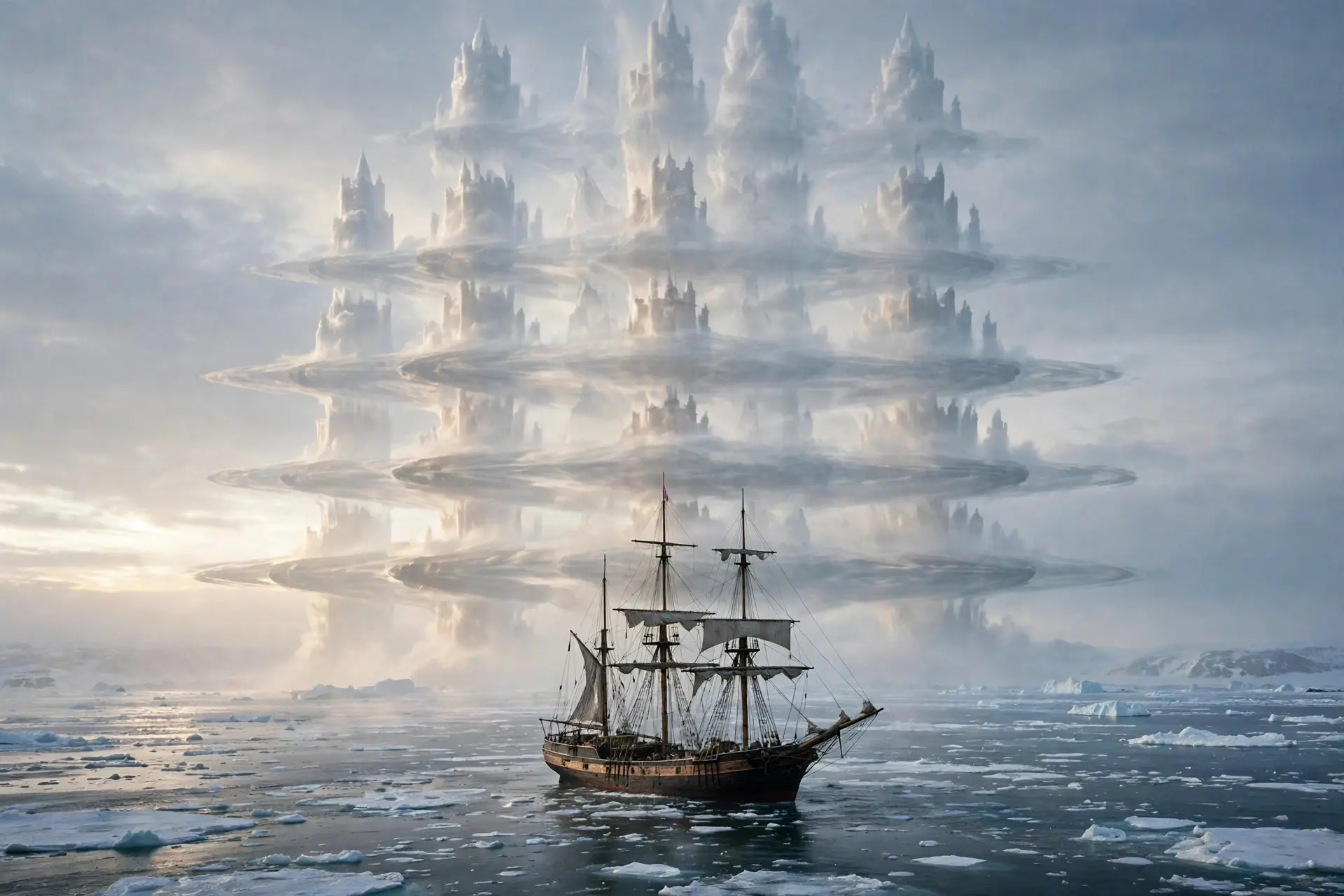
- Fata Morgana is the extreme superior mirage: stacked, alternating images of a ship look like phantom castles.
- The name comes from Morgan le Fay — Morgan the Fairy — said to conjure illusory castles to deceive sailors.
The mirage never lies. The light reaching your eye is real light, bent by real physics. It is your brain that does the lying — because the brain assumes light travels in straight lines, and in a mirage it does not. One rule explains everything: when air temperature changes over short distances, light curves toward the colder, denser layer. From that single rule come desert "water," ships that float in the sky, castles that were never built, and a sun that once rose two weeks early. The trick is always the same. Only the temperature arrangement changes.
Why does the desert show you water that isn't there?
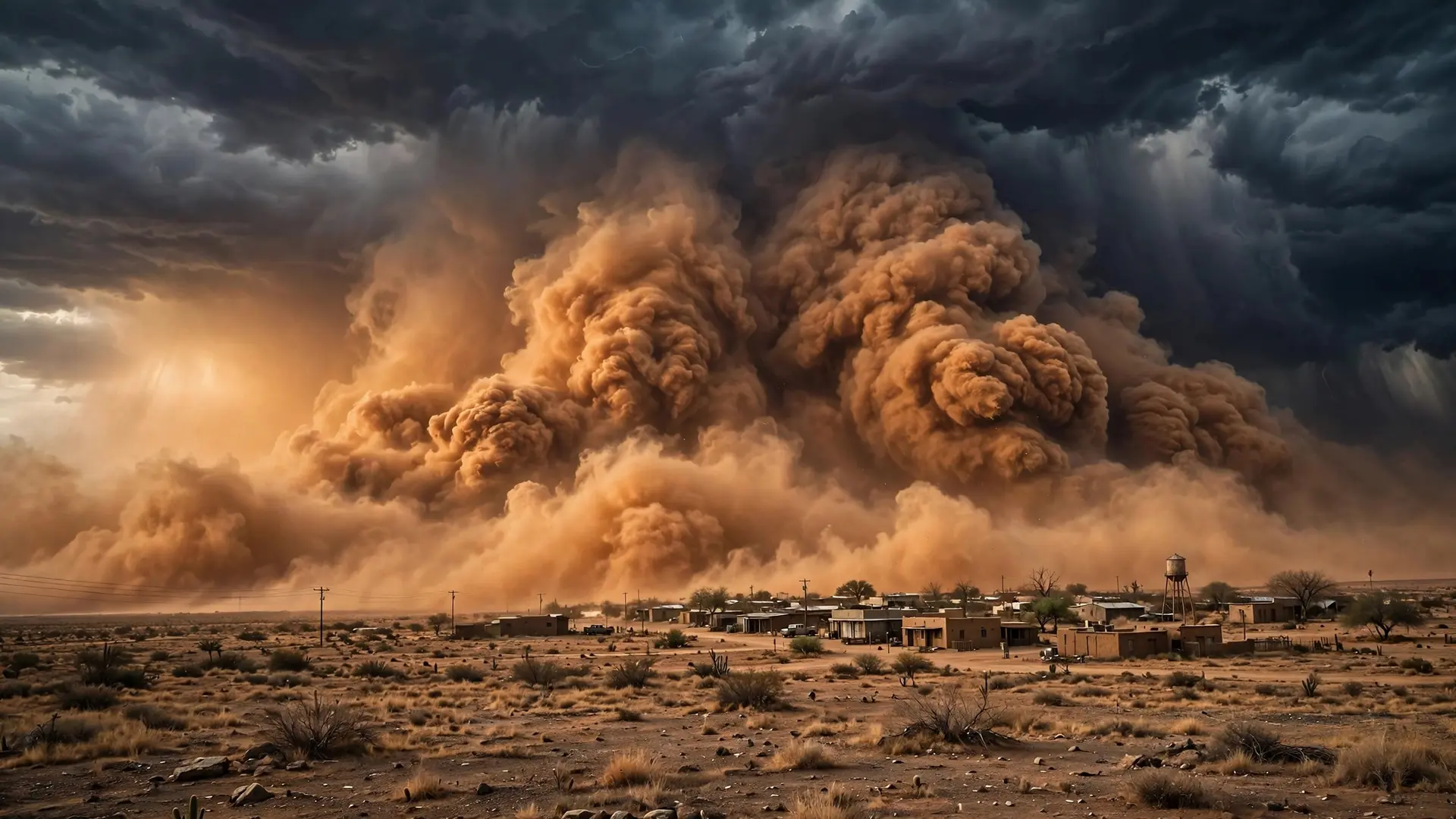
This is the inferior mirage, and it needs heat. Sun-baked sand or asphalt warms the air just above the ground; cooler air sits above that. Rays of light from the sky, skimming through this layered air, bend upward into your eye — toward the colder layer above. Your brain, doing its straight-line geometry, concludes the ray must have come from the ground in front of you. You are looking at the sky. You see water. Dry pans in the Great Basin of the American West looked like lakes to pioneers, tormenting travelers desperate for water. The image they chased was real light from the real sky, delivered to the wrong address by hot air.
Why do ships look like they are floating?
Flip the temperatures and you get the superior mirage. Cold water or cold land below, warmer air above — a temperature inversion. Now light bends downward, toward the cold surface, and distant ships or coastlines are projected upward. They appear higher than they are: floating, hovering, suspended in the air. Inversion has been confirmed by direct observation. Photographed miraged ships in the Strait of Juan de Fuca showed a distinct inversion between the cold water and the warm air above it. In layered air, rays can even bend around Earth's curvature, making below-horizon objects visible — the reason cold air's higher refractive index can stretch a hill into a steep mountain range.
Here is where the "castle" appears. Rays from a ship's mast, bent one way, arrive above the ship; rays from the hull, crossing a stronger gradient, arrive flipped upside-down. Add a thick inversion layer and you get a third, right-side-up image stacked on top. Alternating upright and inverted images, piled vertically — that is the spire-and-pinnacle look sailors reported for centuries. It is one ship, refracted into architecture.
What is Fata Morgana?
Fata Morgana is the extreme version of the superior mirage. Warm air over much colder air forms an atmospheric duct that combines upside-down and right-side-up images into a single shifting display. The phantom castles can change shape or vanish in seconds, depending on exactly where the observer stands. Calm conditions are essential — wind mixes the layers and kills the effect. The name is the Italian translation of Morgan le Fay — Morgan the Fairy of Arthurian legend, said to conjure illusory castles over the Strait of Messina to deceive sailors. The legend got the mechanism wrong but the psychology right: these things genuinely look designed. In the early 19th century, the English whaler William Scoresby saw an upside-down ship so detailed in the Arctic air that he recognized his father's vessel, some 35 kilometers away. His crew reported "innumerable collections of spires and pinnacles, or in the form of a thick forest of naked trees." One ship; a whole mirage city.
Where can you actually see a Fata Morgana?
The namesake location is the Strait of Messina, between Sicily and mainland Italy, where the legend of Morgan le Fay was born. But the conditions matter more than the place: you need warm air sitting over much colder air, calm weather, and a long sightline. That is why superior mirages and Fata Morgana appear most often over Arctic and Antarctic cold land, and sometimes over cold ocean water — the polar regions are inversion factories.
Calm is non-negotiable. Wind mixes the air layers, destroys the gradient, and kills the effect. The best Fata Morgana displays are eerily still: a ship floating silently in air that has stopped moving. And the display is personal — because the stacked images depend on the exact geometry of the ray paths, two observers standing a few meters apart can see different versions of the same mirage, and the phantom castles can change shape or vanish in seconds as the air shifts.
Can a mirage really make the sun rise early?
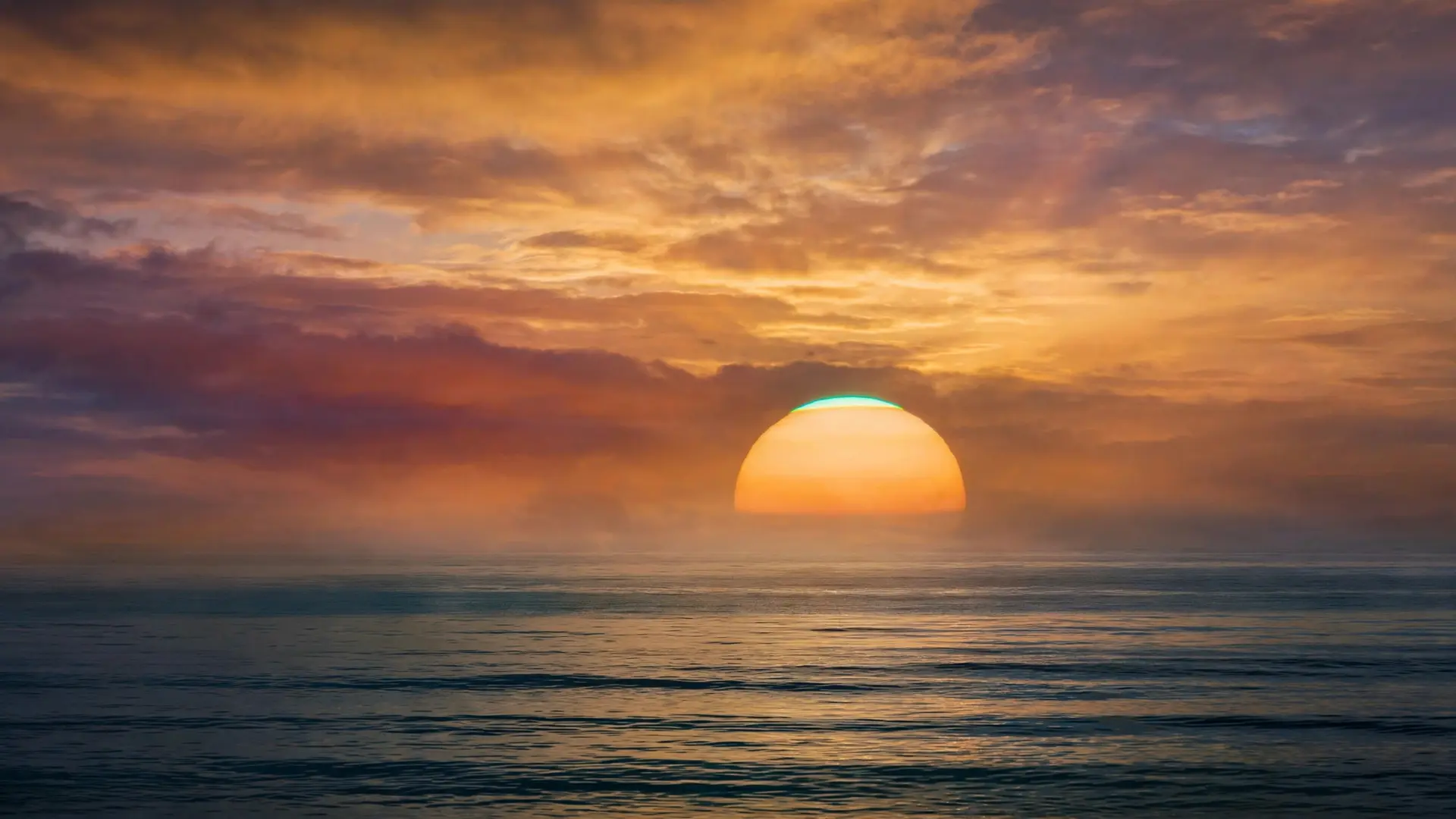
Yes — the Novaya Zemlya effect, confirmed by the World Meteorological Organization, is a polar mirage that makes the Sun appear to rise while it is still below the horizon. First observed on Novaya Zemlya in the Barents and Kara Seas in 1597, it is caused by a large-scale temperature inversion bending light along Earth's curvature. The Sun appears as a line, a stack of lines, or even a rectangle — two weeks of light smuggled in by cold air. Superior mirages appear most often over Arctic and Antarctic cold land, sometimes over the ocean. And the two mirage types can even share one scene: photographers off Heron Island, Australia, captured superior and inferior mirages in a single frame, separated by a "vanishing line" — one horizon, two opposite illusions, stacked. There is a final humility in all of this. The light in a mirage is telling the truth about the air it traveled through. The lie is the brain's: its unexamined belief that light always travels straight. Every mirage is a lesson in the difference between seeing and knowing — and a reminder that the most beautiful thing in the sky that day might be a ship that was never there. Like the physics of rainbows, a mirage is ordinary light behaving extraordinarily because of the medium it travels through. And like why the sky is blue, it is a reminder that what you see in the sky is never the raw signal — it is the signal after the atmosphere, and after your brain, have finished editing it.
Frequently asked questions
What causes a mirage?
When air temperature changes over short distances, light curves toward the colder, denser layer. Your brain assumes light travels in straight lines, so it projects the bent ray backward to the wrong location — and you 'see' water, or a floating ship, that isn't there.
What is a Fata Morgana?
An extreme superior mirage that occurs when warm air sits over much colder air, forming an atmospheric duct. It stacks alternating upright and inverted images of a distant ship or coastline, which look like castles or floating architecture and can change or vanish in seconds.
Why does the name Fata Morgana sound like a fairy?
It is the Italian translation of Morgan le Fay — Morgan the Fairy of Arthurian legend — who was said to conjure illusory castles over the Strait of Messina to deceive sailors.
Are mirages always over deserts?
No. Desert 'water' is only the inferior mirage. Superior mirages and Fata Morgana appear over cold water and Arctic land, where warm air sits above colder air — the opposite temperature setup.