Why Does the Moon Turn Orange During a Lunar Eclipse?
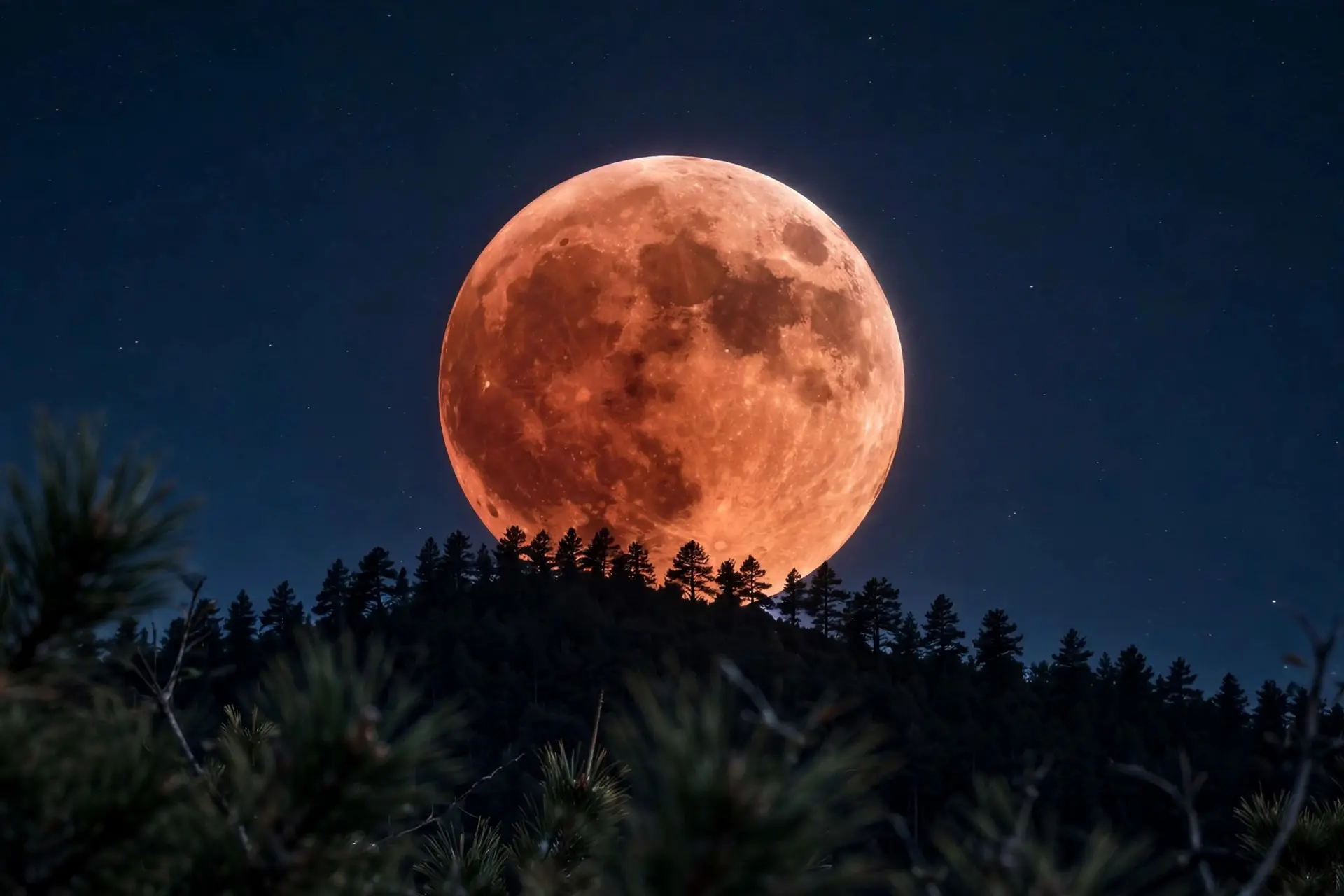
Why does the Moon turn orange during a lunar eclipse? Air strips the blue from sunlight and bends the red remains into Earth's shadow, painting the Moon red.
Key takeaways
- During a total lunar eclipse the Moon sits inside Earth's shadow, lit only by sunlight that has passed through Earth's atmosphere.
- Air molecules scatter away the blue light, while the red and orange light is bent into the shadow, so the Moon glows copper-red.
- The Danjon scale rates the colour from L=0, a Moon almost invisible, to L=4, a very bright copper-red or orange disk.
- Volcanic dust in the stratosphere is the great darkener: after a major eruption the eclipsed Moon can go nearly black.
- Totality can last up to about 100 minutes; the longest of the 21st century, on July 27, 2018, lasted 103 minutes.
During a total lunar eclipse the Moon turns orange because the only light reaching it has travelled through Earth's atmosphere, which strips out the blue and lets the red and orange through. Earth sits directly between the Sun and the Moon, and its air bends the surviving red light into the shadow. The eclipsed Moon becomes a screen showing every sunrise and sunset on Earth at once.
Key facts
- The Moon enters Earth's inner shadow, the umbra. During totality the Moon is fully inside the umbra, and the only light falling on it has passed through Earth's atmosphere. NASA
- Blue light is scattered away. Air molecules scatter most of the blue out of the sunlight, the same Rayleigh scattering that makes the sky blue, leaving red and orange to be bent into the shadow. NASA JPL Education
- From the Moon it would look like a red ring. An observer standing on the Moon during totality would see Earth ringed in red, the glow of all the sunrises and sunsets happening around the planet at that moment. European Space Agency
- Totality can last up to about 100 minutes. The longest total lunar eclipse of the 21st century, on July 27, 2018, held totality for 103 minutes. European Space Agency
- The most recent total eclipse ran 59 minutes. On March 3, 2026, totality lasted from 11:04 to 12:03 UTC, inside a whole event of 5 hours 39 minutes. NASA Science
- It is safe to watch with the naked eye. Unlike a solar eclipse, a total lunar eclipse needs no special equipment, and anyone on the night side of Earth can see it. European Space Agency
What happens to sunlight during a total lunar eclipse?
A lunar eclipse can only happen at full Moon, when the Sun, Earth and Moon line up. Even then it is not guaranteed: the Moon's orbit is tilted, so most full Moons pass above or below Earth's shadow. Eclipses come only in eclipse seasons, windows of about 34 days that arrive just shy of every six months.
When the lineup works, the Moon first slides into the penumbra, the pale outer shadow, where it dims only slightly. Then it enters the umbra, the dark inner shadow, and the direct sunlight is cut off. Totality begins when the Moon is fully inside the umbra. This is where Earth's atmosphere takes over. Sunlight grazing the edge of the planet passes through a long stretch of air. The air molecules scatter the short blue wavelengths in all directions, the same effect that paints the daytime sky blue and turns sunsets red. What survives is mostly red and orange light, and the atmosphere bends, or refracts, that light inward, into the shadow, where it lands on the Moon. NASA puts it neatly: "It's as if all of the world's sunrises and sunsets are projected onto the Moon." The colour you see is not the Moon's own colour at all. It is sunlight after Earth's air has filtered it, a sample of the planet's atmosphere thrown across 384,400 km (238,900 miles) of space. The same air that filters the light also makes its own. Earth's upper atmosphere can glow in greens and purples when charged particles strike it, which is the aurora. The difference is that auroral light is made by the air itself, while the orange of an eclipsed Moon is sunlight the air has filtered.
Why is the Moon sometimes copper and sometimes nearly black?
No two eclipses look quite alike, because no two skies over Earth are quite alike. Clouds, dust, ash and tiny droplets in the atmosphere all change how much light gets bent into the shadow and how red it is. A Moon near perigee, its closest approach to Earth, sits deeper in the umbra and looks darker. In the early 20th century the French astronomer André Danjon gave skywatchers a five-point scale for grading what they see. It is still in use today:
| Danjon number | What the eclipsed Moon looks like |
|---|---|
| L = 0 | Very dark, Moon almost invisible, especially in mid-totality |
| L = 1 | Dark grey or brownish, surface details hard to make out |
| L = 2 | Deep red or rust, very dark in the middle, brighter at the edge |
| L = 3 | Brick red, usually with a bright or yellow rim |
| L = 4 | Very bright copper-red or orange, with a bluish, very bright rim |
| The single biggest darkener is volcanic dust. Unless airborne volcanic aerosols intervene, the eclipsed disk stays moderately bright. After a major eruption loads the stratosphere with tiny particles, the Moon can go nearly black, sometimes so dark that observers lose it against the stars. In that sense the eclipsed Moon doubles as a weather report on Earth's own air: bright copper means clean skies, while a ghostly dark disk means the upper atmosphere is full of dust. |
At mid-totality the Moon can grow as faint as a naked-eye planet or a prominent star. Faint stars that the full Moon normally washes out suddenly become visible, and the ground below takes on a sombre hue. Then the eastern edge of the Moon begins to brighten, and the whole sequence runs in reverse until the spectacle is over.
How long does totality last?
Totality is the slow part of the show. The Moon crosses the umbra at its own orbital pace, and the length of the crossing depends on how centrally it passes through the shadow. A Moon that clips the edge is in and out quickly; one that crosses the middle lingers.
| Eclipse | Totality |
|---|---|
| July 27, 2018 | 103 minutes, the longest of the 21st century |
| January 20–21, 2019 | 62 minutes (8:41 p.m. to 9:43 p.m. PST) |
| March 3, 2026 | 59 minutes (11:04 to 12:03 UTC) |
| Lunar eclipses of all kinds happen up to five times a year, though most years see fewer, and any one eclipse is visible only from the half of Earth facing the Moon. The March 3, 2026 eclipse, for example, was the only total lunar eclipse of its year; August 28, 2026 brought a partial one instead. Because totality is long and the whole night side can watch, lunar eclipses are among the easiest sky events to catch with no planning at all. |
What most people get wrong about the orange Moon
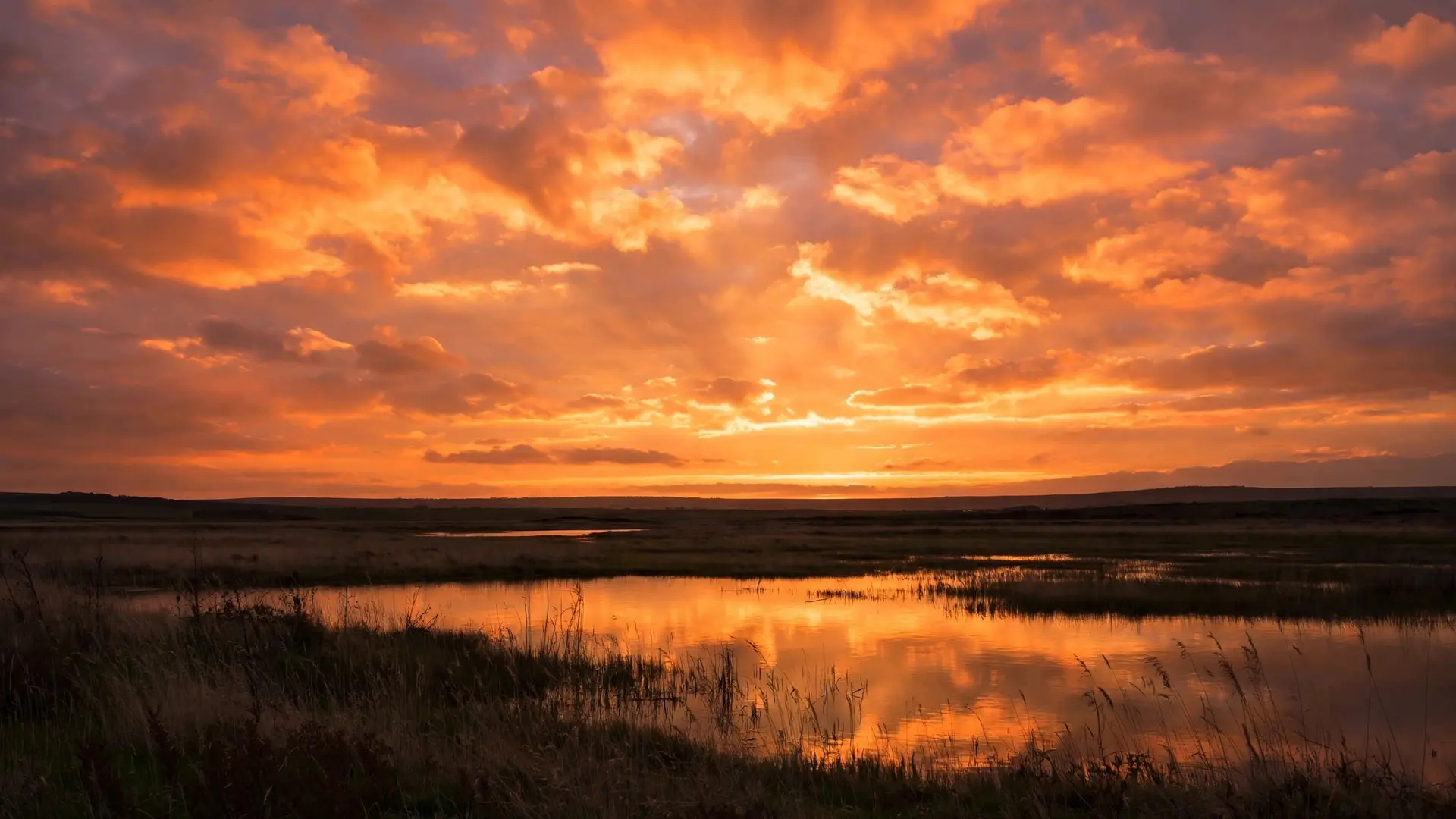
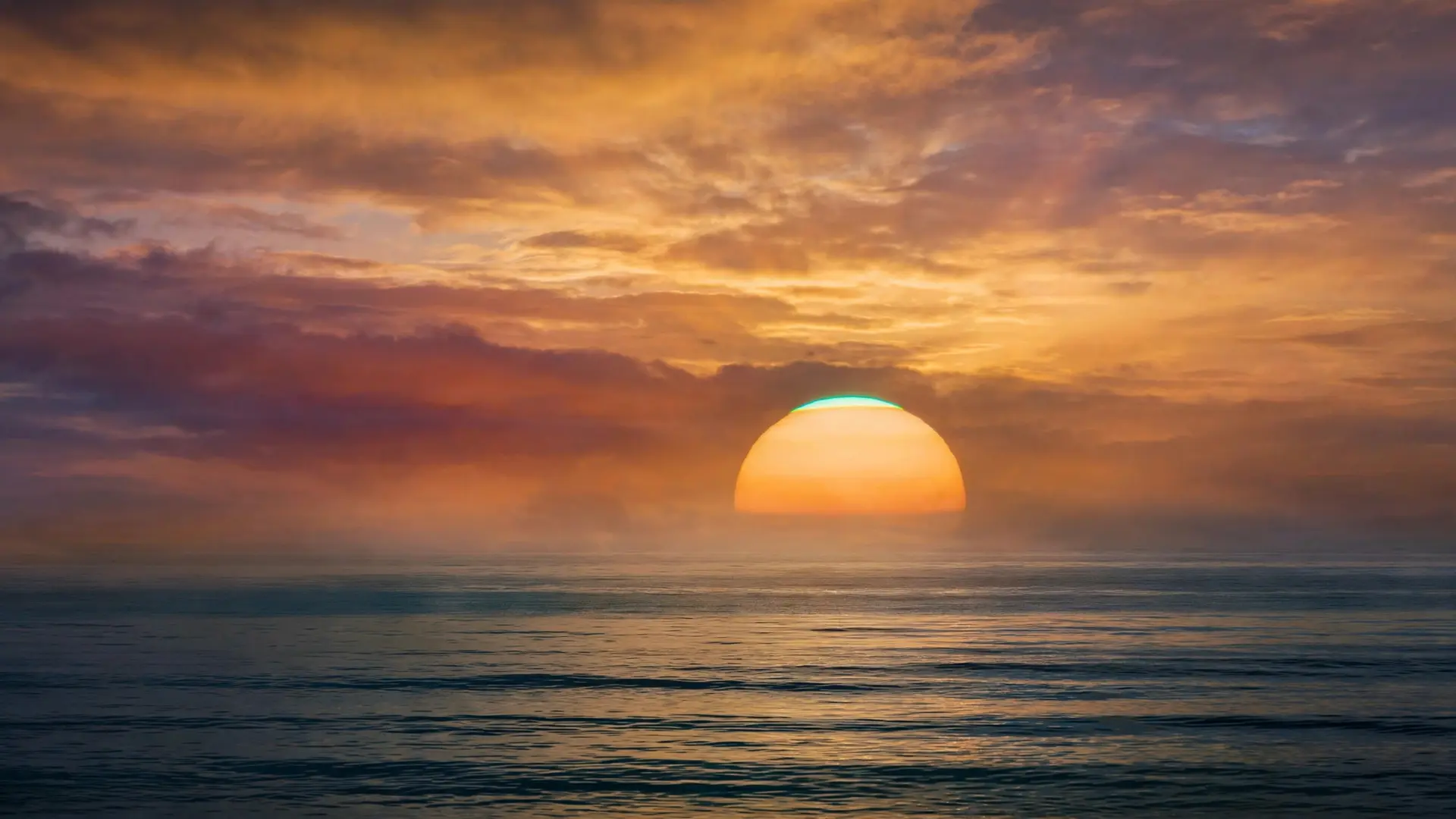
The first mistake is confusing two different oranges. The Moon also looks orange when it rises, because its light then crosses a long stretch of air near the horizon, which scatters the blue away, just like a sunset. That is the Moon looking bigger near the horizon, a trick of the low Moon. An eclipsed Moon is orange for a different reason: it sits inside Earth's shadow and is lit only by filtered light. Same colour, different cause. The second mistake is expecting the Moon to vanish. It never goes fully dark, because the atmosphere always bends some light into the shadow. Even the darkest eclipses leave a faint grey or brown disk, and most leave a Moon bright enough to see clearly with the naked eye. The third mistake is thinking the colour means something is wrong with the Moon. Nothing changes on the Moon itself. The orange is Earth's doing, a readout of the air above our heads. Ancient skywatchers understood the geometry long before the physics: Aristotle noted that the shadow Earth casts on the Moon during an eclipse is always round, which told him Earth is a sphere, and Hipparchus used a lunar eclipse to discover precession, Earth's slow 26,000-year wobble. That is the lasting charm of a total lunar eclipse. It is the one eclipse you can watch with bare eyes from anywhere on the night side, and the colour on the Moon is a report from your own planet's sky, written in red light. How we made this article: FactSpire researched and drafted it with AI assistance and checked every fact against the sources listed above.
Frequently asked questions
Why doesn't the Moon disappear during a total lunar eclipse?
Earth's atmosphere bends sunlight around the planet and into the shadow. Without that bending, the Moon would go almost dark, but the air acts like a lens, filtering sunlight and throwing the red and orange leftovers onto the Moon's face.
What is a blood moon?
A blood moon is simply a total lunar eclipse, when the Moon turns red or copper-coloured inside Earth's shadow. The name comes from the colour, not from anything bloody happening. The exact shade changes from eclipse to eclipse, from bright copper to deep rust or nearly black.
Is it safe to watch a lunar eclipse without glasses?
Yes. A lunar eclipse is completely safe to watch with the naked eye, unlike a solar eclipse. The Moon is only reflecting dim, filtered sunlight, and no special equipment is needed. Anyone on the night side of Earth can see it.
When was the most recent total lunar eclipse?
March 3, 2026, when totality lasted 59 minutes, from 11:04 to 12:03 UTC, and the whole event ran 5 hours 39 minutes. The same year also brought a partial lunar eclipse on August 28, 2026.
Sources
- Total Lunar Eclipse, NASA
- How to Watch the Only Total Lunar Eclipse of 2019, Plus a Supermoon, NASA JPL Education
- March 2026 Total Lunar Eclipse: Your Questions Answered, NASA Science
- What is an eclipse?, European Space Agency
- Lunar eclipse – 27 July 2018, European Space Agency
- Total Lunar Eclipse: How to Judge the Moon's Brightness and Color, Space.com