What Makes a Supermoon Super, and Can You Actually See It?
A supermoon is a full Moon near perigee, its closest point to Earth: up to 14% larger and 30% brighter. The next ones rise November 24 and December 24, 2026.
Key takeaways
- A supermoon is a full Moon that arrives at or near perigee, the closest point of the Moon's elliptical orbit.
- At its largest it appears up to 14% larger in diameter and 30% brighter than the year's smallest full Moon.
- The difference is real but almost impossible to judge from memory; side-by-side photos show it best.
- 2026's remaining supermoons are the Beaver Moon on November 24 and the Cold Moon on December 24, the year's closest.
- Supermoons cause no earthquakes, floods, or disasters, despite persistent claims.
What makes a supermoon super is timing: a full Moon arriving at or near perigee, the closest point in its orbit. It can appear up to 14% larger and 30% brighter than the year's smallest full Moon. But a 14% change on something you can hide behind a fingernail at arm's length is nearly impossible to notice.
- A supermoon is a full Moon that falls at or near perigee, the closest point of the Moon's elliptical orbit, about 363,300 km (225,744 miles) from Earth on average. NASA JPL
- The opposite is a micromoon: a full Moon at apogee, about 405,500 km (251,966 miles) away on average, roughly 40,000 km (24,855 miles) farther out. NASA JPL
- At its largest, a supermoon can appear 14% larger in diameter and up to 30% brighter than the smallest full Moon of the year. NASA JPL
- "Supermoon" has no official astronomical definition; the common working rule counts a full Moon at least 90% of the way to perigee. NASA JPL
- 2026 holds three supermoons: the Wolf Moon of January 3 (past), the Beaver Moon on November 24, and the Cold Moon on December 24, the year's closest full Moon at 356,700 km (221,700 miles). Supernova Tribune
What exactly makes a supermoon super?
The Moon does not circle Earth in a perfect ring. It follows an ellipse, so every month it swings through a near point and a far point. The near point is called perigee, averaging about 363,300 km (225,744 miles) from Earth. The far point is apogee, averaging about 405,500 km (251,966 miles). During each 27-day orbit, the Moon reaches both. NASA JPL A full Moon happens when the Moon lines up on the opposite side of Earth from the Sun, showing its fully lit face to us. That alignment can land anywhere along the elliptical path. When it lands at or near perigee, the full Moon looks a little larger and brighter than usual. That is all a supermoon is: a full Moon with lucky timing. NASA JPL
Astronomers have a more precise name for the arrangement: perigee syzygy. Syzygy means an alignment of three celestial bodies, in this case the Sun, Moon, and Earth. "Supermoon" itself is not an official astronomical term; there is no formal rule for how close to perigee the full Moon must be to earn the label. In practice, skywatchers count a full Moon at least 90% of the way to perigee. NASA JPL
How much bigger and brighter does it really get?
A supermoon sits about 40,000 km (24,855 miles) closer to Earth, on average, than a micromoon, the full Moon at apogee. That shift makes it appear up to 14% larger in diameter than the smallest full Moon of the year. The extra closeness can also raise its brightness by up to 30%, a direct consequence of the inverse square law: light spreads out as it travels, so a nearer Moon delivers more of it to your eyes. NASA JPL
| Supermoon (full Moon at perigee) | Micromoon (full Moon at apogee) | |
|---|---|---|
| Average distance | 363,300 km (225,744 miles) | 405,500 km (251,966 miles) |
| Apparent diameter | up to 14% larger | baseline (smallest full Moon) |
| Brightness | up to 30% brighter | baseline (faintest full Moon) |
| 2026 gives a concrete comparison. The Cold Moon on December 24 sits about 356,700 km (221,700 miles) away, only about seven hours from the year's closest perigee, making it the closest full Moon of 2026. The year's most distant full Moon, the blue moon of May 31, sat about 406,100 km (252,400 miles) out. Put them side by side and the gap is about 49,400 km (30,700 miles): the full range the Moon's orbit allows. Supernova Tribune |
Can you actually tell the difference with your eyes?
Probably not, and that is worth knowing before you go outside. A 14% increase in the apparent size of something you can cover with a fingernail on your outstretched arm will not seem significantly bigger. Worse, you have no fresh comparison: you last saw a full Moon at least 30 days ago, and you will not see another for 30 more. Judging a supermoon against a month-old memory is nearly impossible. NASA JPL
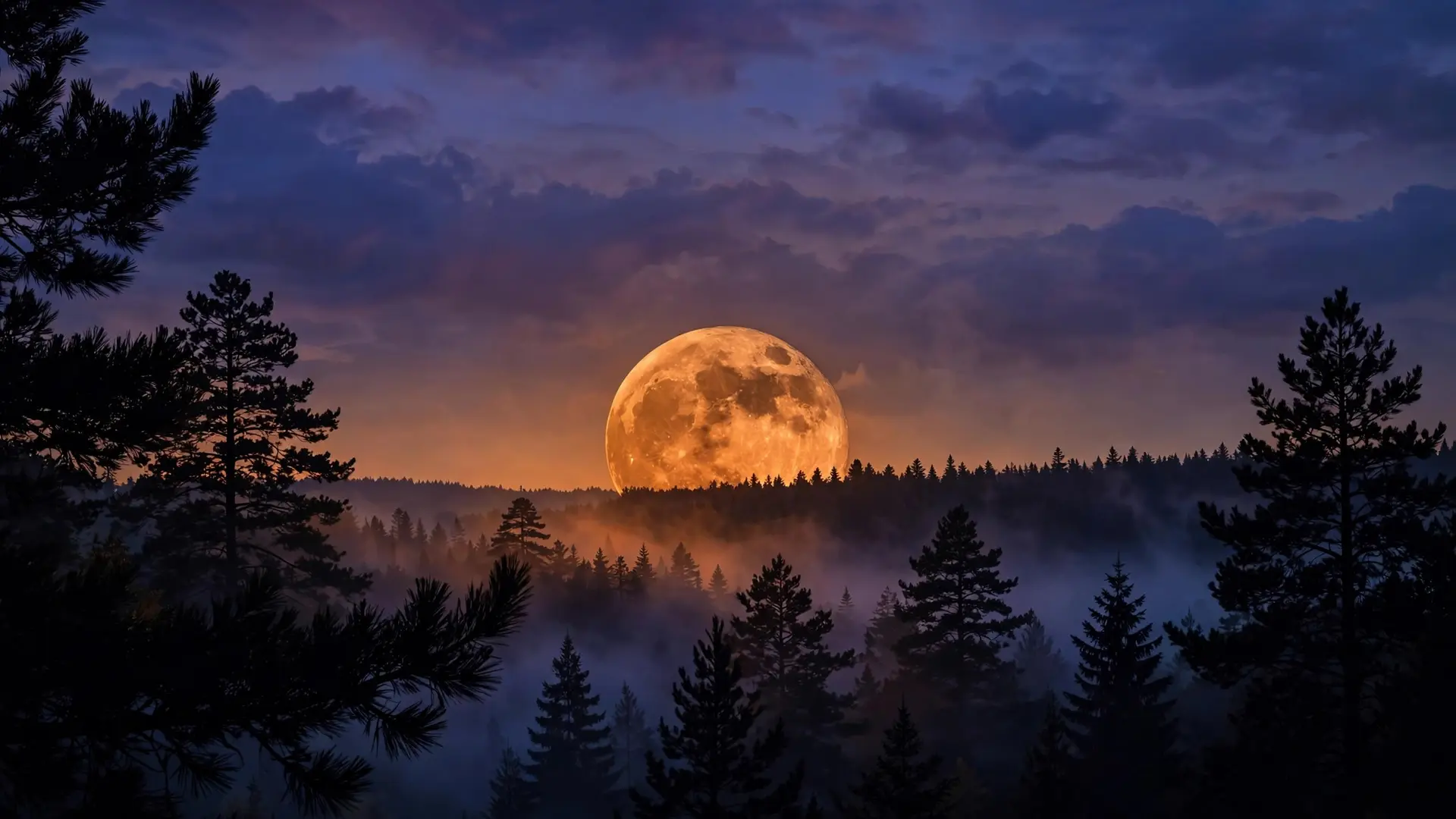
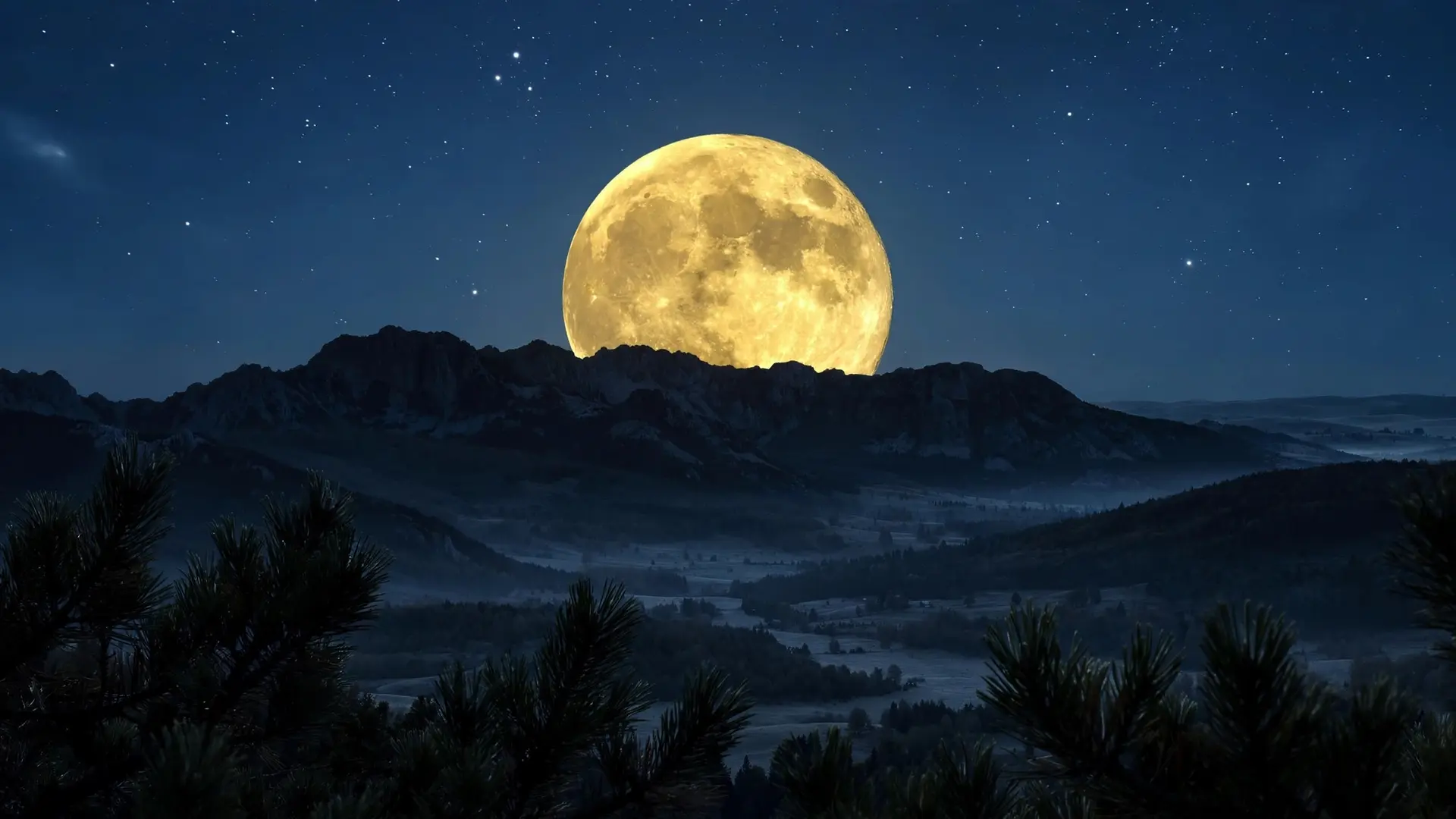
What many people do notice is the Moon looking enormous as it rises. That is the Moon illusion, and it can happen during any full Moon, supermoon or not. Near the horizon the Moon appears huge, then seems to shrink as it climbs. Scientists still do not fully agree on what causes it. Read our explainer on why the Moon looks bigger near the horizon. NASA JPL Photographs can mislead too. A long telephoto lens can frame the Moon next to buildings or mountains so it looks gigantic, but that trick works during any Moon phase and has nothing to do with the supermoon. The same goes for edited images that inflate the Moon's size. NASA JPL Still go out and look. The next supermoon of 2026 is the Beaver Moon, full at 14:54 UTC on November 24 (9:54 a.m. EST), and the Moon will look full on the nights of November 23 and 24. Sky at Night Magazine calls it the Beaver Supermoon, after the traditional November name. Watch it rise in the east around sunset for the best effect. Then comes the Cold Moon on December 24, full at 01:28 UTC (8:28 p.m. EST on December 23 in the Americas), the closest full Moon of the year. Supernova Tribune BBC Sky at Night Magazine City lights wash out the extra brightness, so find a dark spot away from streetlights to give the supermoon its best chance. And since a bright Moon lights the whole sky, a supermoon night is also a fine night to look for moonbows, the Moon's version of a rainbow. NASA JPL
What do people get wrong about supermoons?
Two myths follow every supermoon. The first is that it causes earthquakes, floods, fires, volcanic eruptions, or tsunamis. It does not. NASA's JPL is blunt: a supermoon will cause none of those, whatever non-scientific speculators suggest. NASA JPL The second myth is the horizon confusion: the huge rising Moon is the Moon illusion, not the supermoon effect. A supermoon adds at most 14% to the Moon's apparent size; the swelling you feel at moonrise is far larger and happens with ordinary full Moons too. NASA JPL The "super" in supermoon is mostly marketing. The physics is simple: a full Moon near perigee is closer, so it looks slightly bigger and shines slightly brighter. The honest pleasure is standing outside on November 24 or December 24 and knowing exactly why this particular full Moon earned its nickname, as it traces its ellipse through the solar system. How we made this article: FactSpire researched and drafted it with AI assistance and checked every fact against the sources listed above.
Frequently asked questions
Will the supermoon look dramatically bigger than a normal full Moon?
No. The maximum size gain is about 14% in diameter, on an object you can cover with a fingernail at arm's length, and you last saw a full Moon a month ago. Without a side-by-side photograph, most people cannot tell the difference. What you will notice is the extra brightness on a dark night.
When is the next supermoon?
The next supermoon of 2026 is the Beaver Moon on November 24, full at 14:54 UTC (9:54 a.m. EST), followed by the Cold Moon on December 24, the year's closest full Moon. Both will look full on the nights around those dates, so watch the eastern horizon near sunset.
Does a supermoon cause earthquakes or floods?
There is no scientific basis for it. NASA notes that a supermoon will not cause earthquakes, floods, fires, volcanic eruptions, severe weather, or tsunamis, despite claims from non-scientific speculators. The slightly stronger pull at perigee is far too small to trigger disasters.
Why does the Moon look so big when it rises?
That is the Moon illusion, a trick of perception that affects every full Moon, not just supermoons. Near the horizon the Moon looks huge and seems to shrink as it rises, though its actual size never changes. Scientists still debate the exact cause.
Sources
- What's a Supermoon and Just How Super Is It?, NASA Jet Propulsion Laboratory
- Full Moon Calendar 2026, Supernova Tribune
- Next full Moon 2026 calendar dates, BBC Sky at Night Magazine