Vostok: The Coldest Temperature Ever Measured
On July 21, 1983, a remote Russian station in Antarctica logged −89.2°C — the lowest air temperature ever measured. This is the story of that record night.
Key takeaways
- On 21 July 1983, Vostok Station in Antarctica recorded −89.2 °C (−128.6 °F) — the lowest air temperature ever reliably measured on Earth.
- Vostok sits 3,488 m above sea level and roughly 1,301 km from the South Pole, enduring about 120 days of polar night each winter.
- The record night followed about ten days of steady cooling of roughly 30 K beneath a rare, near-stationary atmospheric vortex.
- Satellites have spotted snow surfaces down to −98.6 °C, but those are surface readings — not standardized air measurements — so the record stands.
- Researchers estimate Vostok could sink toward −96 °C under longer isolation; the higher Dome Argus site runs 5–6 K colder.
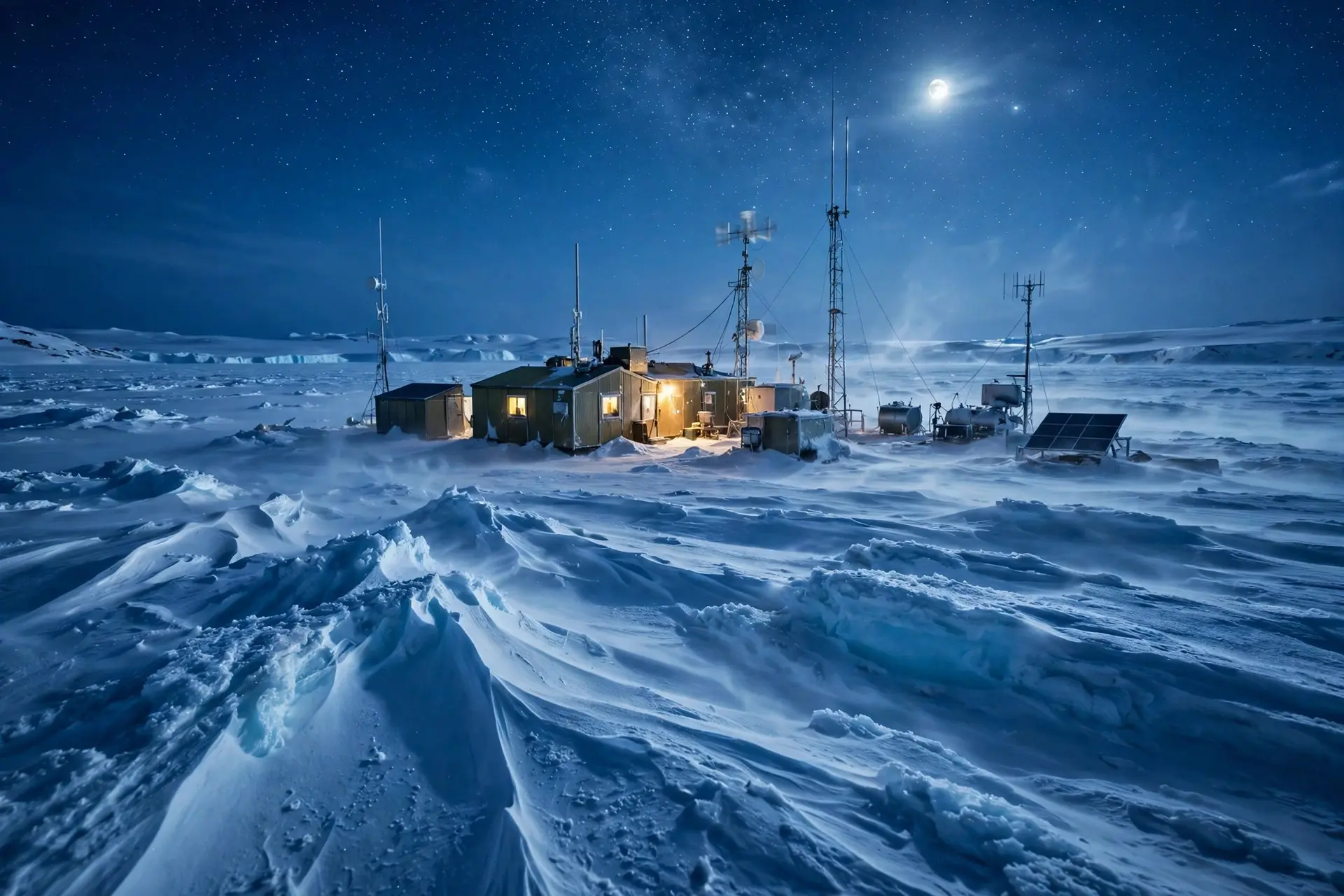
The lowest temperature ever reliably measured on Earth is −89.2 °C (−128.6 °F). It was recorded at Vostok Station, a Russian research base deep in East Antarctica, on 21 July 1983 — in the middle of the southern winter. Four decades later, no thermometer on the planet has officially gone lower. But the number alone is not the story. The story is why this one spot, and this one night, could get colder than anywhere else.
Why is Vostok colder than almost anywhere else on Earth?
Vostok sits in a part of Antarctica built to manufacture cold. The station stands at 3,488 metres above sea level — roughly the altitude of a high alpine pass — where the thin air holds little heat. It lies about 1,301 kilometres from the Geographic South Pole, buried deep in the interior of the East Antarctic ice sheet, far from any warming influence of the ocean. Water that evaporates off the sea carries heat; at Vostok, the air arrives stripped of moisture, and the air above the station holds almost none — one more reason it ranks among the hardest places on Earth to inhabit. Then comes the darkness. Vostok endures about 120 days of polar night, from late April to mid-August, during which the sun never rises. In May, June, July and August the climate tables show zero hours of sunshine at all. Without incoming sunlight for months, the snow surface can only do one thing: radiate its stored heat into space. The average temperature through the cold season, April to September, is around −66 °C — and even summer barely counts as summer. The warmest temperature ever recorded at Vostok is −14.0 °C, reached on a January day in 1974. There has never been a warm day there by any definition you or I would recognise. Put the pieces together — high elevation, deep interior, months of darkness, bone-dry air — and you get a place where −60 °C is an ordinary winter night. The record of −89.2 °C was not a freak accident; it was an ordinary extreme pushed one step further by a rare coincidence of weather. Vostok is so reliably cold that scientists call it the southern pole of cold, a title it shares with the ice fields around it in a way no other place can claim — though the full question of why the frozen continent and its northern twin are classified the way they are is its own story.
What happened on the night of July 21, 1983?
The record did not arrive out of nowhere. A team of British Antarctic Survey scientists later reconstructed the event in detail, and what they found was a kind of atmospheric lockdown. The temperature had been sliding for about ten days, dropping roughly 30 degrees from near-average July values in an almost straight line, before hitting the bottom at 01:45 UTC on 21 July. Five conditions lined up at once, according to the analysis by John Turner and colleagues published in the Journal of Geophysical Research. First, the core of the mid-tropospheric vortex — a great spinning dome of cold air that sits over Antarctica in winter — was at a near-record low temperature itself. Second, the centre of that vortex drifted close to the station. Third, the circulation around Vostok became almost perfectly circular and stayed that way for about a week, which shut down the waves of warmer air that usually arrive from the ocean. As Turner explained, the near-stationary vortex isolated the station and blocked those intrusions of maritime air. The last two conditions finished the job: surface winds fell unusually calm for that location, and for a week no cloud and not even diamond dust — the glittering ice crystals that often drift through polar air — appeared above the station. With clear skies, still air, and bone-dry conditions, heat bled off the surface into space as long-wave radiation with nothing to send it back. The day after the record, the vortex loosened and the temperature rebounded by more than 20 °C within a single day. The coldest night on Earth was, in a sense, a week of perfect radiational cooling. The previous record at the same station, −88.3 °C on 24 August 1960, stood for 23 years. The 1983 reading beat it by nearly a full degree — an enormous gap in record-keeping terms, and one that has now held for more than forty.
Have satellites found colder spots since then?
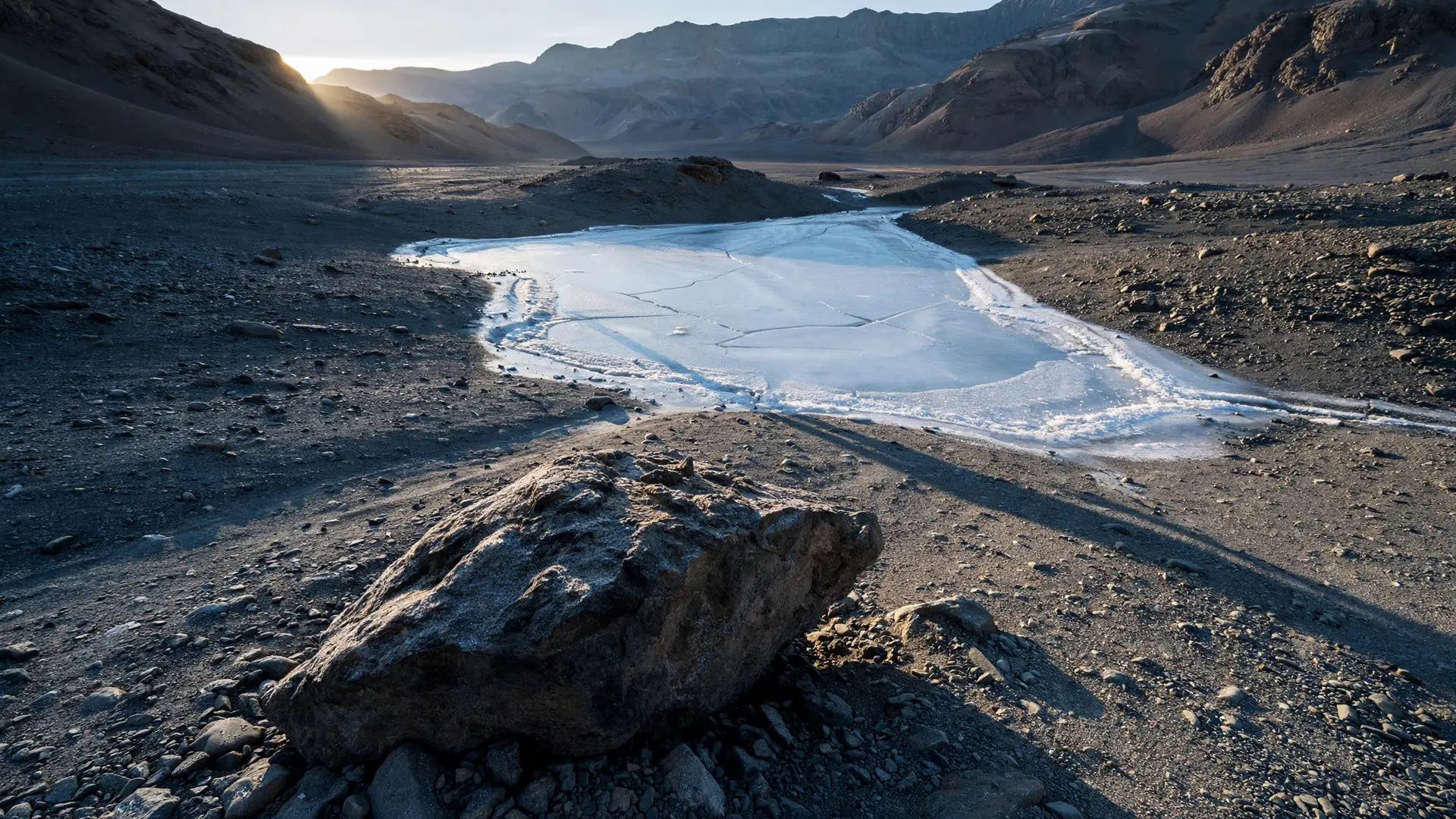
Yes — and this is where the story gets a subtle but important twist. In 2018, a team led by glaciologist Ted Scambos of the National Snow and Ice Data Center reported that satellites had scanned about a hundred shallow hollows on the East Antarctic Plateau, between Dome Argus and Dome Fuji, where the snow surface reached temperatures as low as −98.6 °C. Instruments aboard NASA's Terra and Aqua satellites, plus Landsat 8, had watched these pockets cool through the polar winters of 2004 to 2016. Scambos later joked to reporters that he hoped never to experience such cold himself.
But those readings describe the skin of the snow, not the air someone would breathe. The researchers estimated that the air two metres above the coldest snow was roughly −94 °C, with an uncertainty of about four degrees. Crucially, that is an estimate, not a thermometer reading — and weather stations around the world follow standardised equipment and procedures precisely so that records can be compared. Guinness World Records' entry on the record explains why the satellite findings are not recognised: ground temperatures differ from air temperatures, the exact measurement height is uncertain, and satellite techniques do not conform to the same rules as surface stations. So Vostok's −89.2 °C remains the official record, while the satellite data reveals something arguably more interesting — that under the right combination of darkness, extreme dryness, calm air, and pooled cold in shallow dips, the Antarctic surface can get even colder than any thermometer has yet witnessed.
Could the record ever be broken?
Possibly. Turner and his colleagues calculated that if Vostok's isolation had lasted longer, the surface temperature could have sunk to around −96 °C. And there is a stronger candidate for the ultimate cold spot: Dome Argus, a higher summit on the plateau that typically runs 5 to 6 degrees colder than Vostok. If a future station there sits through a week of the same near-perfect conditions — a record-cold vortex, circular flow, calm winds, clear skies — the official record could fall. For perspective on the other end of the scale, the northern hemisphere's cold record stands at −69.6 °C, measured at the Klinck weather station on the Greenland ice sheet on 22 December 1991 and confirmed by the World Meteorological Organization in 2020 — a full twenty degrees warmer than Vostok's reading. The planet's cold pole is firmly in Antarctica. And the mirror image of this story lives in the desert southwest: Death Valley, holder of the hottest air-temperature record, shows how topography can manufacture heat the same way Vostok's plateau manufactures cold. The two extremes are shaped by opposite versions of the same physics — one traps heat, the other lets it escape. For the wider picture of how sunlight sets those bounds, the explanation of why the equator gets the most direct sun yet isn't the hottest place completes the triangle. What makes Vostok remarkable is not just the number. It is the convergence: a station planted in 1957 at the altitude, latitude, and isolation needed for cold, waiting through months of night until the atmosphere arranged itself into a nearly perfect cooling machine. That it has held for over forty years is a testament to how special that night was — and how quietly the coldest place on Earth keeps doing its work.
Frequently asked questions
Where is the coldest place on Earth?
By official measurement, Vostok Station in East Antarctica: −89.2 °C (−128.6 °F) on 21 July 1983. Satellites have detected colder snow surfaces nearby, but no weather station has matched Vostok's air-temperature reading.
Why doesn't the satellite reading of −98 °C count as the record?
Satellites measure the skin temperature of the snow surface, not the air 2 metres above it, and they don't follow standardized weather-station procedures. The estimated air temperature above the coldest snow is about −94 °C, give or take 4 degrees — an estimate, not a direct reading.
What was the previous cold record before 1983?
Vostok itself held it: −88.3 °C on 24 August 1960. The 1983 reading beat it by nearly a degree — a large margin in the world of temperature records.
Could Vostok's record ever be broken?
Scientists who studied the event estimate that a longer spell of the same isolation could push the station toward −96 °C. Dome Argus, a higher site that normally runs 5–6 degrees colder, is considered the most likely place for an even lower reading.