Why Is the Equator the Hottest Place on Earth?
The equator gets Earth's most direct sunlight, yet the hottest temperatures come from deserts far away. The culprit is a giant loop of rising and sinking air.

Key takeaways
- At the equator, sunlight strikes nearly perpendicular, concentrating energy onto the smallest patch of ground, and day length holds near 12 hours all year.
- The equator's heat drives the Hadley cell: moist air rises, dumps torrential rain along the ITCZ, and sinks back down dry around 30° latitude.
- That sinking, warming air creates the subtropical high-pressure belts — the reason the Sahara, Arabian, and Atacama deserts ring the tropics.
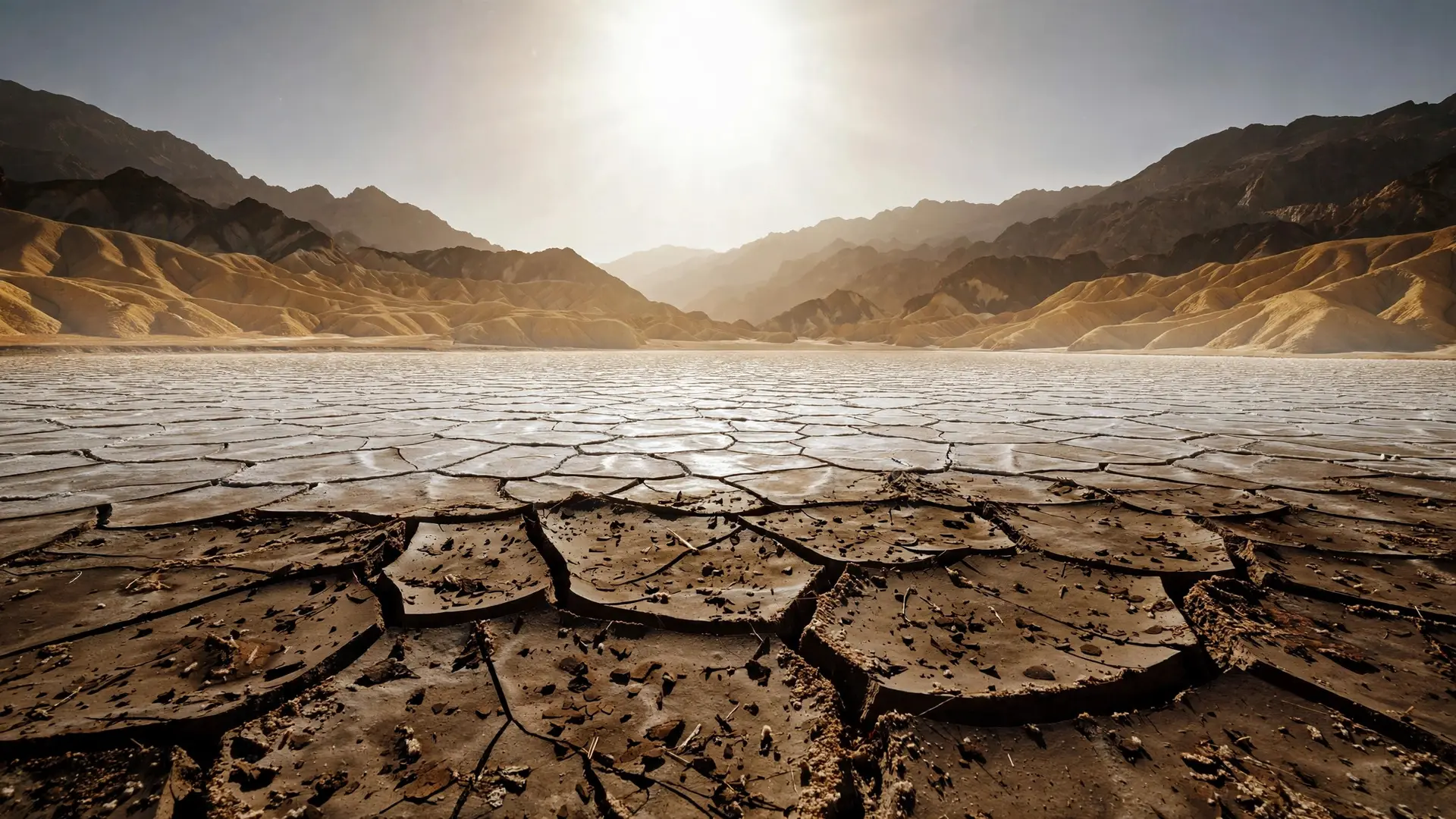
- Death Valley's 56.7°C reading on July 10, 1913, is the hottest air temperature ever reliably recorded — at 36°N, not on the equator.
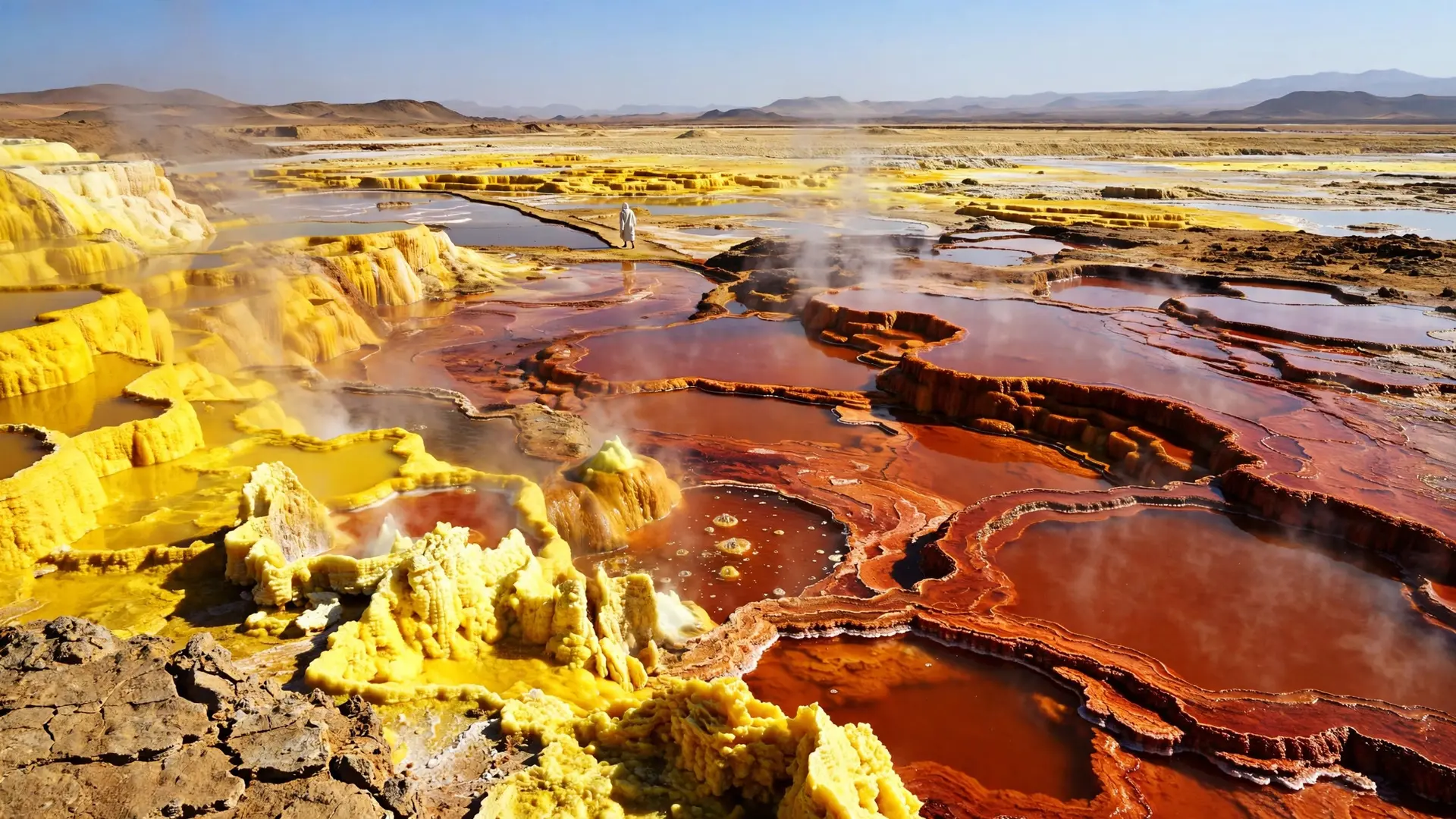
- Dallol, Ethiopia, holds the hottest year-round average of any inhabited place: about 34.6°C across the years 1960–1966.
The equator is hot because the sun's rays strike it nearly head-on, concentrating solar energy into the smallest possible patch of ground, and the days there stay close to twelve hours all year. But direct sunlight is only half the story. The truly hottest places on Earth — Death Valley's 56.7°C record, the furnace towns of the Sahara, the Danakil Depression — sit hundreds or thousands of miles off the equator. The equator receives the most solar energy on the planet, and then its own heat engine gives most of the heat away.
Why does the equator get the strongest sunlight?
It is geometry, pure and simple. Near the equator the sun climbs high overhead and its rays strike the surface close to perpendicular, packing a full dose of energy into a small area. Travel toward the poles and two things dilute that dose: the same beam spreads across a wider patch of curved ground, and it must cross a thicker slab of atmosphere on a slanting path, losing energy to scattering and absorption before it ever lands. Earth's 23.5-degree axial tilt moves the point of maximum overhead sun between the Tropics of Cancer and Capricorn through the year, but the equator stays nearest to perpendicular the whole time — which is why equatorial regions never develop seasons, only variations on warm. Because of that tilt, the point where the sun stands directly overhead at noon migrates: it touches the equator twice a year, at the March and September equinoxes, and swings out to the tropics at the solstices. The equator is the only latitude the overhead sun visits twice annually — a double dose of zenith passages that keeps its energy supply the most constant on Earth.
If the sun is strongest there, why aren't the records?
Because heat is not a one-way street; the planet redistributes it. The hottest air temperature ever reliably recorded was 56.7°C at Furnace Creek in Death Valley, California, on July 10, 1913 — at about 36° north latitude, far from the tropics. The hottest inhabited place year-round is Dallol, Ethiopia, in the Danakil Depression, where thermometers averaged about 34.6°C across the years 1960 to 1966. Ethiopia's lowlands sit at roughly 14° north. Neither is on the equator. The equator cools itself with the very energy it receives. Intense solar heating warms the surface air so powerfully that the air cannot stay put — it rises in towering columns, cools as it climbs, and its moisture condenses into massive cumulonimbus clouds. The result is the Intertropical Convergence Zone, a belt of near-daily thunderstorms straddling the equator. The clouds themselves shade the ground, and the constant rain keeps soils wet and evaporation high. The equator gets the most sun and answers it with the most rain on Earth. Elevation tips the scales further. The record-breaking deserts sit low: Death Valley's floor drops about 86 meters below sea level, Dallol around 125 meters below it. In a deep, enclosed basin, sinking air piles up and compresses, adding heat to heat — while the equatorial hotspots have no such topographic amplifier, and the ocean breezes rarely let them bake uninterrupted.
What is the Hadley cell, and why does it make deserts?
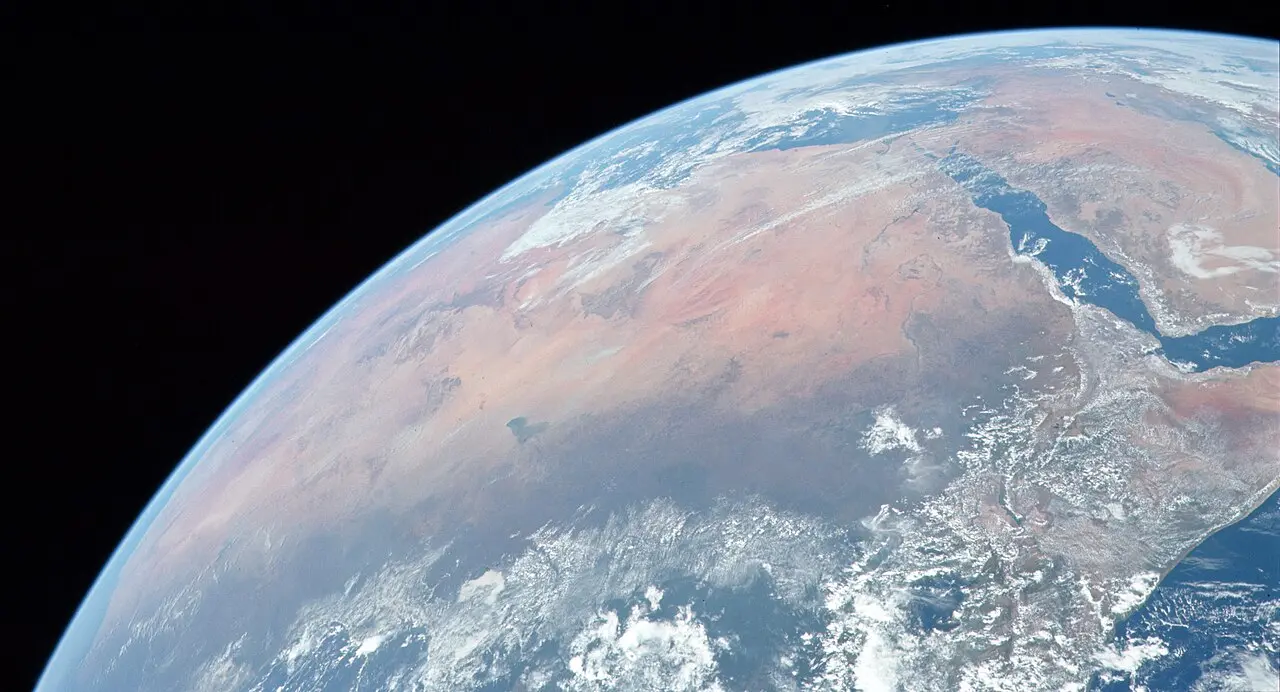
The rising air over the equator is the first half of the largest circulation loop on the planet. That moist air, now wrung almost dry at the top of the troposphere, drifts toward the poles — and around 30° latitude in each hemisphere it sinks back down. Sinking air compresses and warms, and the compression forbids clouds from forming: no rising, no cooling, no rain. These subtropical high-pressure belts — the old "horse latitudes" — are permanent clear-sky machines. That is why the world's great deserts ring the tropics like a belt: the Sahara and the Arabian Desert in the north, the Kalahari and Australian deserts in the south, and the Atacama, the driest nonpolar place on Earth, pinned against the Andes at roughly 20–30° south. They are not hot because the sun is strongest there. They are hot because the air is driest there — and the dryness is manufactured by the equator's own rising air. The tropics are a single connected machine: the equator's storms and the deserts' drought are the two ends of one loop.
The surface winds feeding this engine are the trade winds, blowing steadily from both hemispheres toward the equator and converging at the ITCZ. The band of calms beneath the sinking air earned the old sailors' name of the horse latitudes — windless stretches where the atmosphere's conveyor belt pauses before it descends.
Why does land heat up faster than water?
There is one more piece of the puzzle. The equator is mostly ocean, and water is a heat hoarder — it absorbs enormous energy without warming much and gives it back slowly. The equatorial rainforests add another buffer: the Amazon and the Congo recycle rainfall through evaporation, keeping the air humid and the ground cool. Deserts are the opposite arrangement: dry land, cloudless sky, nothing to evaporate. Nearly every joule of sunlight becomes surface heat. Even on the equator itself, where a cold ocean current chills the air above it — the way the Humboldt Current does along western South America — convection is suppressed and the coast stays strikingly arid. Water decides who gets the heat, and who gets to keep it. That land-versus-water asymmetry is also why the equator's warmest inhabited spots sit on land. Dallol lies 125 meters below sea level in a volcanic rift — low, dry, and geothermally heated from beneath as well as blasted from above. And the same physics runs in miniature in every city: concrete and asphalt store heat like desert rock, which is why built-up districts bake long after sunset. Our piece on urban heat islands traces how cities accidentally recreate the desert's thermal trap. So is the equator the hottest place on Earth? In one sense, yes — it is the planet's solar furnace, receiving the most direct sunlight of any latitude, and it drives the atmospheric circulation that heats the rest. But the furnace does not get to keep its own fire. Its heat rises, its rain falls, and the driest, cruelest heat of the planet lands hundreds of miles away, under the sinking half of the loop. The equator's greatest gift to the world is warmth — and its greatest irony is that the hottest places on Earth are the deserts it creates.
Frequently asked questions
Is the equator the hottest place on Earth?
No. It gets the most direct sunlight, but daily rain and cloud cover cool it. The most extreme temperatures strike subtropical deserts — Death Valley holds the air-temperature record at 56.7°C.
Why are the great deserts located near 30° latitude?
The Hadley cell's descending limb dries the air there: sinking air warms, suppresses cloud formation, and creates near-permanent high pressure — the horse latitudes.
Does the sun shine directly overhead at the equator all year?
Almost, but the directly-overhead sun wanders between the Tropics of Cancer and Capricorn with the seasons; the equator sees it pass zenith twice a year, at the equinoxes.