Is the Loch Ness Monster Real? What the Searches Found
Ninety years of sonar sweeps, hoaxes and DNA tests have found no monster in Loch Ness. Here is what each search turned up, and why people keep seeing one.
Key takeaways
- The modern Nessie legend began in 1933, when the Inverness Courier reported a sighting by hotel manager Aldie Mackay and her husband.
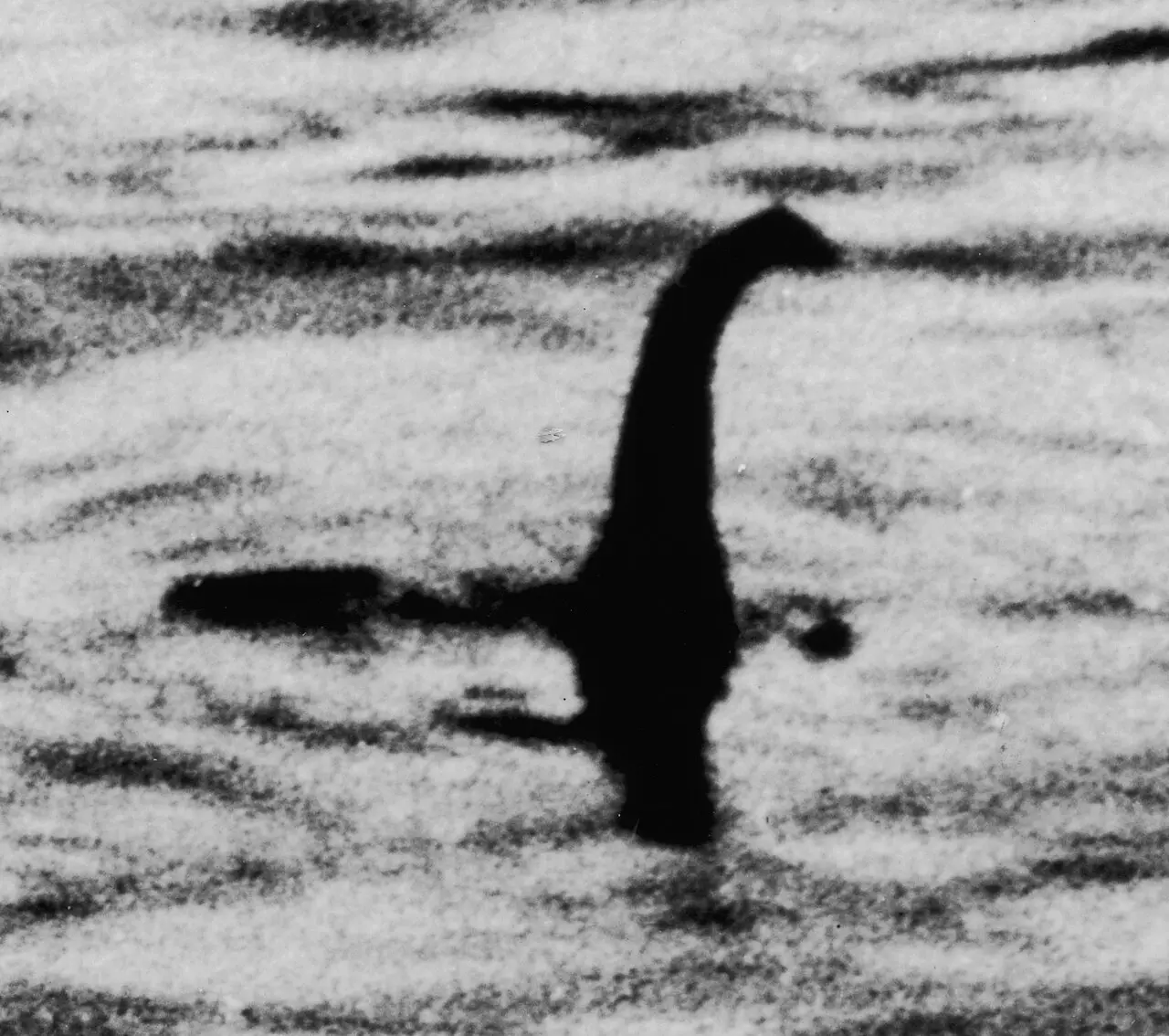
- The famous 1934 'Surgeon's Photograph' was exposed in 1994 as a hoax: a model head and neck mounted on a toy submarine.
- Operation Deepscan's 1987 sonar sweep logged three unexplained deep contacts, but no search has found anything confidently identified as a giant animal.
- A 2018 environmental DNA survey of about 250 water samples found no reptile DNA at all, but eel DNA almost everywhere in the loch.
- Acoustic surveys suggest only 17 to 24 tonnes of open-water fish, enough to feed roughly two tonnes of predators in the whole loch.
There is no good evidence that a monster lives in Loch Ness. More than 90 years of searching, from telescope watches to sonar curtains to a census of the DNA floating in the water, has turned up fish, plenty of eels and a few puzzling echoes, but no large unknown animal. The most famous photograph of Nessie, meanwhile, turned out to be a toy. What the hunt has produced instead is a remarkably detailed portrait of a cold, deep Highland loch, and a case study in how people see what they expect to see.
What is the evidence for the Loch Ness Monster?
The case for Nessie has always rested on three things: what people say they saw, what cameras seem to show and what sonar occasionally picks up. Each has a weakness. A sighting cannot be tested after the fact. The best-known photograph was staged. Sonar contacts have been real but fleeting, and none has been tied to a large animal. What has never turned up is anything physical. In all the decades of searching, nobody has produced a carcass, a bone or a scrap of tissue from an unknown creature in the loch.
How did a Highland loch get a monster in 1933?
Tales of a beast in the area reach back to a life of St Columba, written about a century after the Irish monk's death, which describes him driving off a creature in the River Ness. Sceptics point out that it is a saint's biography packed with miracles, and that the encounter happens in the river rather than the loch. The modern legend has a much clearer starting date. In 1933 a new road along the northern shore opened the loch up to passing drivers. On 2 May the Inverness Courier carried a report that Aldie Mackay, who managed a hotel in Drumnadrochit, and her husband had seen a large animal in the loch; the article was written by Alex Campbell, the paper's freelance correspondent. That summer a Londoner, George Spicer, described an animal crossing the road in front of his car. By the end of the year tourists were camping on the shores.
The Daily Mail hired a big-game hunter, Marmaduke Wetherell, who soon announced that he had found giant footprints. Scientists at the Natural History Museum concluded they had been made with a hippopotamus foot, probably a stuffed one. Then, on 21 April 1934, the same newspaper published the image that became Nessie's portrait: a slender neck and small head rising from rippled water, credited to a respectable doctor, Robert Kenneth Wilson. The "Surgeon's Photograph" was finally exposed in 1994 as a toy submarine topped with a sculpted head and neck, a hoax traced back to Wetherell's circle.
What did sonar sweeps and DNA tests find?
Through the 1960s and 1970s, volunteers watched the surface with binoculars and telescopes for weeks at a stretch and recorded nothing compelling. So the searchers went underwater. In October 1987 Operation Deepscan, directed by Adrian Shine, who runs the Loch Ness Project, sent 20 or more boats fitted with echo sounders down the loch in a slow-moving line, a sonar curtain that swept its length over two days. The crews logged three deep contacts that were stronger than any fish echo and could not be found again. They are still unexplained, with debris, temperature layers in the water and a stray seal all suggested. Nothing found in that sweep, or any since, has been convincingly read as a giant animal. In 2003 a team working for the BBC scanned the loch with 600 separate sonar beams guided by satellite navigation. The team's only confirmed target was a buoy it had moored as an equipment test. The most decisive test came from the water itself. Animals constantly shed traces of their DNA through skin cells, mucus and waste, so a water sample is a rough register of what lives nearby. In 2018 a team led by Neil Gemmell, a geneticist at New Zealand's University of Otago, collected about 250 samples from the loch's edges, its centre and its depths. The results, announced in September 2019, contained no reptile DNA whatsoever, and no trace of sharks, catfish or sturgeon, all of which had been floated as Nessie candidates. What the samples did hold was eel DNA at almost every site, "a very significant amount", in Gemmell's words. DNA cannot reveal how large those eels are, so a giant eel cannot be ruled out entirely, although Gemmell noted that an eel of the 4-metre length some witnesses describe would sit far outside the normal range. One recent big push came in August 2023, when the Loch Ness Centre and the volunteer group Loch Ness Exploration staged the largest surface search in more than 50 years, adding thermal-imaging drones and an underwater microphone. Volunteers listening on the hydrophone heard a few unexplained "gloops". Nothing else emerged.
Could a large animal really live in Loch Ness?
The loch is big enough to make the question feel reasonable. It runs for about 36 kilometres along the Great Glen Fault, drops to more than 220 metres and holds roughly 7.4 cubic kilometres of water, more fresh water than all the lakes of England and Wales put together. Size is not the same as food, though. Acoustic surveys put the fish living in the open water at between 17 and 24 tonnes in total. Applying the ecologist's rule of thumb that predators weigh no more than about a tenth of their prey, Adrian Shine has calculated that the whole loch could support roughly two tonnes of predator. Divide that among ten animals, close to the bare minimum for a population that could persist, and each would weigh about 200 kilograms, a fraction of the bulk witnesses describe. Time is the other obstacle. Through the last ice age the Great Glen lay buried under a glacier, and the open water seen today has existed for only about ten millennia. Plesiosaurs, the long-necked marine reptiles Nessie is so often drawn as, disappeared about 66 million years ago. And a lone survivor will not do: anything seen in 1933 and still seen today would need a breeding population, every member of which, if reptilian, would have to surface regularly to breathe.
Why do people keep seeing the Loch Ness Monster?
Adrian Shine, who has spent five decades studying the loch, attributes most sightings to ordinary things. Boats using the Caledonian Canal, which runs through Loch Ness, throw off wakes, and a wake crossing in front of an observer can look like a row of solid black humps. On a flat calm surface people lose the cues they need to judge distance, and without distance they cannot judge size. Waterbirds hunting on still water explain many of the long-necked reports. Expectation fills the gaps. During the 2003 survey, researchers raised a fence post out of the water in full view of a coach party of tourists. Most described a square-shaped object, but when asked to sketch it, several drew a monster's head. That is the difference between Nessie and phenomena such as the Hessdalen lights, where instruments have recorded something real that still needs explaining. At Loch Ness, each improvement in the instruments has left less to explain. The legend endures anyway, helped by the visitors who pass through the Loch Ness Centre at Drumnadrochit. Nessie lives where the evidence is weakest: on the surface, in wakes, birds and half-seen shapes at a distance nobody can judge. Underneath, in the sonar records and the DNA, the loch has given a clear and consistent answer. It is home to fish, a great many eels and a remarkably persistent idea.
Frequently asked questions
Has anyone found real evidence of the Loch Ness Monster?
No. Sightings cannot be tested, the most famous photograph was a hoax, and sonar sweeps and a 2018 DNA survey found nothing that points to a large unknown animal.
What did the Loch Ness DNA study find?
A team led by geneticist Neil Gemmell, from New Zealand's University of Otago, found no DNA from reptiles, sharks, catfish or sturgeon in about 250 water samples, but a very significant amount of eel DNA. DNA cannot show how big those eels are.
Was the Surgeon's Photograph fake?
Yes. The 1934 picture, credited to a respected doctor, was revealed in 1994 to show a toy submarine carrying a sculpted head and neck.
Sources
- Loch Ness Monster DNA study reveals ‘plausible’ explanation for sightings, BBC Science Focus Magazine
- Loch Ness Project: Operation Deepscan, Loch Ness Project
- Loch Ness monster is sighted, Sky HISTORY
- The Surgeon’s Photo, Museum of Hoaxes
- Underwater Discoveries - News Archive July - December 2003, Morien Institute