Lena Pillars: Siberia's Ancient Stone Cathedrals
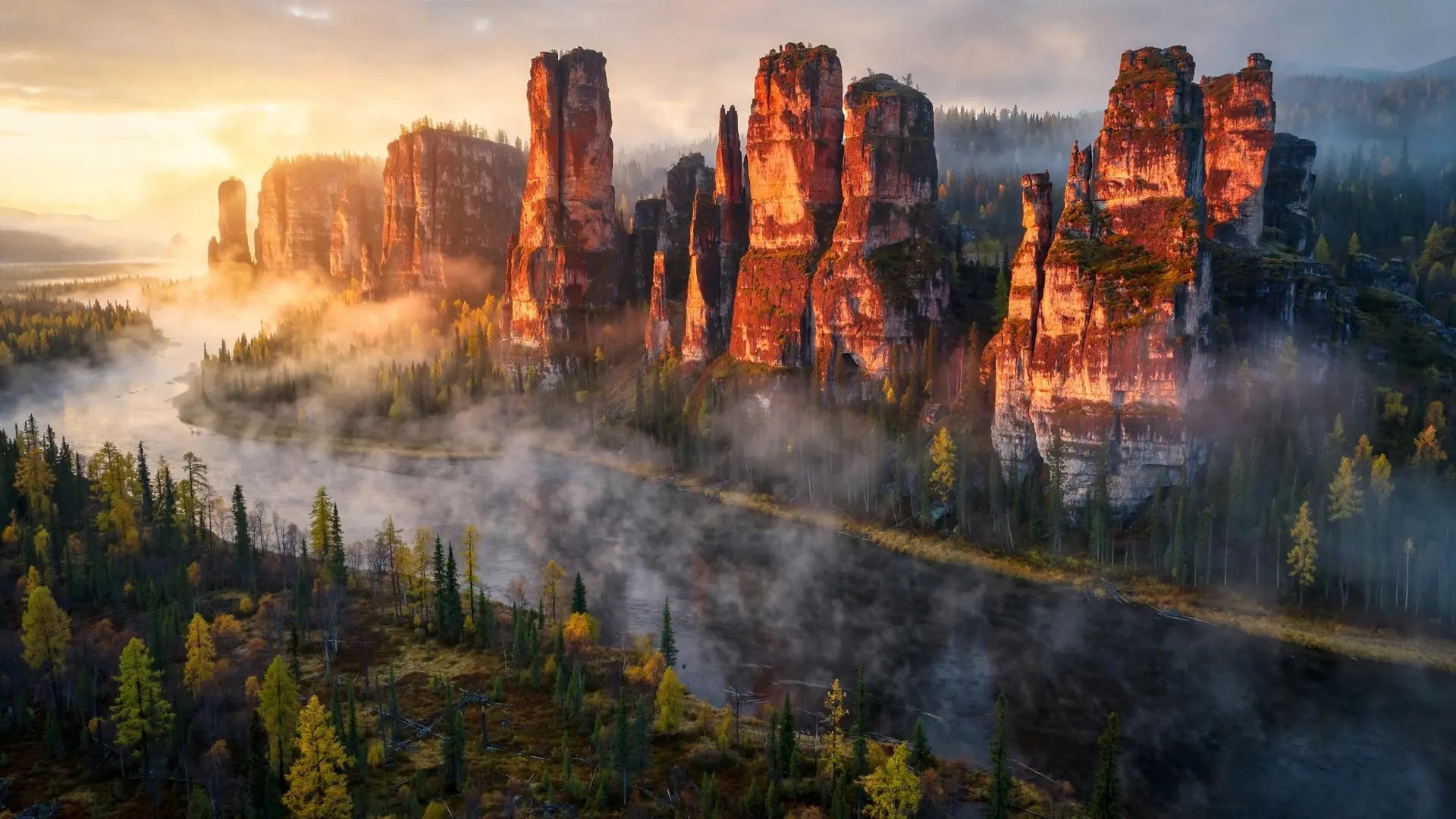
Along Siberia's Lena River stand limestone towers up to 300 metres tall, the fossilized remains of a Cambrian reef. Ice, water and eons made them.
Key takeaways
- The Lena Pillars are 150–300 metre towers of Cambrian limestone and dolomite along Siberia's Lena River, formed over 500 million years ago.
- They are the fossilized remains of an ancient reef that preserves trilobites, archaeocyathids, and stromatolites from the Cambrian Explosion.
- Freeze-thaw cycles in temperatures swinging from −60°C to +40°C cracked the rock into pillars over millions of years.
- The site was inscribed on the UNESCO World Heritage List in 2012 under criterion (viii), and the park covers 1,387,000 hectares.
- The pillars sit about 180 kilometres from Yakutsk in the Sakha Republic, reachable mainly by river cruise.
Rising up to 300 metres above Siberia's Lena River stand limestone towers like a petrified reef — because that is precisely what they are. The Lena Pillars are the fossilized remains of a Cambrian reef more than 500 million years old, split into columns by millions of years of freezing and thawing. In 2012, UNESCO added them to the World Heritage List for their geology alone.
What exactly are the Lena Pillars?
The pillars are a series of steep cliff belts and spires of limestone and dolomite karst standing along some 250 kilometres of the Lena River's middle course in the Sakha Republic (Yakutia), in eastern Siberia — plus a stretch along the Buotama, a parallel tributary. The highest density of towers rises between the villages of Petrovskoye and Tit-Ary, about 180 kilometres — less than a day's boat ride — south of Yakutsk, one of the coldest major cities on Earth. The rock itself is layered: alternating bands of limestone, dolomite, marlstone, and slate from the Lower and Middle Cambrian. The pillars reach 150–300 metres in height, glowing amber and crimson under the Arctic sun. The protected Lena Pillars Nature Park around them spans 1,387,000 hectares — a wilderness of taiga forest, tundra, and riverine wetlands that also shelters bears, elk, over 100 bird species, and 21 species of extremely rare plants. Reaching them is half the adventure. Few modern amenities exist in this part of Russia; most visitors come by river cruise out of Yakutsk, and the hiking trails are famously steep and precarious. In winter, temperatures plunge toward −60°C; in summer they can reach +40°C. That hundred-degree swing is not just weather — it is the sculptor that made the pillars.
How did ice carve a 500-million-year-old seabed into towers?
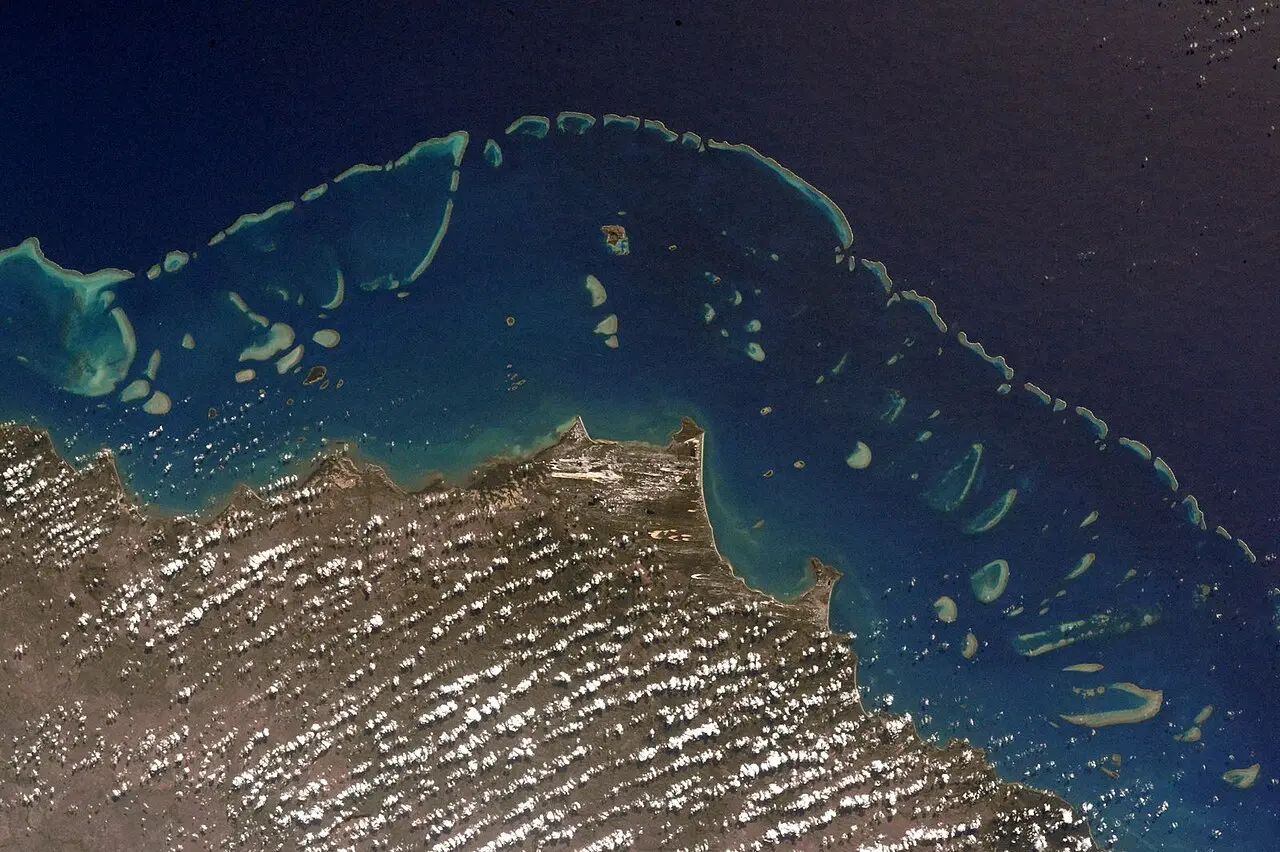
The story starts in the Cambrian seas. More than 500 million years ago, this part of Siberia lay beneath warm, shallow tropical waters teeming with marine life. Limestone and dolomite accumulated on the seafloor — in places building up an enormous reef, comparable in scale to today's Great Barrier Reef. Tectonic forces eventually lifted the seabed into dry land.
Then came the ice. The sculpting process that split the massif into individual towers is called frost shattering, or gelifraction: water seeps into small fissures in the limestone, freezes, and expands, prying the rock apart grain by grain. Repeat that across millions of winters in a permafrost landscape — where moisture gets trapped in the active layer above the permanently frozen ground, keeping the cracks saturated — and the rock splits along vertical joints into isolated columns. The Lena River did the rest, exploiting zones of weakness — bedding planes and fractures — to wash away the softer material between the resistant pillars. That is why the towers stand right at the river's edge: water, in liquid and frozen form, has been their carver for the whole of their existence.
Why do scientists call this a fossil library?
UNESCO inscribed the site under natural criterion (viii) — major stages of Earth's history — largely because of what is inside the rock. The pillars hold one of the world's most continuous and well-preserved sequences of Lower Cambrian strata, containing an exceptional range of skeletal and soft-bodied fossils. The finds include trilobites and brachiopods preserved in shale seams, early echinoderms and archaeocyathids — sponge-like reef builders that were among the first animals to build reefs — in the limestone beds, and stromatolites recording ancient microbial mat communities. Together they form a chronological map of the Cambrian Explosion, the burst of life around 541 million years ago when most major animal phyla first appeared in the fossil record. Prehistoric mammals left their traces too: the area holds burial places of mammoth, bison, the Lena horse, and the woolly rhinoceros. And the park hides a stranger geological secret — the tukulans, isolated patches of wind-blown sand ridges in the middle of the Siberian taiga, small desert landscapes surrounded by forest.
What else lives in the stone cathedral's shadow?
The pillars do not stand alone. The Lena Pillars Nature Park stretches far beyond the rock belts, across a mosaic of ecosystems — taiga forest, tundra plains, and riverine wetlands — shaped by one of the most extreme continental climates on Earth. The Lena River itself, flowing more than 4,400 kilometres from the Baikal Mountains to the Arctic Ocean, sets the rhythm of life here, and its broad valley supports communities of Yakut (Sakha) and Evenki peoples who have lived along its shores for centuries. The park's fossil record is matched by its living one. Alongside bears, elk, and more than a hundred bird species, the valley's cliffs shelter 21 species of extremely rare plants, and the river hosts over 31 species of fish. The Tukulan sands — those wind-blown desert ridges stranded in the middle of Siberian forest — developed independently of any surrounding desert, small self-contained worlds of sand practically unfixed by vegetation. Prehistoric mammals left their bones here too. Scientists have uncovered burial places of mammoth, bison, the Lena horse, and the woolly rhinoceros among the gorges carved by freeze-thaw cycles. The site is, in effect, a double archive: marine fossils from half a billion years ago in the rock, and Ice Age giants in the sediments between the pillars.
How remote is the site?
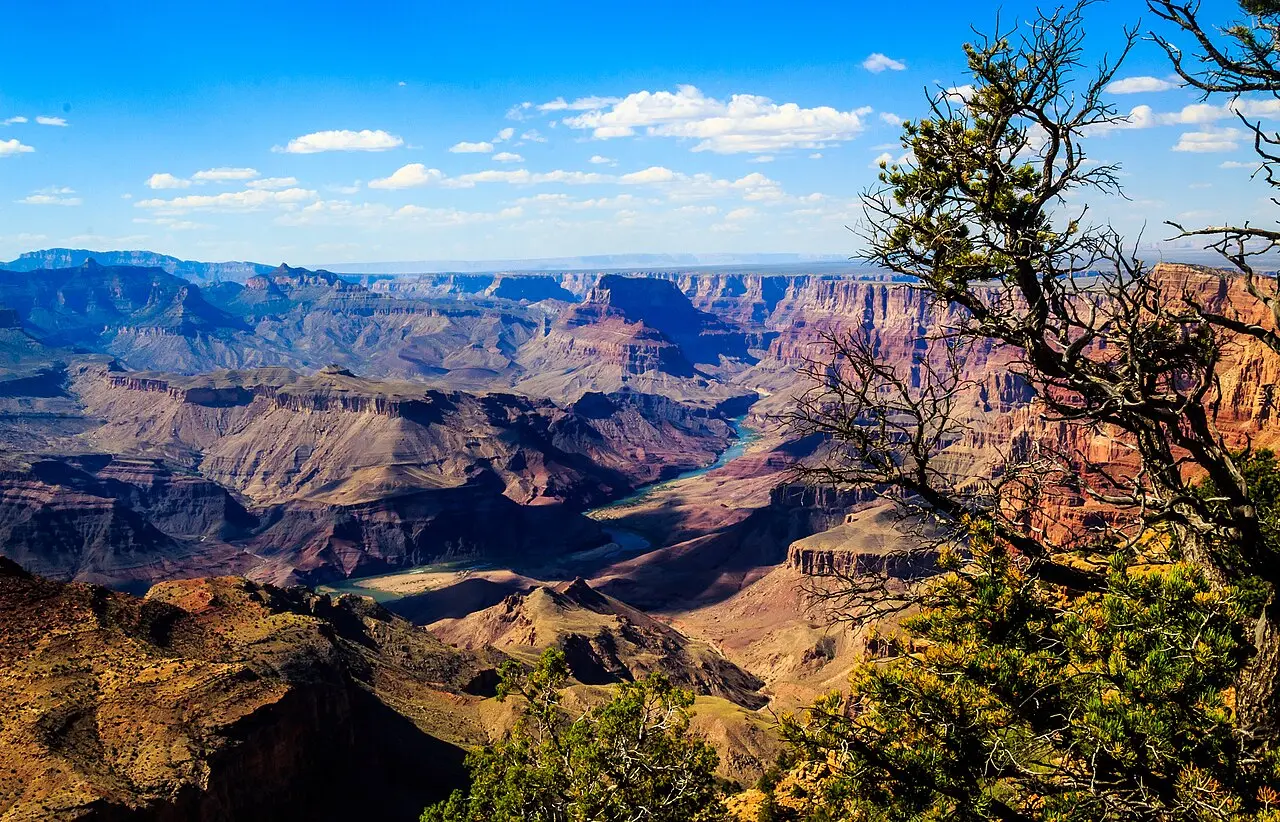
Very. The pillars' isolation is why they stayed unknown outside scientific circles for so long: Yakutsk itself requires a roughly seven-hour flight from Moscow, and from there visitors take a river cruise or a helicopter down the Lena. January in Yakutsk averages around −38.6°C, with extremes far lower. The reward for the journey is a landscape that feels older than the idea of travel — towers that watched the Cambrian seas die, outlasted the ice ages, and are still being carved, winter by winter, into the future. Siberia's stone cathedrals are a reminder that erosion can be an author. The Lena Pillars did not survive five hundred million years by resisting change — they became famous because change, in the form of water and ice, wrote them into columns. The river that carved them still runs at their feet, still working. If deep-time landscapes are your thing, the Danakil Depression offers Earth's most alien terrain, and the Grand Canyon tells its own deep-time story in stone.
Frequently asked questions
How were the Lena Pillars formed?
The pillars began as limestone and dolomite laid down in Cambrian seas more than 500 million years ago. After the seabed was uplifted, freeze-thaw cycles — water entering cracks, freezing, and expanding — split the massif into towers, while the Lena River carved away the softer surroundings.
How old are the Lena Pillars' rocks?
The rocks date to the Cambrian period, more than 500 million years ago. They preserve fossils from the Cambrian Explosion around 541 million years ago, when most major animal phyla first appeared in the fossil record.
Can you visit the Lena Pillars?
Yes, though it takes effort. The site lies about 180 kilometres south of Yakutsk in the Sakha Republic, and most visitors arrive by river cruise or helicopter. Hiking trails are steep, and few modern amenities exist in the area.