How Deep Did the Kola Superdeep Borehole Go?
The Kola Superdeep Borehole reached 12,262 metres in 1989 but never left the crust. Discover what the drill found, why heat stopped it, and why it matters.
Key takeaways
- The Kola Superdeep Borehole reached 12,262 metres (40,230 feet) in 1989, the greatest vertical depth ever drilled.
- Its shaft was only about 23 centimetres wide, yet it took nearly two decades of drilling to reach that depth.
- Rock samples showed no granite-to-basalt boundary where seismic surveys had predicted one, forcing geologists to rethink how they read earthquake waves.
- Water trapped in deep fractures, hydrogen gas, and microscopic fossils about two billion years old were among the unexpected finds.
- Heat of about 180 degrees Celsius, nearly double the forecast, made deeper drilling impractical, and work stopped in 1992.
The Kola Superdeep Borehole went down 12,262 metres (40,230 feet) below the surface of Russia's Kola Peninsula, reaching that mark in 1989. It remains the deepest vertical hole people have ever drilled, deeper than Mount Everest is tall, yet it stopped only about a third of the way through the crust beneath the site. The project never reached the mantle it was chasing, but the rock it brought back changed how geologists picture the deep Earth. That mismatch between ambition and outcome is what makes Kola worth revisiting. It was not a stunt, and it was not a hunt for oil or minerals. It was an attempt to replace guesswork with samples, and in several important ways the samples contradicted the guesses.
Why did Soviet scientists start drilling on Kola?
Before Kola, most of what geologists believed about the deep continental crust came from earthquake waves. When those waves speed up or slow down as they pass through the planet, researchers can infer where one kind of rock may give way to another. Inference, however, is not the same as holding the rock in your hand, and the Soviet programme set out to close that gap by drilling directly into ancient continental crust. The site was chosen with care. The Kola Peninsula, near Russia's border with Norway and well north of the Arctic Circle, sits on the Baltic Shield, a region of very old, stable crust. Planners reasoned that cold, ancient rock would warm more slowly with depth, giving the drill a better chance of going far before heat became unmanageable. Work began on 24 May 1970, in the middle of a Cold War rivalry that was pushing both superpowers to probe frontiers, upward into space and downward into the planet. The American counterpart, Project Mohole, had tried a different route, drilling through the thinner crust beneath the Pacific Ocean floor in the early 1960s before funding was cut in 1966. The Soviet team chose the opposite gamble: stay on land, drill straight down through thick continental crust, and learn whatever the rock revealed along the way. The original target was later raised to 15,000 metres, a goal the purpose-built Uralmash-15000 rig was named after, but the science, not the round number, was the point.
How do you drill twelve kilometres straight down?
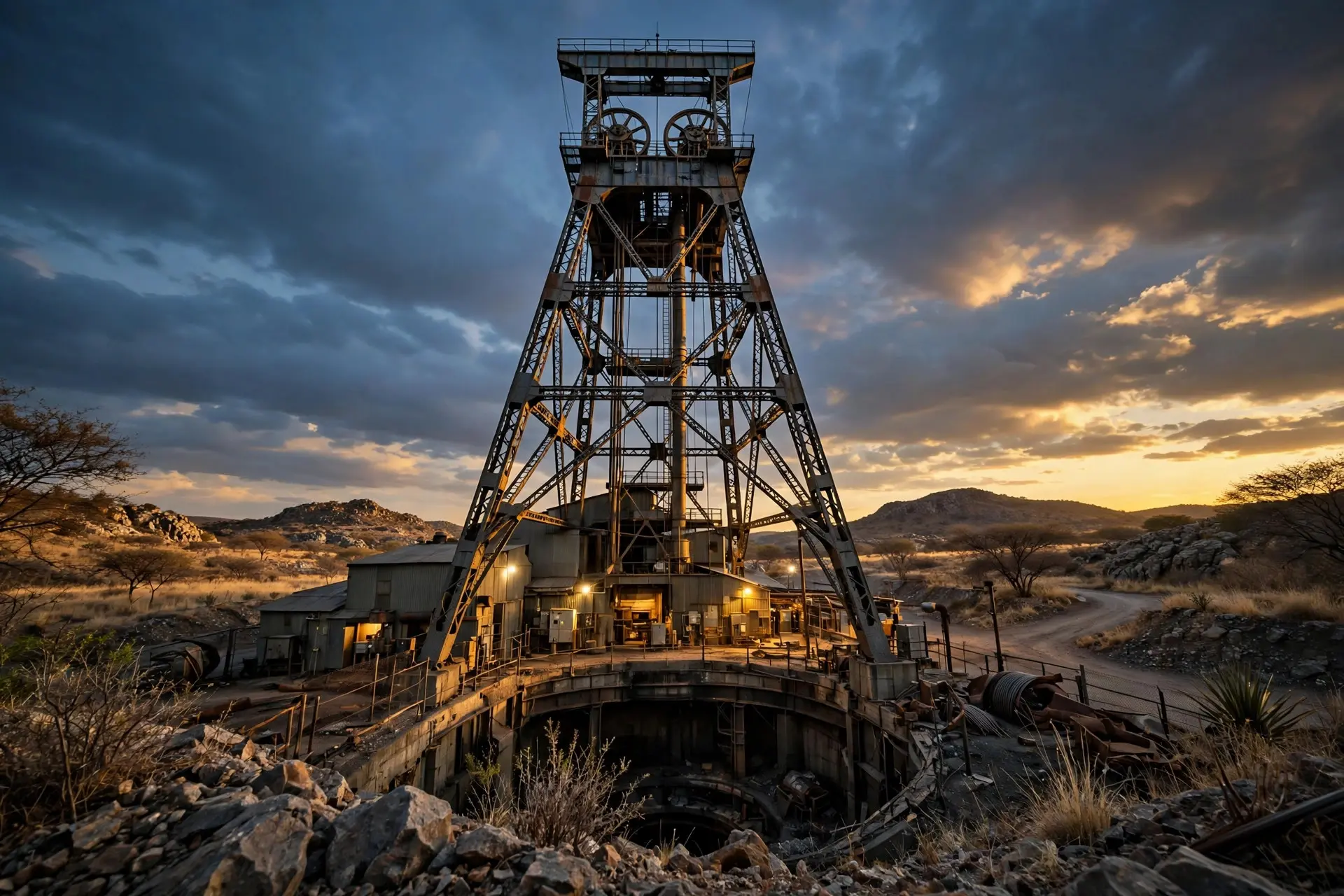
Picture the scale first, because it corrects the most common mental image. Kola was not a pit you could peer into, and nobody could have climbed down it. At its widest, the shaft measured only about 23 centimetres across, roughly the width of a dinner plate, while the drill string stretching down it weighed an enormous amount and grew harder to control with every added section.
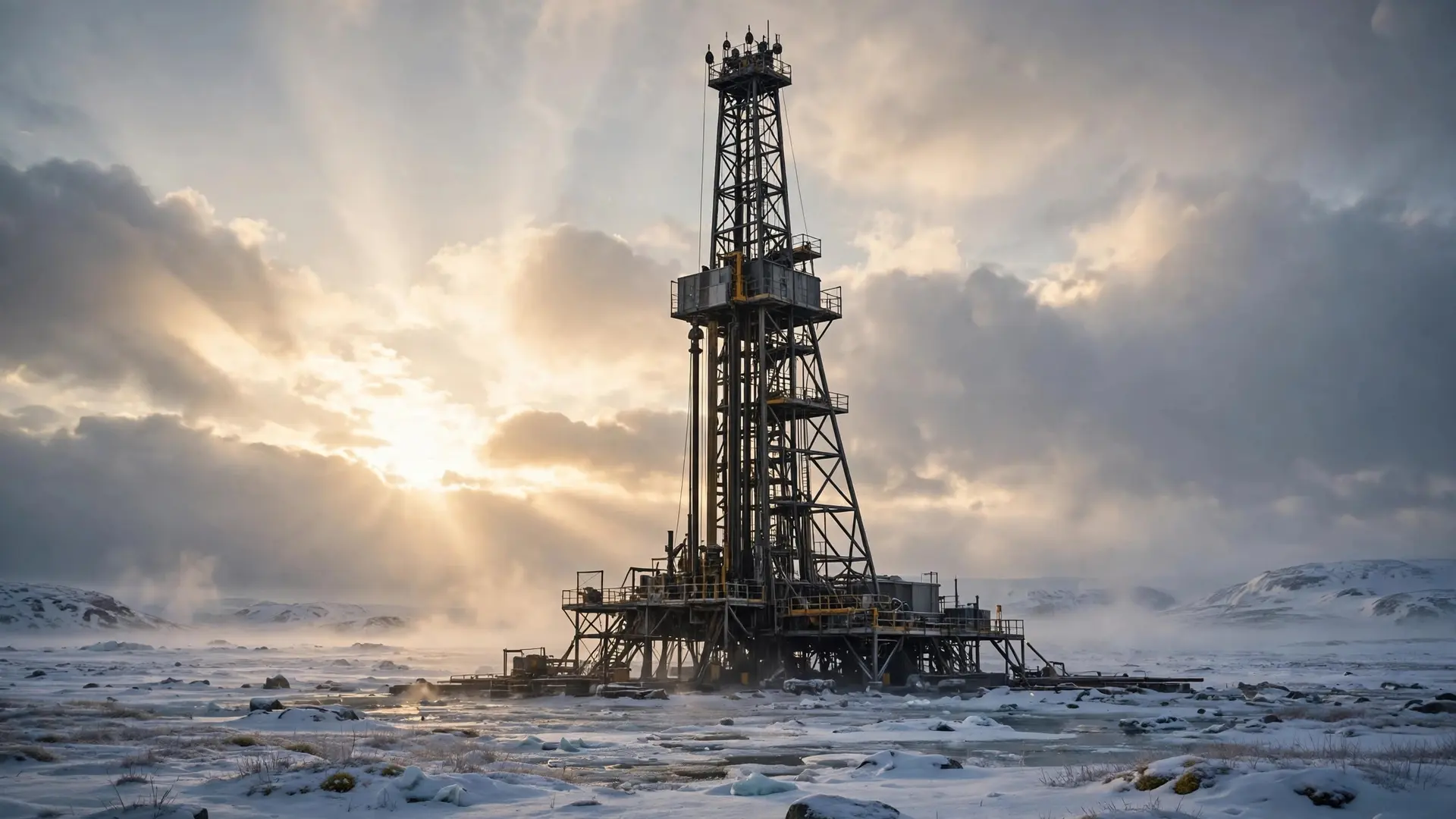
A conventional rig spins the whole pipe from the surface, but over many kilometres a long steel string twists, stores energy like a wound spring, and can fail under its own torque. The Soviet answer was a turbodrill: only the cutting bit at the bottom rotated, driven by drilling mud pumped down the hollow pipe under great pressure, while the pipe itself slid downward without spinning. Whenever a bit wore out, the crew had to haul the entire string up section by section, swap the bit, and feed it all back down again, a round trip that could swallow most of a working day. Progress was slow and frequently undone. The hole passed the previous world record, held by a gas well in Oklahoma, in June 1979, and pushed past 12,000 metres in 1983. Then, after a long pause for visits and celebrations, disaster struck: in September 1984 a five-kilometre length of drill string twisted off and stayed stuck in the hole. Engineers abandoned that section and, in 1986, started a fresh branch from around 7,000 metres down. Kola is therefore better understood as a family of branching shafts than as one straight tube, and its deepest branch, SG-3, is the one that set the record in 1989.
What surprised scientists in the core samples?
The biggest surprise was something the drill never found. Seismic readings had suggested that the rock would change from granite to basalt at roughly seven kilometres down, a boundary sometimes called the Conrad discontinuity. The core samples told a different story: granitic rock continued past that depth, giving way lower down to gneiss, a metamorphic rock that was still unmistakably continental in character. The change in seismic wave speed was real, but it did not mark a change of rock type. Instead, researchers concluded, it reflected rock that had been fractured, heated, and altered, with its physical properties changed enough to bend the waves differently. Water provided the second shock. Conventional wisdom had held that crushing pressure a few kilometres down would squeeze every crack shut, leaving the deep crust essentially dry. Instead, the drill met salty water moving through fractures several kilometres beneath the surface. The leading explanation is that the water had been released from minerals themselves as heat and pressure broke down their crystal structures, then collected in cracks beneath less permeable rock. In other words, the deep crust leaks, at least in places, and fluid pathways exist where textbooks had assumed solid, sealed stone. The samples also carried gas and ancient life. Drilling mud returning to the surface fizzed with hydrogen, alongside helium, nitrogen, carbon dioxide, and other gases, a sign of chemical reactions between hot water and minerals deep underground. And in rock roughly two billion years old, recovered from several kilometres down, researchers found microscopic fossils of plankton-like organisms, around two dozen kinds preserved despite the age and heating of their surroundings. Those fossils were not living creatures at the bottom of the hole; they were remnants of organisms buried in sediments long ago, then carried deep and transformed as the crust itself changed around them.
Why did heat, not depth, end the project?
Heat was the wall the project could not drill through. Planners had expected temperatures near 100 degrees Celsius at the target depth. Instead, thermometers near the bottom read about 180 degrees Celsius, close to the temperature of a domestic oven, and the temperature was climbing faster with depth than the models had predicted. Hot rock under immense pressure stops behaving like the brittle stone found near the surface. It softens and creeps, slowly squeezing back into the freshly cut shaft, while bits and other equipment wear out, warp, or fail far more quickly. Each additional metre therefore cost more time, more equipment, and more money than the last. By the early 1990s, that physical barrier met a political one: the Soviet Union dissolved at the end of 1991, and the funding that had sustained a two-decade scientific marathon dried up. Drilling on the deepest branch stopped in 1992, a later and shallower branch was abandoned in 1994 for lack of money, and the site was eventually left derelict, its opening capped with a welded metal plate. The closure was ordinary housekeeping for a dead borehole, not a cover-up, and the popular story of recorded screams from below has no credible evidence behind it. One distinction is worth keeping straight. Later oil wells have drilled longer total paths, because they curve sideways for miles underground, but none has gone deeper straight down than Kola. Length along a curving bore and vertical depth below the surface are different records, and Kola still holds the second one.
What does Kola still teach us?
Kola's lesson is less about a record than about method. Remote sensing can map the planet's interior in broad strokes, but it can also mislead, and only a physical sample can settle what a seismic signal really means. The same caution applies to reading the crust elsewhere, including in collision zones such as the Himalayas, where seismic maps also need ground truth before they can be trusted. The missing basalt boundary, the water in fractured rock, and the gas-rich mud all forced geologists to treat the crust as a more dynamic, fluid-bearing system than the neat layered diagram in older textbooks suggested. The scale is humbling too. A shaft deeper than any mountain is tall still amounts to a scratch on the planet: it penetrated roughly a third of the local crust and a tiny fraction of the distance to Earth's centre, which lies more than 6,000 kilometres below the surface. Compared with the ocean's deepest point, which plunges past 10,000 metres below sea level, Kola's achievement looks different again, a reminder that human depth records in rock and in water measure very different kinds of frontier. Yet for all its limits, the hole gave science something no surface instrument could: real pieces of the deep crust, pulled from kilometres down, still being studied long after the rig itself fell silent.
Frequently asked questions
How deep did the Kola Superdeep Borehole go?
Its deepest branch, SG-3, reached 12,262 metres (40,230 feet) in 1989. That is deeper than Mount Everest is tall, and no hole drilled since has gone deeper straight down.
Did the Kola borehole reach the mantle?
No. The drill travelled only about a third of the way through the continental crust beneath the site, so it never came close to the mantle below.
Why did drilling stop?
Rising heat was the main physical barrier: rock near the bottom reached about 180 degrees Celsius, softening equipment and squeezing the shaft shut. Funding also collapsed as the Soviet Union dissolved.
Is the story about screams from the borehole true?
No. The tale of a microphone picking up screams underground is a hoax with no support in any credible scientific report, and the narrow, fluid-filled shaft could not have produced such a recording.
Sources
- Kola Superdeep Borehole: Why Scientists Sealed the Deepest Hole Ever Dug, HowStuffWorks
- Ask Smithsonian: What's the Deepest Hole Ever Dug?, Smithsonian Magazine
- Kola Superdeep Borehole: The Deepest Hole on Earth, Geoscopy
- What Is The Kola Super Deep Borehole?, WorldAtlas