How Deep Is Mponeng, the World's Deepest Gold Mine?
Mponeng mine in South Africa descends nearly 4 km (2.5 miles) — but how deep is the deepest mine in the world, and how do miners survive 60°C rock?
Key takeaways
- Mponeng descends about 3.9 km (2.4 miles), making it the deepest operational mine on Earth.
- Its 380 km (236 miles) of tunnels are as long as the entire New York subway system.
- Rock at the deepest levels reaches 60°C (140°F); ice slurry cools tunnels to 30°C (86°F).
- Harmony Gold's FY2026 output was 307,392 ounces at a rich 10.67 grams per tonne.
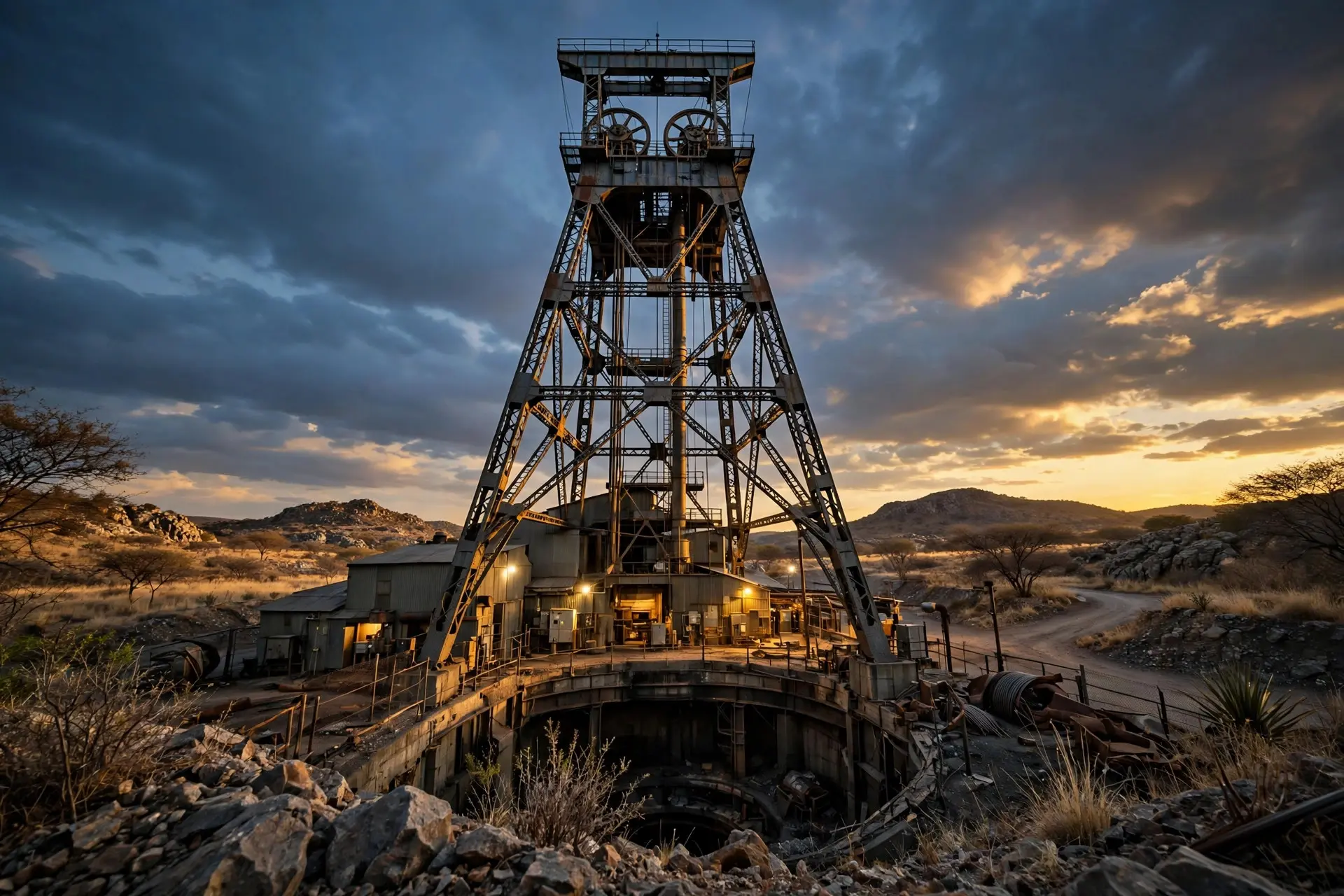
Mponeng plunges about 3.9 km (2.4 miles) straight down into South Africa's crust, making it the deepest operational mine on Earth. The rock at its lowest levels hits 60°C (140°F), yet thousands of miners work down there every day, and the mine's 380 km (236 miles) of tunnels would stretch as far as the entire New York subway system.
- The deepest workings at Mponeng sit roughly 3.9 km below the surface, and the mine is officially the world's deepest. At that depth, the ride down takes around an hour.
- Mponeng has 380 km (236 miles) of underground tunnels, a network as long as the New York subway and 140 km (87 miles) longer than the city's underground railway tracks.
- Virgin rock temperatures reach 60°C (140°F). One of the world's largest refrigeration plants freezes thousands of tonnes of ice slurry daily to cool working areas to 30°C (86°F).
- Workers reach the bottom on multi-stage hoists, because four kilometres is too long for the steel cables that normally run mine lifts.
- In financial year 2026 the mine produced 307,392 ounces of gold at 10.67 grams per tonne, with Harmony estimating 4.5 million ounces of reserves still in the ground.
- Mponeng means "look at me" in Sesotho, a name it has carried since 1999.
How deep is Mponeng, really?
About 3.9 km (12,795 feet) at its deepest, with active extraction happening at roughly four kilometres. The trip from the surface cage to the lowest level takes over an hour, dropping miners through layer after layer of the Witwatersrand Basin, the geological formation that started South Africa's gold rush in 1886.
The number moves a little year to year as new levels open. Harmony, which has owned the mine since 2020, approved funding in 2024 to push deeper again and keep Mponeng running into the late 2030s and early 2040s, so the record is unlikely to be beaten by any other mine soon. Engineering News reported in 2026 that Mponeng, described as the world's deepest mine, is the primary driver of Harmony Gold's record underground margins.
How big is Mponeng's tunnel network?
The mine holds 380 km (236 miles) of tunnels, roughly as long as the New York subway system. Since the Daily Investor notes the tunnels run 140 km (87 miles) longer than the city's underground railway tracks, we can derive that NYC's underground track is about 240 km (149 miles). Here is how the two networks compare:
| Network | Length | How we know |
|---|---|---|
| Mponeng's tunnels | 380 km (236 miles) | Reported by Daily Investor, 2026 |
| New York subway (whole system) | ~380 km (~236 miles) | Described as "as long as" Mponeng's network |
| NYC's underground railway tracks | ~240 km (149 miles) | Derived: 380 km minus 140 km |
| Method: the 380 km figure comes directly from reporting; the 240 km figure is simple subtraction from the "140 km longer" comparison. For readers in the US, picture this: you could lay the mine's tunnels end to end from Manhattan to well past the Connecticut border. |
Why is mining four kilometres down so dangerous?
Depth creates three brutal problems: heat, pressure and seismicity. At nearly four kilometres, the earth itself is hot, and the weight of the rock above squeezes the tunnels constantly. The strangest detail is that ordinary concrete is unusable down there. The rock shifts so much under tectonic stress that concrete would shatter, so engineers hold the tunnels open with steel mesh pinned by flexible diamond-strand tendon rock bolts and anchor cables that stretch under seismic shock. That image captures Mponeng's whole philosophy: nothing rigid survives at these depths, so everything is designed to flex. Ventilation is the other battle. In FY2026 the operation also had to solve underground ventilation constraints, and the company called ventilation supply its main operational constraint. The air has to be cooled, cleaned and pushed through hundreds of kilometres of passages, all while the rock radiates heat like an oven.
How does the ice-slurry cooling work, step by step?
Mponeng runs one of the largest refrigeration complexes in the world, and its daily routine looks like this:
- Freeze it on the surface. Industrial chillers freeze thousands of tonnes of water into ice slurry each day.
- Drop it down the shaft. The slurry travels down vertical pipes into underground reservoirs.
- Swap the heat. Heat exchanger networks pull heat out of the mine air and tunnel walls, melting the ice in the process.
- Breathe easier. The cooled air, brought down from 60°C (140°F) to about 30°C (86°F), circulates through working areas via giant fans.
- Keep it moving. The system runs constantly: fresh ice goes down every day, and the cycle never stops. This is the single most expensive part of ultra-deep mining. Without it, the working temperature would kill within hours.
What most people get wrong about Mponeng
"It's just a deeper version of a normal gold mine." Not really. Mponeng started life in 1986 as the Western Deep Levels South Shaft, seven years after the first gold was produced, and a second shaft had to be sunk just to push past the initial three-kilometre limit. The techniques, the cooling plant, the multi-stage hoists, none of them existed at this scale before. "Deeper always means richer." The opposite is often true. Ultra-deep mining is so expensive that the mine survives only because its ore is unusually rich: a recovery grade above seven grams per tonne, with FY2026 hitting 10.67 grams. Ordinary gold mines run grades a fraction of that. "The deepest hole ever dug by humans." That title belongs to the Kola Superdeep Borehole, drilled 12.3 km (7.6 miles) down. But Kola is a sealed scientific hole, not a mine. For a place where people still work underground every day, nothing on the planet beats Mponeng. "It will run forever." The 2024 extension funding stretches operations into the late 2030s and early 2040s, and reserves are estimated at 4.5 million ounces. But Harmony is investing R3.1 billion in the 2027 financial year just to reach a steady state of 250,000 ounces a year, a sign of how hard-won each ounce has become.
Why Mponeng matters
Mponeng is the limit case of industrial mining: the deepest people have ever gone to extract anything from the earth, kept alive by ice slurry, flexible steel and relentless engineering. Compare it with the deepest cave on Earth or the deepest point on dry land and one thing stands out: the others are natural formations we explored; Mponeng is a place we built, four kilometres down, and chose to keep working. How we made this article: FactSpire researched and drafted it with AI assistance and checked every fact against the sources listed above.
Frequently asked questions
How deep is Mponeng mine exactly?
Mponeng's deepest workings reach about 3.9 km (2.4 miles) below the surface in South Africa's Gauteng province, with operations pushing toward four kilometres. The ride from the surface to the bottom takes around an hour through multi-stage hoists.
Is Mponeng deeper than the Kola Superdeep Borehole?
No. The Kola Superdeep Borehole drilled 12.3 km (7.6 miles) down, but it is a sealed scientific drill hole, not a mine. Mponeng is the deepest place where people still work and extract ore every day.
How do miners survive the heat in Mponeng?
One of the world's largest refrigeration complexes freezes thousands of tonnes of ice slurry daily, which is pumped underground and used in heat exchangers to bring tunnel temperatures down from 60°C (140°F) to 30°C (86°F).
Who owns Mponeng mine?
Harmony Gold has operated Mponeng since 2020, when it acquired AngloGold Ashanti's South African assets. The company approved major funding in 2024 to extend the mine's life into the late 2030s and early 2040s.
Sources
- South African gold mine has more tunnels than the entire New York subway system, Daily Investor
- Harmony's underground gold mines producing at 38% free cash margin, Engineering News
- Exploring Mponeng: The World's Deepest Mine in South Africa, Babcock International