Which Island Rose From the Atlantic Ocean in 1963?
On November 14, 1963, a volcanic eruption broke the surface of the North Atlantic and built Surtsey, an island almost no one has ever been allowed to visit.
Key takeaways
- Surtsey broke the ocean surface on November 14, 1963, after an eruption that began 130 metres below sea level.
- The eruption ran until June 5, 1967, building an island of 2.7 square kilometres from about 1.1 cubic kilometres of volcanic material.
- Iceland made Surtsey a nature reserve in 1965, while it was still erupting, and UNESCO listed it as a World Heritage Site in 2008.
- Life arrived on its own: the first plant appeared in 1965, and 74 vascular plant species had been counted by 2015.
- Waves have cut the island to about half its largest size, but its hard lava core should keep part of it above water for many decades.
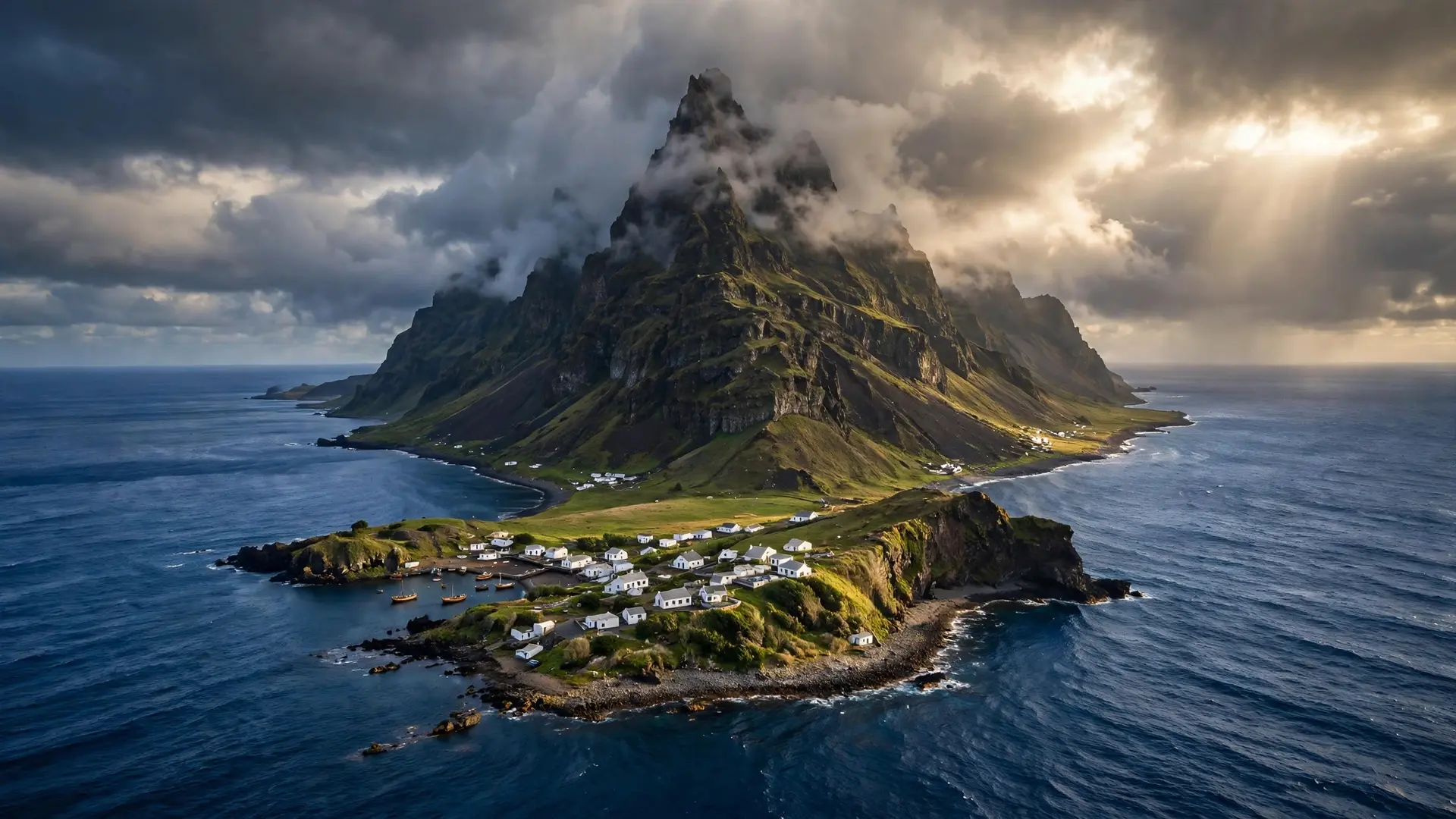
Surtsey, off the south coast of Iceland. A submarine eruption that began 130 metres (427 feet) below the sea broke the surface on November 14, 1963, and kept building for three and a half years until the island covered 2.7 square kilometres (1.0 square mile). Iceland protected it from the day it appeared, and today only scientists may land there.
- The eruption began 130 metres below sea level and broke the surface on November 14, 1963, at 07:15 UTC.
- It produced about 1.1 cubic kilometres of volcanic material, 60 to 70 percent of it loose tephra.
- The island reached its largest size of 2.7 square kilometres when the eruption ended on June 5, 1967.
- Iceland declared Surtsey a nature reserve in 1965, and UNESCO listed it as a World Heritage Site in 2008.
- By 2004 the island held 60 vascular plant species, plus 75 bryophytes, 71 lichens and 24 fungi, and 89 bird species and 335 invertebrate species have been recorded there.
- Waves have cut the island to roughly 1.3 square kilometres, and it loses about 1 hectare a year.
How does an island rise out of the sea?
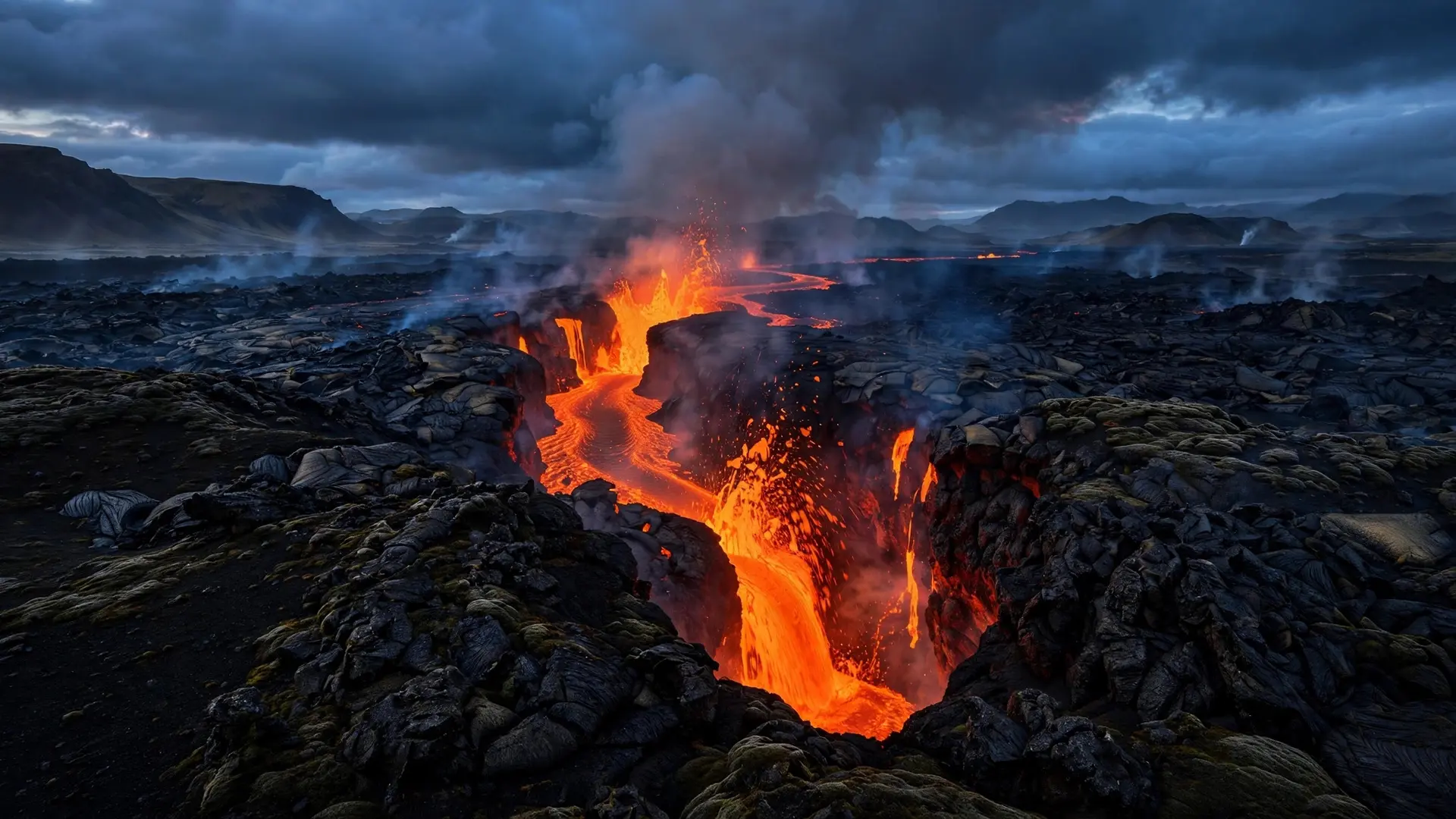
It starts with magma meeting cold water. The vents that built Surtsey sit on the Mid-Atlantic Ridge, the underwater seam where the North American and Eurasian plates pull apart. Magma rose from below and hit seawater at around 10 degrees Celsius (50 degrees Fahrenheit) while the magma itself was between 1,155 and 1,180 degrees Celsius. The contact flashed seawater to steam in violent bursts, a style of eruption now called Surtseyan after this very island. The eruption probably began days before anyone saw it. The sea floor at the site lies 130 metres down, deep enough that water pressure held the first explosions in check. Seismic stations picked up faint tremors from November 6 to 8, 1963, and on November 13 a fishing boat nearby measured sea temperatures 2.4 degrees Celsius higher than the surrounding water. The pile of volcanic rock was growing toward the surface, and once it got shallow enough, the explosions could no longer stay underwater. At 07:15 UTC on November 14, the cook of the trawler Isleifur II spotted a dark column of smoke rising from the sea to the southwest. The captain first thought a boat was on fire and turned to investigate. Instead the crew found black ash columns and explosive eruptions breaking through the waves. Within days the new land measured 500 metres long and stood 45 metres high. Within ten days it was 900 by 650 metres. By January 1964 it had grown to 174 metres above sea level. The early island was a loose heap of scoria and ash, and North Atlantic winter storms tore at it constantly. What saved it was a change in the eruption itself. In early April 1964 the growing pile sealed the vents from seawater, the explosions calmed, and lava began flowing from the western crater. That lava laid a hard cap up to 100 metres thick over the loose pile, armor that has held the island together ever since.
What happened in the first days?
| Date | What happened |
|---|---|
| November 6 to 8, 1963 | Seismic stations detect faint tremors southwest of Iceland |
| November 13, 1963 | A fishing boat records seawater 2.4 degrees Celsius warmer than nearby water |
| November 14, 1963 | The crew of the Isleifur II spots the eruption at 07:15 UTC, and Surtsey breaks the surface |
| November 24, 1963 | The island measures about 900 by 650 metres |
| January 1964 | The island reaches 174 metres above sea level |
| April 4, 1964 | Lava starts flowing and caps the loose ash pile |
| May 1964 | The first animal, a flying insect, is spotted |
| June 3, 1965 | The first vascular plant, a sea rocket, is found on the northern shore |
| 1965 | Surtsey becomes a nature reserve, while the eruption is still going |
| June 5, 1967 | The eruption ends, with the island at 2.7 square kilometres |
| 1970 | The first seabirds nest on the island |
| 1983 | Grey seals start breeding on the northern spit |
| 1986 | A large gull colony settles on the southern lava fields |
| 2008 | UNESCO adds Surtsey to the World Heritage List |
| Surtsey was not the only island the eruption made. Two smaller vents nearby built short-lived islands of their own. Syrtlingur appeared in May 1965, grew to 0.15 square kilometres, and vanished beneath the waves by October the same year. Jolnur formed in December 1965, reached 70 metres high, and was washed away by October 1966. A third feature, Surtla, never rose above the surface at all. None of them developed the lava cap that saved Surtsey, which is why only one of the four survived. |
How did life arrive on a brand-new island?
On its own, by wind, sea and bird. When the eruption ended, Surtsey was bare lava and ash, with no soil and no living thing. Scientists began watching almost at once, and the order of arrival has been recorded in unusual detail. Bacteria, fungi and cyanobacteria appeared first, around warm steam vents on the cooling lava. The first animal was a flying insect carried by the wind in May 1964, before the eruption had even finished. Plants came next, and the sea delivered the first ones. A sea rocket washed ashore and was found on June 3, 1965. Sea lyme grass followed in 1966, then oyster plant and sea sandwort in 1967. None of the earliest arrivals survived their first winter. The breakthrough came in the winter of 1968 to 1969, when sea sandwort became the first vascular plant to live through the cold and reproduce. Ten vascular plant species had arrived by the end of the first decade. By 2004 the count had reached 60, and by 2015 it was 74, about 15 percent of Iceland's native vascular plant flora. Birds changed the pace of everything. The first seabirds nested in 1970, and when a large gull colony settled on the southern lava fields in 1986, its droppings flooded the ground with nitrogen. Inside the colony, nitrogen reached about 47 kilograms per hectare per year, against 0.7 kilograms on the bare ground outside, a gap of nearly 70 times. A green meadow spread around the colony and covered about 12 hectares by 2013. Grey seals joined in 1983, breeding on the low northern spit, and their waste added more nutrients still.
The arrivals keep coming by surprising routes. In 1974 a grass-covered tussock washed ashore carrying 663 land invertebrates, mostly mites and springtails, and most of them had survived the crossing. Spiders reached the island by floating on silk threads. A 2025 study found that most of the 78 vascular plant species recorded since 1965 lacked the traits that help seeds travel long distances, and that birds had carried most of them in their digestive systems or on their feathers. The island now holds 335 invertebrate species, about 26 percent of all the invertebrate species found in Iceland, and 89 bird species have been recorded there.
Why is nobody allowed to visit?
Because the whole point of Surtsey is that nobody has interfered with it. Iceland declared it a nature reserve in 1965, while the eruption was still going, and the reserve was enlarged in 2006 to cover about 65 square kilometres of sea and island. UNESCO added it to the World Heritage List in 2008, calling it a pristine natural laboratory for watching new land gain life. The rules ban landing without permission, disturbing the island, bringing in organisms or soil, and leaving waste. Diving near the island is banned too. Only one to three research visits take place each year, with no more than 10 to 12 people per trip, and the Surtsey Research Society coordinates the science. The restriction is the experiment. Because no one has planted, farmed or built on Surtsey, every species there arrived by natural means, which makes it the cleanest record on Earth of how bare rock becomes a living place. The island's conservation outlook was rated Good in the IUCN assessment finalized in October 2025.
What most people get wrong about Surtsey
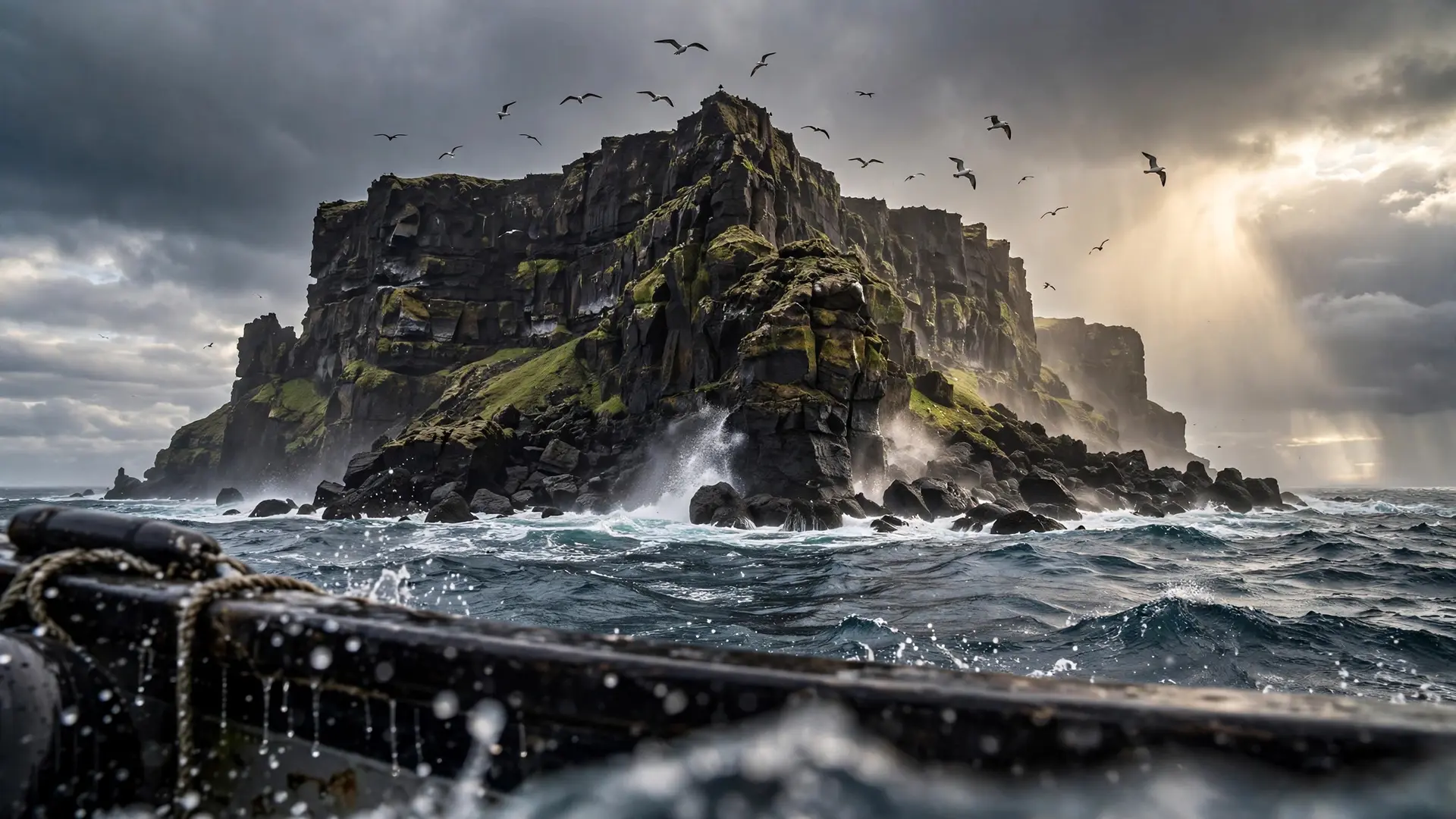
The first mistake is assuming the island is doomed. Erosion has been harsh: the island has shrunk from 2.7 to about 1.3 square kilometres, and it loses roughly 1 hectare a year. Models suggest it could sit mostly at or below sea level by 2100. But the loss should slow as the tough core is exposed. The lava cap resists the waves, and a chemical change called palagonitization has been turning the loose ash inside the island into hard palagonite tuff since the year after the eruption ended. The soft outer layers go first. The hard heart lasts. The second mistake is picturing Surtsey as a barren rock. It is still mostly bare lava, but six decades of arrivals have built a real ecosystem: meadows around the gull colony, willows near the bird grounds, seals on the northern spit, and puffins nesting since 2004. It looks empty from a boat. Up close it is one of the most closely watched patches of ground on the planet, and its story keeps rewriting what scientists thought they knew about how volcanic islands form and how life reaches the most remote islands on Earth. Even the driest place on Earth has more in common with Surtsey than it seems: both are places where life starts from almost nothing and has to earn every foothold. Surtsey will keep shrinking, and it will keep teaching. Every seed that lands there, every bird that nests, every hectare the sea takes back is measured and recorded, because this is the one place where scientists watched an island being born and then left it alone to grow up. How we made this article: FactSpire researched and drafted it with AI assistance and checked every fact against the sources listed above.
Frequently asked questions
Can you visit Surtsey?
No, not as a tourist. Landing needs permission from Iceland's Environment Agency, and only one to three small research visits take place each year, with no more than 10 to 12 people per trip. You can see the island from a boat or a plane, but going ashore is limited to scientists.
Why is the island called Surtsey?
It is named after Surtr, the fire giant of Norse mythology. The name means Surtr's island. Iceland's Naming Committee chose it because the island was born from fire rising out of the sea.
How long will Surtsey last?
Erosion has already cut it from 2.7 to about 1.3 square kilometres, and it loses roughly 1 hectare a year. Models suggest it could sit mostly at or below sea level by 2100, but the loss should slow as the tough lava and palagonite core is exposed.
What was the first living thing on Surtsey?
The first animal was a flying insect, spotted in May 1964 while the eruption was still going. The first plant was a sea rocket, a coastal flowering plant, found on the northern shore on June 3, 1965. Bacteria and fungi had appeared even earlier around warm steam vents.
Sources
- Surtsey, UNESCO World Heritage Centre
- Surtsey, Iceland: Ratings & Visitor Guide, International Parks
- A new island formed off the coast of Iceland in 1963, but very few people have ever been allowed to visit, Earth.com
- A Volcanic Island Born From Fire Stayed Nearly Untouched Since 1963 and Became a Rare Natural Lab for Life Starting From Scratch, BioScience Pakistan