Why Iceland Has So Many Volcanoes, Explained
Iceland is the only place where a mid-ocean ridge meets a deep mantle plume — a double magma supply that explains its 2021 Reykjanes awakening.
Key takeaways
- Iceland is the only place where the Mid-Atlantic Ridge rises above the sea — and it also sits over a deep mantle plume, giving it two independent magma sources.
- About a third of all lava erupted worldwide since 1500 AD has come from Iceland.
- The 2021 Fagradalsfjall eruption ended roughly 800 years of quiet on the Reykjanes Peninsula; twelve eruptions have followed.
- Eruptions under Iceland's glaciers can unleash jökulhlaup floods with discharge up to 20 times the Amazon's flow.
Iceland has more than 100 volcanoes and erupts, on average, every five to ten years. About a third of all the lava that has flowed on Earth's surface since 1500 AD came from this one small island. No other country of comparable size produces anything like it — and the reason is that Iceland gets its volcanoes from not one but two independent sources, stacked in the same spot. The island sits on a geological jackpot: the Mid-Atlantic Ridge, where two tectonic plates tear apart, runs directly beneath it — and the same patch of crust also sits over a deep upwelling of hot mantle rock called the Iceland plume. It is the only place on Earth where these two features coincide.
Why is the Mid-Atlantic Ridge above the sea only in Iceland?
The Mid-Atlantic Ridge is a 16,000-kilometer mountain chain that runs down the center of the Atlantic Ocean — and almost all of it is deep underwater. Iceland is the exception, the largest island on the ridge, and it exists because the mantle plume's extra heat and magma pushed the land above sea level. Everywhere else, the ridge sits thousands of meters beneath the waves. At the ridge, the North American and Eurasian tectonic plates pull apart at roughly 2 to 2.5 centimeters per year. As they separate, magma wells up from the mantle to fill the gap, building new crust. This slow spreading is what makes Iceland a construction site: the island is literally being pulled apart and rebuilt, with fresh rock emerging along the rift. At Þingvellir National Park, visitors can walk through a rift valley where the gap between the two plates is visible at the surface — one of the few places on Earth where a mid-ocean ridge can be seen above water. This process alone would make Iceland volcanic. But the second ingredient, the plume, supercharges it.
How did the plume build an island?
A mid-ocean ridge alone does not normally build islands. Spreading ridges all over the planet create new seafloor — thin basaltic crust that stays thousands of meters underwater. Iceland rose above the waves because the plume's extra heat and magma supply thickened the crust far beyond what the ridge could do on its own. That is why Iceland is the largest island anywhere on the Mid-Atlantic Ridge, and why the ridge is exposed at the surface only there: everywhere else, it lies buried under the ocean. The island is still under construction. With the plates separating 2 to 2.5 centimeters a year and the plume feeding magma from below, Iceland keeps growing — a country whose landmass is being manufactured in real time, with fresh lava plains appearing in single eruptions.
What does the mantle plume add?
Beneath Iceland, a column of unusually hot rock rises from deep in the mantle — the Iceland plume. It acts as a second, independent magma factory, independent of the plate-tectonic spreading happening above it. The combination of ridge and plume is what pushes Iceland's volcanic output so far beyond what the ridge alone would produce. Recent research has added a twist to the plume story. A 2024 study published in Nature Geoscience by Sanfilippo and colleagues found that the plume's buoyancy comes not only from heat but also from chemistry: the upwelling rock melted more than a billion years ago, leaving it lighter than the surrounding mantle. The finding suggests the plume's composition matters as much as its temperature — and that the engine beneath Iceland is stranger and older than the simple "hot rock rises" picture. A minority of geophysicists argue that Iceland's volcanism could be explained by shallow plate-tectonic processes without invoking a deep plume at all. The plume model remains the mainstream view, but the debate shows that even one of geology's most famous hotspots is still an active research question.
How volcanic is Iceland, exactly?
The numbers are striking. Iceland hosts more than 100 volcanoes, and around 35 have erupted in recent geologic history. Roughly 60 percent of the world's regional fissure eruptions — long cracks that gush lava — have occurred in Iceland. About 83 percent of all known subglacial eruptions are Icelandic. Subglacial eruptions produce one of Iceland's most dramatic hazards. When a volcano erupts beneath an ice cap, it melts enormous volumes of ice in hours, unleashing jökulhlaups — sudden glacial floods whose discharge can reach roughly 20 times the flow rate of the Amazon River. It is a scale of flooding almost no other country has to plan for. For perspective on how volcanic islands form elsewhere, Iceland shows what happens when the process runs at maximum output: entire landscapes built in single eruptions.
Why are eruptions happening again on the Reykjanes Peninsula?
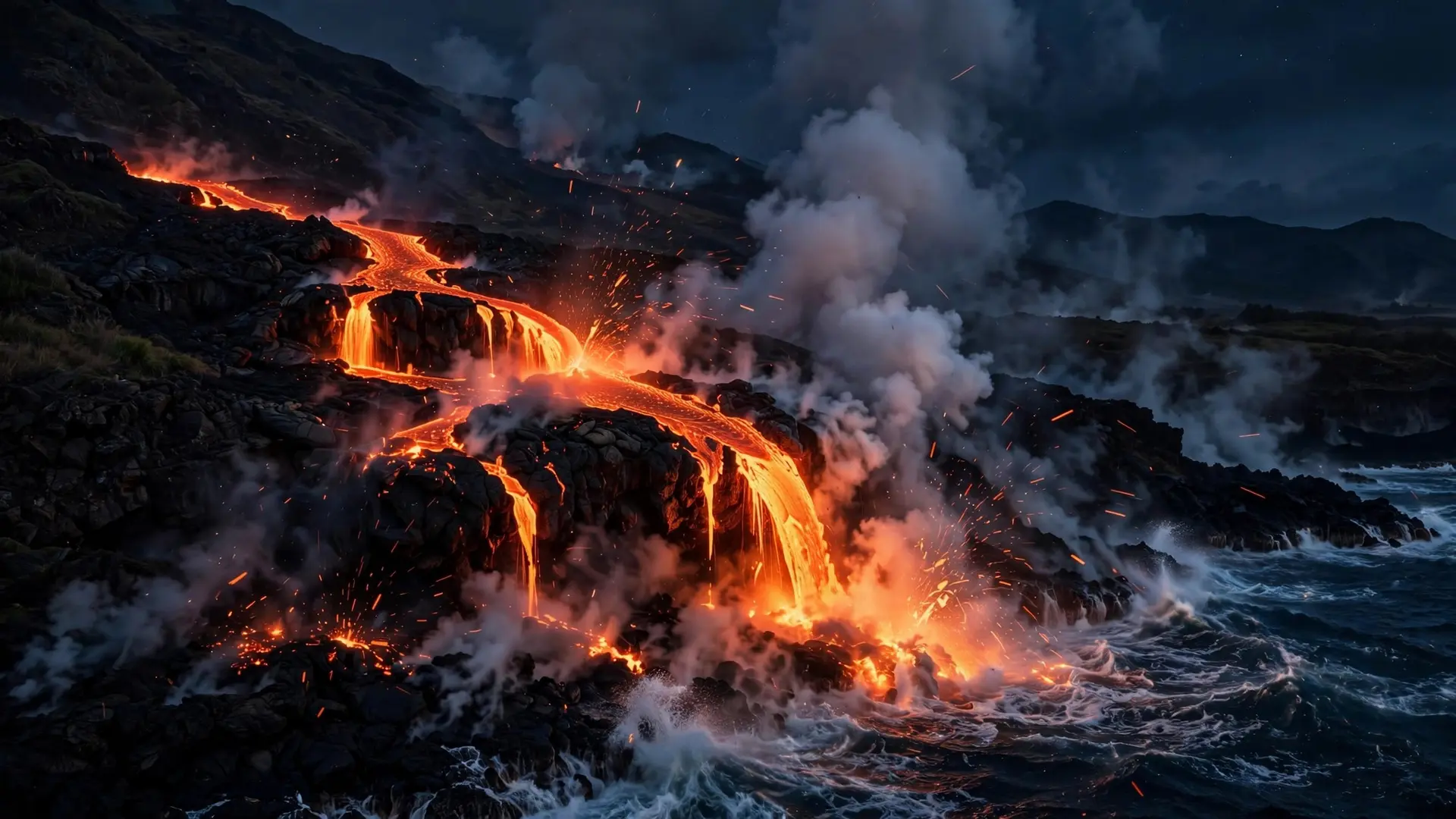
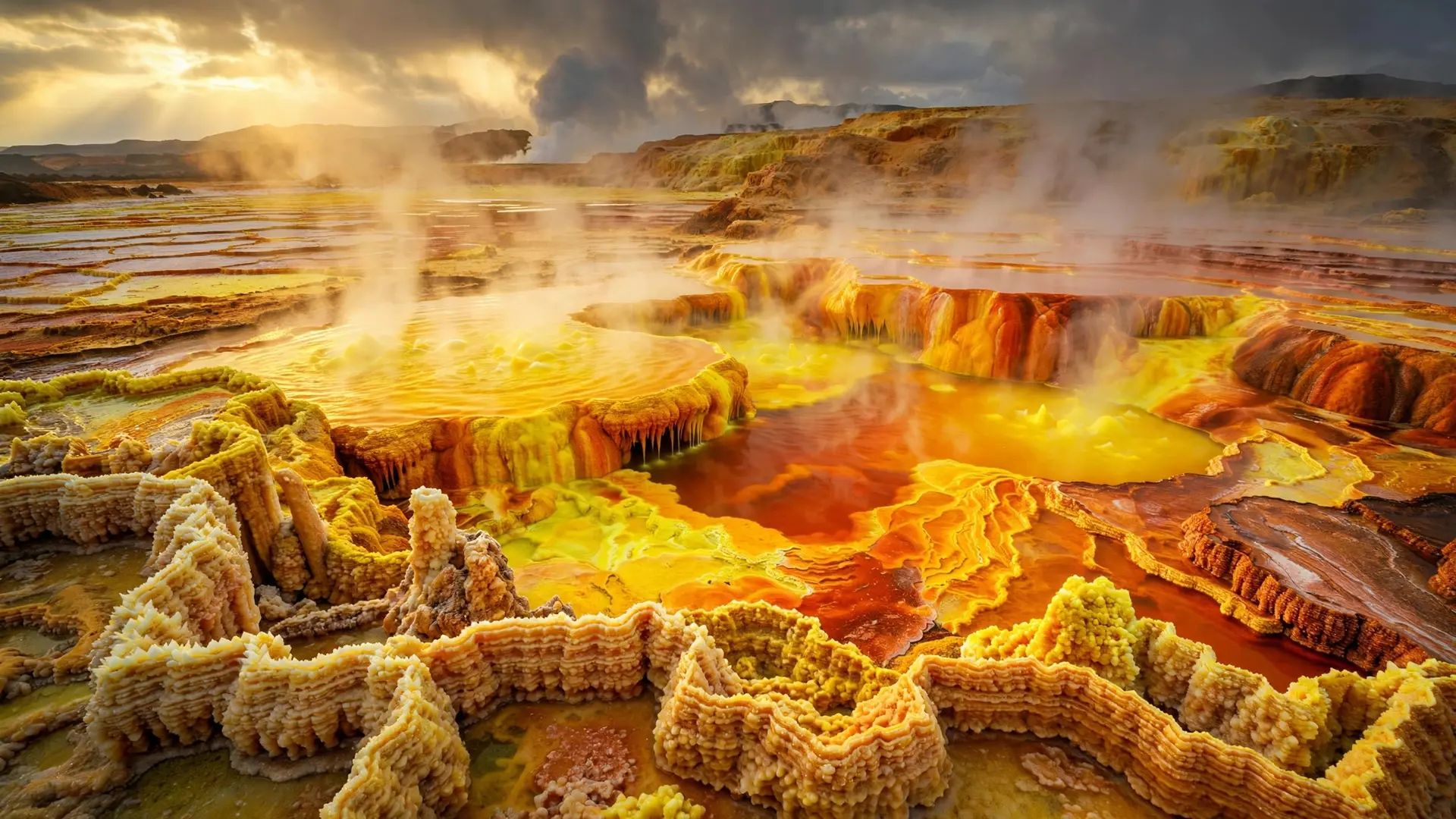
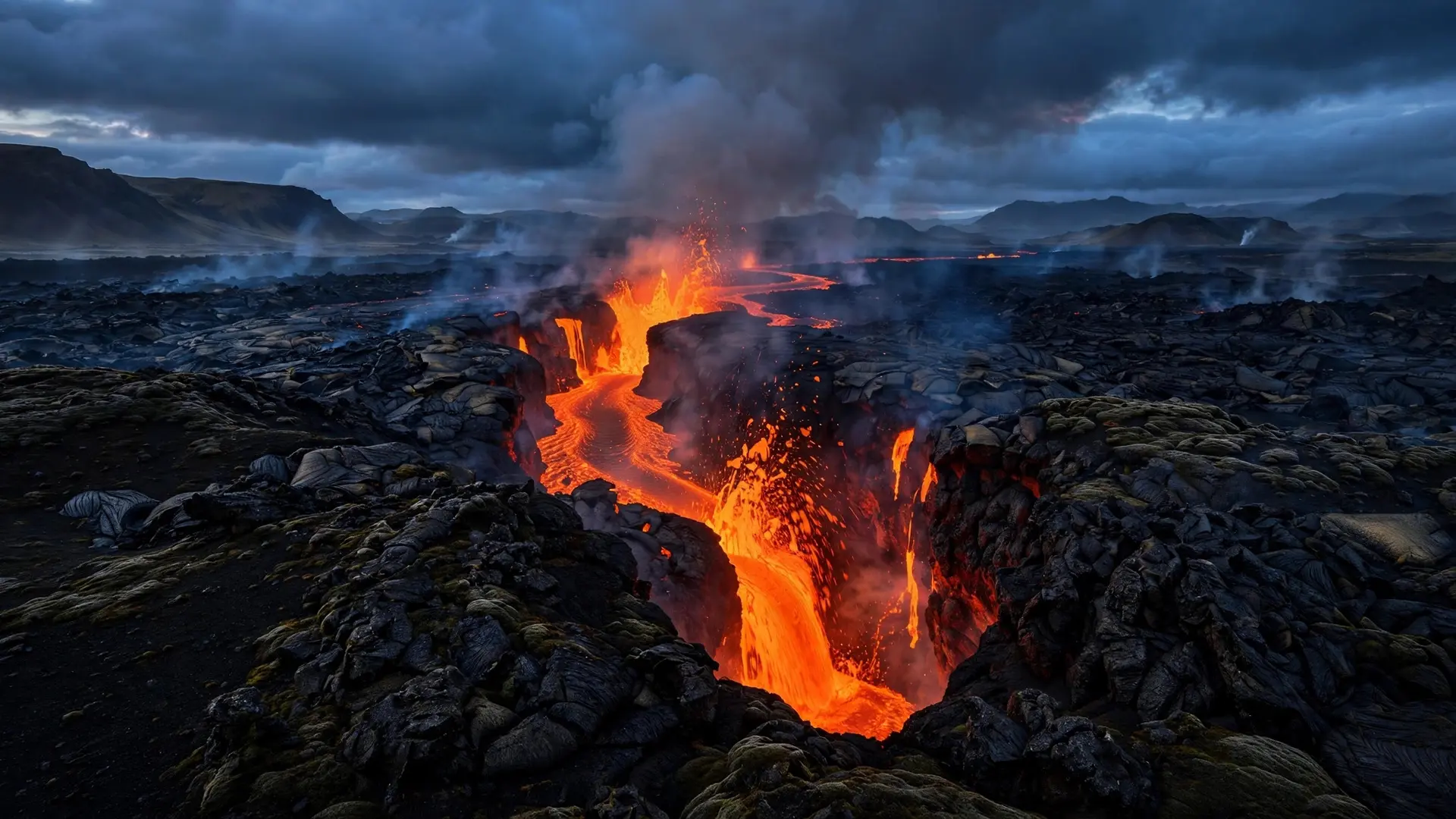
In March 2021, the Fagradalsfjall volcano erupted — ending roughly 800 years of quiet on the Reykjanes Peninsula, the arm of land southwest of Reykjavík. The eruption was the first of many. Since then, there have been twelve eruptions in total: three near Fagradalsfjall (March 2021, August 2022, July 2023) and nine along the Sundhnúkur crater row near the fishing town of Grindavík, running from December 2023 to August 2025. Scientists call the current era the "New Reykjanes Fires," after a strikingly similar active period on the same peninsula in the 13th century. With magma collecting 4 to 5 kilometers beneath the Svartsengi area, more eruptions are expected. The Reykjanes events are a live demonstration of Iceland's dual magma supply at work — a landscape actively being rebuilt while people watch. Like the alien landscape of the Danakil Depression farther south, Iceland's volcanic terrain shows what a planet looks like when geology runs hot and fast. The difference is that Iceland's heat comes from a two-for-one deal that exists nowhere else: a ridge and a plume, stacked, feeding the same small island. As long as the plates keep parting and the plume keeps rising, Iceland will keep erupting — roughly every five to ten years, right on schedule.
Frequently asked questions
Why does Iceland have so many volcanoes?
Iceland sits on the Mid-Atlantic Ridge, where two tectonic plates pull apart, and also over a deep mantle plume. The ridge supplies one source of magma and the plume a second, so the island gets an unusually large volcanic output.
How often do volcanoes erupt in Iceland?
Eruptions occur roughly every 5 to 10 years. Iceland hosts more than 100 volcanoes, about 35 of which have erupted in recent geologic history.
What is the New Reykjanes Fires period?
It is the name scientists give to the current era of eruptions on Iceland's Reykjanes Peninsula, which began with Fagradalsfjall in 2021 after about 800 years of quiet. It echoes a similar active period there in the 13th century.
What is a jökulhlaup?
A jökulhlaup is a sudden glacial flood triggered when a volcano erupts beneath an ice cap. Icelandic jökulhlaups can reach discharge rates up to 20 times the flow of the Amazon River.