What Is the Oldest Rainforest on Earth? The Daintree
The Daintree in Queensland, Australia, answers what is the oldest rainforest on Earth: about 180 million years old, it outlived the dinosaurs and grows today.
Key takeaways
- The Daintree in Queensland, Australia, is the oldest continuously surviving tropical rainforest on Earth, estimated at about 180 million years old.
- At about 1,200 sq km (463 sq miles), it is small next to the Amazon, yet it holds more primitive flowering plant families than any other forest.
- The Wet Tropics of Queensland, which includes the Daintree, joined the UNESCO World Heritage List on December 9, 1988.
- The southern cassowary is the forest's keystone gardener, spreading seeds of more than 70 trees no other animal can carry.
- The Kuku Yalanji people have lived in this country for more than 50,000 years and regained formal ownership of the Daintree in 2021.
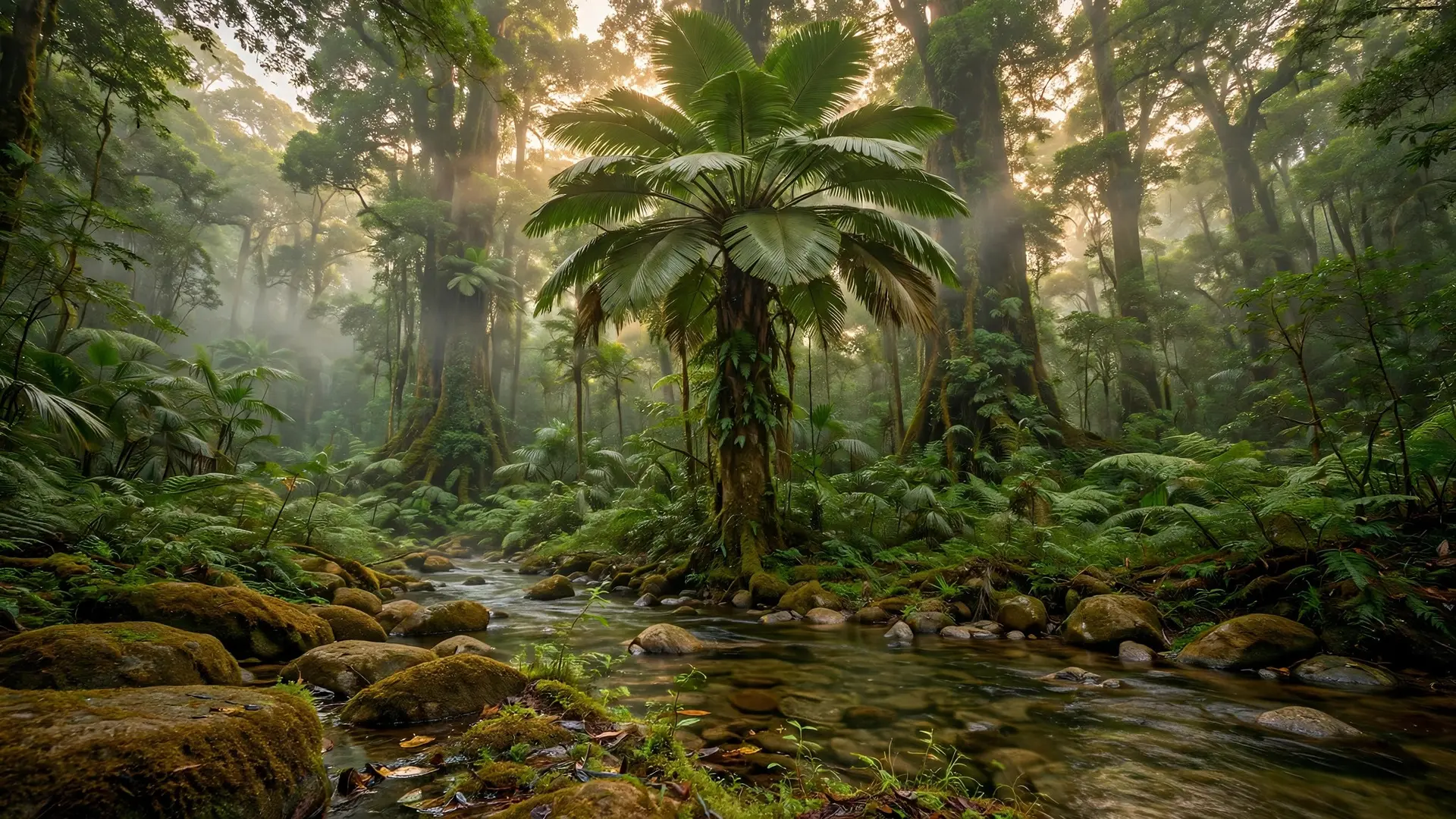
The Daintree Rainforest in Queensland, Australia, holds the title: at an estimated 180 million years old, it is the oldest continuously surviving tropical rainforest on Earth. That makes it roughly three times as old as the Amazon, and its oldest plant families were already growing while dinosaurs still walked the planet. Most people picture the Amazon when they think of ancient rainforest: the largest, and old in its own right. The Daintree is different: small, about 1,200 sq km (463 sq miles), it has kept going in one place, in nearly unbroken form, since Australia sat joined to the supercontinent Gondwana. Guinness World Records names it the oldest tropical rainforest in the world. Key facts
- The Daintree is estimated to be as old as 180 million years and covers around 1,200 sq km (463 sq miles) on the north-east coast of Queensland, Australia. Source: Guinness World Records
- The Wet Tropics of Queensland, which includes the Daintree, spans about 895,000 hectares (2,211,000 acres) and joined the UNESCO World Heritage List in 1988 after meeting all four natural criteria. Source: Wet Tropics Management Authority
- The Daintree holds around 12,000 insect species, one-third of Australia's marsupial, frog and reptile species and 65% of its butterfly and bat species. Source: Guinness World Records
- The southern cassowary eats fruit from more than 238 plant species and is the only animal able to spread the seeds of over 70 rainforest trees; about 4,400 adults live in the Wet Tropics. Source: Wet Tropics Management Authority
- The Daintree holds the majority of the world's 19 primitive flowering plant families, more ancient flowering plant families than anywhere else in the world, including the Amazon. Source: Rainforest Rescue
- A 2005 study estimated the Amazon rainforest is at least 55 million years old, while the Borneo lowland rainforests are estimated at about 140 million years old. Source: IFLScience
Why is the Daintree called the oldest rainforest on Earth?
The claim rests on continuity: the Daintree never died and regrew. Its plant lineages have persisted in the same wet coastal strip of north-east Queensland while continents drifted, climates dried and ice ages passed. The Wet Tropics Management Authority notes that the region holds relicts of the great Gondwanan forest that covered Australia and part of Antarctica 50 to 100 million years ago, and that rainforests have persisted there continuously since Gondwanan times.
That long run shows up in the plants. The Daintree holds the majority of the world's 19 primitive flowering plant families, more ancient flowering plant families than any other forest on the planet. One of them, the Idiot Fruit tree (Idiospermum australiense), was rediscovered in 1972 and is described by Rainforest Rescue as Australia's most important botanical discovery. The Wet Tropics holds 2,840 recorded species of vascular plants, and 43 of them grow nowhere except in Queensland's Wet Tropics. The forest also sits where two World Heritage areas meet: the Daintree runs down to the coast beside the Great Barrier Reef, so rainforest and reef share one shoreline. The 1988 listing recognised the area under all four natural World Heritage criteria, a distinction held by very few places worldwide.
How did the Daintree survive when other ancient forests vanished?
Australia was once mostly rainforest: in the 40 million years after it separated from Gondwana, rainforest covered much of the continent. Then the climate dried. Over tens of millions of years, most of that forest gave way to drier country, and today deserts cover about 20% of Australia. The oldest desert on Earth sits on another continent, but Australia's drying tells the same story. The Daintree survived because its corner of the coast stayed wet. Warmth and steady rain held through the drying, and steep coastal ranges caught moisture from the sea. Rainforests elsewhere on the continent shrank into small refuges or disappeared, while the Daintree contracted and expanded with the climate but never broke apart. The Wet Tropics Management Authority notes that rainforests stayed stable only in the cool uplands and ever-wet gorges and valleys. People helped it survive too, and people nearly destroyed it. The Kuku Yalanji people, the traditional owners of the Daintree coast, have lived in the area for more than 50,000 years. European colonists arrived in 1873, and the forest was named after the geologist and photographer Richard Daintree. In 1983 and 1984, protesters blockaded bulldozers building a road from Cape Tribulation to Bloomfield through the forest. The fight ended with the World Heritage listing on December 9, 1988, and in 2021 the Eastern Kuku Yalanji people were handed back formal ownership of the Daintree and neighbouring national parks.
What lives in a forest this old?
A forest that has run for 180 million years collects life. About 30% of Australia's frog, reptile and marsupial species live in the Daintree, along with 65% of its bat and butterfly species and 18% of its bird species, all inside about 0.2% of Australia's total land area. Guinness World Records adds around 12,000 insect species.
The most important resident may be a bird that cannot fly. The southern cassowary grows as tall as 2 metres (6.6 feet) and weighs up to 76 kg (168 pounds). The Wet Tropics Management Authority calls it the rainforest gardener: it eats fruit from more than 238 plant species, and it is the only animal able to spread the seeds of over 70 rainforest trees whose fruit is too large for anything else to carry. Seeds pass through the bird intact and land in dung piles that work as fertiliser. Without the cassowary, the plants that depend on it would decline and the forest would grow less diverse. Research coordinated by the CSIRO puts the Wet Tropics population at around 4,400 adults, and the bird is listed as endangered by the Queensland and Australian governments. The cassowary is itself ancient. Cassowaries belong to the ratites, a group of flightless birds that also includes the emu, kiwi, rhea and ostrich, dating back around 70 million years. The musky rat-kangaroo is the most unchanged member of the kangaroo family, having stayed much the same for millions of years.
How does the Daintree compare with the Amazon and Borneo?
| Forest | Estimated age | Area | What sets it apart |
|---|---|---|---|
| Daintree, Australia | About 180 million years | 1,200 sq km (463 sq miles) | Oldest continuously surviving tropical rainforest; most primitive flowering plant families |
| Amazon, South America | At least 55 million years | 6.7 million sq km (2.6 million sq miles) | Largest tropical rainforest on Earth |
| Borneo lowland rainforests | About 140 million years | 428,438 sq km (165,420 sq miles) | Second-oldest living rainforest; covers more than 57% of Borneo |
| The trade-off is clear. The Amazon wins on size by an enormous margin: at 6.7 million sq km (2.6 million sq miles), it is more than 5,000 times the size of the Daintree. Borneo's lowland rainforests sit in the middle on both age and area. The Daintree wins on age and on the density of ancient plant families. Australia is both a country and a continent, and the Daintree is one of the clearest examples of how old its natural history runs. |
What do most people get wrong about the oldest rainforest?
First, the age itself is an estimate, not a measurement with a fixed date. The 180-million-year figure is the one most often cited, and Guinness World Records states it plainly. Some sources put the Daintree closer to 135 million years. Either number leaves it the oldest continuously surviving tropical rainforest. The forest is a living community whose parts have turned over countless times, not one stand of 180-million-year-old trees. Second, people assume the oldest rainforest must also be the biggest. It is not. The Daintree covers about 1,200 sq km (463 sq miles). The Amazon is thousands of times larger and holds far more species in total. What the Daintree holds is a concentration of the very oldest plant families, packed into a small area, while the driest place on Earth shows what happens when rain stops. Third, people treat the title as settled forever. It is not. The Daintree survived ice ages and a drying continent, but its survival now depends on the cassowary, on connected habitat rather than isolated patches, and on the wet coastal climate holding. The forest is old, not indestructible. The Daintree answers the question with a small patch of Queensland coast that never stopped being rainforest. It outlived the dinosaurs, outlasted the drying of a continent, and still grows new trees from seeds carried by a flightless bird. That unbroken run is what makes it the oldest rainforest on Earth. How we made this article: FactSpire researched and drafted it with AI assistance and checked every fact against the sources listed above.
Frequently asked questions
How old is the Daintree Rainforest?
The Daintree is estimated at about 180 million years old, which makes it the oldest continuously surviving tropical rainforest on Earth. Some sources put the figure closer to 135 million years, but even the lower estimate leaves it far older than the Amazon.
Is the Daintree older than the Amazon?
Yes, by a wide margin. The Amazon has existed for at least 55 million years, according to a 2005 study, while the Daintree is estimated at about 180 million years. The Daintree is roughly three times as old, though the Amazon is far larger.
Why is the Daintree a UNESCO World Heritage Site?
The Wet Tropics of Queensland, which includes the Daintree, was inscribed on the UNESCO World Heritage List on December 9, 1988. It met all four natural criteria, a rare distinction, because it preserves a near-complete record of plant evolution on Earth.
What animal keeps the Daintree growing?
The southern cassowary, a flightless bird up to 2 metres (6.6 feet) tall, eats fruit from more than 238 plant species. It is the only animal able to spread the seeds of over 70 rainforest trees, so the forest depends on it to renew itself.
Sources
- Oldest tropical rainforest, Guinness World Records
- World Heritage listing, Wet Tropics Management Authority
- Cassowaries, Wet Tropics Management Authority
- What You Should Know About The Daintree, Rainforest Rescue
- What Is The Oldest Ecosystem On Earth?, IFLScience
- World Heritage Wet Tropics, Queensland State Archives