Inside the ISS: How It Stays in Orbit and Keeps Crews Alive
The International Space Station circles 400 km up at 28,000 km/h. How it holds its orbit, recycles 98% of its water, and what will happen to it after 2030.
Key takeaways
- The ISS orbits about 400 km up at roughly 28,000 km/h, circling Earth about 16 times a day, and has been continuously crewed since November 2000.
- It spans 109 metres end to end, just short of an American football field, weighs about 420 tonnes and took 42 assembly flights to build.
- Thin air at that height drags on the station, so engines on its Russian segment and on docked cargo ships periodically raise its orbit.
- In June 2023 NASA reported that the station's life support recovers 98% of its water, from cabin humidity, sweat and urine.
- NASA chose SpaceX, under a contract worth up to $843 million, to build a vehicle that will steer the station into a controlled re-entry after 2030.
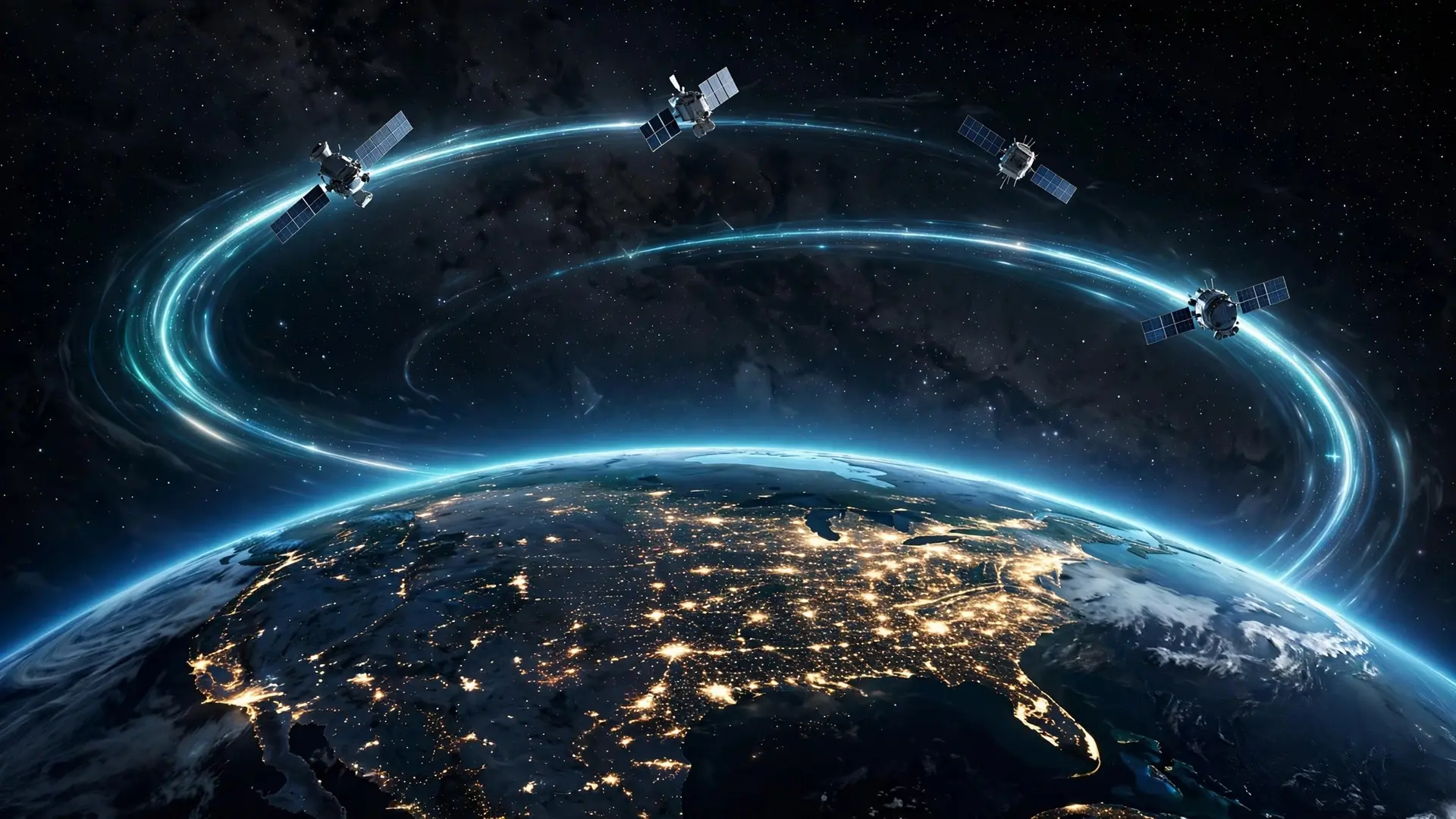
The International Space Station stays up the same way every satellite does: it is falling. About 400 kilometres above Earth, it moves sideways at roughly 28,000 km/h, fast enough that the planet's surface curves away beneath it as quickly as it drops, and it circles the globe about 16 times a day. Holding that orbit takes regular engine burns against the thin air, and keeping its crew alive takes a life-support system that recycles nearly all of its water and splits water to make the oxygen they breathe. People have lived aboard without a break since November 2000. Apollo 11's whole round trip to the Moon lasted about eight days; the station has now been occupied continuously for almost 26 years, and by mid-October 2026 it had hosted 298 people from 26 countries.
What is the International Space Station made of?
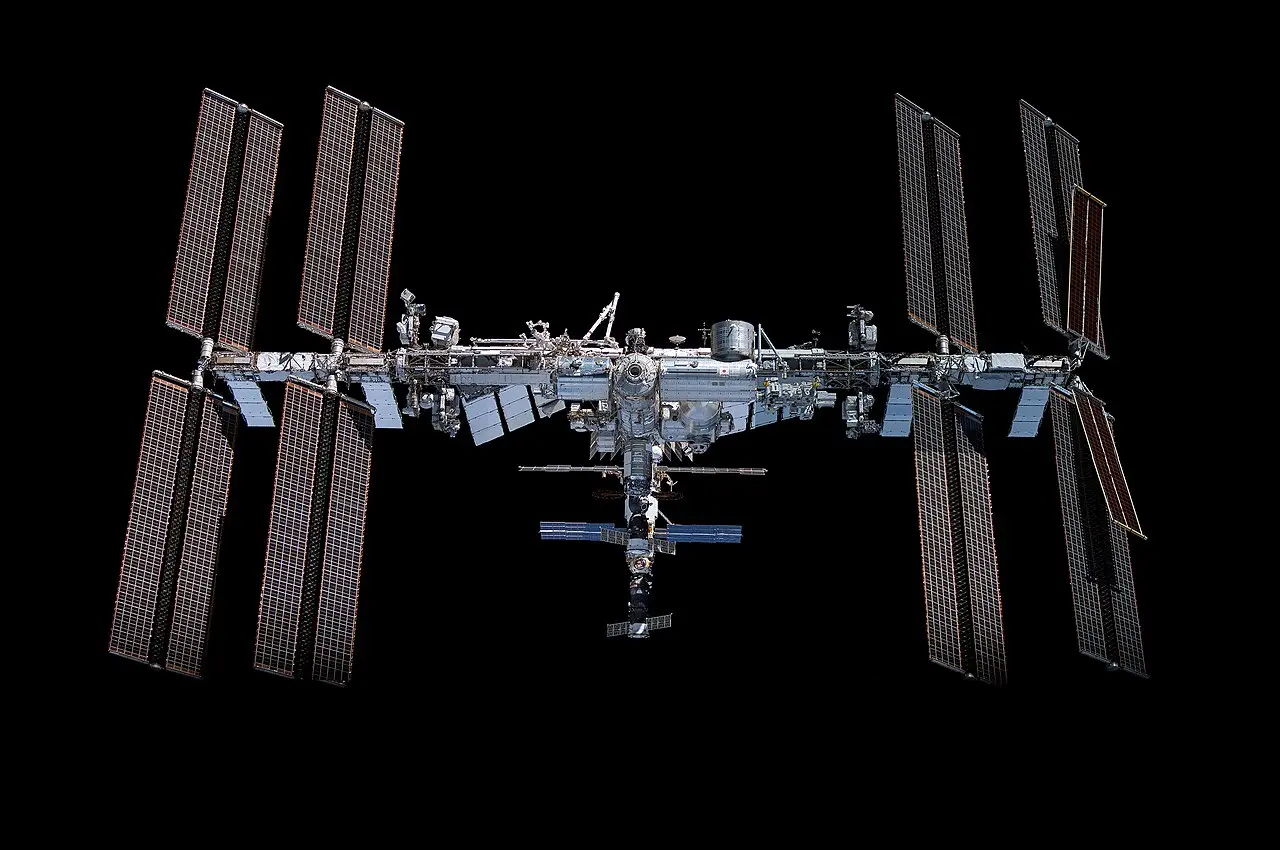
Measured end to end, the station spans 109 metres (356 ft), almost exactly the length of an American football field, end zones and all, and it weighs about 420 tonnes. Inside are 1,005 cubic metres of pressurised space, of which about 388 count as living room for the crew. Eight solar arrays, with a wingspan longer than an Airbus A380's, supply 75 to 90 kilowatts of power. Europe designed and built more than a third of the pressurised elements, among them the Cupola observation dome, whose 80-centimetre top window ESA describes as the largest ever flown in space. It was built piece by piece. Russia's Zarya module launched on 20 November 1998, the American Unity node followed on 4 December aboard the shuttle Endeavour, and the Zvezda service module, carrying living quarters, life-support systems and engines, launched on 12 July 2000. Assembling it took 42 flights, 37 by US space shuttles and five by Russian rockets. The first resident crew, Expedition 1's William Shepherd, Yuri Gidzenko and Sergei Krikalev, moved in during November 2000. Five space agencies run it: NASA, Russia's Roscosmos, the European Space Agency, Japan's JAXA and the Canadian Space Agency, together representing 15 countries. Up to eight visiting spacecraft can be docked at once, and astronauts have made 284 spacewalks to build and maintain it.
How does a 420-tonne station stay in orbit?
Nothing holds the station up. Like any satellite it is in permanent free fall, and its crew floats because everything on board is falling together. What keeps it from hitting the ground is speed: about 8 kilometres a second, which carries it around the planet in roughly 90 minutes, so the crew sees about 16 sunrises and 16 sunsets every day. Because Earth turns underneath, each lap crosses the ground about 2,200 kilometres west of the one before. It is the same physics that explains how satellites stay in orbit without falling down. What sets the station apart is its size and its height. At around 400 kilometres it flies through the outermost fringe of the atmosphere, gas so thin that most people would call it a vacuum. Even so, a station this large ploughs through enough of that gas to feel a steady brake. The effect is slow but it compounds: as the station sinks, the air around it grows denser and the braking gets stronger. Left alone, it would spiral down and eventually fall. So it gets pushed back up. The Zvezda module has its own propulsion system, and docked cargo ships can lend theirs: Europe's five Automated Transfer Vehicles, the last launched in 2014, used their engines to raise the station's orbit and offset the drag. Every reboost buys time against an atmosphere that never stops pulling.
What does it take to keep a crew alive up there?
Unlike tardigrades, which have survived days of exposure to open space, astronauts cannot simply shut down and wait out a vacuum. The seven people currently aboard need air, water and exercise every day, and nearly everything they breathe and drink has to be cleaned or made on board.
Water comes first. Each astronaut needs about 3.8 litres (1 gallon) a day for drinking, food and hygiene, so the station recycles almost all of it. Dehumidifiers pull the moisture of breath and sweat out of the cabin air. Urine is distilled under vacuum, and a Brine Processor Assembly then blows warm, dry air across a membrane to draw the last water out of the leftover brine. In June 2023 NASA announced that the system had reached 98 percent water recovery, up from about 93 to 94 percent before the brine processor was added. Jill Williamson, who manages the station's water systems, has said the result is "cleaner than what we drink here on Earth." Oxygen comes from water too. The station's oxygen generator passes electricity through recycled water, splitting it into oxygen, which goes into the cabin, and hydrogen. Molecular sieves strip exhaled carbon dioxide from the air, and a Sabatier reactor combines some of that carbon dioxide with the spare hydrogen to make more water, venting the leftover methane into space. Charcoal beds and a catalytic oxidiser remove trace gases. The body needs maintenance as well. Floating for months without the load of gravity, astronauts lose bone and muscle, so they exercise for two to two and a half hours a day: on a resistance machine that simulates weightlifting, a treadmill and an exercise bike. Back on Earth, according to NASA, most crew members regain their pre-flight fitness within 45 days.
What will happen to the ISS after 2030?
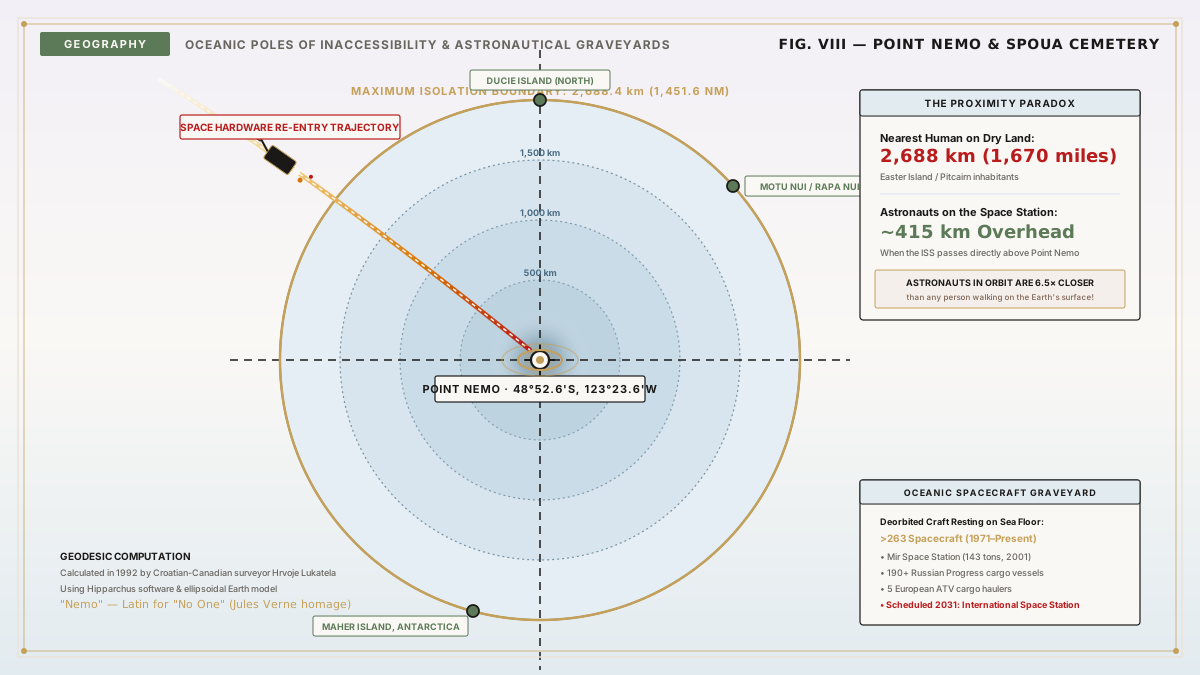
The station will not stay up forever. The United States, Japan, Canada and the European partners have committed to operating it through 2030, and in July 2026 Russia agreed to do the same. After that it will be brought down on purpose. A 420-tonne structure cannot simply be abandoned to drag. Left to fall on its own, it would come down wherever the atmosphere happened to bring it, and pieces that survived the heat could land almost anywhere beneath its path. In June 2024 NASA chose SpaceX to build the US Deorbit Vehicle, under a contract worth up to $843 million, with the launch to be bought separately. NASA will own and operate the vehicle, whose job is to guide the station's final plunge away from populated areas; the station itself is expected to break apart on the way down. The ISS can look like a fixed outpost in the sky, but it is a machine in constant motion and constant repair. It falls around Earth 16 times a day, loses height to air most people would call empty space, and relies on engines to stay aloft. Inside, it turns sweat into drinking water and water into air. That balancing act has kept people alive in orbit every single day for a quarter of a century, which may be the station's most remarkable result of all.
Frequently asked questions
How does the ISS stay in orbit?
It is in continuous free fall, moving sideways at about 28,000 km/h so that Earth's surface curves away beneath it. Thin air at 400 km slowly drags it down, so engines periodically push it back up.
Where does the ISS get its oxygen and water?
Most of its water is recycled: in 2023 the system reached 98% recovery from humidity, sweat and urine. Oxygen is made by splitting recycled water with electricity, and carbon dioxide is filtered out of the cabin air.
What will happen to the ISS after 2030?
The partners plan to operate it through 2030. A SpaceX-built US Deorbit Vehicle will then guide it into a controlled re-entry away from populated areas, and the station is expected to break up as it falls.