What Is a Dust Devil, and How Does It Form?
A dust devil is a column of dust raised by intense ground heat, not a miniature tornado. Learn how it forms, why it spins, and when it can turn dangerous.
Key takeaways
- A dust devil is a ground-up whirlwind driven by strong surface heating, not a storm cloud.
- Warm air rises, gets nudged into a spin, and stretches upward, which makes it spin faster.
- Most dust devils are small and brief, but the strongest can top 60 mph and damage light structures.
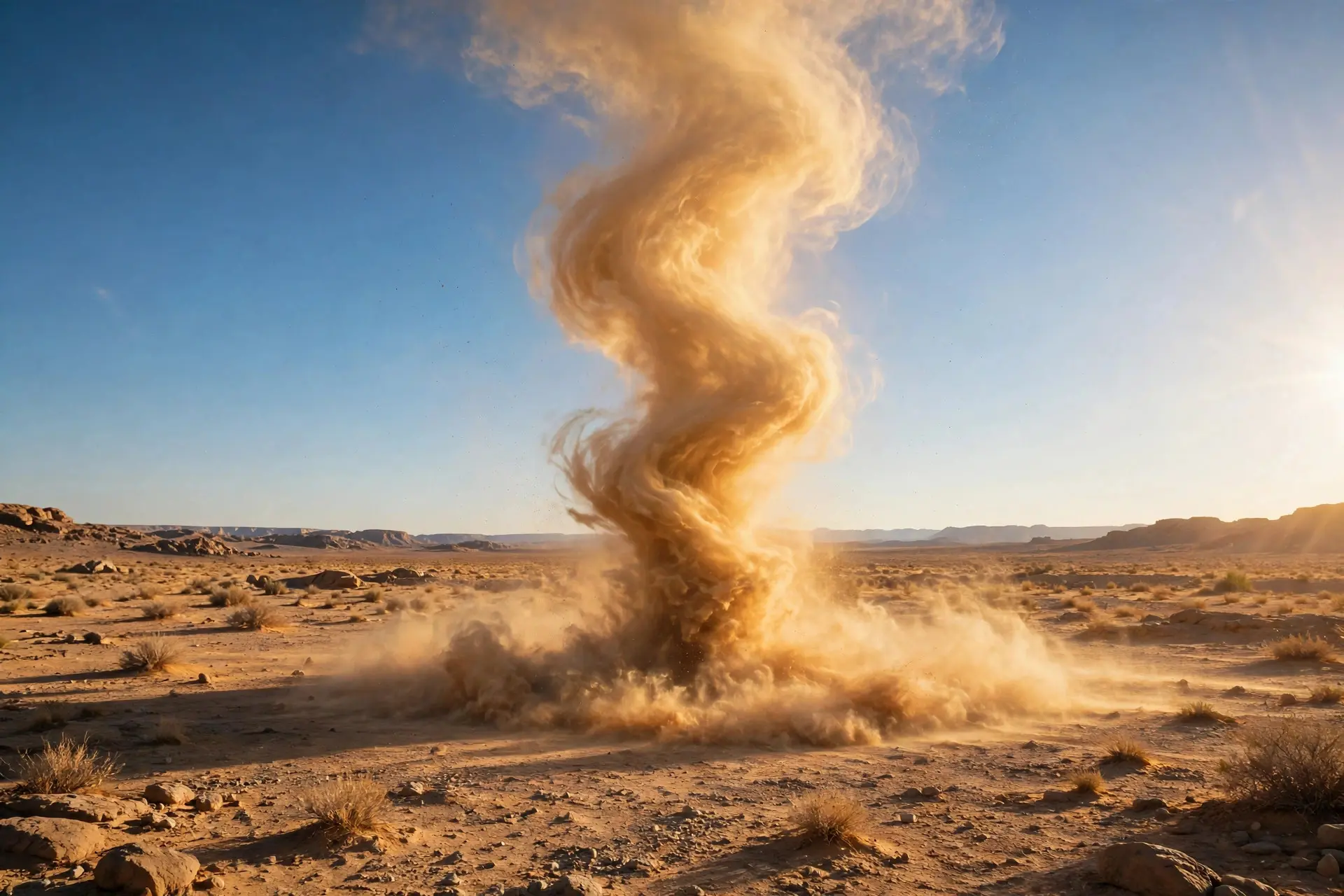
On a hot, still afternoon in dry country, a thin column of dust can suddenly start to dance across an open field, spinning as it wanders. That is a dust devil: a small whirlwind that rises from sun-baked ground. It is not a baby tornado. It is a fair-weather phenomenon with its own recipe, and once you know the ingredients, you can spot the days when one is likely to appear.
How does a dust devil form?
It starts with sunshine on bare ground. On a clear day with light winds, the sun heats soil, asphalt, or a dry field far more than it heats the air a short distance above. The layer of air touching that hot surface warms, becomes lighter, and wants to rise, much like a bubble in a heated pot. Because the surrounding air is cooler and heavier, the warm pocket is unstable and eventually breaks free and shoots upward. That rising pocket is only half the story. As it climbs, air near the ground rushes inward to take its place. If that inflow has even a slight twist — from a breeze curling around a building, a change in ground cover, or a passing vehicle — the rising air starts to rotate. As the column stretches taller, the spin tightens and speeds up, in the same way a skater spins faster when pulling their arms in. Dust and loose debris caught in the flow make the invisible column visible, and suddenly there is a twisting funnel wandering across the ground. The process feeds itself for a while. Rising warm air keeps drawing in more warm air at the base, and the spin keeps the column organized. The National Weather Service notes that dust devils often appear where two surface types meet, such as asphalt beside dirt or an irrigated field beside a dry road, because the ground heats unevenly there and the contrast helps kick off the rising pocket.
Why do dust devils love deserts and dry ground?
Deserts supply everything on the recipe list: fierce sunshine, dry soil, sparse vegetation, and plenty of loose dust. The National Weather Service describes dust devils as most frequent in arid and semi-arid regions, and they are a familiar sight across the desert Southwest of the United States. In northern Arizona, they show up most often in May and June, typically between late morning and early afternoon, when the sun is strongest. But they are not confined to deserts. Any hot, dry, open surface can do the job: a parking lot, a plowed field, a gravel road, even a forest clearing. The University of Alaska Fairbanks Geophysical Institute recounts dust devils appearing on Alaskan roads and parking lots, far from any desert, whenever sun-warmed surfaces and calm air line up. The key is not the landscape but the contrast between a very hot surface and the cooler air above it. Without loose dust, though, the whirlwind may stay invisible, a spinning column of clear air that nobody notices. Size varies a great deal. The Flagstaff weather office gives typical diameters of 10 to 300 feet and average heights of roughly 500 to 1,000 feet. Most last only a few minutes before they drift onto cooler ground or run out of warm air and fall apart. In deep desert, where hot surfaces stretch for miles, some have reached several thousand feet tall and kept going for an hour or more.
How is a dust devil different from a tornado?
The resemblance is real, and it fools plenty of people, but the two spin for opposite reasons. A tornado descends from a rotating thunderstorm, building from cloud to ground in a violent storm system. A dust devil builds from the ground up on a calm, sunny day, with no storm cloud involved at all. The National Weather Service defines a dust devil precisely as a small vortex not associated with a thunderstorm, which is the cleanest way to tell them apart: if there is no storm overhead, it is not a tornado.
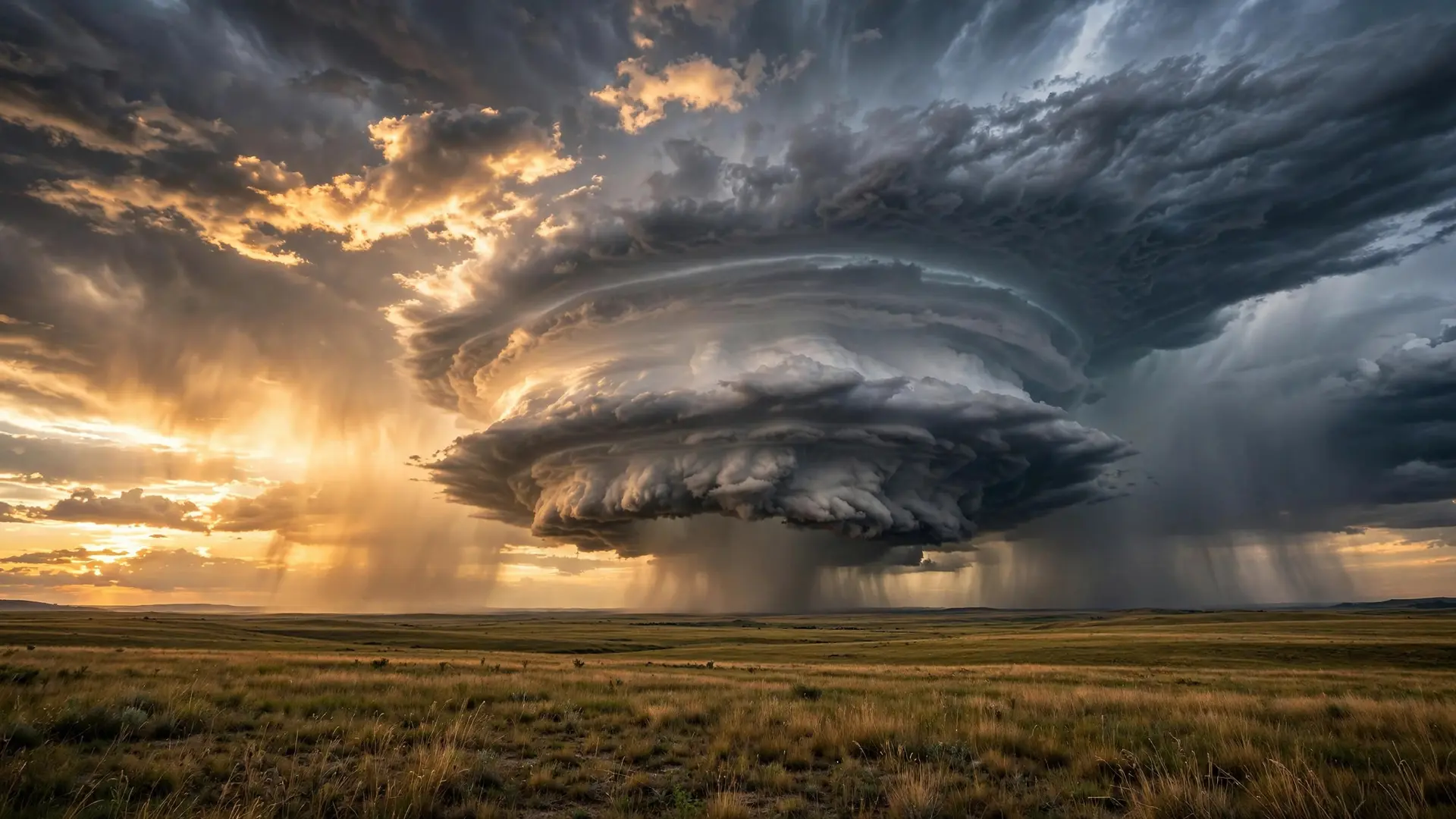
That difference also explains their different characters. Tornadoes draw power from a whole storm system and can grow far stronger and wider. Dust devils draw power only from a patch of hot ground, so they stay small and die quickly once they wander off their heat source. They can also spin in either direction, unlike the strong directional preference seen in large storm systems. This is why forecasters treat them as separate phenomena, even though both are rotating columns of air. For the storm-born side of the family, see how thunderstorm supercells organize rotation.
When can a dust devil turn dangerous?
Most of the time, a dust devil is a curiosity worth watching from a distance. The strongest ones, however, deserve respect. The Flagstaff office reports that winds in larger dust devils can reach 60 mph or greater, and that small structures can be damaged or even destroyed in the path of a strong one. A striking example struck on September 14, 2000, when a large dust devil hit the Coconino County Fairgrounds in Arizona. Tents were blown down, a ticket booth was knocked over, and a large wooden beam in one pavilion was split apart. Based on that damage, forecasters estimated winds may have reached up to 75 mph. The Geophysical Institute account adds that dust devils have pulled shingles from roofs and mostly carry dust, dry leaves, and other light material along their paths. The danger is rarely the wind itself; it is the debris the wind throws. The safest response is simple: do not chase one, and do not stand in its path to film it. Dust devils can change direction, and a gust of flying debris is no joke. Give it room, enjoy the show, and let it spend itself on open ground. Like other tricks of hot, dry air, dust devils belong to the same family of desert optics as mirages that shimmer over heated ground, where the heated air itself bends what you see. A dust devil is, in the end, a small reminder of how much energy sits in ordinary sunshine. Give a patch of ground enough heat, a breath of calm air, and a slight twist, and the atmosphere will put on a spinning show all by itself.
Frequently asked questions
Is a dust devil a small tornado?
No. A tornado grows downward from a thunderstorm, while a dust devil builds upward from hot ground on a fair-weather day. They look alike, but their origins are different.
How long does a dust devil usually last?
Most fade within a few minutes. In hot deserts, where warm ground is plentiful, some have been observed lasting an hour or more.
Can a dust devil be dangerous?
Usually it is harmless, but a strong one can lift debris and damage small structures, so it is wise to move away rather than approach it.
Sources
- Dust Devils, National Weather Service Flagstaff
- Weather Spotter's Field Guide - Glossary: D, National Weather Service
- Dance of the Dust Devils, University of Alaska Fairbanks Geophysical Institute