What Are Crepuscular Rays, and Why Do They Appear?
Crepuscular rays look like sunbeams fanning across the sky, but the bright bands are only half the story. The dark bands are shadows, and the rays are parallel.

Key takeaways
- Crepuscular rays are alternating bands of sunlight and cloud shadow, made visible when dust, haze, or water droplets scatter sunlight toward the viewer.
- The dark bands are the real actors: they are shadows cast by clouds, mountains, or other objects blocking the sun.
- The rays are actually parallel, and only look fanned out because of perspective, like railway tracks converging in the distance.
- They are most striking at sunrise and sunset, when the contrast between lit and shadowed air is strongest.
- If the bands stretch across the whole sky, they may reappear on the opposite horizon as anticrepuscular rays.
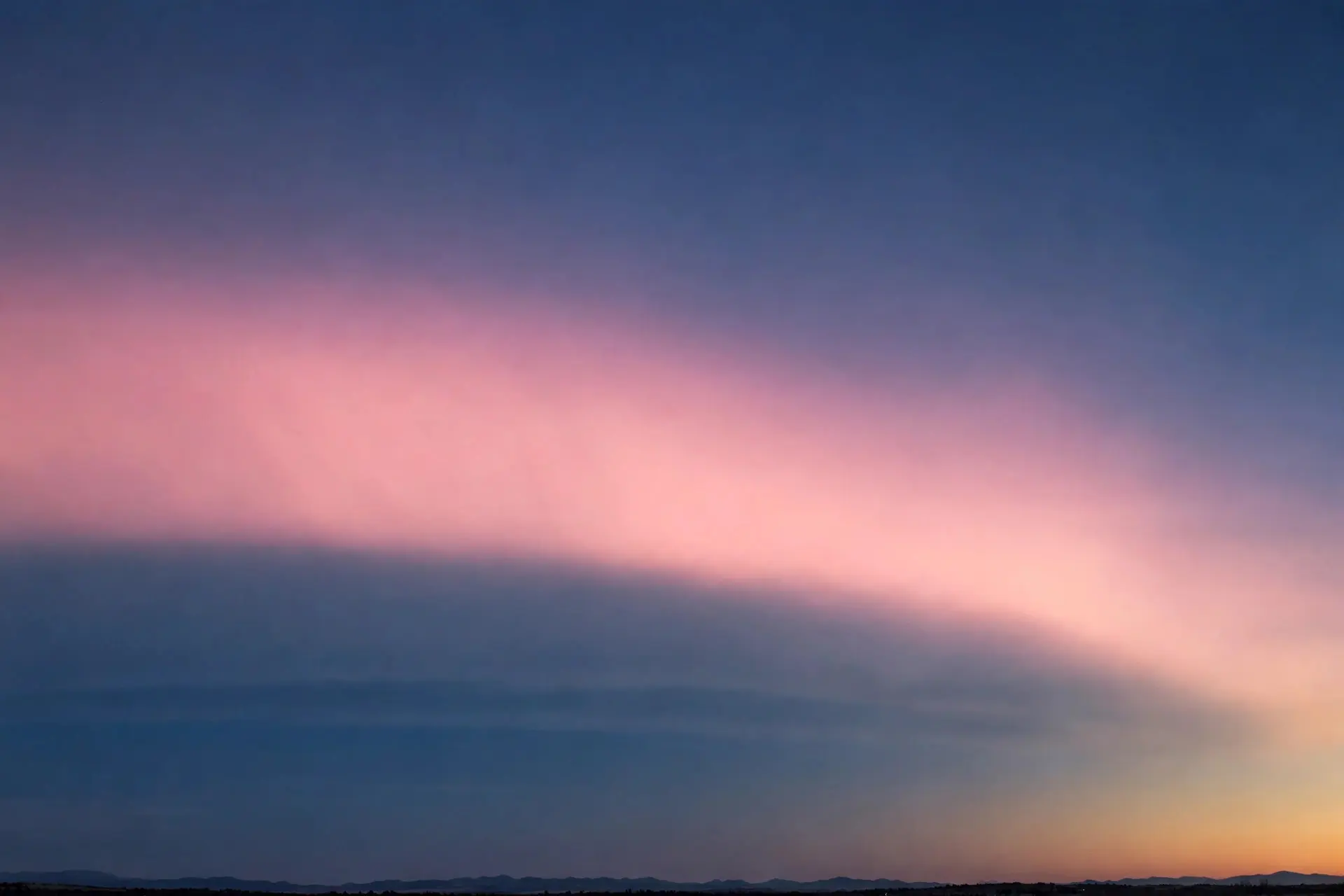
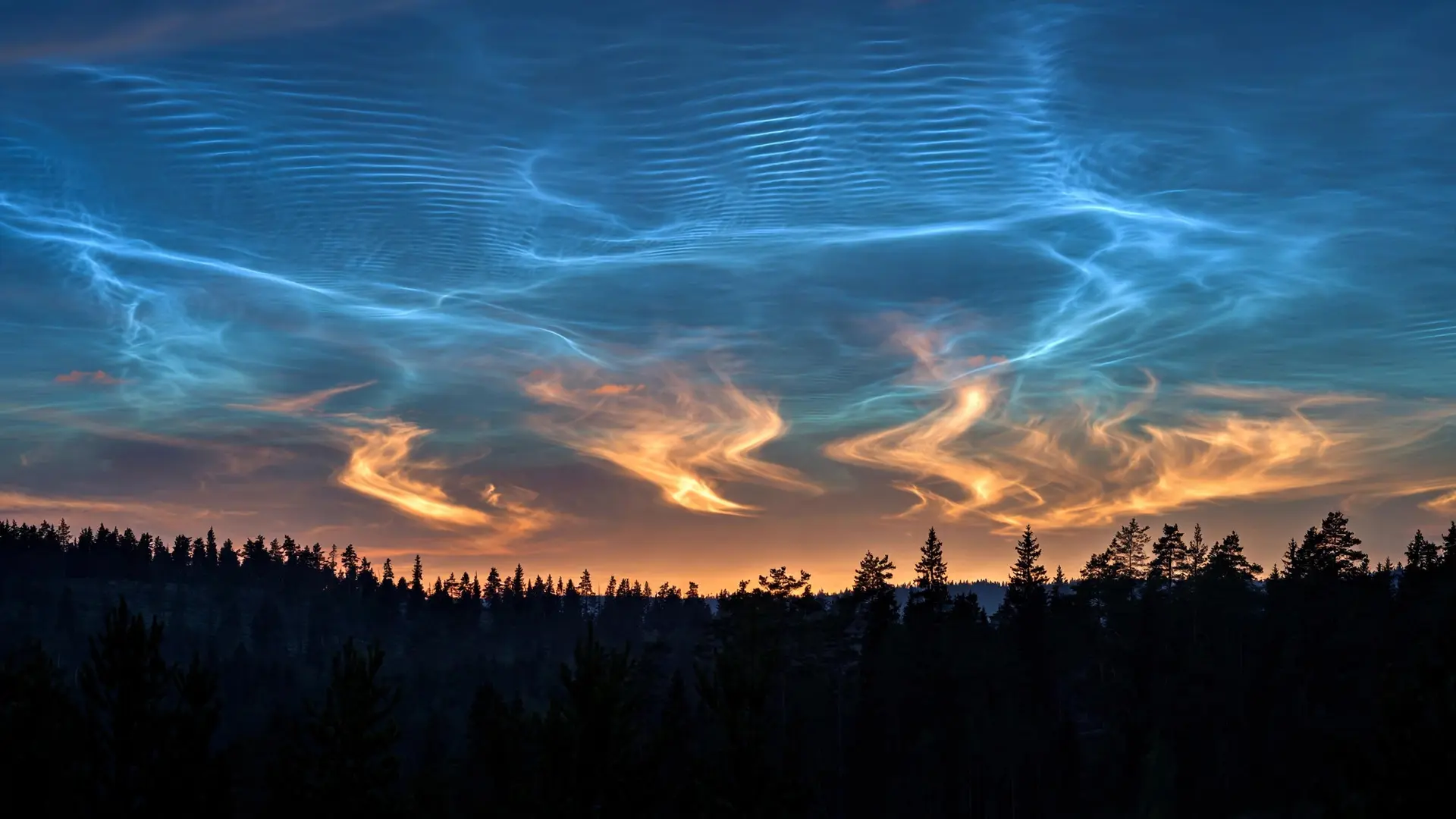
Crepuscular rays are the great illusion of the evening sky: broad shafts of light that seem to fan out from the sun like the spokes of a wheel, separated by dark bands that look like shadows cast across the heavens. They are not beams of light in any physical sense. They are sunlight and shadow, made visible in the air itself — and the rays, for all their dramatic spread, are actually parallel. The name gives away the best time to look. Crepuscular means relating to twilight, and these rays show most vividly around sunrise and sunset, when the sun is low and the contrast between lit and unlit sky is at its strongest. They can appear at other times of day too, whenever clouds break up the sunlight, but twilight is when they earn their name.
What makes the bright bands visible?
Sunlight on its own is invisible as it travels through empty space; you only see it when something in its path throws some of it toward your eyes. In the atmosphere, that something is the fine haze of particles always floating in the air: dust, smoke, water droplets, and the air molecules themselves. Where sunlight passes unblocked through a gap in the clouds, those particles scatter a little of it sideways, and the whole column of air along that path glows faintly brighter than the air around it. That glowing column is the bright band you see. Without those particles, there would be no display at all. A perfectly clean sky would show no rays, because there would be nothing to scatter the light into your eyes — the shadows would still exist, but you could not see them, since a shadow in empty air is just air that is slightly less lit. The rays are therefore a joint creation of light and atmosphere: the sun supplies the light, and the haze supplies the screen it is projected onto. This is also why crepuscular rays look best after rain, near the sea, or in dusty or smoky air. More particles mean more scattering, which means brighter bands and sharper contrast. A crisp, dry, dust-free sky can still produce them, but the effect is fainter, because fewer particles are available to catch the light.
What makes the dark bands?
The dark bands are the more interesting half of the picture, because they are not an absence of light in general — they are shadows, cast across the sky itself. When a cloud, a mountain peak, or another solid object stands between the sun and a stretch of atmosphere, it blocks the direct sunlight from reaching that stretch. The air in the blocked column stays darker, while the air beside it, lit through a gap, glows. The alternating pattern of bright and dark bands is simply the pattern of gaps and obstacles in front of the sun, projected across the sky. The World Meteorological Organization's cloud atlas describes this plainly: the darker streaks are the shadows of parts of an irregular cloud, while pale beams diverge from a sun hidden behind cloud, usually cumulus or cumulonimbus. The obstacles do not even need to be visible to you. A mountain range or a towering storm cloud below your horizon can cast a shadow high into the sky above you, so the dark bands may appear without any obvious object to blame. That is why the pattern can seem mysterious: the thing casting the shadow is often out of sight. Sometimes the bright bands are sunlight streaming through gaps in a low cloud layer, rendered visible by water or dust in the air below. Either way, the mechanism is the same: light passes where it can, shadow falls where it cannot, and the haze turns both into something the eye can read.
Why do the rays fan out if sunlight is parallel?
Here is the heart of the illusion. Sunlight arrives at Earth in essentially parallel rays — the sun is so far away that its light reaches us in straight, parallel lines. The bands of light and shadow in the sky are therefore parallel too, like long, straight corridors of lit and unlit air stretching from the sun toward you and past you. They only look fanned because of perspective, the same effect that makes parallel railway tracks appear to converge in the distance. When you look toward the sun, the parallel bands stretch away from you toward a single vanishing point, and your visual system reads that convergence as a fan spreading outward from the sun. The American Meteorological Society's glossary states it directly: the apparent divergence of parallel sunlight is an artifact of linear perspective. The proof is in turning around. If the bands are long enough, they can stretch all the way across the sky and reappear on the opposite horizon, where they seem to converge again at the antisolar point — the spot directly opposite the sun. These are called anticrepuscular rays, and they are the same corridors of light and shadow, viewed from the other end. A fan that converges at both ends cannot really be a fan; it is a set of parallel lines, seen in perspective from the middle.
The color of the display follows the same rules as a sunset. Crepuscular rays often glow red or yellow because, at sunrise and sunset, sunlight travels a long path through the atmosphere, and air molecules scatter the shorter blue wavelengths out of the beam, leaving the longer reds and yellows behind. The shadows, by contrast, can look deep blue or purple, lit only by the scattered blue light of the surrounding sky.
When and where can you see them best?
The recipe has four ingredients, and twilight supplies most of them. First, the sun must be low, so that its light travels sideways through the atmosphere and the contrast with the darkening sky is strong. Second, there must be broken cloud or a mountainous horizon to chop the sunlight into bands. Third, the air must carry enough haze, dust, or moisture to scatter the light. Fourth, you need a clear view of a wide stretch of sky, so the pattern has room to show itself. Coasts, valleys, and open plains after a storm are classic settings, because the air is hazy and the cloud is broken. Mountain sunsets are especially good: peaks provide crisp obstacles, and the valleys below fill with haze that catches the light. The rays that stream down from behind a cloud toward the ground are sometimes nicknamed Jacob's Ladder, after the biblical story of a ladder reaching toward heaven — a name that captures how the display has always felt to watchers, long before anyone understood the optics. It is worth noting what crepuscular rays are not. They are not a weather warning in themselves, and they are not a sign of anything supernatural or unusual in the atmosphere. They are simply what broken sunlight looks like when the air is hazy enough to show it. A spectacular display at sunset usually means only that the evening cloud was broken in the right way, and that the air was dusty or moist enough to catch the light — the same conditions that also make sunsets glow orange. Next time the sky fills with those radiant spokes, try the simplest experiment the phenomenon offers: turn around. If the bands are long, you may find them converging again on the far horizon, fainter and stranger than the ones you first saw. That second fan is the giveaway. The sky is not radiating light from a single point. It is showing you parallel sunlight, shadowed by distant clouds, and your own eyes are doing the rest. For more of the same hidden geometry, the reflections that make sun pillars and the refractions behind halos and sun dogs are close cousins of this trick.
Frequently asked questions
Are crepuscular rays real beams of light?
Not in the way they look. The bright bands are regions of air lit by the sun, made visible by particles scattering sunlight toward your eyes, and the dark bands beside them are shadows. The sun's rays themselves are essentially parallel; the fan shape is a perspective effect.
Why do crepuscular rays appear mainly at sunrise and sunset?
The name itself means relating to twilight, and twilight is when the effect is strongest. The low sun lights the sky from the side, and the darker background gives the bright bands and dark shadows maximum contrast, so the pattern stands out.
What are anticrepuscular rays?
They are the same bands of light and shadow seen on the opposite side of the sky, appearing to converge at the antisolar point, the spot on the horizon directly opposite the sun. They are fainter than crepuscular rays and easy to miss unless you turn around and look.
Sources
- Crepuscular rays, World Meteorological Organization, International Cloud Atlas
- crepuscular rays, American Meteorological Society, Glossary of Meteorology
- Crepuscular Rays: sun rays converging on the horizon, University of Illinois, WW2010
- Crepuscular rays are sunrays in twilight skies, EarthSky