Why Do Northern Lights Reach Farther South in Some Years?
The northern lights reach farther south near solar maximum, when stronger storms stretch the auroral oval to lower latitudes. Cycle 25 is in that window now.
Key takeaways
- The northern lights reach farther south near solar maximum, when stronger geomagnetic storms stretch the auroral oval.
- Solar Cycle 25 beat forecasts: sunspot counts topped 150 against a predicted 115, peaking in late 2024.
- The May 2024 Gannon Storm hit Kp 9 and put auroras over Mexico, Cuba, and Hawaii.
- NOAA's G-scale runs G1 (Kp 5) to G5 (Kp 9); G3 brings mid-latitude aurora, G4 can reach near the tropics.
- Heightened activity should last through 2026; the next maximum is expected around 2034-2036.
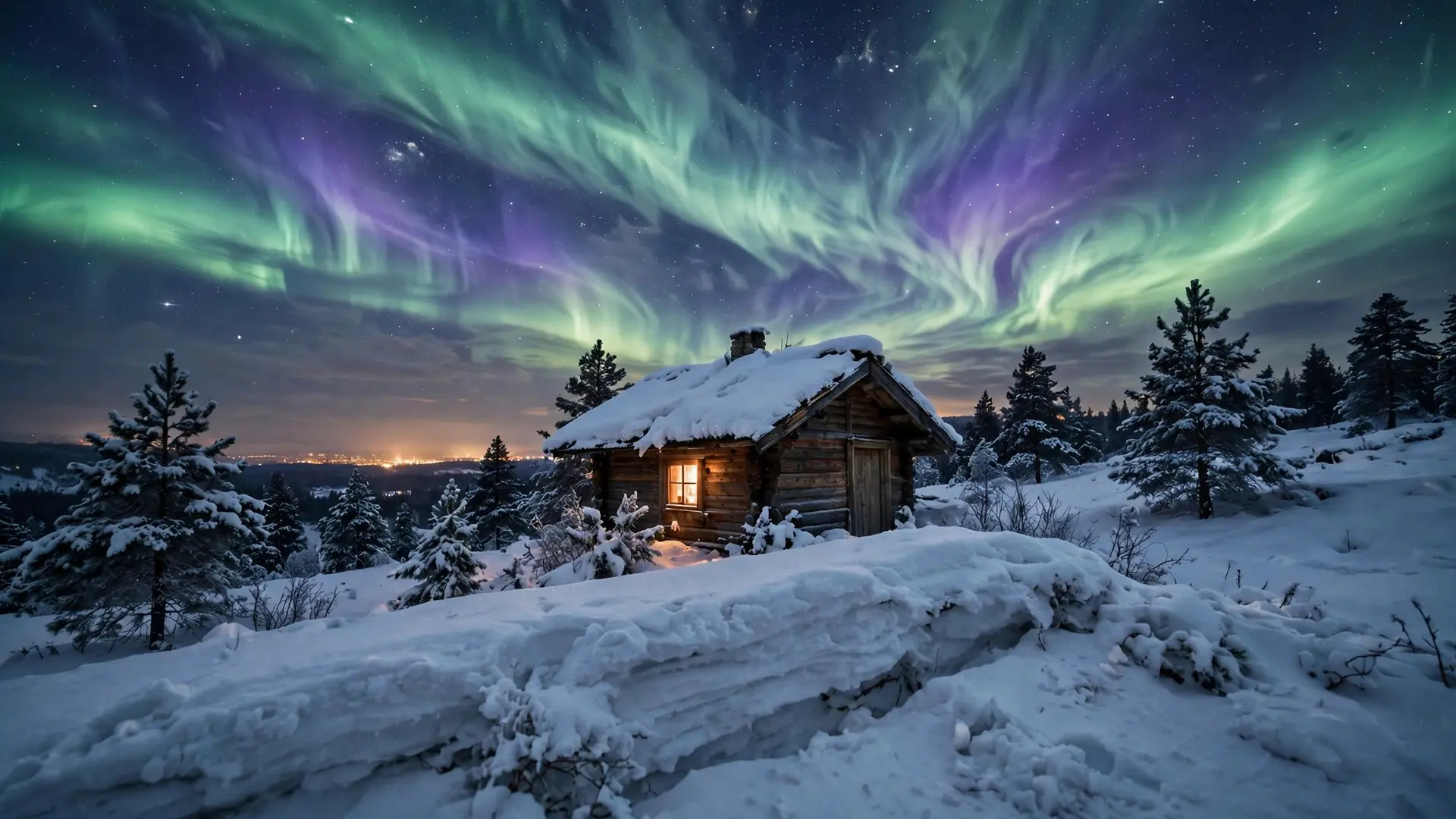
The northern lights reach farther south in years around solar maximum, when the Sun's activity peaks and sends more frequent, stronger geomagnetic storms toward Earth. The May 2024 storm pushed auroras as far south as Mexico, Cuba, and Hawaii. We are in such a window now: Solar Cycle 25 peaked in late 2024 and stays active through 2026.
- The Sun's activity runs on an average 11-year cycle; Solar Cycle 25 began in December 2019. aurora-norway.no
- Forecasters predicted a weak cycle with a smoothed sunspot number of about 115 peaking in July 2025; the actual count topped 150 by 2024 and the peak came early. aurora-norway.no
- The May 10-12, 2024 Gannon Storm reached Kp 9, the strongest geomagnetic storm since the Halloween storms of 2003, with aurora visible in all 48 contiguous US states and as far south as Mexico, Cuba, and Hawaii. aurora-norway.no
- NOAA grades geomagnetic storms from G1 (Kp 5) to G5 (Kp 9); G3 storms bring aurora to mid-latitudes, and G4 storms can push it toward the tropics. NOAA SWPC
- Heightened activity should continue through 2026 before declining toward a solar minimum around 2030-2031; the next maximum (Cycle 26) is not expected until about 2034-2036. aurora-norway.no
How does the Sun push the lights south?
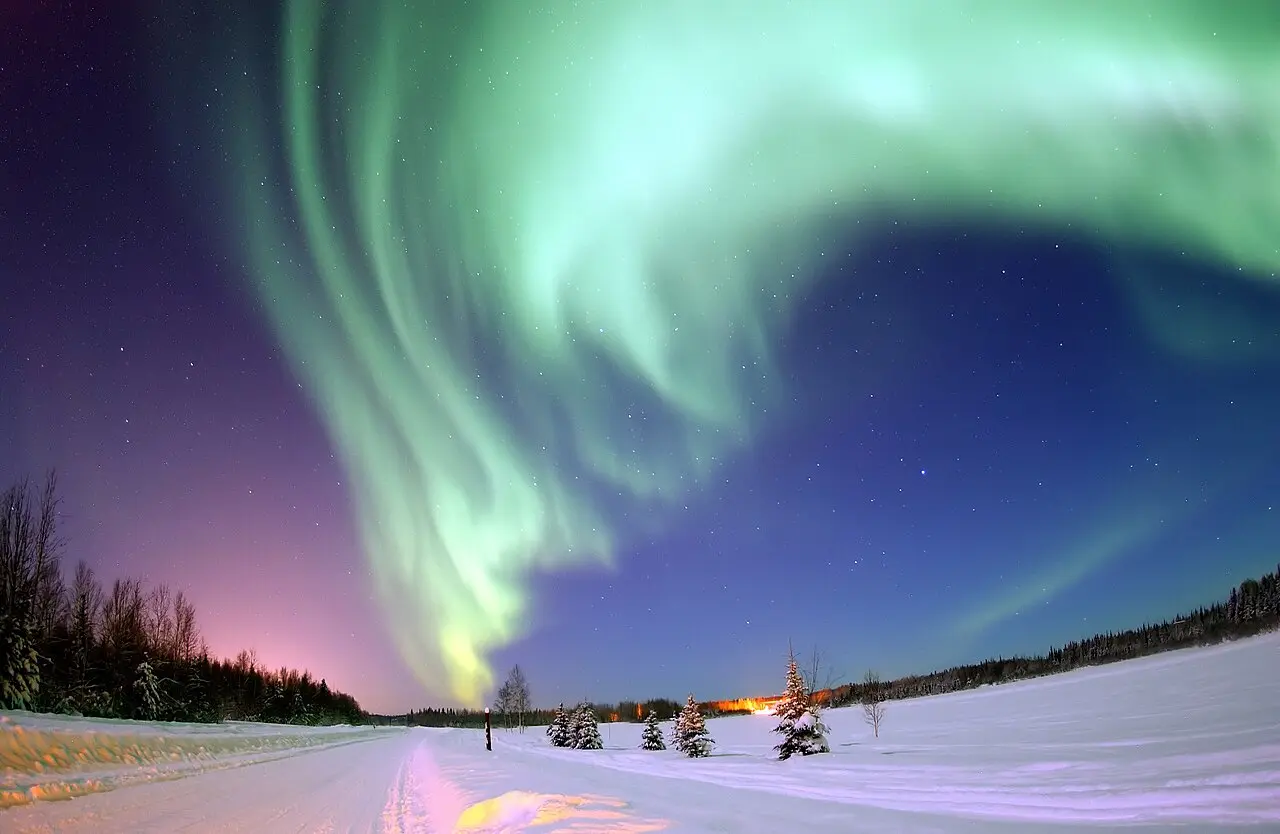
The chain runs from the Sun's surface to your sky. More sunspots mean more magnetically tangled active regions. Those regions fire off solar flares and coronal mass ejections, billion-tonne blasts of plasma. The Sun's solar wind buffets Earth's magnetic shield, and when the energy stored there is released, it rains charged particles down into the upper atmosphere, where they make oxygen and nitrogen glow. Green is the most common color, produced by oxygen around 60 miles (100 km) up; red comes from oxygen above 120 miles (200 km), and nitrogen adds blue and pink. The stronger the storm, the farther the auroral oval stretches from the poles, and the farther south the lights appear. aurora-norway.no NASA
Near the poles, in places like northern Norway, the oval sits overhead on any clear dark night, solar cycle or not. Farther south you need the oval to come to you, and that only happens during strong storms. During solar maximum, storms rated Kp 5 or higher roughly double in frequency compared with solar minimum, and extreme Kp 7+ events that might strike once every 18 months at minimum can arrive several times a year. aurora-norway.no For the full physics of the display itself, see our guide to how the aurora works.
Why did this solar cycle surprise everyone?
In 2019, the joint NOAA-NASA prediction panel called for a modest Cycle 25: a maximum smoothed sunspot number of about 115, similar to the weak Cycle 24, peaking around July 2025. The Sun ignored the memo. By 2024 the smoothed sunspot number had already passed 150 and was still climbing, and the peak arrived earlier than predicted. Even a revised 2024 forecast of about 137 was overtaken. aurora-norway.no The storms that followed made the difference visible. The May 10-12, 2024 Gannon Storm, driven by a run of X-class flares and multiple coronal mass ejections, pushed the Kp index to 9, its maximum, for several hours. Aurora appeared across all 48 contiguous US states, most of Europe, and as far south as Mexico, Cuba, and Hawaii. An October 2024 storm reached Kp 8-9 and put the lights over southern France, Spain, the northern United States, and southern Australia. During 2024 there were about 15 nights with Kp at 6 or higher, more than in any year of the previous cycle, and the lights were seen from Oslo, Bergen, and Stockholm on multiple occasions. aurora-norway.no
What does the Kp index tell you?
NOAA's Space Weather Prediction Center watches the Sun and rates geomagnetic disturbance on the Kp index. From Kp 5 upward the disturbance earns a G-scale storm rating, G1 at Kp 5 through G5 at Kp 9. The higher the number, the farther the aurora reaches from the poles. NOAA SWPC
| Kp | NOAA storm rating | How far south the aurora can reach |
|---|---|---|
| 5 | G1 (minor) | The aurora zone overhead: northern Canada, Scandinavia, Alaska |
| 6 | G2 (moderate) | Dips toward southern Norway and Scotland on occasion |
| 7 | G3 (strong) | Mid-latitudes: the northern US, the UK, central Europe |
| 8 | G4 (severe) | Possible aurora near the tropics |
| 9 | G5 (extreme) | As far south as Mexico, Cuba, and Hawaii, as in May 2024 |
| NOAA's own impact tables list "mid-latitude aurora" at G3 and "possible aurora near the tropics" at G4. NOAA SWPC | ||
| Statistically, the odds favor stormy years right now. During solar maximum, Kp 5+ events happen on roughly 50 to 60 days per year, versus 20 to 30 at minimum; Kp 7+ events run 5 to 10 per year at maximum versus 1 to 3 at minimum. aurora-norway.no |
What do people get wrong about the northern lights?
First, that they vanish at solar minimum. They do not. The auroral oval sits over northern Norway on any clear dark night, in every year of the cycle; what fades at minimum is the chance of seeing them from your hometown farther south. aurora-norway.no Second, that you must travel to the Arctic. During the strongest storms the lights travel instead. The May 2024 storm put auroras over cities whose residents had never seen them, which is exactly why some years feel like the lights have moved south. aurora-norway.no Third, that they are a winter phenomenon. It is the darkness that matters, not the cold. Aurora season is set by Earth's tilt and the resulting long nights; the solar cycle only changes how likely and how far-reaching the displays are during those dark months. November sits in those dark months for the northern hemisphere, where it is late autumn, while in the southern hemisphere it is late spring and the southern lights are harder to catch. aurora-norway.no And not every strange light in a Norwegian valley is an aurora: the Hessdalen lights are a separate, still-unexplained phenomenon, and other upper-atmosphere flashes such as red sprites above thunderstorms are an entirely different show. The northern lights reach farther south in some years because the Sun runs hotter in some years. Solar Cycle 25 overdelivered, and its storms stretched the auroral oval over places that rarely see it. The window stays open through 2026, then narrows for a decade. If you live south of the usual aurora zone, this is the year to watch the sky. How we made this article: FactSpire researched and drafted it with AI assistance and checked every fact against the sources listed above.
Frequently asked questions
Why can I suddenly see the northern lights from where I live?
Because a strong geomagnetic storm has stretched the auroral oval south. Near solar maximum, storms rated Kp 7 or higher happen several times a year, pushing the lights into the northern US, the UK, and central Europe. These far-south sightings cluster around solar maximum and fade as the cycle declines.
What does a G3 geomagnetic storm warning mean?
It means NOAA expects a strong geomagnetic storm, with the Kp index reaching 7. G3 storms can push aurora to mid-latitudes such as the northern United States, the UK, and central Europe, and can disturb power systems, satellites, and high-frequency radio.
When will the next good years for low-latitude auroras come?
Solar Cycle 25 should stay active through 2026 before declining toward a solar minimum around 2030-2031. The next solar maximum, Cycle 26, is expected around 2034-2036, though forecasts of its strength will not be reliable until about 2029. Until then, far-south aurora sightings will grow rare.
Do the northern lights disappear between solar maximums?
No. The auroral oval sits over northern Norway, Alaska, and northern Canada on any clear dark night, every year of the cycle. What declines after solar maximum is the frequency of strong storms, so far-south sightings become rare again until the next maximum.
Sources
- The Solar Cycle and Northern Lights: Why 2024–2026 Is an Exceptional Aurora Period, aurora-norway.no
- Auroras, NASA Science
- Subscription Services | NOAA / NWS Space Weather Prediction Center, NOAA Space Weather Prediction Center