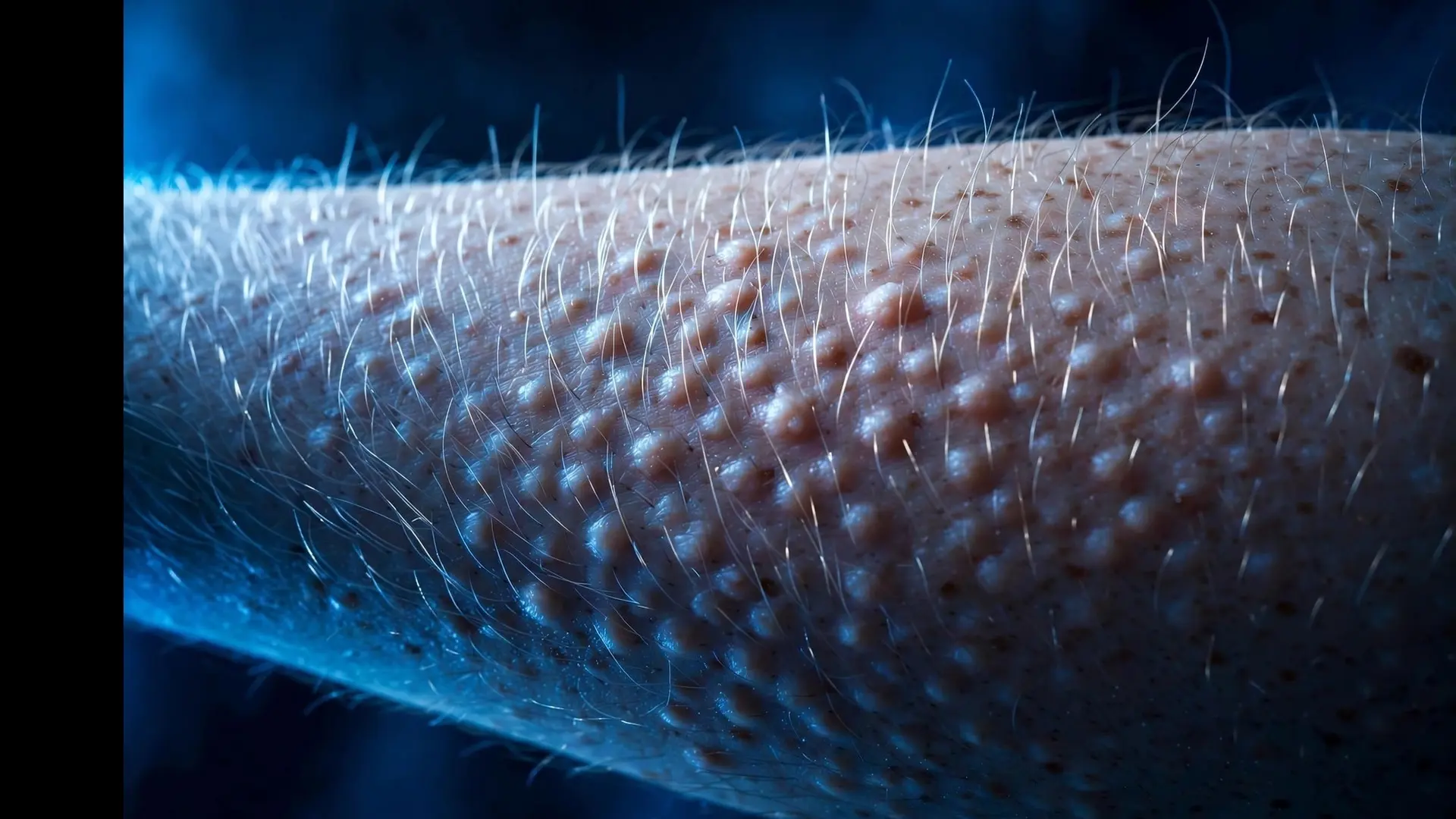
Why Your Fingers Wrinkle in Water — And Why It Helps
Your pruney fingers aren't soaking up water — your nervous system deflates them. This strange response may be an evolved rain-tread design for better grip.
Key takeaways
- Water wrinkles are caused by your autonomic nervous system constricting blood vessels beneath the skin — not by the skin absorbing water.
- Fingers with nerve damage don't wrinkle at all, a finding from the 1930s that proves the response is neurological, not osmotic.
- Evolutionary neurobiologist Mark Changizi proposed in 2011 that wrinkles act like rain treads, channeling water away for better grip.
- Lab tests found people picked up wet marbles faster with wrinkled fingers — while wrinkles gave no advantage with dry objects.
- Only fingertips and toes wrinkle, since the thick ridged skin there is built for grip and footing.
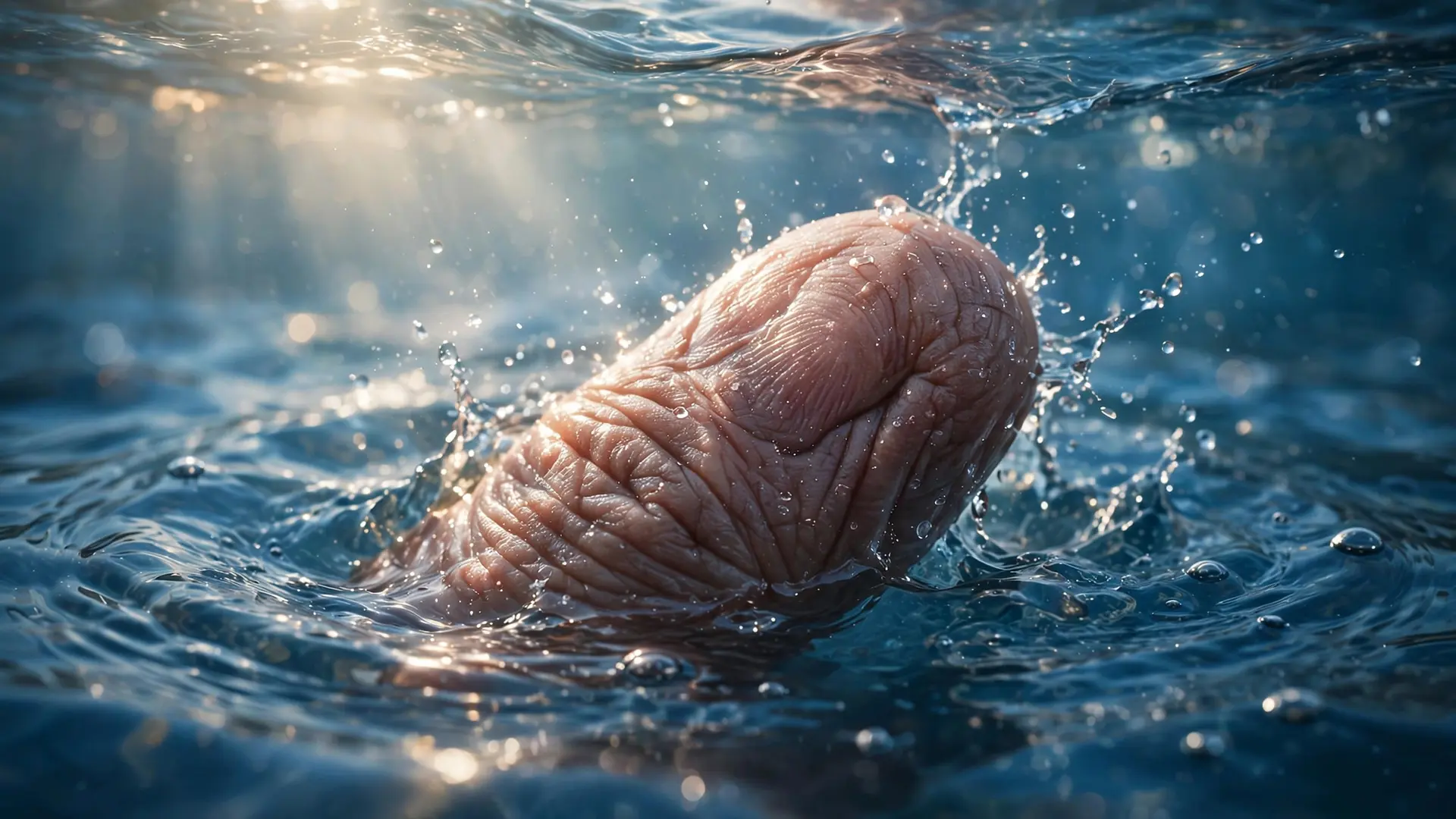
Your fingers don't wrinkle in the bath because they're soaking up water. They wrinkle because your nervous system tells them to: sympathetic nerves narrow the blood vessels beneath your fingertips, shrinking the tissue underneath while the outer skin stays the same size — so it buckles into ridges. Scientists believe this odd, deliberate maneuver may be one of your body's quiet engineering tricks: natural rain treads that help you grip wet things.
What actually causes water wrinkles?
For most of history, the explanation seemed obvious: skin absorbs water and swells up like a sponge. It is wrong, and researchers have known that since the 1930s. Experiments back then revealed something startling — fingers whose nerves had been severed or damaged simply do not wrinkle in water at all. If wrinkling were just water soaking into dead skin, nerve damage wouldn't change a thing. Instead, the finding proved that pruney fingers are an active, involuntary response run by the autonomic nervous system — the same system that controls your breathing, heart rate, sweating, and other involuntary quirks like goosebumps. Here is the actual mechanism. When you soak in water, sympathetic nerve fibers signal the tiny blood vessels in your fingertips to constrict. With less blood filling the soft tissue, the pulp of the fingertip loses volume, like a balloon slowly deflating. But the outer layer of skin doesn't shrink along with it — so it folds and buckles into the familiar wrinkled ridges. In other words, your nervous system is deliberately wrinkling your fingers on purpose, every single time.
When you climb out of the water, the process reverses: the sympathetic signal fades, the blood vessels relax and refill, and your fingertips plump back to their smooth shape within minutes. The whole cycle — wrinkle on immersion, smooth on drying — is a neat demonstration that this is living tissue responding to nerve signals, not dead skin passively swelling. It also explains why the effect is so reliable: it is a reflex, and like most reflexes, it runs the same way every time.
Why do only your fingers and toes wrinkle?
Notice that your whole hand doesn't go pruney — just the pads of your fingers, along with your toes. That selectivity is a clue. These are the only areas covered in thick, ridged, hairless skin — dermatologists call it "glabrous" skin — the same skin that carries your fingerprints. Everywhere else on the body, the skin is thinner and anchored differently, so the same volume loss never produces the dramatic ridging. The pattern also hints at function. Your fingertips are your precision instruments — the parts of you that grab, hold, and manipulate. Your toes are your footing. Researchers who favor the evolutionary explanation point out that the same logic applies below: pruney toes may have helped our ancestors keep their footing on rain-slicked rocks and riverbeds. Intriguingly, the response is not uniquely human — macaques, our primate cousins, show water wrinkling too, which suggests the mechanism is ancient and deeply wired into primate biology.
Are pruney fingers really nature's rain treads?
The rain-tread idea comes from Mark Changizi, an evolutionary neurobiologist at 2AI Labs in Boise, Idaho. In a 2011 paper in the journal Brain, Behavior and Evolution — pointedly titled "Are wet-induced wrinkled fingers primate rain treads?" — Changizi argued that because wrinkling is an active, energy-costly nervous-system response, it must serve a purpose. His proposal: the wrinkles form a drainage network that channels water away from the fingertip's contact surface, exactly like the rain treads on car tires, letting more skin meet the object for a surer grip.
A beautiful theory is still only a theory — so researchers at Newcastle University put it to a practical test. In a study published in the journal Biology Letters, volunteers picked up wet and dry marbles of different sizes, either with normal fingers or with fingers wrinkled by a 30-minute soak in warm water. The result was striking: subjects were noticeably faster at picking up the wet marbles with wrinkled fingers. With dry objects, the wrinkles made no difference at all — precisely what the rain-tread idea predicts. As evolutionary biologist Tom Smulders, a co-author of the study, put it, wrinkled fingers may be "working like treads on your car tires, which allow more of the tire to be in contact with the road and gives you a better grip."
Is the rain-tread idea settled science?
Not quite. The rain-tread hypothesis is the leading explanation, but it remains a hypothesis. Some scientists note that the measured grip advantage, while real, is modest — and that proving what evolution "intended" for a trait this ancient is notoriously hard. What is not in doubt is that wrinkling is neurological rather than osmotic, and that it improves wet grip under at least some conditions. Future experiments may even test whether the effect exists in other primates beyond macaques. Medicine, meanwhile, has found its own use for the phenomenon. Because water wrinkling depends on intact sympathetic nerves, doctors use the water-immersion test to check nerve function: a hand soaked in warm water should wrinkle on schedule, and a hand that stays smooth can be an early warning sign of nerve damage, as seen in conditions like diabetic neuropathy. Researcher E. P. V. Wilder-Smith formalized the test's clinical value in a 2004 paper — proof that something most of us discover in the bathtub doubles as a genuine window into the nervous system. So the next time you climb out of the bath and catch your fingertips looking like tiny raisins, don't blame the water. Thank your nervous system — it has been quietly reshaping your fingers into high-traction tools, a maneuver first documented in the 1930s, reframed as evolutionary engineering in 2011, and as handy today as it presumably was for ancestors gathering food from a wet stream. It is a small reminder that even your quirkiest reflexes, much like why your brain freezes when you eat ice cream too fast, are usually the body solving a problem you never knew you had — with engineering as precise as the surfaces modern touchscreens are designed to read.
Frequently asked questions
Do fingers wrinkle because they absorb water?
No. Wrinkling is controlled by your autonomic nervous system, which constricts blood vessels under the skin so the tissue loses volume and the skin buckles. Fingers with nerve damage don't wrinkle at all, which rules out simple water absorption.
How long does it take for fingers to wrinkle in water?
In laboratory studies, full wrinkling appeared after about 30 minutes of soaking in warm water. In a hot bath or pool you may notice the first ridges forming much sooner.
Do wrinkly fingers really help you grip better?
Experiments suggest so: volunteers picked up wet marbles faster with wrinkled fingers than with smooth ones, while wrinkles made no difference for dry objects. The leading theory is that the wrinkles act like tire rain treads, draining water away from the contact surface.