Why Did the Egyptians Bury Workers With the Pyramid?
Why did the Egyptians bury workers with the pyramid? Giza's cemetery shows it was honor, not sacrifice: named tombs, job titles, and food for the afterlife.
Key takeaways
- No one was sacrificed at Giza: the workers' cemetery holds honored builders buried with their names, job titles and food for the afterlife.
- More than 600 tombs rank the workforce in death as in life: mud-brick graves for laborers below, stone mastabas for overseers on the upper slope.
- The builders ate prime beef: over 4,000 pounds of meat a day fed the 10,000 workers on Menkaure's pyramid, plus bread, beer and fish.
- Set and healed fractures in workers' skeletons show the state provided medical care, and Egyptologist Zahi Hawass calls them volunteers, not slaves.
- Burial near the king was the reward itself: Egyptians believed the dead stayed close to the ruler they had served in the afterlife.
Nobody was sacrificed at Giza. The workers buried beside the pyramids were honored dead: ordinary Egyptians who earned a tomb in the king's eternal neighborhood. Their graves carry their names and job titles, and they were stocked with bread and beer for the afterlife, because staying close to the king in death meant sharing his eternity.
- More than 600 tombs make up the workers' cemetery at Giza, uncovered after a tourist's horse stumbled on a buried wall in 1990 (Archaeology Magazine).
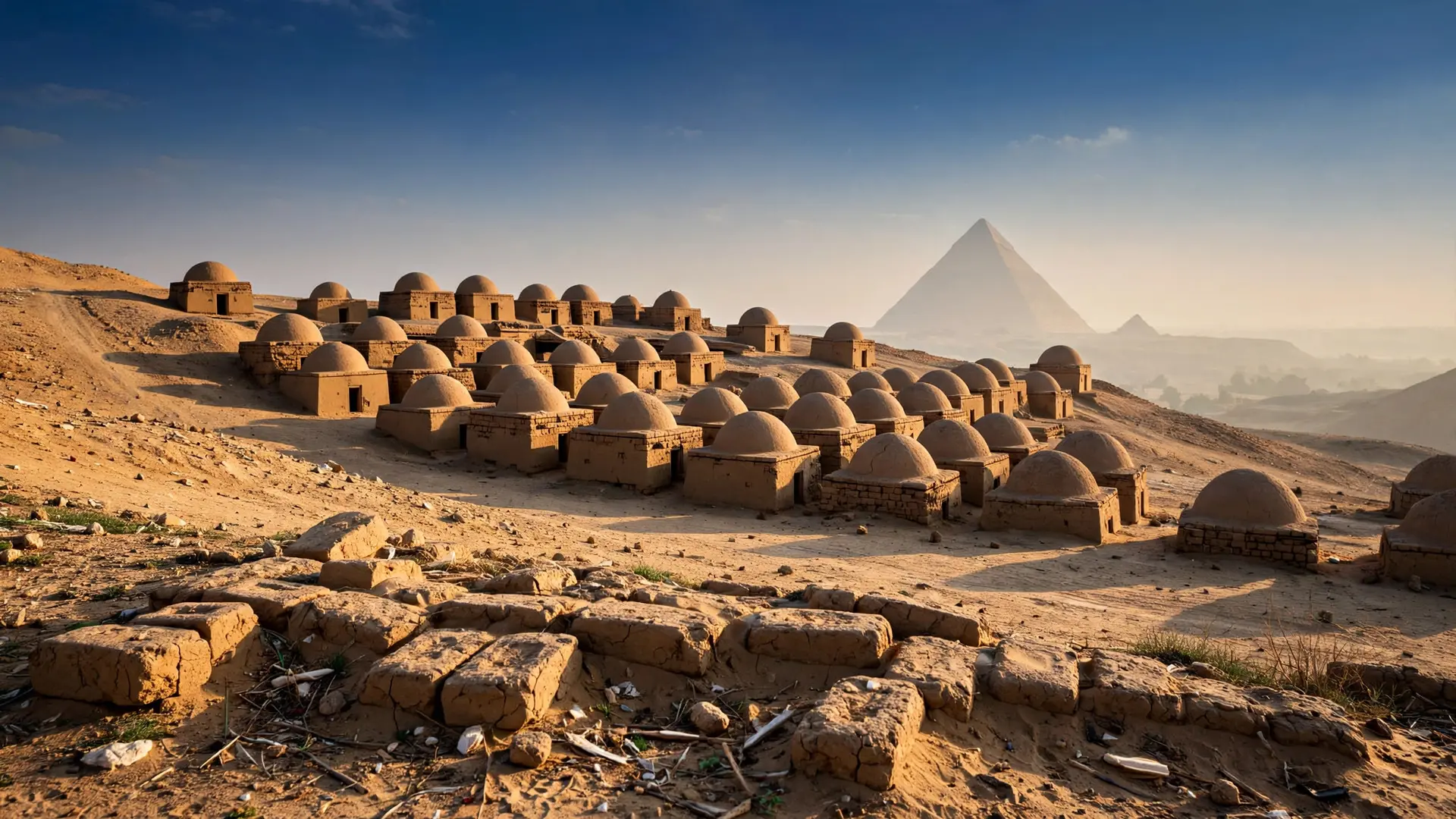
- The tombs are ranked like the workforce: unadorned mud-brick graves for laborers on the lower slopes, and large stone mastabas for overseers and skilled craftsmen higher up, including the decorated tomb of Nefertheith, overseer of linen (Egyptian Ministry of Tourism and Antiquities).
- The 10,000 workers who built Menkaure's pyramid were supplied with more than 4,000 pounds (1,814 kg) of meat from cattle, sheep and goats each day, on top of fish, beans, lentils, grain and beer (Archaeology Magazine, 2013).
- Animal bones include prime cuts of beef from cattle younger than two years, and skeletons show fractures that were set and healed, proof the state fed and treated its workers (Archaeology Magazine archive).
- The Great Pyramid stood about 482 feet (147 meters) tall when built for Pharaoh Khufu around 2589–2566 BCE and used roughly 2.3 million stone blocks (Britannica).
Were the pyramid workers actually sacrificed?
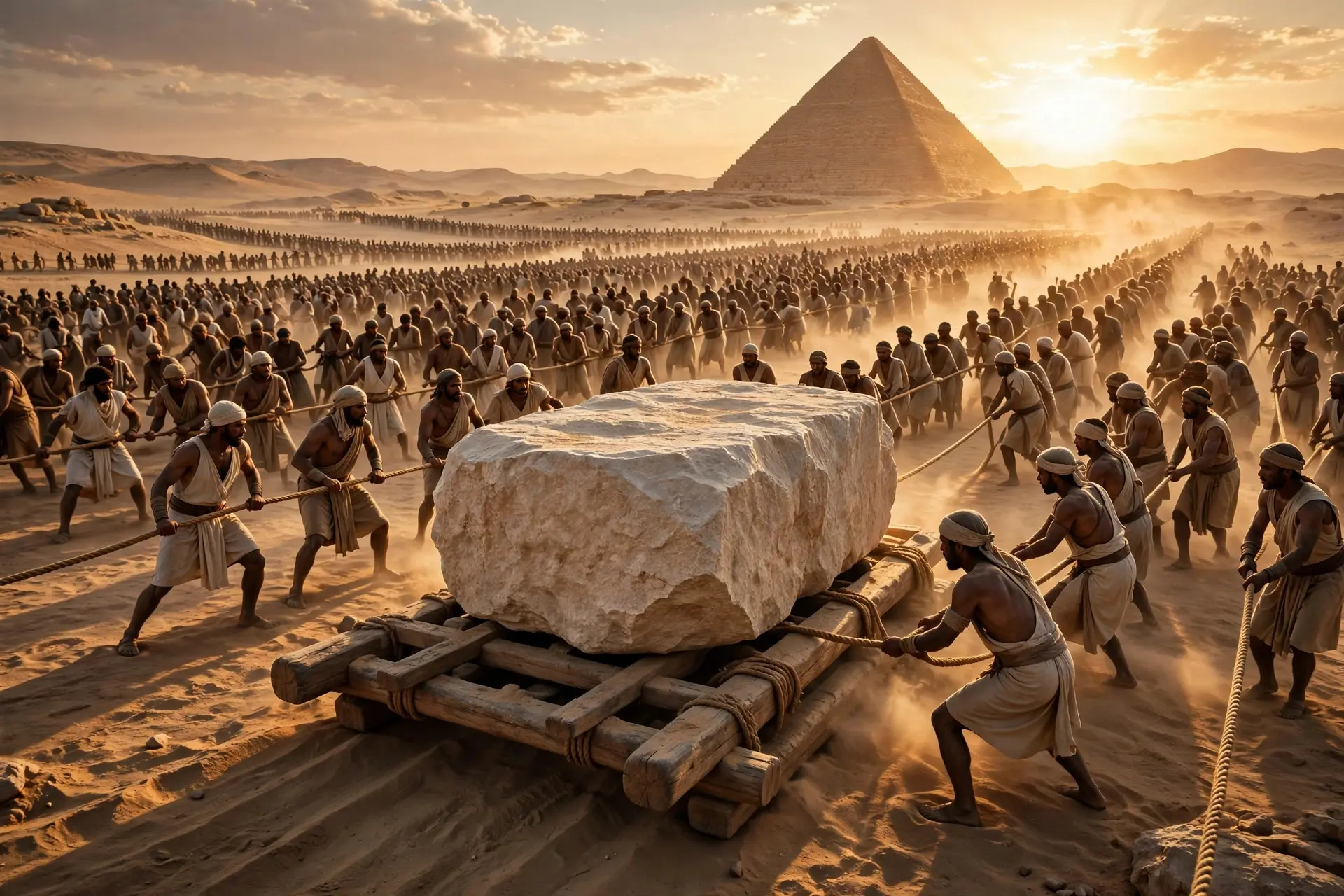
Film and legend love the image of slaves lashed to sledges, and of servants slaughtered to attend the king in death. The ground at Giza tells a different story. The workers' cemetery sits on the hillside just west of Heit el-Ghurab, the town where the builders lived south of the Sphinx. It was found by accident in 1990, when a tourist's horse stumbled on a buried wall, and archaeologist Zahi Hawass has since investigated more than 600 tombs there. The detail that matters is the spread of dates. These burials were not made at a single royal funeral. They span the reigns of Khufu (around 2589–2566 BCE), Khafre (around 2558–2532 BCE) and Menkaure (around 2532–2503 BCE), three generations of pyramid building. People died on the job over decades and were buried where they had worked. That is the pattern of a community, not a massacre.
Hawass estimates the workforce as a core of 5,000 full-time specialists and administrators plus about 15,000 laborers, working 12-hour days in three-month shifts before returning to their villages. He calls them "volunteers, not slaves." Mark Lehner, the archaeologist who excavated the workers' town, likens the project to "an Amish barn raising": the labor was obligatory, but the people were not unwilling. Hollywood's whipped slaves come from the Greek historian Herodotus, who wrote two thousand years after the fact and claimed 100,000 slaves built the Great Pyramid. The bones say otherwise.
What did the workers' cemetery look like?
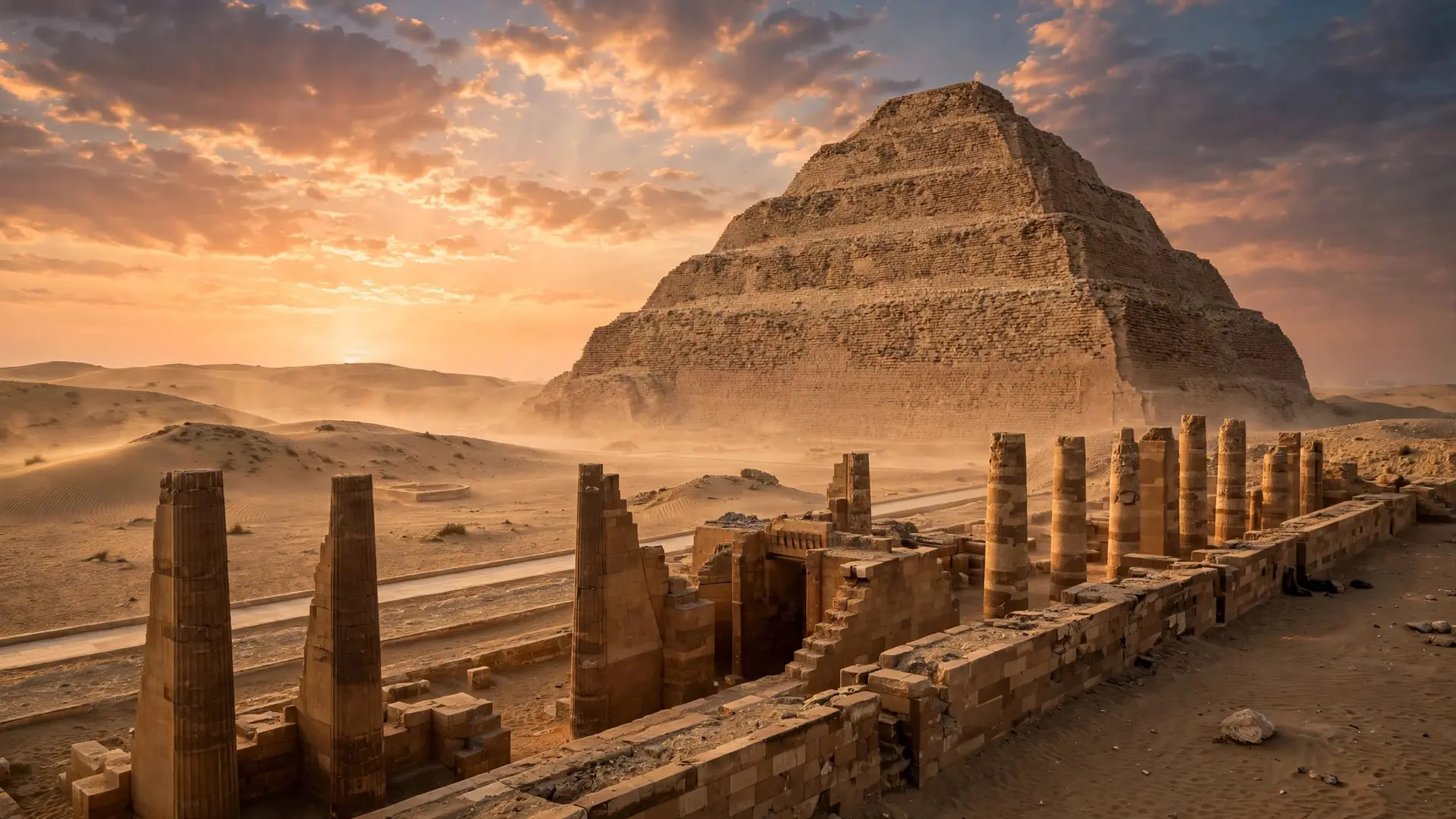
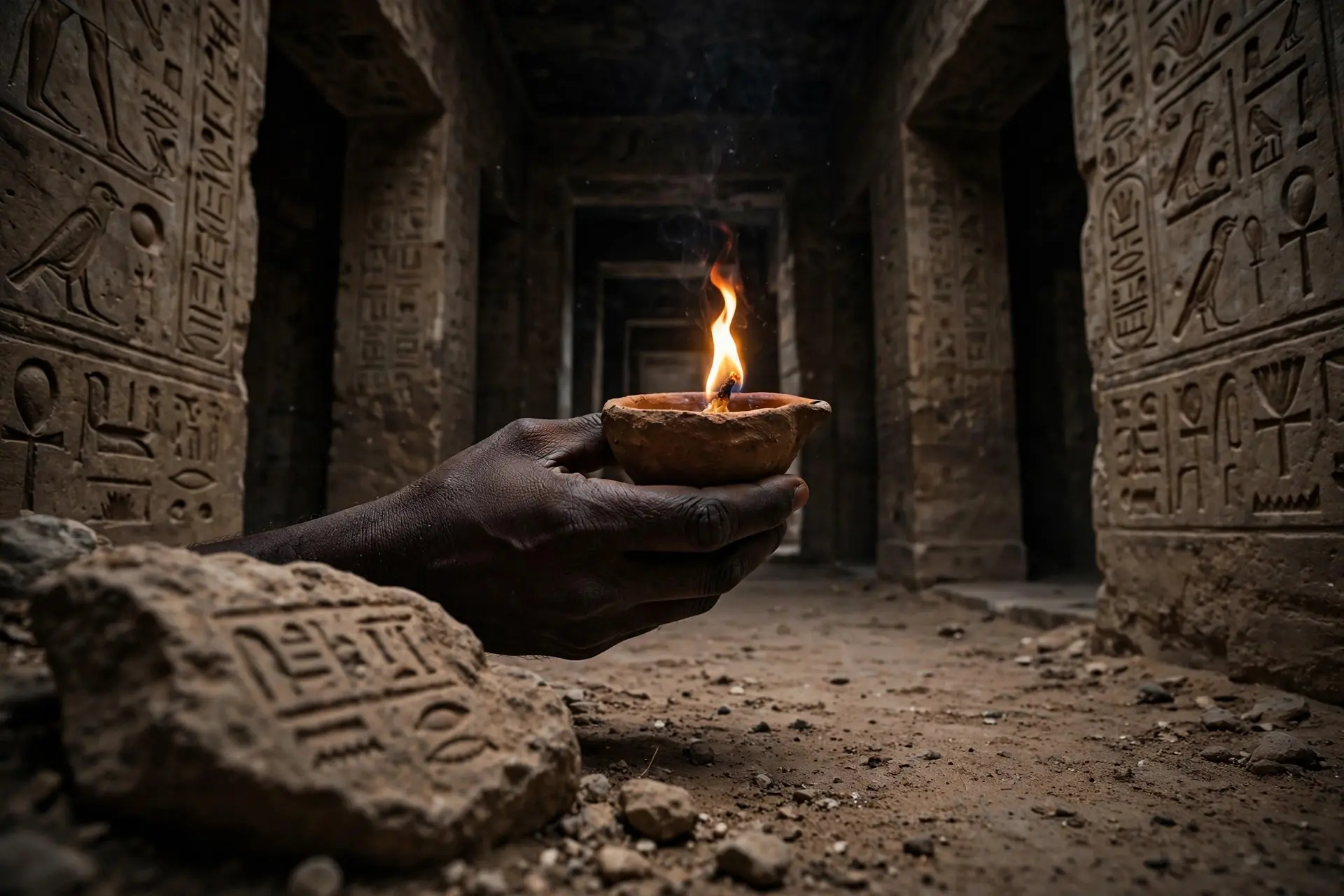
Rank followed the builders into death. Low-ranking overseers rest in modest mastabas on the lower slopes, surrounded by even smaller mud-brick or domed tombs, probably those of their families and the workmen they supervised. Higher up the slope, senior overseers and skilled craftsmen got large stone mastabas. Among them stands the decorated tomb of Nefertheith, overseer of linen and of the royal house of purification. The Egyptian Ministry of Tourism and Antiquities, which manages the site, describes this as a workforce cemetery: a mirror of the job ladder, from laborer to craftsman to overseer. The dead took their work with them. Inscriptions on the tombs give the owners' occupations and ranks in the workforce, and the burial chambers held the basics for the journey: bread and beer. The tombs are simple, and the workers were not mummified like royalty, but they were buried as individuals, named and titled, within sight of the monument they had raised. This was a step the pyramid age made possible. A century earlier, Imhotep's Step Pyramid at Saqqara had proved Egypt could build in stone at monumental scale. By the Fourth Dynasty, the state could run an industrial building program and give its workforce a cemetery of its own.
How well were the builders treated?
Better than the legend allows. The animal bones from the workers' town tell the story in unusual detail. Archaeozoologist Richard Redding of Ancient Egypt Research Associates studied about 175,000 bones and concluded the crews got prime cuts of beef from cattle younger than two years old. The 10,000 workers on Menkaure's pyramid were supplied with more than 4,000 pounds (1,814 kg) of meat from cattle, sheep and goats every day, plus fish, beans, lentils, grain and beer. His calculations put the daily slaughter at about 105 cattle and 368 sheep or goats every ten days. Redding says the builders "probably got a much better diet than they got in their village." The skeletons agree. Most show the wear of hard physical labor, and many have broken bones. But the fractures were set and had healed correctly, which means the state kept doctors on hand. Analysis of the cemetery found the workers died on average ten years before the nobility, yet they were treated when hurt. Hawass notes the cemetery even contains small mud or stone pyramids, a funerary form used by people at every level. The work gangs had names and pride: one was called the Drunkards of Menkaure, and gang names painted on stone blocks inside the Great Pyramid carry the name of Khufu himself. These were people who signed their work, not people who were erased by it. Hauling multi-ton blocks up desert ramps was grueling, but the organization around it was professional to the bone.
Why would burial near the pyramid be an honor?
Because in Egyptian belief, death was a change of address, not an ending. A tomb was a house for the afterlife, equipped with food, drink and a false door through which the spirit could return to receive offerings from the living. To be buried near the king was to stay in his orbit forever. Long before Khufu, Egyptians of rank asked to be buried beside the ruler they had served, so the connection would continue after death. The workers' cemetery extends the same privilege to the people who built the monument. There is a theological reason too. Egyptians believed the king would sit alongside the gods after death and intervene for his people, keeping the Nile floods coming and plagues away. Building his pyramid was how he made that journey, and helping build it was a share in the project. To Hawass, building the pyramids expressed devotion to the pharaoh and national pride. Nobody was buried as equipment. The workers were buried as participants, in tombs that face the monument they made, at the pyramid whose alignment still tracks the cardinal points nearly 4,600 years later.
What most people get wrong
| Myth | What the evidence shows |
|---|---|
| The workers were sacrificed when the pharaoh died. | The cemetery's 600-plus tombs span three reigns and several generations of builders. People were buried as they died, not slaughtered at a funeral. |
| The pyramids were built by slaves. | Healed fractures show the state provided medical care. Tomb inscriptions list names and job titles. Hawass calls the crews "volunteers, not slaves," working 12-hour days in three-month shifts. |
| The builders were treated as disposable. | The crews ate prime cuts of beef, more than 4,000 pounds of meat a day, plus bread, beer and fish: a better diet than most had at home, according to Richard Redding's research. |
| The workers were buried inside the pyramid. | They were buried in their own tombs near the pyramids, with their own names on them. Khufu's own body, fittingly, has never been found. |
| Only nobles earned a tomb. | The cemetery is ranked by occupation, from mud-brick tombs for laborers to stone mastabas for overseers. Burial itself was every Egyptian's right; what varied was the size. |
| "Buried with the pyramid" makes it sound as if the workers were packed into the king's tomb as offerings. The truth is nearly the reverse. The workers were buried with their names, their titles and their dinner, on a hillside facing the monument they had built. In a civilization that measured honor by closeness to the king in death, that plot of desert was the finest bonus on the pay slip. The same organizational genius that could raise stone obelisks upright centuries later started here: a state that fed, housed, doctored and buried its builders, and let them sign the work. | |
| How we made this article: FactSpire researched and drafted it with AI assistance and checked every fact against the sources listed above. |
Frequently asked questions
Were pyramid workers really sacrificed when the pharaoh died?
No. The cemetery's 600-plus tombs span the reigns of Khufu, Khafre and Menkaure, so burials accumulated over generations, not in one funeral. The dead were buried with their names, job titles and food for the afterlife, which is the treatment of honored workers, not of human offerings.
Were the pyramids built by slaves?
There is no archaeological support for the slave story. The workers lived in a state-built town, ate prime beef, received medical care, and were buried with their job titles on their tombs. Zahi Hawass describes them as volunteers who worked 12-hour days in three-month shifts before returning to their villages.
What did the workers eat while building the pyramids?
Better than most Egyptians of their time. Alongside bread, beer, fish, beans and lentils, the crews got more than 4,000 pounds (1,814 kg) of beef, sheep and goat meat a day, including prime cuts from cattle under two years old. Researcher Richard Redding says they probably ate better than they did back in their home villages.
Why would ordinary workers get tombs at all?
In Egypt, tombs were how everyone prepared for the afterlife, not a luxury for kings alone. The workers' cemetery mirrors the workforce's ranks: mud-brick tombs for laborers, stone mastabas higher up the slope for overseers. And being buried near the king meant staying close to him in the next life, which was itself an honor.
Sources
- Workers' Town and Cemetery, Egyptian Ministry of Tourism and Antiquities
- Pyramid Builders Were Well Fed, Archaeology Magazine
- Secrets of the Pharaohs: Part 2 - Archaeology Magazine Archive, Archaeology Magazine
- Great Pyramid of Giza, Encyclopaedia Britannica
- Digital Giza | Tombs at Giza, Harvard Giza Project
- Bureaucracy, Meat Production Crucial To Building Egypt's Pyramids, Live Science