What Is a Snow Squall, and Why Is It So Dangerous?
A snow squall is a brief burst of heavy snow and gusty wind that can turn a highway into a whiteout within minutes. Here is how it forms and how to stay safe.
Key takeaways
- A snow squall is a short, intense burst of heavy snow and gusty wind that can cut visibility to near zero within minutes.
- The danger is speed, not snowfall totals: a squall drops little snow overall but changes road conditions faster than drivers can react.
- Falling temperatures behind a squall can flash-freeze wet roads, turning a slick surface into a sheet of ice.
- Snow Squall Warnings, issued since 2018, are short, local alerts much like tornado warnings, and the most severe carry a phone alert.
- If a warning sounds, delay travel; if you are already driving, exit the highway, slow gradually, and never stop in a travel lane.
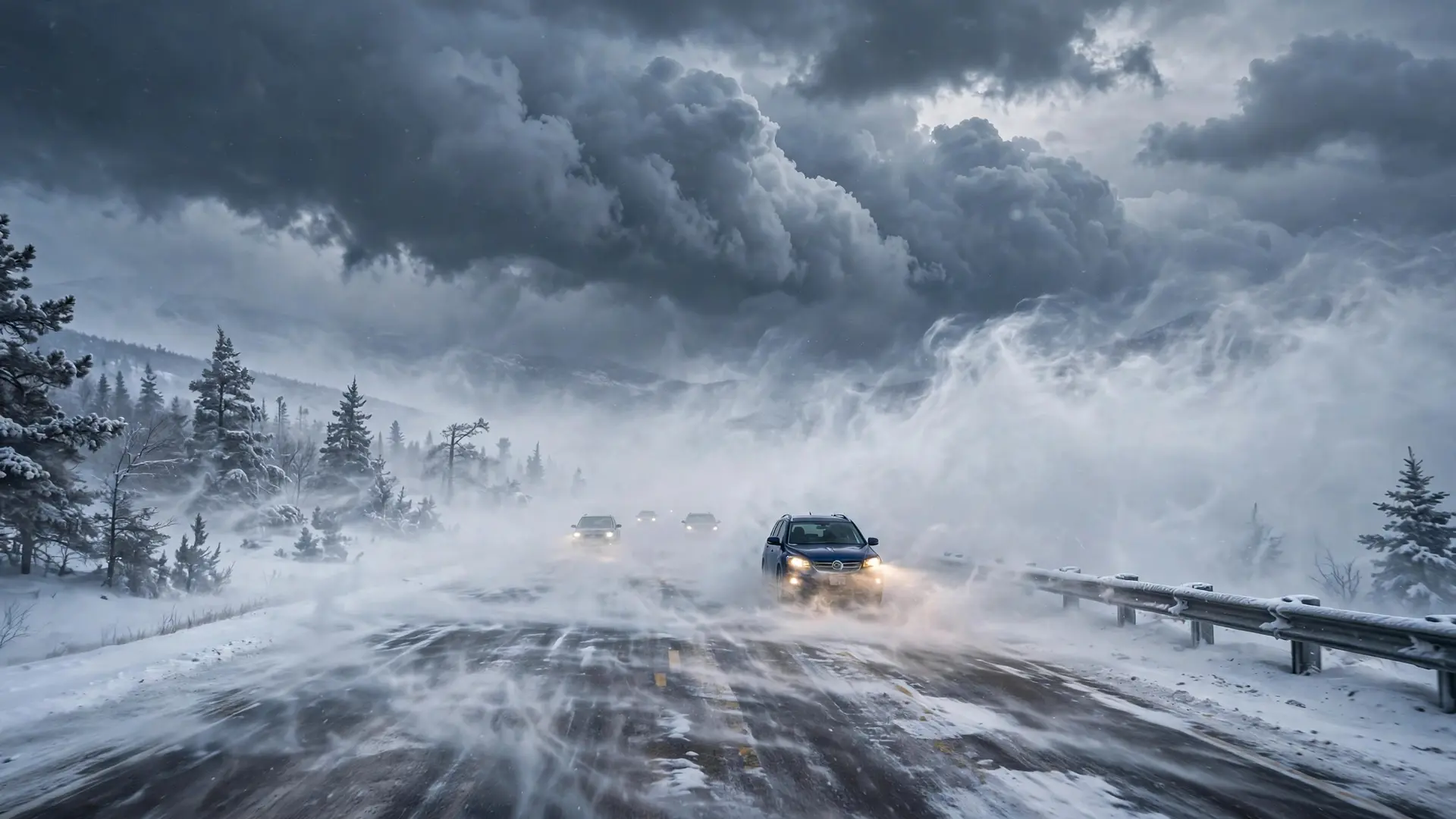
A snow squall is a short, violent burst of heavy snow and gusty wind that can turn a clear road into a whiteout within minutes. The National Weather Service defines it as an intense but limited-duration period of moderate to heavy snowfall, accompanied by gusty surface winds that cut visibility. The danger is not how much snow falls. It is how fast everything changes, and how little warning drivers get before the road ahead disappears.
How does a snow squall form?
A squall is a narrow band of intense snow showers that sweeps through an area like a line of summer thunderstorms in winter dress. The comparison is built into the name: researchers coined the term snow squall because of its similarity to warm-season squall lines, those organized rows of storms that race across the landscape. Where a snowstorm settles over a region for hours, a squall passes through in roughly 30 to 60 minutes, dumping its snow in a concentrated rush and then moving on, sometimes leaving blue sky behind it. That speed explains the strange arithmetic of squalls. Because the band moves so quickly, total accumulations stay light. But while the band is overhead, snowfall is heavy, winds gust, and visibility collapses. Falling temperatures behind the band add a second hazard: snow that melts on a relatively warm road can refreeze into a sheet of ice as road temperatures drop below freezing, a process forecasters call a flash freeze. A road that looked merely wet moments earlier can become an ice rink before a driver has time to adjust. Squalls are also deceptive because they do not need a big storm to exist. They can arrive on days when no major winter system is in progress and no broad winter storm warning covers the region. That gap in the warning system is exactly what the Snow Squall Warning was created to fill: a short, local alert for a hazard too brief for the usual winter advisories but too dangerous to leave unwarned.
Why does a snow squall turn deadly so fast?
The chain of events is brutally simple. A driver travelling at highway speed under fair skies meets a wall of snow. Visibility falls toward zero, the car ahead becomes a guess, and the road beneath the tires turns slick at the same moment. If one driver brakes hard or swerves, the vehicles behind, equally blind, pile into the back of the queue. One crash becomes a chain reaction before anyone can see what happened. The numbers behind that pattern are grim. Research on winter precipitation has tied it to tens of thousands of roadway fatalities in the United States over recent decades, and studies of multi-vehicle chain-reaction crashes found that more than half of those involving at least ten vehicles between 2001 and 2012 were caused by adverse weather, with winter conditions the most common cause. Nearly all of those weather-related pileups happened on limited-access highways, where speeds are highest and escape routes fewest. Pennsylvania has become the cautionary example. In March 2022, an 80-car pileup on Interstate 81 in the state killed six people as a squall wiped out visibility. The state's combination of frequent squalls and major highways such as Interstate 80 and the New York State Thruway corridor has made it a hotspot for winter-weather roadway deaths, and it was Pennsylvania forecasters who led the push for dedicated squall warnings. Unlike a blizzard, which announces itself for days, a squall gives drivers minutes, and on a busy interstate, minutes are not enough.
How is a snow squall warning different from other winter alerts?
Before 2018, forecasters had no formal warning product for squalls, even though the pileups they caused were well documented. That year, the National Weather Service began issuing Snow Squall Warnings, short polygon warnings aimed at a specific local area, much like a tornado or severe thunderstorm warning. The point was urgency: a warning that arrives on a phone and on highway message signs, telling drivers to get off the road now rather than advising them about snow that might fall tomorrow.
The system has since been refined to avoid over-alerting. Since late 2022, the most threatening squalls carry a "significant" tag, and only those tagged warnings trigger a Wireless Emergency Alert on phones in the warned area. Lesser squalls still get warnings through weather radio, broadcast alerts and forecast office channels, but they do not buzz every phone in the county. The distinction matters because familiarity with squall warnings remains low: a survey of more than 1,400 people in 2022 and 2023 found that about half had no prior awareness of them at all, far less than for ice storm, blizzard or wind chill warnings. That low awareness is itself part of the danger. A warning only works if the person receiving it understands what it means. A snow squall warning does not mean heavy snow is coming eventually. It means a brief, blinding burst is about to cross your exact location, and the safest response is measured in minutes, not hours.
What should you do when a snow squall warning sounds?
The advice from the National Weather Service is blunt: there is no safe place on a highway during a snow squall. If a warning reaches you before you leave, delay the trip until the squall passes, which usually takes less than an hour. Waiting out a squall is a small delay against a risk that has killed dozens of people in single crashes. If you are already driving, take the next exit or pull completely off the road, away from traffic, and wait. If you cannot exit in time, turn on your headlights and hazard lights, slow down gradually, and leave much more space than usual between your vehicle and the one ahead. Do not slam on your brakes: on a flash-frozen road, hard braking can cost you control and trigger the chain reaction behind you. And if you are stopped or involved in a crash, get out of the vehicle only if it is safe to do so, and move as far from the road as possible, since approaching drivers may be unable to see you or stop in time. Squalls reward one habit above all others: respecting a warning that looks out of proportion to the snow involved. A dusting of snow does not sound threatening, and a warning for a storm that lasts under an hour can feel like an overreaction. But the history of these bursts shows the opposite. The snow is light, the visibility loss is total, and the road turns to ice in the same few minutes. A snow squall is dangerous precisely because it is brief — it changes the world faster than a driver can change plans, and the only safe response is to stop trying to drive through it. Thundersnow is another winter phenomenon where a storm does something unexpected, while freezing rain shows a different way winter precipitation can turn roads treacherous in minutes, and fog explains how visibility can vanish even without falling snow.
Frequently asked questions
How is a snow squall different from a snowstorm?
A snowstorm lasts for hours and piles up deep snow over a wide area. A snow squall lasts roughly 30 to 60 minutes, covers a narrow band, and leaves only light accumulations — but its heavy snow and gusty winds can erase visibility in minutes.
Can a snow squall happen on a sunny day?
Yes. Squalls can arrive on days with no major winter storm in progress, sometimes under partly cloudy skies, which is part of why they catch drivers by surprise. A clear morning is no guarantee against a squall later in the day.
What should I do if I am driving when a snow squall hits?
Take the next exit or pull completely off the road away from traffic and wait for it to pass. If you cannot exit, turn on your headlights and hazard lights, slow down gradually, leave extra space ahead, and avoid slamming on your brakes.
What does a Snow Squall Warning mean?
It means a dangerous squall is expected in a specific, local area very soon, much like a tornado warning. The most severe warnings, tagged significant, also trigger a Wireless Emergency Alert on phones in the warned area.
Sources
- Communicating Snow Squall Risk in English and Spanish with Virtual Reality, American Meteorological Society
- Impact-Based Snow Squall Alerts coming to mobile devices, National Weather Service
- What Is A Snow Squall? They Are An Unsuspecting Danger For Drivers, The Weather Channel