What Is the Smallest Landlocked Country in the World?
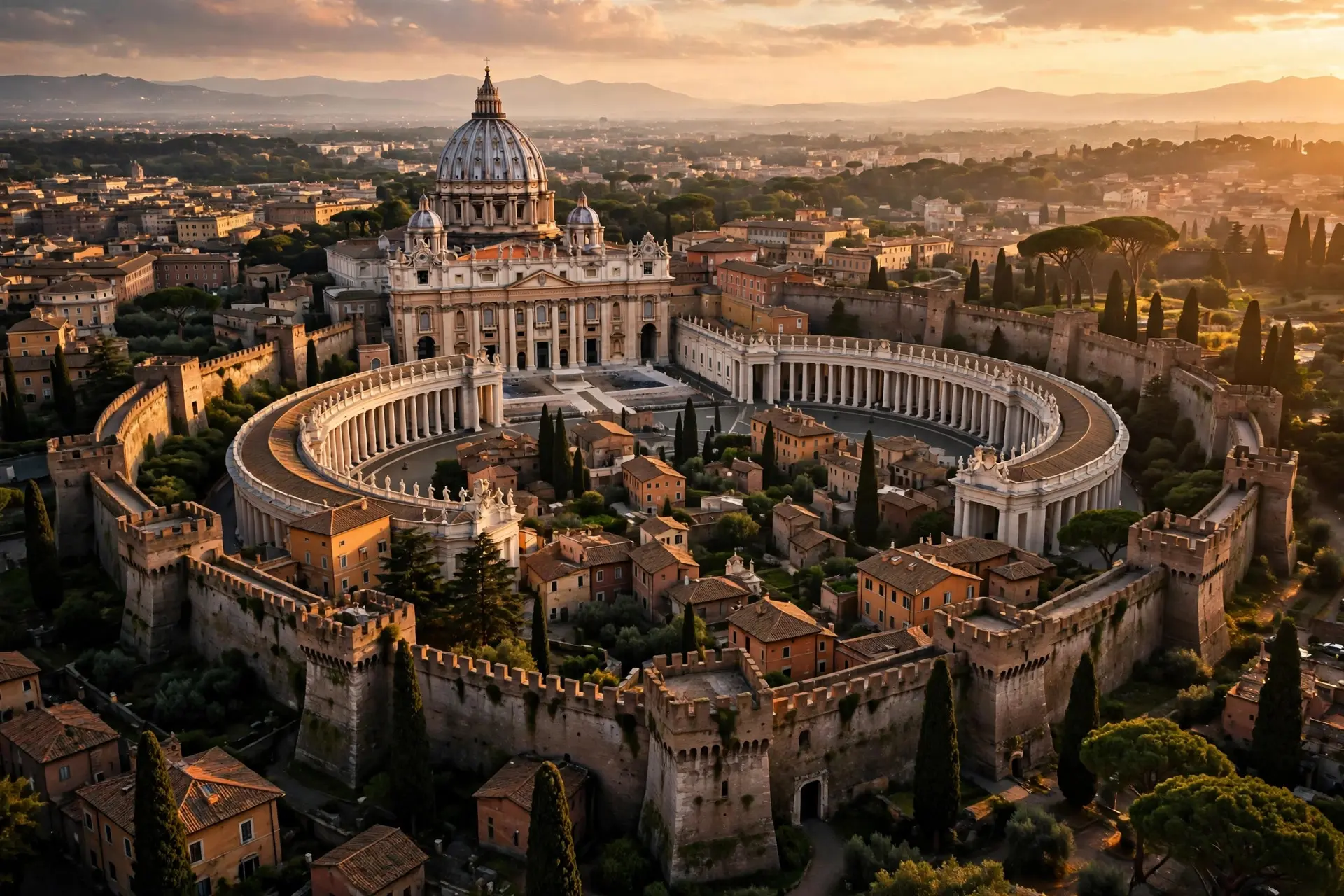
Vatican City is the smallest landlocked country: 0.44 square kilometres, zero coastline, surrounded by Rome. Here is how a country with no sea survives.
Key takeaways
- Vatican City is the smallest landlocked country in the world: 0.44 square kilometers (0.17 square miles), entirely inside Rome, Italy.
- Landlocked is literal here: the CIA World Factbook lists 0 kilometers of coastline and no maritime claims for the country.
- Its whole land boundary is 3.2 kilometers (2 miles), all of it shared with Italy; almost everything consumed inside must be imported through Italy.
- San Marino, the next-smallest landlocked country, is about 61 square kilometers, nearly 140 times the area of Vatican City.
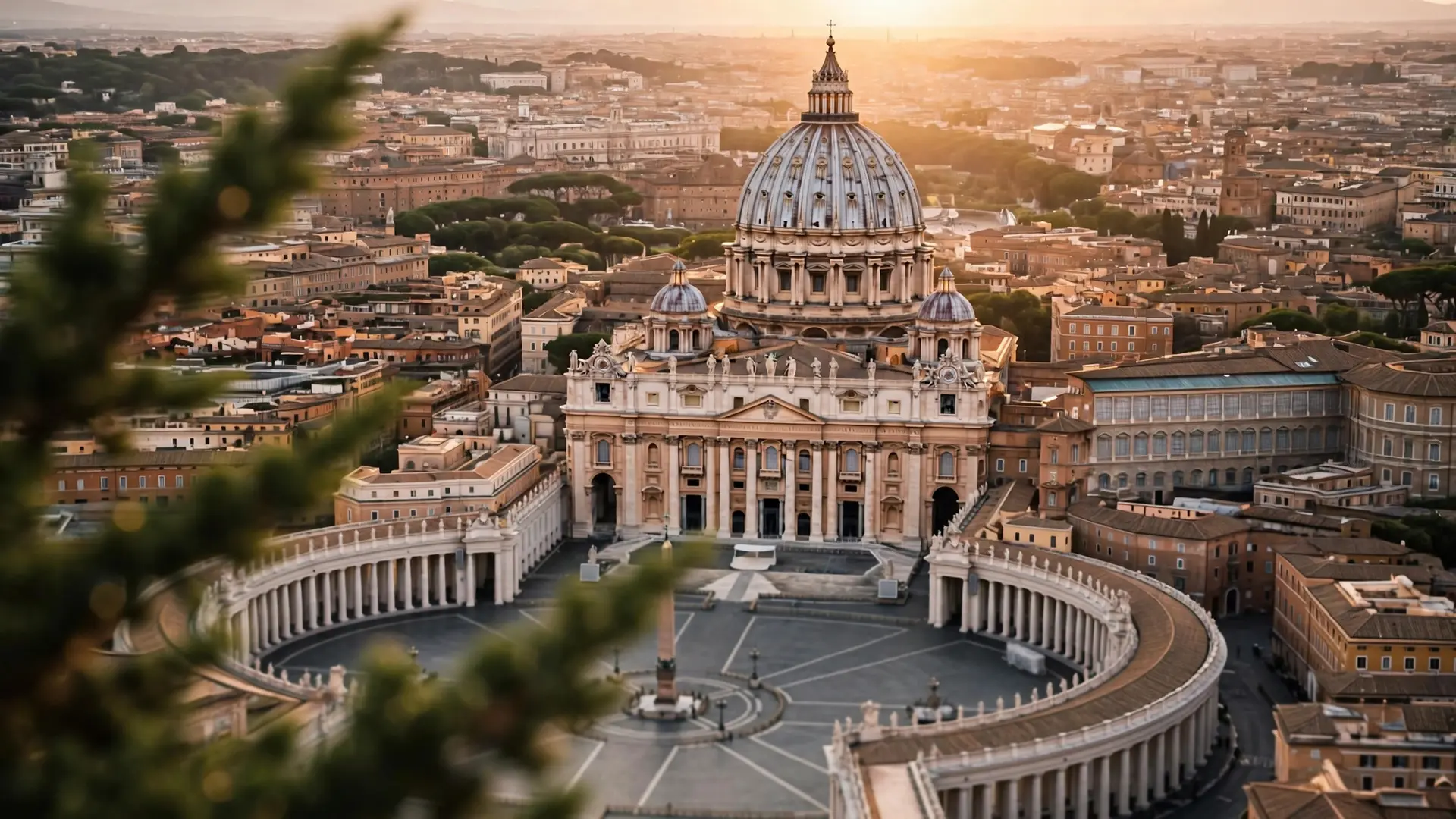
Vatican City. It is the smallest landlocked country in the world, covering 0.44 square kilometers (0.17 square miles) with zero kilometers of coastline. The surprising part is how completely it depends on one neighbor: its entire 3.2-kilometer (2-mile) border touches Italy, and nearly everything it consumes, from food and water to electricity and gas, arrives through Italian territory.
- Vatican City covers 0.44 square kilometers (0.17 square miles), making it the world's smallest fully independent nation-state, and the smallest landlocked one. (Vatican City, Encyclopaedia Britannica)
- "Landlocked" is literal here: the CIA World Factbook lists 0 kilometers of coastline and no maritime claims for the Holy See (Vatican City). (CIA World Factbook, Central Intelligence Agency)
- Its entire land boundary is 3.2 kilometers (2 miles), all of it shared with Italy; the frontier follows the Vatican's walls except at St. Peter's Square. (CIA World Factbook, Central Intelligence Agency; Vatican City, Encyclopaedia Britannica)
- San Marino, the next-smallest landlocked country, covers about 61 square kilometers (24 square miles), nearly 140 times the area of Vatican City (61 ÷ 0.44). (San Marino, Encyclopaedia Britannica)
- Almost all supplies, including food, water, electricity and gas, must be imported, which for a landlocked microstate means imported through Italy. (Vatican City, Encyclopaedia Britannica)
What Does "Landlocked" Actually Mean?
It means no coastline: a country that cannot reach the sea without crossing another country's territory. Dozens of countries fit the description, from Switzerland to Mongolia. But most of them at least touch several neighbors or sit near a coast. Vatican City is the extreme case: not just landlocked but an enclave, entirely surrounded by a single country, and in fact by a single city: Rome, on the west bank of the Tiber River.
The two terms are easy to mix up. Landlocked describes access to the sea; enclave describes being surrounded. Lesotho, entirely surrounded by South Africa, is the textbook enclave, and Vatican City matches it exactly. Contrast that with Kaliningrad, a piece of Russia cut off from the rest of Russia: Kaliningrad is an exclave, separated from its mainland, while Vatican City was never attached to anything else. It is a whole country contained inside Italy.
Why Is Vatican City the Answer and Not San Marino?
San Marino is the obvious guess: another tiny, landlocked, Italian-surrounded microstate, and the next-smallest landlocked country in the world. But the numbers are not close.
| Vatican City | San Marino | |
|---|---|---|
| Area | 0.44 sq km (0.17 sq mi) | 61 sq km (24 sq mi) |
| Coastline | 0 km | 0 km (landlocked) |
| Surrounded by | Italy (the city of Rome) | Italy (central Apennines) |
| Population | 882 (2024 est.) | 34,300 (2026 est.) |
| Modern statehood | 1929, Lateran Treaty | A republic since the 15th century |
| San Marino is about 61 square kilometers (24 square miles), and Britannica notes that only Vatican City and Monaco are smaller than it. Divide 61 by 0.44 and San Marino comes out nearly 140 times larger: the difference between a mountainside republic you can drive across and a walled city-state you can walk across in minutes. Both microstates survived inside Italy for very different reasons (see why San Marino and Vatican City survive inside Italy), and how Vatican City became a country at all is its own story (see why Vatican City is a country of its own). |
How Does a Country With No Coast Actually Function?
By treating Italy as its port, its highway and its power grid. The CIA World Factbook gives the physical facts bluntly: 0% arable land, 100% urban area, natural resources listed as "none," with the land rising from 19 meters to just 75 meters above sea level. Nothing the country needs can be grown, mined or shipped in directly, so nearly everything, from food and water to electricity and gas, crosses that 3.2-kilometer (2-mile) Italian border.
The border itself is mostly walls: medieval and Renaissance fortifications ring the state, except on the southeast at St. Peter's Square, where the frontier is a line of white travertine set into the paving between the arms of Bernini's colonnade. Step over it and you have left Italy without meeting a border guard. Beyond the walls, the 1929 Lateran Treaty gives the Holy See extraterritorial rights over 23 sites in Rome and five outside it, including the papal summer residence at Castel Gandolfo, a small legal footprint beyond the tiny territory. The economy is built for a country with no exports to load onto ships. Income comes from the voluntary contributions of Catholics worldwide, plus investments and the sale of stamps, coins and publications; the state mints its own euro coins, runs its own post office, bank, pharmacy, radio station (broadcasting since 1931) and daily newspaper, and there is no income tax. About seven-tenths the size of the National Mall in Washington, DC, it holds St. Peter's Basilica, the Vatican Museums and the Sistine Chapel, and the Swiss Guard, responsible for the pope's personal safety since 1506, still stands at the gates.
What Do Most People Get Wrong About Landlocked Countries?
First, that landlocked means isolated or poor. Vatican City is landlocked and also one of the most visited square kilometers on Earth; its "trade route" is simply Italy's infrastructure, and that arrangement has worked since the Lateran Treaty of February 11, 1929 recognized its sovereignty. Second, that a country needs a coastline to matter beyond its borders. The Holy See lists no maritime claims, keeps no navy and claims no waters, and still maintains diplomatic relations with states on every continent. Sea access was never the requirement; recognized sovereignty was. Third, that "smallest country" and "smallest landlocked country" must be different answers. Usually they are. Here they point to the same 0.44 square kilometers, because the smallest country on Earth happens to have no coast. It is a coincidence of geography, not a rule, and it is what makes the question worth asking. Vatican City shows what "landlocked" looks like at its absolute limit: a country you can walk across in minutes, with no shore, no port and no hinterland, kept alive by treaties, visitors and the goodwill of the single neighbor that surrounds it. How we made this article: FactSpire researched and drafted it with AI assistance and checked every fact against the sources listed above.
Frequently asked questions
Is Vatican City really landlocked?
Yes, completely. The CIA World Factbook records 0 kilometers of coastline and no maritime claims for the Holy See (Vatican City). It is an enclave within Rome, Italy, with no port, no navy and no shoreline of any kind, about as landlocked as a country can physically be.
What is the difference between landlocked and an enclave?
Landlocked means having no sea coastline; an enclave means being entirely surrounded by a single other country. Vatican City is both: it has zero coastline and its entire 3.2-kilometer (2-mile) border touches only Italy. San Marino is in the same position, while Lesotho is an enclave with no coast either.
How does a country with no coastline trade with the world?
Through its neighbor. Almost everything Vatican City consumes, from food and water to electricity and gas, is imported via Italy, and its economy runs on tourism, museum admissions, stamps, coins and donations rather than exports. Its 0% of arable land and complete lack of natural resources make self-sufficiency impossible, so Italian roads, rails and ports are its lifeline.
Isn't San Marino smaller than Vatican City?
No. San Marino covers about 61 square kilometers (24 square miles), making it nearly 140 times larger than Vatican City's 0.44 square kilometers (0.17 square miles). Of Europe's microstates, only Vatican City and Monaco are smaller than San Marino, and Vatican City is the only one of the three with no coastline at all.
Sources
- Vatican City | History, Map, Flag, Location, Population, & Facts, Encyclopaedia Britannica
- CIA - The World Factbook, Central Intelligence Agency (via UNT Libraries archive)
- History, Vatican City State
- San Marino - Students | Britannica Kids | Homework Help, Encyclopaedia Britannica