What Is the Highest Lake on Earth? Ojos del Salado
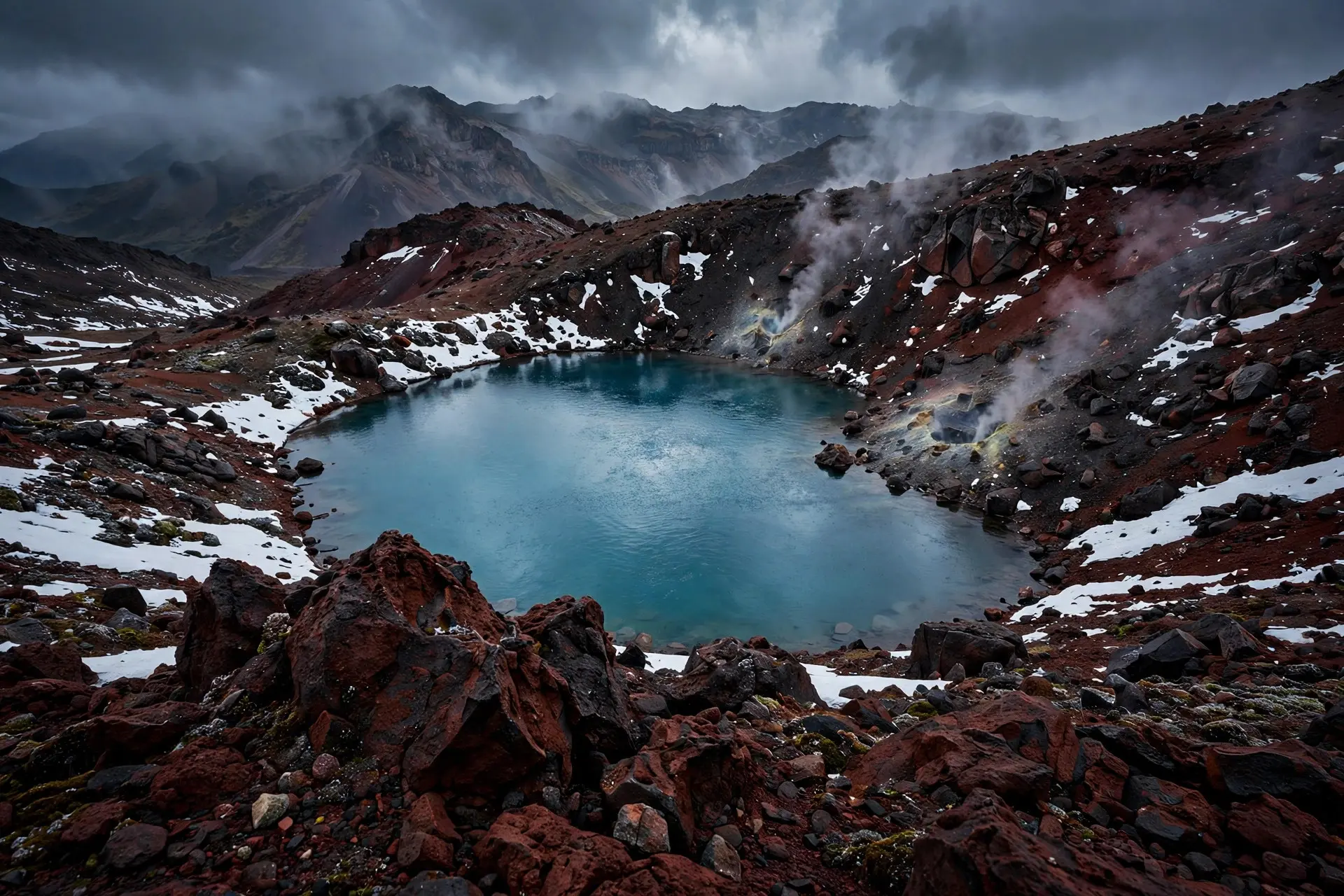
The highest lake on Earth sits in a volcano crater 6,390 metres above sea level, but the exact record depends on which pool you count. Here is the full story.
Key takeaways
- The highest lake on Earth is the crater lake on Ojos del Salado, cited at 6,390 m, with a 2020 study measuring 6,480 m.
- The 'lake' is only about 100 m across, yet it sits nearly 2,600 m above Lake Titicaca.
- Its waters range from 3.8°C and acidic to 40.8°C in warm fumarole-fed creeks.
- Lake Titicaca is the highest lake navigable by large vessels, at 3,810 m.
The highest lake on Earth is the small crater lake on Ojos del Salado, a volcano on the Chile-Argentina border. The figure most sources give is 6,390 m (20,965 ft) above sea level, but a 2020 scientific study measured the highest lake on the volcano at 6,480 m (21,260 ft). Either way, it sits nearly 2,600 m above Lake Titicaca.
Key facts
- Ojos del Salado rises 6,893 m (22,615 ft), making it the highest volcano on Earth and the highest mountain in Chile. Astrobiology
- The crater lake is only about 100 m (328 ft) across, yet it holds the altitude record. IFLScience
- A 2020 study in the journal Astrobiology measured the highest lake on the volcano at 6,480 m (21,260 ft) above sea level. Astrobiology
- Water in the lake's warm creek reaches 40.8°C (105.4°F), while the cold water sits at 3.8°C (38.8°F). Astrobiology
- Lake Titicaca sits at 3,810 m (12,500 ft), covers 8,300 sq km (3,200 sq miles) and is the highest lake navigable by large vessels. IFLScience
- Australian adventurer Daniel Bull swam in a lake on the volcano at 6,370 m (20,899 ft) in 2020, the highest altitude swim on record. Guinness World Records
Why do sources give two different heights?
Because the volcano holds more than one pool, and different surveys measured different ones. The figure you will see most often, 6,390 m (20,965 ft), describes the permanent crater lake on the volcano's eastern side, about 100 m (328 ft) across. It is the number used by WorldAtlas, IFLScience and most reference pages, and it has been repeated for years. The higher figure, 6,480 m (21,260 ft), comes from a 2020 study published in the journal Astrobiology. Researchers from Eötvös Loránd University in Budapest sampled the summit crater lake in February 2016 and described it as "the highest known altitude lake." Their paper puts the lake at 6,480 m above sea level, about 90 m (295 ft) above the widely cited figure. Which number is right? Both, for different pools. Ojos del Salado is a huge volcanic complex, and its slopes hold several small lakes at different heights. The same 2020 study also sampled a second, non-volcanic lake at 5,900 m (19,360 ft) as a comparison. Seasonal pools can appear higher still after snowmelt and then vanish. So the honest answer is that the permanent crater lake most sources cite sits at 6,390 m, while the highest lake measured by scientists sits at 6,480 m, and the record depends on which pool you count.
The same counting problem once applied to the runner-up. The Himalayas' highest lake sat a few miles north of Mount Everest at 6,368 m (20,892 ft), but recent satellite images show it has dried up and it is now considered extinct. That leaves the field clear for Ojos del Salado, whichever of its two figures you use.
What is it like up there?
The lake sits in one of the driest high-mountain environments on Earth. Ojos del Salado stands in the Atacama's rain shadow, and its climate is dry because of its closeness to the Atacama Desert. The volcano last erupted between 1,000 and 1,500 years ago, but it is not quiet: ash was ejected around 1993, fumaroles vent steam on the summit, and the crater lake sits among them. The water itself is strange. The 2020 study found cold water at 3.8°C (38.8°F) with a pH of 4.88, acidic enough to sting, and warm water at 40.8°C (105.4°F) with a pH of 2.08, about as acidic as lemon juice. The two waters sit in the same small basin, fed by different seeps. Bacteria live in the sediments under both, including acid-loving iron oxidizers that would die in an ordinary lake. The researchers call the place a Mars analog, and NASA uses the volcano's surroundings to test instruments for future Mars missions. The air is thin enough to be dangerous. Daniel Bull, who swam there in 2020, described climbing the volcano as "like hiking up Kilimanjaro five times in a week" and noted there is less than half the oxygen found at sea level. He made the swim without a wetsuit, in water that was partly frozen, and said his toes were snap frozen as he plunged in. The lake was freezing over as he stood at its edge. The volcano itself is a record holder twice over. At 6,893 m (22,615 ft) it is the highest volcano on Earth, the highest mountain in Chile, and the second-highest mountain in the Southern Hemisphere and the Western Hemisphere. Its name means "eyes of the salty one" in Spanish, from the salt flats and lagoons on its slopes. The first recorded ascent was made in 1937 by Jan Alfred Szczepanski and Justyn Wojsznis.
How does it compare with Lake Titicaca?
Lake Titicaca is the lake most people name, and the comparison shows why the record is confusing. Titicaca is famous, huge and inhabited; the Ojos del Salado lake is obscure, tiny and lifeless by comparison. Yet Titicaca sits 2,580 m (8,465 ft) lower.
| Lake | Elevation | What makes it notable |
|---|---|---|
| Ojos del Salado crater lake | 6,390 m (20,965 ft) widely cited; 6,480 m (21,260 ft) in a 2020 study | Highest lake of any kind |
| Lhagba Pool, Tibet | 6,368 m (20,892 ft) | Once the second-highest; now dried up |
| Nevado de Tres Cruces lake, Chile | 6,206 m (20,361 ft) | Chile's second-highest lake |
| Lake Titicaca, Bolivia-Peru | 3,810 m (12,500 ft) | Highest lake navigable by large vessels; largest alpine lake |
Titicaca earns its fame on different measures. It stretches 190 km (118 miles), runs 140 to 180 m (460 to 600 ft) deep, holds 41 islands and supports about 4,000 people on those islands, including the Uros people, who predate the Inca. It is South America's second-largest lake after Lake Maracaibo. The Ojos del Salado lake, at about 100 m across, would fit inside a single Titicaca island and disappear. The altitude record goes to the small pool; the human record goes to Titicaca. Fourteen lakes sit higher than Titicaca, most of them crater pools in the Andes and the Himalayas, the two highest mountain systems on Earth. The Ojos del Salado lake is the highest of them, and its nearest rivals are also volcanic pools, including Lake Licancabur in Chile, the ninth-highest lake in the world.
What do people get wrong about the highest lake?
The first mistake is naming Titicaca. It is the highest lake most people have heard of, and the highest that ships can use, but it is not the highest lake. The record belongs to a pool so small that most maps do not show it, on a volcano most people could not place on a map. The second mistake is picturing a lake you could visit and swim in. The Ojos del Salado lake is a scientific curiosity and a record, not a destination. Reaching it means climbing the highest volcano on Earth through thin air and storms, and the water is acidic, near freezing in places and scalding in others. Bull's swim was a planned record attempt with years of preparation, not a holiday dip. The third mistake is trusting a single number. The 6,390 m figure and the 6,480 m figure both appear in reliable sources, and both are right for the pool each one measured. Altitude records for tiny mountain pools shift as surveys improve and as pools dry up, as Lhagba Pool did. The safe way to state the record is the way the science states it: the highest known lake on Earth sits on Ojos del Salado, at about 6,390 m by the usual figure and 6,480 m by the latest measurement. That leaves a small patch of water, barely wider than a football field, holding one of the planet's strangest records. It sits above the clouds, in a crater, on the highest volcano on Earth, in water that is both freezing and hot, and it is there that the highest lake on Earth quietly waits. The lake is part of the same high-Andes world as Lake Titicaca, the highest navigable lake, and it belongs in any list of extremes alongside Tanganyika, the deepest lake in Africa, Blue Lake in New Zealand, the clearest lake on Earth and Don Juan Pond, the saltiest lake on Earth. How we made this article: FactSpire researched and drafted it with AI assistance and checked every fact against the sources listed above.
Frequently asked questions
Is Lake Titicaca the highest lake in the world?
No. Lake Titicaca is the highest lake that large vessels can navigate, at 3,810 m, and the largest alpine lake. But 14 lakes sit higher than it, and the highest of all is the crater lake on Ojos del Salado, about 2,580 m above Titicaca.
Can you swim in the highest lake on Earth?
One person has, for a record. Australian adventurer Daniel Bull swam in a lake on Ojos del Salado at 6,370 m in 2020, without a wetsuit, in water near freezing and air with less than half the oxygen at sea level. He said his toes went numb and he still could not feel them months later.
Why is the highest lake so small?
It is a crater pool that fills a hollow left by volcanic activity on a dry, high volcano, and it has almost no catchment feeding it. At about 100 m across, it holds the altitude record on height alone; size plays no part in the ranking.
What lives in the highest lake on Earth?
Bacteria that tolerate acid, cold and almost no food. A 2020 study of the crater lake found acid-loving microbes, including iron-oxidizing bacteria, living in sediments soaked by cold acidic water and by warm water from fumaroles.
Sources
- Effects of Active Volcanism on Bacterial Communities in the Highest-Altitude Crater Lake of Ojos del Salado (Dry Andes, Altiplano-Atacama Region), Astrobiology
- The World's Highest Lake Isn't Lake Titicaca, IFLScience
- Australian adventurer swims in the highest lake on earth, Guinness World Records
- Ojos del Salado, WorldAtlas