What Is the Clearest Lake on Earth? Rotomairewhenua
What is the clearest lake on Earth? New Zealand's Blue Lake shows 70-80 m (230-262 ft) visibility, nearly matching distilled water, per NIWA research.
Key takeaways
- Rotomairewhenua / Blue Lake in New Zealand is the clearest lake on Earth, with 70-80 m (230-262 ft) of horizontal visibility measured by NIWA in 2011.
- Its water sits just under the theoretical visibility limit of distilled water, about 80 m (262 ft).
- Water filters underground through landslide debris from Lake Constance, stripping out almost all suspended particles.
- The lake is tapu (sacred) to Ngāti Apa ki te Rā Tō; swimming and even touching the water are banned.
- The microscopic algae lindavia, known as lake snow, threatens its clarity; DOC runs gear-cleaning stations and hut wardens.
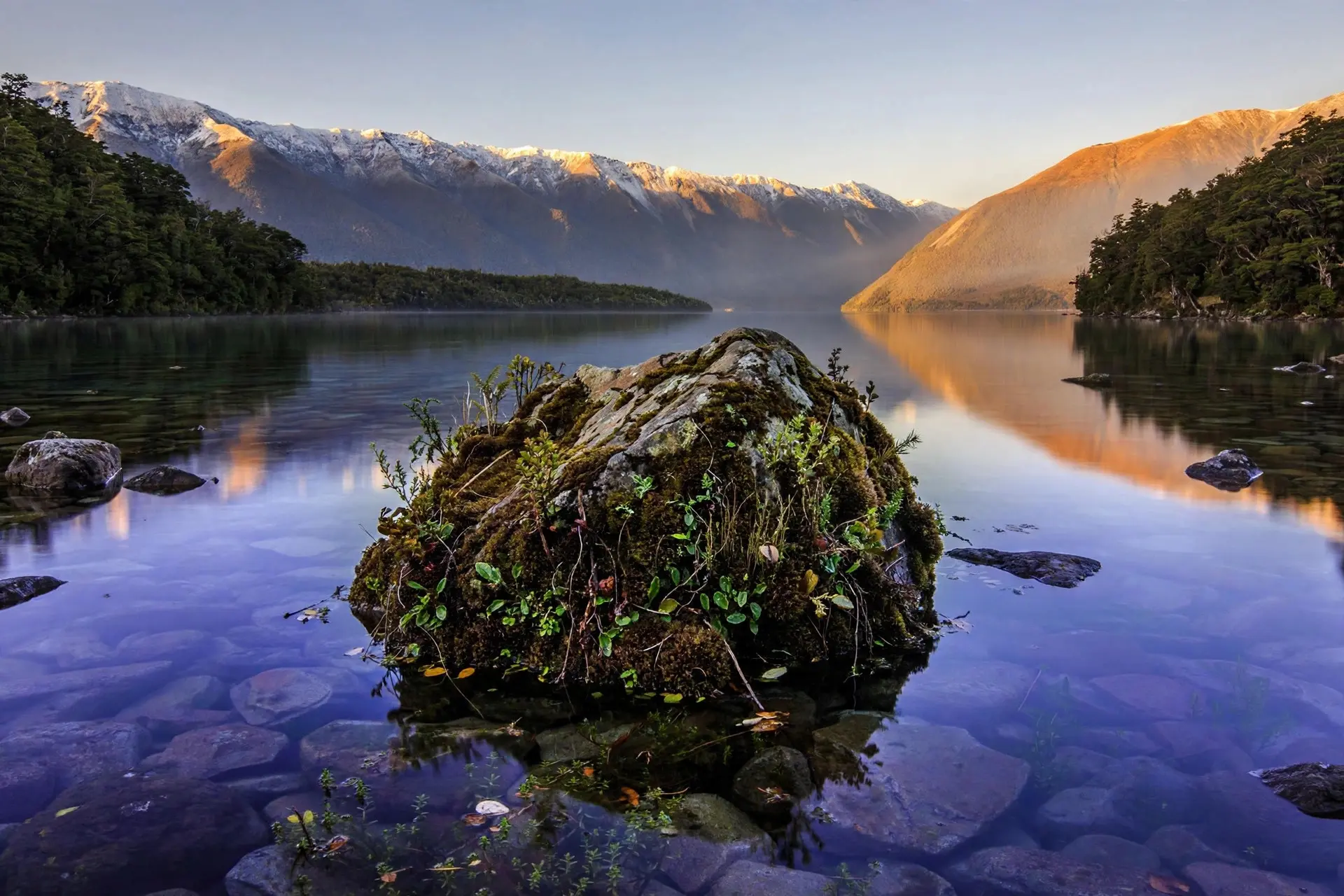
Rotomairewhenua / Blue Lake in New Zealand's Nelson Lakes National Park is the clearest lake on Earth. A 2011 study by NIWA measured 70 to 80 metres (230 to 262 feet) of horizontal visibility, nearly touching the theoretical limit of distilled water, and the surprise is that the lake is sacred, so touching the water is banned.
- In 2011, scientists from New Zealand's National Institute of Water and Atmospheric Research (NIWA) measured visibility of 70 to 80 m (230 to 262 ft), the clearest natural freshwater ever reported. (IFLScience)
- Distilled water's theoretical visibility limit is about 80 m (262 ft); Blue Lake beat the previous record holder, Te Waikoropupu Springs in Golden Bay, at 63 m (207 ft). (IFLScience)
- Water arrives from Lake Constance (Rotopōhueroa) via underground springs, seeping through landslide debris that forms a natural dam and strips out nearly all suspended particles. (Department of Conservation (NZ) Conservation Blog)
- At about 1,200 m (3,937 ft) above sea level the lake stays between 5 and 8°C (41 to 46°F); it averages only 7 m (23 ft) deep, so visibility had to be measured horizontally. (WeatherWatch)
- The lake is tapu, or sacred, to Ngāti Apa ki te Rā Tō; its official name became Rotomairewhenua / Blue Lake in August 2014 after the iwi's treaty settlement with the Crown. (Department of Conservation (NZ) Conservation Blog)
- The microscopic algae lindavia, which makes slimy lake snow, has reached nearby lakes; DOC runs gear-cleaning stations and stations hut wardens at Blue Lake Hut to stop it spreading. (RNZ)
How clear is the clearest lake on Earth, exactly?
Clarity has a number, and Blue Lake's is 70 to 80 metres. NIWA scientists made six helicopter trips to the remote lake and measured how far a one-metre black disc stayed visible under the surface, finding a typical range of 70 to 80 m (230 to 262 ft). To put that in perspective, NIWA treats anything above 40 m (131 ft) as outstandingly clear, and the previous record holder, Te Waikoropupu Springs near Golden Bay, reached 63 m (207 ft).
The ceiling for comparison is distilled water. Laboratory measurements put the theoretical visibility of perfectly pure water at about 80 m (262 ft), which means Blue Lake is essentially pressing against the physical limit of what water can show. NIWA principal scientist Dr Rob Davies-Colley told the Nelson Mail, as reported by IFLScience: "There may well be other systems somewhere in the world that are comparable but there's not very much wriggle room between the clarity of Blue Lake and pure water. If there's anything else in the world clearer, it could only be very slightly clearer."
What makes Blue Lake so incredibly clear?
The lake's filtration system is geological. Blue Lake is spring-fed from Lake Constance, a glacial lake sitting higher in the same valley, and the water travels underground through the debris of an ancient landslide that forms a dam between the two lakes. That rubble acts as a giant sieve, removing almost every particle suspended in the glacial melt before it reaches Blue Lake. Altitude and cold do the rest. At about 1,200 m (3,937 ft), just below the treeline of stunted mountain beech, the water stays between 5 and 8°C (41 to 46°F) all year, which discourages the plankton blooms that cloud warmer lakes. With almost nothing in the water to scatter light, the lake shows the blue-violet tint of pure water itself, a color that appears only in exceptionally clear water. The lake is small and bent, with two arms of roughly 200 m (656 ft) each, and because it averages only 7 m (23 ft) deep, the NIWA team had to measure visibility sideways instead of lowering a disc from above.
Why is swimming banned in the world's clearest lake?
The ban is both cultural and scientific. Rotomairewhenua lies within the tribal area (rohe) of Ngāti Apa ki te Rā Tō, and its Māori name translates as "the lake of peaceful lands." The iwi traditionally used it in rites that cleansed the bones of deceased men so their spirits could begin the journey to Hawaiki, while nearby Lake Constance served the same purpose for women. The waters are tapu, sacred, and the iwi's treaty settlement with the Crown made Rotomairewhenua / Blue Lake the official name in August 2014. Science backs the restriction. Skin oils, sunscreen, and microbes from a single swimmer could seed changes in water that has almost no particles to buffer them. Visitors are asked not to touch the water at all, not to wash dishes or clothes in it, and not even to fill drink bottles from it. The lake's value is defined by what is absent: no plankton blooms, no suspended sediment, no introduced microbes. Unlike Lake Baikal, the deepest lake on Earth, or Lake Tanganyika, Africa's deepest lake, Rotomairewhenua is protected for optical purity rather than size or biodiversity.
What is threatening the lake's record clarity?
The threat is microscopic. A tiny organism called lindavia produces a slimy brown algae known as lake snow, and it has been detected in lakes Rotoiti and Rotoroa in the same national park. Nobody knows how to remove it once it arrives, and trampers' boots and damp gear are the likely carriers. If lake snow reached Rotomairewhenua, the record clarity could be lost. The Department of Conservation has responded with unusual intensity. Cleaning stations near the main access points ask trampers to soak gear for 10 minutes in a 10 percent detergent solution, and for three summers running, hut wardens have been posted at Blue Lake Hut to talk visitors through the check-clean-dry routine and the cultural rules. In the summer of 2021-2022, the role went further: Kylie Batt of Ngāti Apa ki te Rā Tō served as the first combined hut warden and iwi guardian, walking in her ancestors' footsteps while protecting the lake. Rangers also warn that heavy rain can wash particles into the lake and cut visibility to about 1 m (3 ft) for a few days, a reminder that even this lake is not immune to weather.
What do people get wrong about the clearest lake?
The biggest mix-up is the direction of the measurement. People imagine looking 80 m straight down, but the lake is only 7 m deep; the 70-80 m figure is horizontal visibility, measured sideways through the water. You cannot see 80 m down a lake that is 7 m deep. Another mistake is calling it the clearest water of any kind. The title is specifically the clearest natural freshwater. The clearest seawater measurement on record, 79 m (259 ft) in the Weddell Sea off Antarctica in 1986, sits just inside Blue Lake's range, and satellites flag parts of the South Pacific gyre as the bluest ocean water by a different measure, chlorophyll content. Finally, clarity is not permanence. Between storms, algae threats, and rising visitor numbers since the 2011 findings, the record is something New Zealand actively defends rather than something nature guarantees. That is why this small alpine lake draws scientists, iwi guardians, and rangers alike, unlike giants such as the Caspian Sea or cautionary tales like the disappearing Aral Sea: keeping water this clear takes work. Rotomairewhenua / Blue Lake is the clearest lake on Earth because geology, altitude, cold, and strict protection all line up. Its 70 to 80 m of visibility sit a hair below the limit of pure water itself, which makes the lake both a scientific benchmark and a sacred place that New Zealand refuses to let slip. How we made this article: FactSpire researched and drafted it with AI assistance and checked every fact against the sources listed above.
Frequently asked questions
Can you swim in Blue Lake?
No. Swimming, washing, and even touching the water are banned, because the lake is tapu, or sacred, to Ngāti Apa ki te Rā Tō. Human contact risks introducing microbes, sunscreen, and skin oils that would harm its record clarity, so visitors must also check, clean, and dry all gear before entering the area.
How did scientists measure the lake's clarity?
NIWA researchers measured horizontal visibility because the lake averages only 7 m (23 ft) deep, too shallow for a standard vertical Secchi-disk drop. They floated a one-metre black disc under a buoy and paddled away in a boat, recording the distance at which the disc disappeared from sight.
Is Blue Lake clearer than the ocean?
For freshwater, nothing measured beats it. The clearest seawater on record is the Weddell Sea off Antarctica, where a Secchi disk stayed visible at 79 m (259 ft) in a 1986 test, just under Blue Lake's 70-80 m range. Satellite data also shows exceptionally blue water in the South Pacific gyre, though that measures color, not visibility.
What is lake snow, and why does it threaten Blue Lake?
Lake snow is a slimy brown algae produced by the microscopic organism lindavia. It has been detected in nearby lakes Rotoiti and Rotoroa, and trampers' boots or gear could carry it to Rotomairewhenua, where it would cloud the water. DOC runs cleaning stations and posts hut wardens to stop the spread.
Sources
- Where Are The Bluest Waters On Earth?, IFLScience
- Sacred waters: Protecting the world's clearest alpine lake from a microscopic threat, Department of Conservation (NZ) Conservation Blog
- DOC call to prevent the spread of invasive algae to lakes and rivers, RNZ
- Blue Lake, Nelson - Very rare water clarity, WeatherWatch