Why Is Lake Baikal the World's Deepest Lake?
Lake Baikal plunges 1,642 meters because it sits in an active rift zone that keeps deepening. Discover its geology, age, vast water, and unique wildlife.
Key takeaways
- Lake Baikal reaches 1,642 meters (5,387 feet), making it the world's deepest lake by a wide margin.
- It sits in an active continental rift where the Amurian and Eurasian plates pull apart, and the lake floor keeps sinking.
- At 25–30 million years old, Baikal is also the world's oldest lake and holds about one-fifth of Earth's unfrozen freshwater.
- Its age and isolation created unique wildlife, including the nerpa, the only exclusively freshwater seal.
Lake Baikal is so deep because it sits in an active continental rift — a place where Siberia's crust is slowly being pulled apart. The stretching thins the crust and lets the lake floor sink ever deeper, and because the rift never stopped widening, Baikal has been deepening for up to 30 million years. At 1,642 meters (5,387 feet), it is the world's deepest lake by a very wide margin. The depth is not a quirk of the water; it is a consequence of the geology underneath it. To understand Baikal, you have to look below the surface — literally.
What is pulling Siberia apart?
Lake Baikal fills a rift valley in southeastern Siberia, where two tectonic plates are diverging. The Amurian Plate is slowly separating from the larger Eurasian Plate, and as the crust stretches, it breaks along faults and the ground between them subsides. The lake occupies the resulting structural hollow, a long, narrow graben that has been sinking for millions of years. The movement is tiny by human standards. GPS studies put the divergence at roughly 3 to 4 millimeters per year across the rift zone, while Russian geologists have measured widening of about 5 millimeters per year along the Irkutsk–Ulan-Ude line. Geologists estimate that the rift has stretched the crust by roughly 7 kilometers in total since it formed. It is the same fundamental process splitting East Africa's Great Rift Valley, except that Baikal has been doing it far longer. The forces behind the stretching are still debated. Some researchers attribute it to the far-field stresses of India's collision with Asia — the same collision that is still raising the Himalayas — while most Russian scientists favor a mantle upwelling, a hot plume pushing up beneath the region and weakening the crust. Either way, the rift remains seismically active: the first seismic monitoring station in the region opened in Irkutsk back in 1901, and the network still operates today.
How did the rift make such an old, deep lake?
Most lakes are geological mayflies. They form in glacial hollows or behind dams of rock and debris, then fill with sediment or drain away within thousands of years. Baikal escaped that fate because its basin is a tectonic structure, not a surface feature. As long as the crust keeps stretching, the rift keeps creating new room for the lake — accommodation space, in geological terms — faster than sediment can fill it. The lake's age reflects this. Baikal began forming 25 to 30 million years ago, making it the oldest lake on Earth by an enormous margin. Its present deep basin took clearer shape only about 2.5 to 3 million years ago, when the lithosphere beneath the region fully split and the rift's mountains rose around the lake. Over that immense span, thick successions of sediment have accumulated in the rift's down-dropped basins, recording the whole history of the rift's evolution in layer upon layer of rock and silt. This persistence explains a common confusion: people hear "oldest lake" and assume old means shallow and filled in. Baikal is old precisely because the rift keeps deepening it — the two records are two sides of the same tectonic coin.
How much water does Baikal actually hold?
The numbers are hard to grasp intuitively. Baikal is 636 kilometers long and up to 79 kilometers wide, with a surface area of about 31,722 square kilometers — slightly larger than Belgium, and the seventh-largest lake in the world by surface area. But surface area is not where Baikal dominates. Its average depth of roughly 744 meters transforms a modest footprint into the world's largest freshwater reservoir by volume: about 23,615 cubic kilometers of water, or roughly one-fifth of all unfrozen surface freshwater on the planet. That is more than all five North American Great Lakes combined, which together hold around 22,671 cubic kilometers.
The comparison with Lake Superior is telling. Superior is the largest freshwater lake by surface area, yet its maximum depth of just 406 meters is less than a quarter of Baikal's. On maps, Baikal looks unremarkable; in three dimensions, it is a world apart. More than 330 rivers and streams flow into the lake, including the Selenga, the Barguzin, and the Upper Angara, but only one river flows out: the Angara, which joins the Yenisei and eventually reaches the Arctic Ocean. For scale, even Baikal's record depth is modest beside the ocean's extremes: the lake's 1,642 meters are a fraction of the ocean's deepest point, which plunges past 10,000 meters.
What makes Baikal so clear — and so alive?
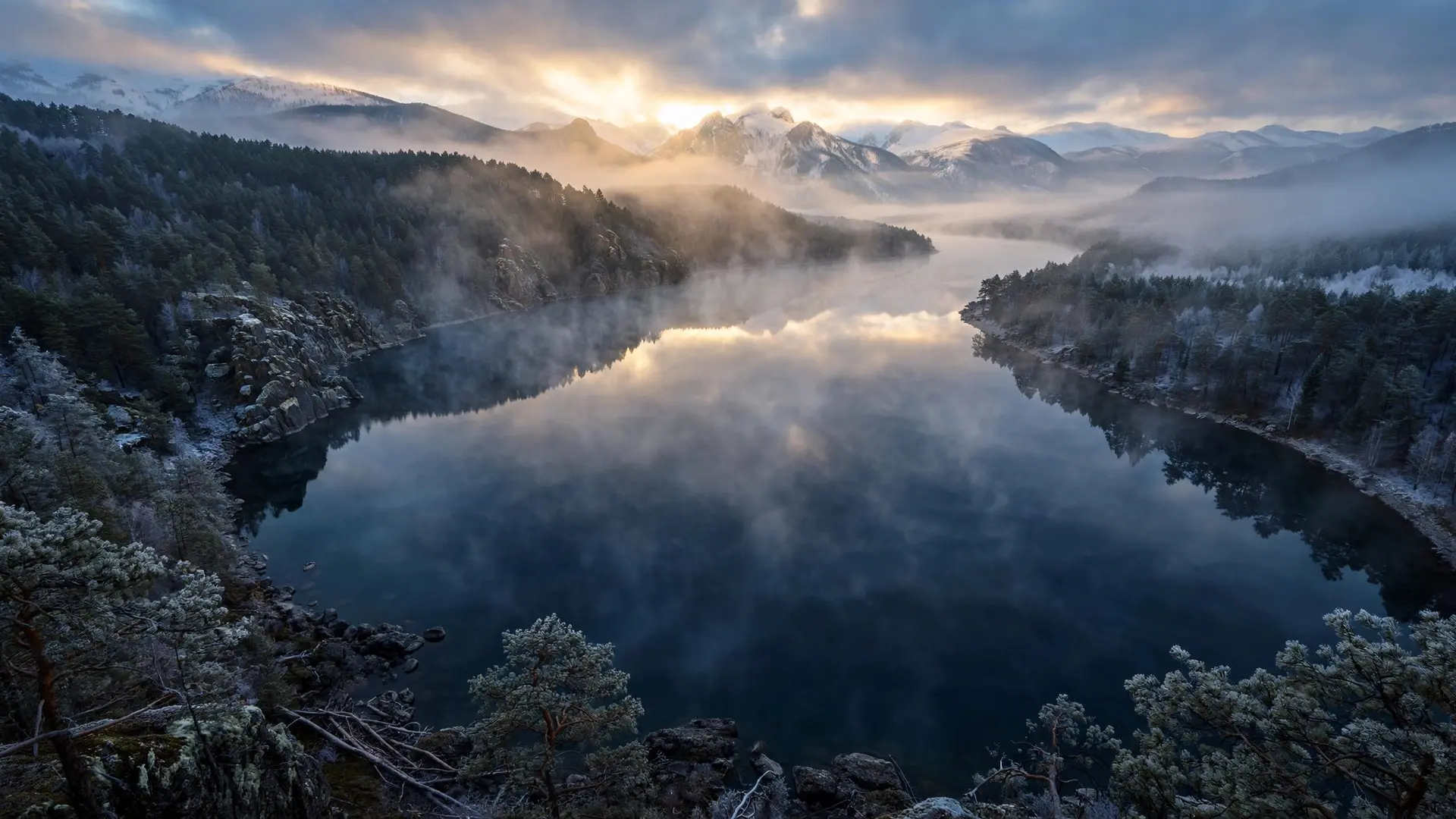
Baikal is also among the world's clearest lakes, with visibility reaching about 40 meters (130 feet) below the surface in spring. The surface freezes in January and thaws in May or June, and deep thermal vents help circulate oxygen through the water column more thoroughly than in many other deep lakes. That deep, oxygen-rich, isolated water became an evolutionary laboratory. The lake hosts more than 2,500 known species of plants and animals, a large share of them endemic — found nowhere else on Earth. UNESCO, which inscribed Baikal as a World Heritage Site in 1996, calls it the "Galapagos of Russia" for exactly this reason: its age and isolation produced one of the world's richest and most unusual freshwater faunas. The most famous resident is the Baikal seal, or nerpa — the only exclusively freshwater seal species in the world. How a marine mammal ended up in a lake deep in the heart of Asia, thousands of kilometers from the sea, remains one of evolutionary biology's enduring puzzles. It is a living reminder that Baikal is less a lake than a small, ancient freshwater sea — a world born of rifting rather than erosion or glaciation. Baikal's lesson is simple and striking: a lake is as deep as the Earth lets it be. Most lakes borrow their basins from the surface and lose them quickly. Baikal carved its own from the crust, and it is still carving — a few millimeters per year, in a rift that has been widening since before humans existed.
Frequently asked questions
How deep is Lake Baikal?
Its maximum depth is 1,642 meters (5,387 feet), with an average depth of about 744 meters. The second-deepest lake, Tanganyika in Africa, reaches only about 1,470 meters.
How old is Lake Baikal?
Between 25 and 30 million years old, making it the oldest lake on Earth. Most lakes fill with sediment or drain away long before reaching that age.
How much of the world's freshwater does Baikal hold?
Roughly one-fifth of Earth's unfrozen surface freshwater — about 23,615 cubic kilometers, more than all five North American Great Lakes combined.
Is Lake Baikal getting deeper?
Yes, in geological terms. The rift beneath it is still active, widening by a few millimeters per year, which gradually deepens the lake basin.