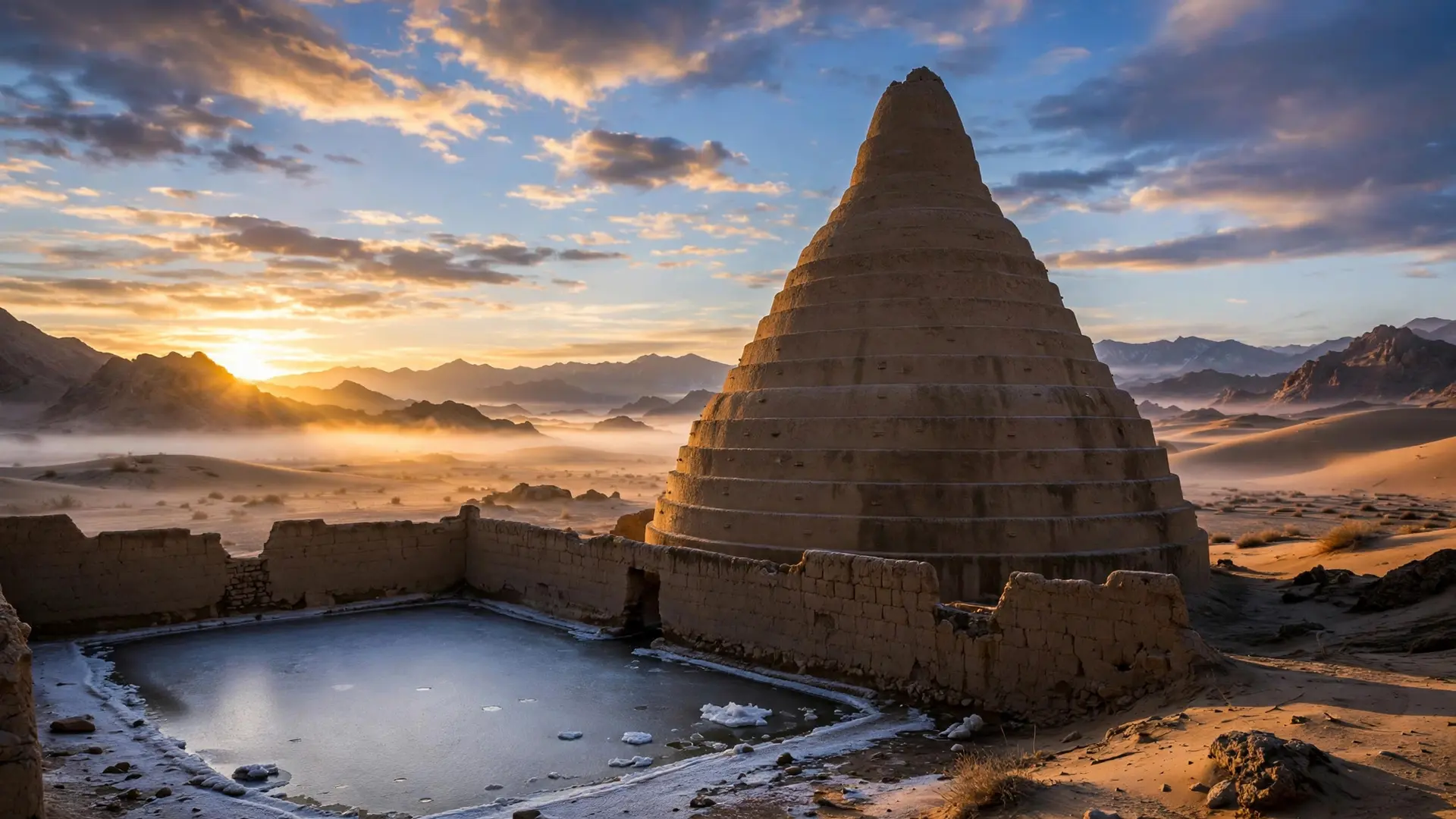
How Persian Windcatchers Cooled Homes Without Power
How did Persian windcatchers cool buildings without electricity? Badgir towers caught desert wind, drew it over water and sent chilled air into the rooms below.
Key takeaways
- A windcatcher, or badgir, is a tall tower that catches wind above the roof and sends it down a shaft into the rooms below.
- Wind pressure pushes air down on the windy side, while suction on the sheltered side pulls warm air out of the house.
- On calm days the tower still works: sun-heated walls make air rise, drawing cool air up from the courtyard and basement.
- Air drawn over water from a qanat or cistern cools further by evaporation, and tests show drops of up to 11 °C (20 °F).
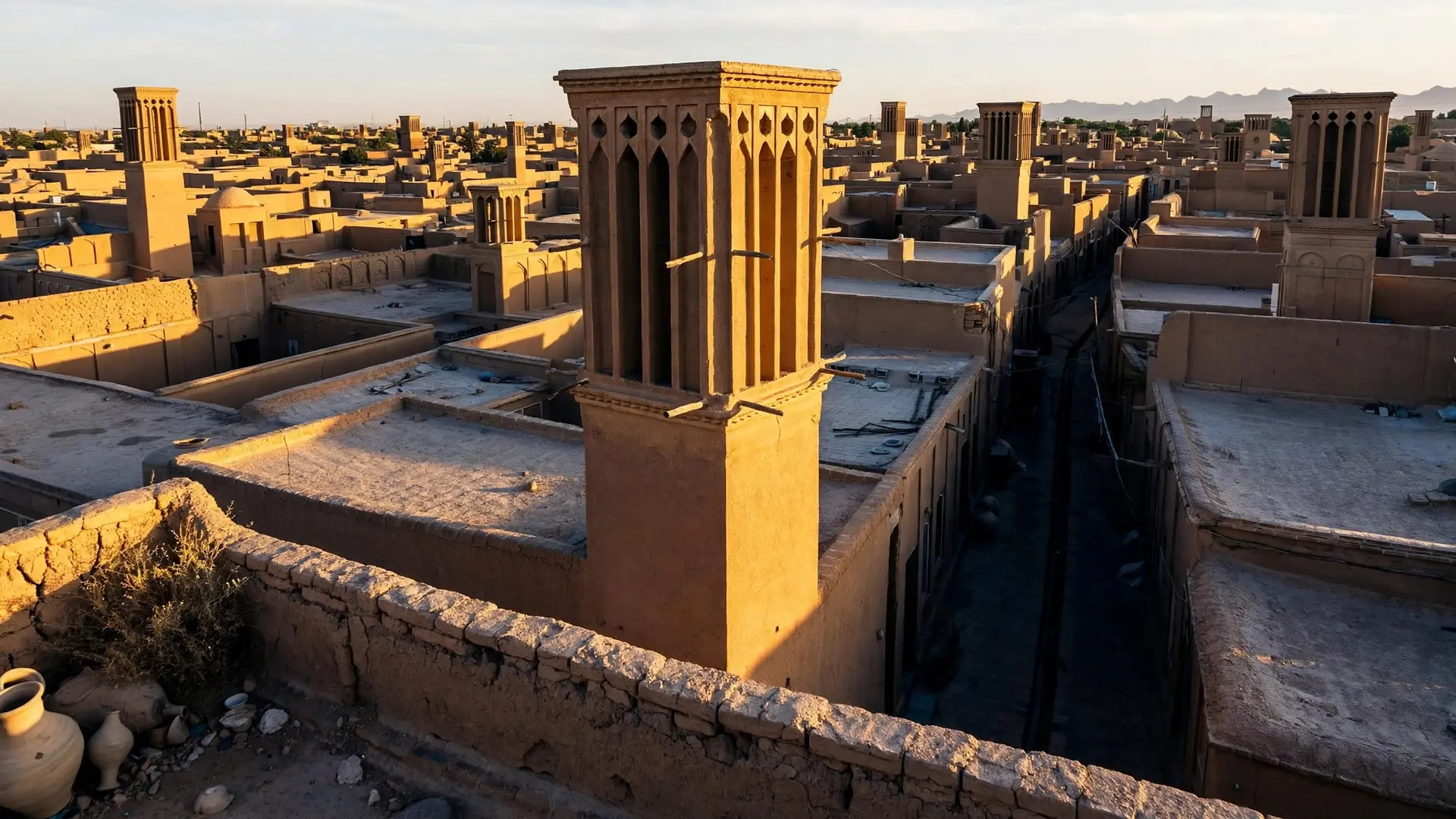
- Yazd holds about 700 windcatchers, and the tallest, at Dowlat Abad Garden, rises 33.35 metres (109 feet) above its pavilion.
Persian windcatchers cooled buildings by catching the wind above the roof and sending it down a tower shaft into the rooms below, with no fan, no compressor and no electricity. In the desert city of Yazd, where summer temperatures climb well over 40 °C (104 °F), these tall mud-brick towers kept houses livable for centuries, and the best of them could drop indoor temperatures by more than 10 °C (18 °F).
- A windcatcher, called a badgir in Persian, is a tower built on a roof with vents at the top that trap the prevailing wind and channel it down to cool and ventilate the rooms below. Encyclopaedia Iranica
- Yazd, nicknamed the city of windcatchers, holds about 700 of them, and the oldest date to the 14th century, while the feature itself is believed to date back as far as 2,500 years. TechXplore
- The tallest windcatcher in the world stands at Dowlat Abad Garden in Yazd and rises 33.35 metres (109 feet) above the roof of the garden pavilion it serves. Encyclopaedia Iranica
- A study of a 4-metre tower in Jordan recorded an indoor temperature drop from 36 °C (97 °F) to 25 °C (77 °F), a fall of 11 °C (20 °F). Applied Sciences
- Iran still has around 33,000 working qanats, underground water channels, down from about 50,000 in the mid-20th century, and many windcatchers drew their cooling water from them. TechXplore
- UNESCO listed the historic city of Yazd as a World Heritage Site in 2017, calling it a living testimony to the intelligent use of limited resources in the desert. TechXplore
How does a windcatcher catch the wind?
A windcatcher is a hollow tower, usually square, built from mud brick and rising above the roof. At its top are openings, called vents, on one, two, or up to eight sides, depending on how steady the local wind is. A tower in a place with one reliable wind direction needs a vent on that side only. A tower in Yazd, where winds shift, often has four vents, one facing each direction. When wind hits the tower, it presses against the windward vent. That pressure pushes air down the shaft and into the living rooms on the ground floor and in the basement. At the same time, wind flowing past the far side of the tower creates suction, a low-pressure zone that pulls warm, stale air out of the house. Fresh air comes in one side, warm air leaves the other, and the house breathes without a single moving part.
The tower does more than catch a breeze. Its height matters. Wind moves faster higher above the roof, away from the friction of walls and rooftops, so a taller tower catches stronger, cleaner air. Most Yazd towers rise between 30 cm (1 foot) and 5 metres (16 feet) above the roof, but the tallest reach far higher.
What happens on a calm day?
A windcatcher does not stop working when the wind drops. That is the part most people miss. The tower also works as a chimney, using the stack effect, the same physics that makes smoke rise up a flue. During the day, the sun heats the tower walls. Warm air inside the shaft grows lighter and rises, escaping through the top vents. As it rises, it pulls replacement air through the house from below, drawing cool, damp air from the shaded courtyard and the basement. Basements were slept in on summer afternoons and nights for exactly this reason: the earth around them stays cool while the air above the roof bakes. The cycle reverses at night. Cool night air sinks down the tower and into the house, flushing out the heat the thick mud-brick walls absorbed during the day. Those walls are part of the system too. Adobe is a slow material: it soaks up heat by day and releases it slowly at night, smoothing out the desert swing between scorching afternoons and cold nights. The windcatcher, the courtyard, the basement and the thick walls worked as one machine, not as separate tricks.
Why does water make the air colder?
Wind alone moves air, but water is what makes the air genuinely cold. Many windcatchers were paired with water, and that pairing is where the biggest temperature drops came from. In the best houses, incoming air passed over a pool fed by a qanat, an underground water channel, or over the surface of a basement water tank. Dry desert air evaporates water easily, and evaporation takes heat out of the air. The air arriving in the living room was cooler and slightly more humid, a welcome change in a dry climate. Builders in some towns stretched light bamboo screens across the vents and threw water over them on summer afternoons, so the air cooled by evaporation before it even entered the shaft. Windcatchers were also built over water cisterns, called ab anbars, where they chilled stored water by the same evaporative cooling, keeping it near freezing through the summer.
Modern tests back up the old design. A wind-tunnel study published in 2026 measured temperature reductions of up to 6 °C (11 °F) from a windcatcher model on its own. A computer model that sprayed fine water droplets into the shaft reached a reduction of 17.4 °C (31 °F). A real traditional house in the United Arab Emirates, studied with two windcatchers, saw its interior temperature fall by as much as 7 °C (13 °F). The numbers vary with the design, but the pattern is steady: wind plus water cools far more than wind alone.
| Cooling method | How it works | When it works best |
|---|---|---|
| Wind pressure | Wind pushes air down the windward vent and suction pulls warm air out the far side | Breezy days, towers with vents facing the prevailing wind |
| Stack effect | Sun-heated tower walls make air rise, drawing cool air from the courtyard and basement | Calm, sunny days and cool nights |
| Evaporative cooling | Dry air passes over qanat water or a pool, and evaporation takes heat from the air | Hot, dry climates, with a water source at the base |
What most people get wrong about windcatchers
The common picture of a windcatcher is a simple chimney that funnels a breeze indoors. That misses the point. A windcatcher is a three-way system: pressure, buoyancy and evaporation, each taking over when the others weaken. Wind does the work on breezy days, the stack effect takes over on calm ones, and water adds the deep cooling that wind alone cannot give. A second mistake is thinking windcatchers were only for the rich. Yazd's skyline is full of them, from grand garden pavilions down to ordinary houses, mosques, caravanserais and water cisterns. Their size and decoration did signal wealth and status, but the technology itself was common across the hot, dry cities of the Iranian plateau, from Kashan and Nain to Kerman and Tabas. A third mistake is assuming the idea died with the arrival of air conditioning. It faded at home, where cheap electricity and cement houses that ignore the climate took over, but architects elsewhere picked it up. Masdar City in the United Arab Emirates designed its buildings to use natural ventilation for cooling in the same way, and the Eastgate Centre in Harare, Zimbabwe, cools itself with a stack-effect design inspired by termite mounds, an approach similar to that of the badgir. The Persian builders worked out the physics first, and modern green architecture keeps rediscovering it. The windcatcher also had a cousin technology in the Roman hypocaust, which heated baths by moving warm air under floors, and it shared its mud-brick world with Sumerian ziggurats built from the same material. The common thread is builders who shaped air itself, hot or cold, with nothing but stone, brick, water and wind. Persian windcatchers worked because they asked the desert for help instead of fighting it. They caught the wind, borrowed the cool of the earth and the water below, and let the sun drive the airflow. No fuel, no machine, no bill, and a house that stayed livable through a 40 °C (104 °F) summer. How we made this article: FactSpire researched and drafted it with AI assistance and checked every fact against the sources listed above.
Frequently asked questions
How does a windcatcher cool a house without electricity?
It uses two natural forces. Wind blowing against the tower creates pressure that pushes air down the shaft into the rooms, while suction on the sheltered side pulls warm air out. On calm days, sun-heated tower walls make the air inside rise, which draws cooler air from the courtyard and basement. Passing the incoming air over water adds evaporative cooling.
How much cooler can a windcatcher make a room?
It depends on the design and the climate. A study of a 4-metre tower in Jordan recorded an indoor drop from 36 °C to 25 °C, about 11 °C (20 °F). A wind-tunnel model measured reductions of up to 6 °C (11 °F), and a computer model with water sprayed into the shaft reached 17.4 °C (31 °F). Real houses saw smaller but still useful drops.
Where are the most famous windcatchers?
Yazd, in central Iran, is known as the city of windcatchers and holds about 700 of them. The oldest date to the 14th century, and the tallest in the world stands at Dowlat Abad Garden in Yazd, rising 33.35 metres (109 feet) above its pavilion. UNESCO listed the historic city of Yazd as a World Heritage Site in 2017.
Do windcatchers still work today?
Yes, where the climate suits them. They need dry air and a breeze, or at least strong sun, so they work best in hot, arid regions. Modern architects have borrowed the idea at Masdar City in the United Arab Emirates, and the Eastgate Centre in Harare, Zimbabwe, uses a similar stack-effect design inspired by termite mounds.
Sources
- BĀDGĪR, Encyclopaedia Iranica
- Wind Catcher Cooling Performance Including Heat Loads: An Experimental Study, Applied Sciences (MDPI)
- Iran's ancient 'wind catchers' beat the heat naturally, TechXplore (AFP)