How Antibiotics Kill Bacteria: The Main Drug Families
Antibiotics kill bacteria four ways: smashing walls, jamming protein factories, breaking DNA, starving cells of folic acid. Here is how each drug family works.
Key takeaways
- Penicillins and other beta-lactams kill bacteria by blocking the enzymes that cross-link the cell wall, causing the cell to burst.
- Vancomycin also targets the cell wall but binds the wall's building blocks instead of the enzymes that assemble them.
- Aminoglycosides and tetracyclines jam the bacterial 70S ribosome; macrolides block the other half of the same machine.
- Fluoroquinolones cripple DNA gyrase, an enzyme bacteria need to unwind and copy their DNA.
- Sulfonamides and trimethoprim starve bacteria of folic acid, which they must make themselves — humans get it from food instead.
Antibiotics kill bacteria by sabotaging structures and processes that bacteria depend on but human cells do not have. There are four main attack routes, and each drug family has mastered one of them.
How do antibiotics spare human cells?
Every antibiotic works because bacteria differ from our cells in some key way. Human cells have no cell wall — they are bounded only by a membrane — so anything that attacks wall construction cannot touch us. Our protein-making machines, the ribosomes, are 80S assemblies, while bacterial ribosomes are smaller 70S structures, so drugs tuned to the bacterial version pass ours by. And while bacteria must manufacture their own folic acid, humans absorb it from food, which lets certain drugs starve bacteria of a vitamin our cells never need to make. This principle is called selective toxicity: poison the microbe, spare the patient. That selectivity is what makes antibiotics among the safest drugs in medicine — penicillins, for instance, are among the few antibiotics considered safe enough to use during pregnancy when the benefit outweighs the risk. But it only works when the bacterium has not found a way around the attack, which is why finishing a prescribed course matters.
Attack 1: demolishing the cell wall
The oldest and most famous drug family, the beta-lactams, goes after the bacterial cell wall. Penicillins — amoxicillin, ampicillin, penicillin G and penicillin V — plus cephalosporins, carbapenems and monobactams all share a chemical feature called a beta-lactam ring. They bind to enzymes known as penicillin-binding proteins, the transpeptidases that stitch cross-links between the strands of peptidoglycan — the tough mesh that gives the wall its strength. Without those cross-links, the wall becomes fragile. Water pressure from inside the cell then does the killing: the weakened bacterium swells and bursts through osmotic lysis. Because peptidoglycan exists only in bacteria, the drug's target simply does not exist in human tissue.
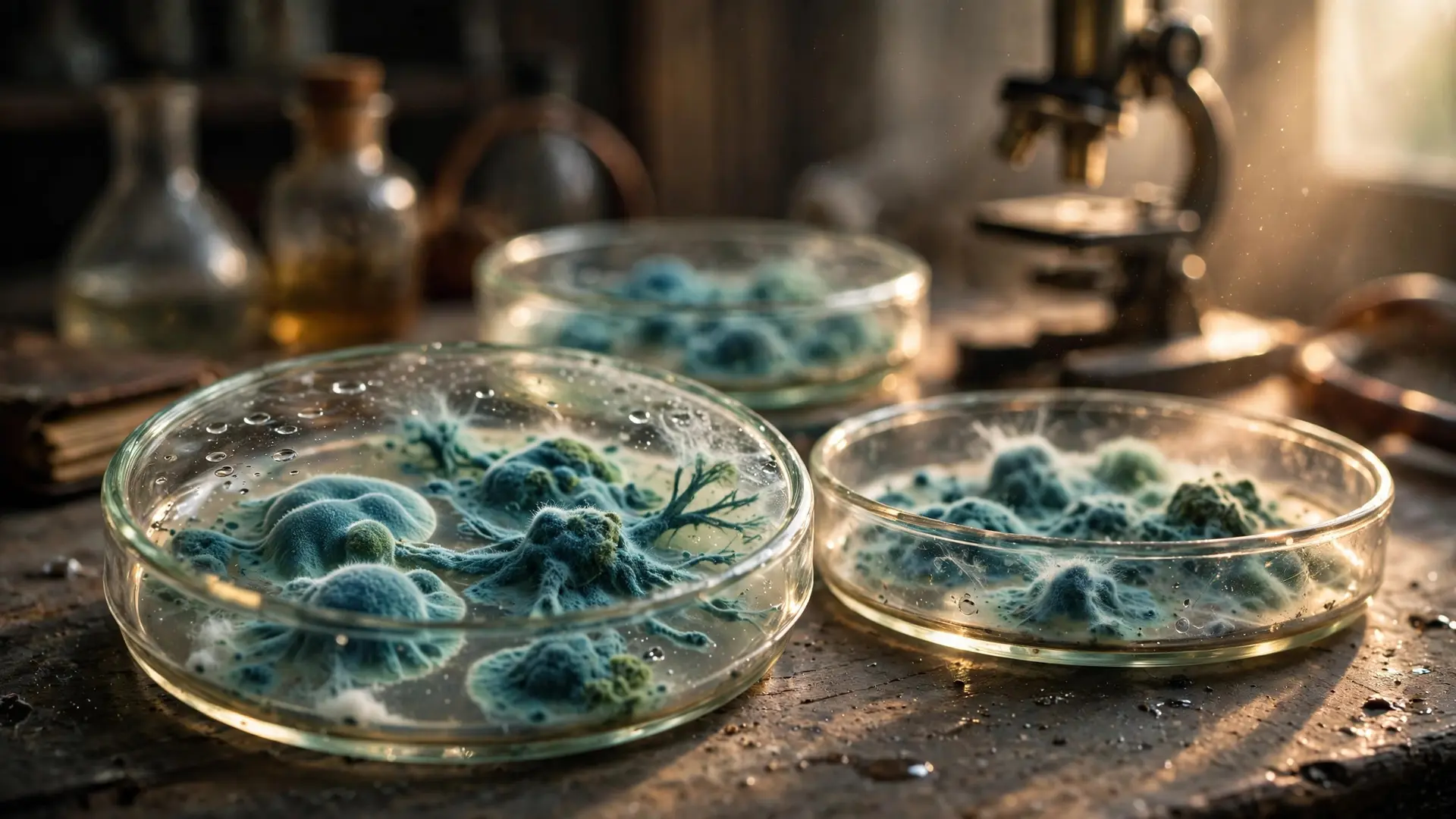
Newer research has revealed a twist. A 2014 study from Indiana University, published in the journal Cell, found that penicillin does not merely block the cross-linking enzyme — it makes the enzyme misbehave. Even when the enzyme was made nonessential, so the cell could live without it, drugging it still killed the cell. The reason: the cell kept manufacturing new wall strands but immediately degraded them, trapped in a futile cycle of building up and tearing down its own wall until its resources ran out. The classic story of penicillin's discovery appears in the tale of Fleming's accidental spore. Vancomycin, a glycopeptide, attacks the same wall from a different angle. Instead of blocking the enzymes that do the cross-linking, it grabs hold of the raw materials themselves — the D-alanine-D-alanine ends of the peptidoglycan precursors — and physically prevents them from being woven into the wall. Different strategy, same wreckage. Bacteria fight back with their own chemistry. Some produce beta-lactamase enzymes that snap the beta-lactam ring and disarm the drug. Physicians counter with inhibitor combinations — amoxicillin paired with clavulanate, ampicillin with sulbactam, piperacillin with tazobactam — in which the second drug sacrifices itself to the enzyme so the antibiotic can do its work.
Attack 2: jamming the protein factories
The second family shuts down protein synthesis by targeting the bacterial ribosome. Aminoglycosides such as gentamicin latch onto the smaller half of the ribosome, the 30S subunit, and cause it to misread the genetic instructions. The bacterium starts building proteins with the wrong amino acids, producing misfolded garbage that poisons it from within. This is a bactericidal attack — it kills outright. Tetracyclines also bind the 30S subunit but use a gentler sabotage: they block the docking site where new amino acids arrive, so the ribosome stalls and translation halts. Because they only freeze bacterial growth rather than killing, they are bacteriostatic, leaving the immune system to clear the stalled invaders. For how the immune system takes over from there, see how vaccines train the immune system.
Macrolides — erythromycin and azithromycin — along with clindamycin and streptogramins, hit the larger half of the ribosome, the 50S subunit. They gum up the peptidyl transferase machinery that links amino acids into chains, stopping elongation of the growing protein. Again the effect is bacteriostatic. Two halves of the same machine, sabotaged at different stations, by drugs that remain among the most prescribed in the world.
Attacks 3 and 4: breaking DNA and starving the cell
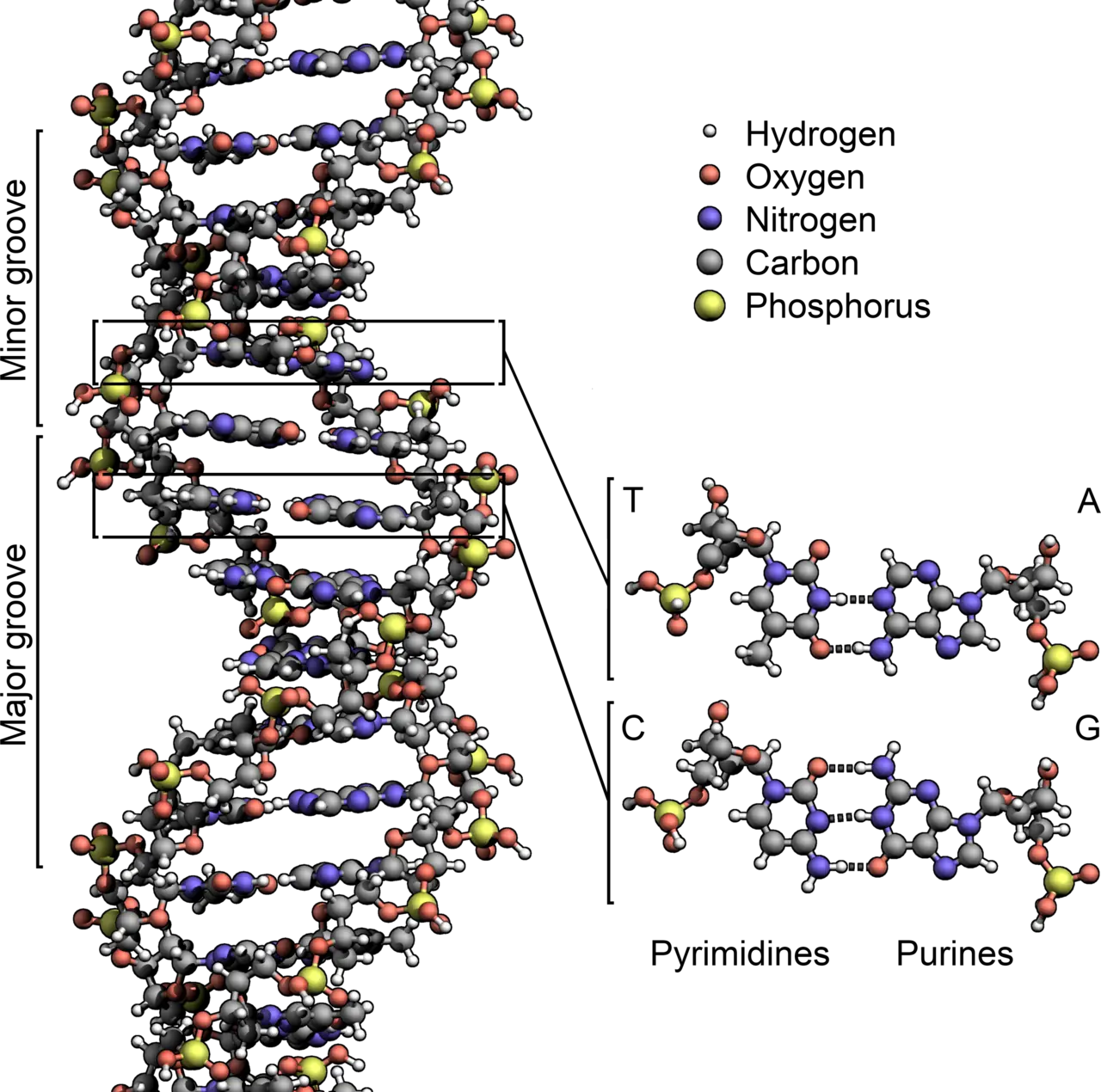
Fluoroquinolones, such as ciprofloxacin, strike at bacterial DNA replication. To copy their DNA, bacteria rely on an enzyme called DNA gyrase, which untangles the supercoiled chromosome so replication machinery can move along it, and on topoisomerase IV, which separates the two daughter chromosomes after copying. Fluoroquinolones wedge into these enzymes and freeze them mid-cut, so the DNA is left with lethal double-strand breaks. Unable to replicate or even properly read its genome, the cell dies. The last classic family, the antimetabolites, wages economic warfare. Bacteria cannot absorb folic acid from their surroundings the way human cells do; they must synthesize it from scratch because it is essential for making DNA building blocks. Sulfonamides mimic a raw material of that pathway — p-aminobenzoic acid — and jam the enzymes that use it. Trimethoprim blocks a later step, the enzyme dihydrofolate reductase. Used together, the pair creates a sequential blockade: two drugs hitting the same assembly line at different stations. The combination, known as co-trimoxazole, is more powerful than either drug alone and has been a workhorse against urinary and respiratory infections for decades.
Why does any of this matter to you?
Knowing how antibiotics work explains the rules doctors keep repeating. Skipping doses gives bacteria time to develop workarounds — the beta-lactamases, the mutated targets, the efflux pumps that are now a global health crisis. Using antibiotics against viral infections is pointless: viruses have no cell walls, no bacterial ribosomes and no folate pathway, so the drugs have nothing to grab. Four attack routes, refined over a century of chemistry, turned once-lethal bacterial infections into treatable ones. They work because bacteria are different from us — and they keep working only as long as we respect that difference. The story of how germ theory revealed bacteria as the cause of disease explains why that difference mattered enough to launch the antibiotic age.
Frequently asked questions
Why don't antibiotics harm our own cells?
Antibiotics exploit differences between bacterial and human cells. Human cells have no cell wall, use different (80S) ribosomes, and don't need to synthesize folic acid — so drugs targeting these bacterial features leave human cells alone. This is called selective toxicity.
What is the difference between bactericidal and bacteriostatic antibiotics?
Bactericidal drugs actively kill bacteria — for example, beta-lactams, aminoglycosides and fluoroquinolones. Bacteriostatic drugs like tetracyclines and macrolides only halt bacterial growth, leaving the immune system to finish the job.
How does penicillin actually kill bacteria?
Penicillin blocks the enzymes that cross-link peptidoglycan, the mesh that gives the bacterial cell wall its strength. Recent research shows the drug also makes one enzyme malfunction, forcing the cell into a futile cycle of building and breaking its wall until it collapses and bursts.
Why do some bacteria survive antibiotics?
Some produce enzymes like beta-lactamases that destroy the drug before it can act — doctors counter these with inhibitor combinations such as amoxicillin with clavulanate. Other resistance tricks include mutating the drug's target, which is why resistance is one of medicine's biggest challenges.