How Göbekli Tepe Rewrote the Story of Civilization
Hunter-gatherers raised Göbekli Tepe's carved pillars around 9600 BCE, before farming. Finds of houses and landslide debris now complicate the temple story.
Key takeaways
- UNESCO dates Göbekli Tepe's monuments to about 9600-8200 BCE: rings of carved limestone pillars raised by hunter-gatherers more than 6,000 years before Stonehenge.
- The largest standing pillars are about 5.5 metres tall and weigh roughly 8 to 10 tonnes; an unfinished 7-metre pillar left in the quarry would have weighed about 50 tonnes.
- Klaus Schmidt recognized the buried pillars in October 1994, three decades after a survey took parts of the mound for Islamic cemeteries. Excavation began in 1995.
- Since 2015, excavators have found small round and rectangular buildings, hearths, a sub-floor burial and a possible rock-cut cistern, undercutting the idea that nobody lived there.
- Schmidt thought the enclosures were deliberately buried. A 2020 DAI review suggests much of the fill slid in from higher slopes, and the question is still being studied.
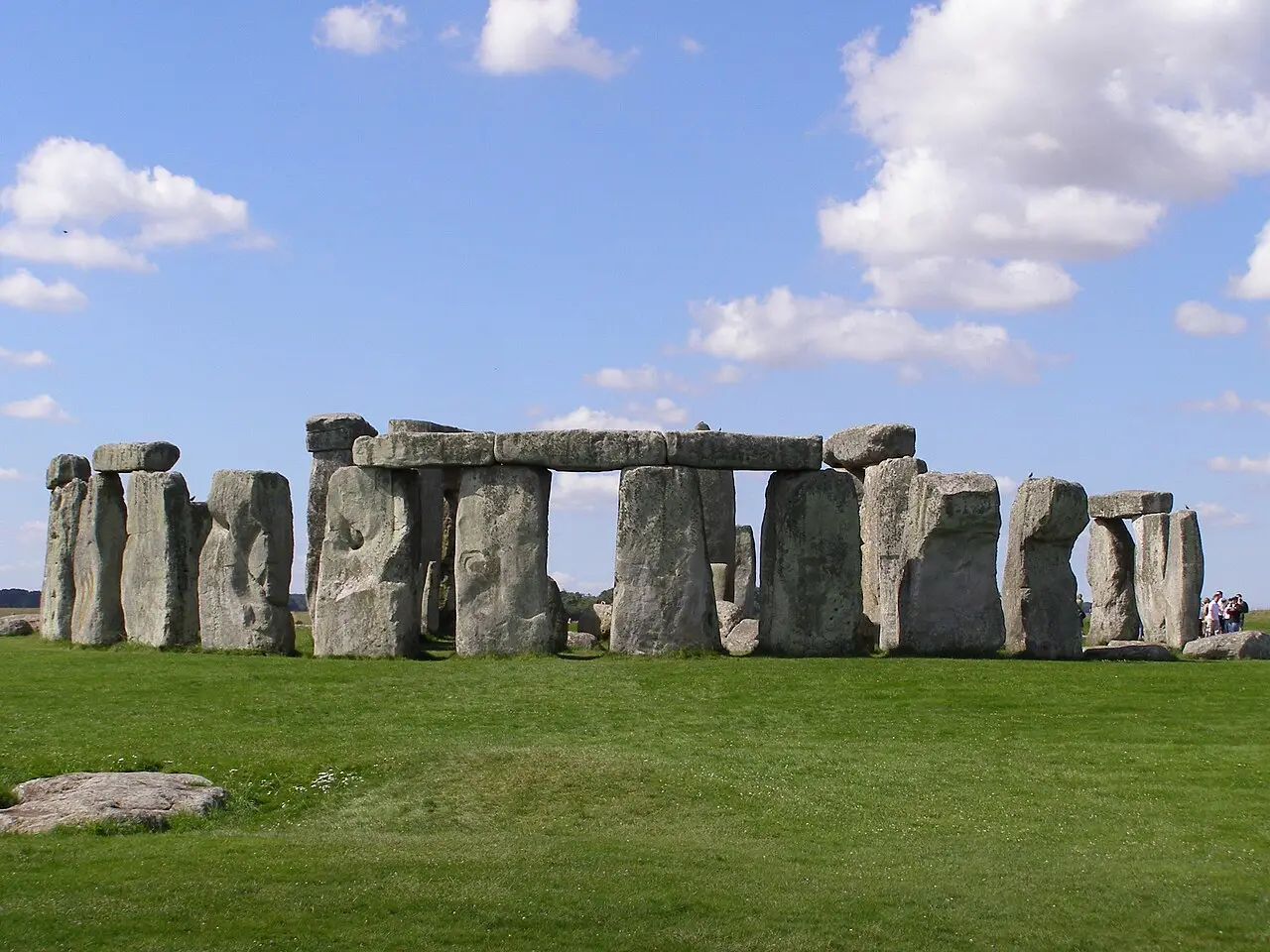
Göbekli Tepe changed the story of civilization by showing that monumental architecture did not have to wait for farming. On a limestone ridge outside Şanlıurfa in south-eastern Turkey, hunter-gatherers raised rings of carved pillars between about 9600 and 8200 BCE, UNESCO's dates for the monuments, more than 6,000 years before work began at Stonehenge. Now the site is revising its own legend: the "world's first temple" may also have been a place where people lived.
How was Göbekli Tepe discovered?
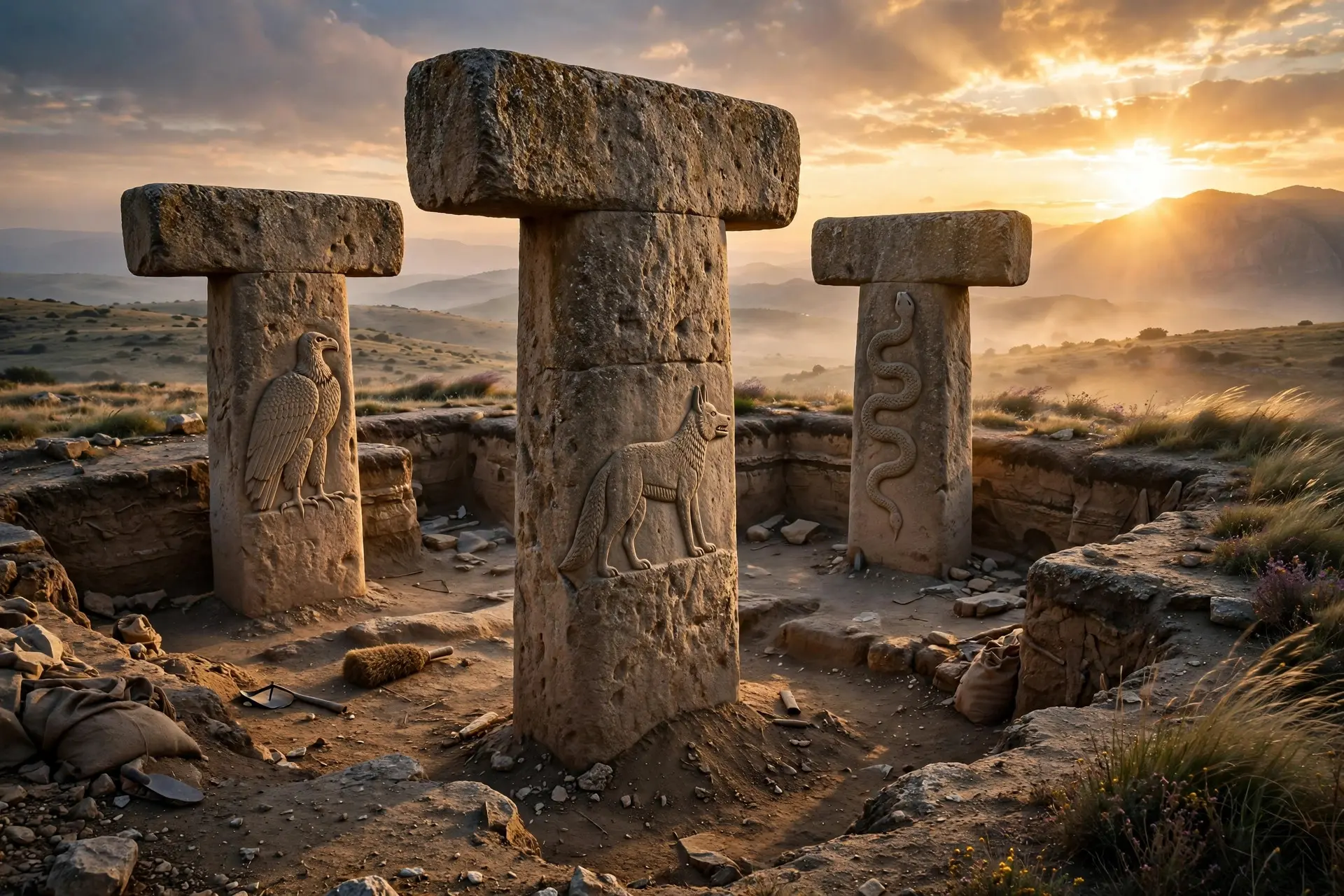
The hill was noticed long before it was understood. A 1963 survey run by Istanbul University and the University of Chicago recorded flint on its slopes and dated it to the Neolithic, but took parts of the mound for small Islamic cemeteries. Part of the hill was farmland belonging to the Yıldız family, and in 1986, by the family's account, two stones turned up by the plough went to the museum in Şanlıurfa and drew little interest. Klaus Schmidt arrived in October 1994. The German prehistorian had excavated at Nevalı Çori, a Neolithic village with T-shaped pillars that the Atatürk Dam reservoir later drowned, and he was checking the region's known Neolithic sites for more like it. On the hilltop he recognized the supposed gravestones as T-shaped pillars. Digging began in 1995, run jointly by the German Archaeological Institute (DAI) and the Şanlıurfa Museum. That first season a landowner clearing stones from his field dug out the tops of two big pillars and started breaking one with a sledgehammer before he was talked out of it; the 1996 trench on that spot exposed the first great enclosure. Schmidt led the work until his sudden death in July 2014, and UNESCO added the site to the World Heritage List in 2018. The name means "Potbelly Hill" in Turkish, apt for a mound up to 15 metres high and about 300 metres across. Inside are round-oval enclosures 10 to 20 metres wide, walled in stone and lined with benches and T-shaped pillars. Two taller pillars, up to 5.5 metres, stand at the centre of each, and the excavators read them as stylized people: some have carved arms, hands resting above a belt, and a loincloth. The surrounding pillars carry reliefs of foxes, boar, snakes, cranes and vultures, all wild animals.
Why did a hunter-gatherer monument upend the textbook?
The textbook sequence ran one way: farming came first, then villages, surpluses and finally temples. At Göbekli Tepe the excavators found no clear trace of domesticated crops or livestock. The builders were foragers. Schmidt turned that into a provocation. His 2006 book was titled, in German, They Built the First Temples, and his team argued that feeding and organizing the work crews may have pushed people toward cultivation. The setting helped: a 1997 DNA study in Science traced domestic einkorn wheat to wild strains from the Karacadağ mountains in the same region.
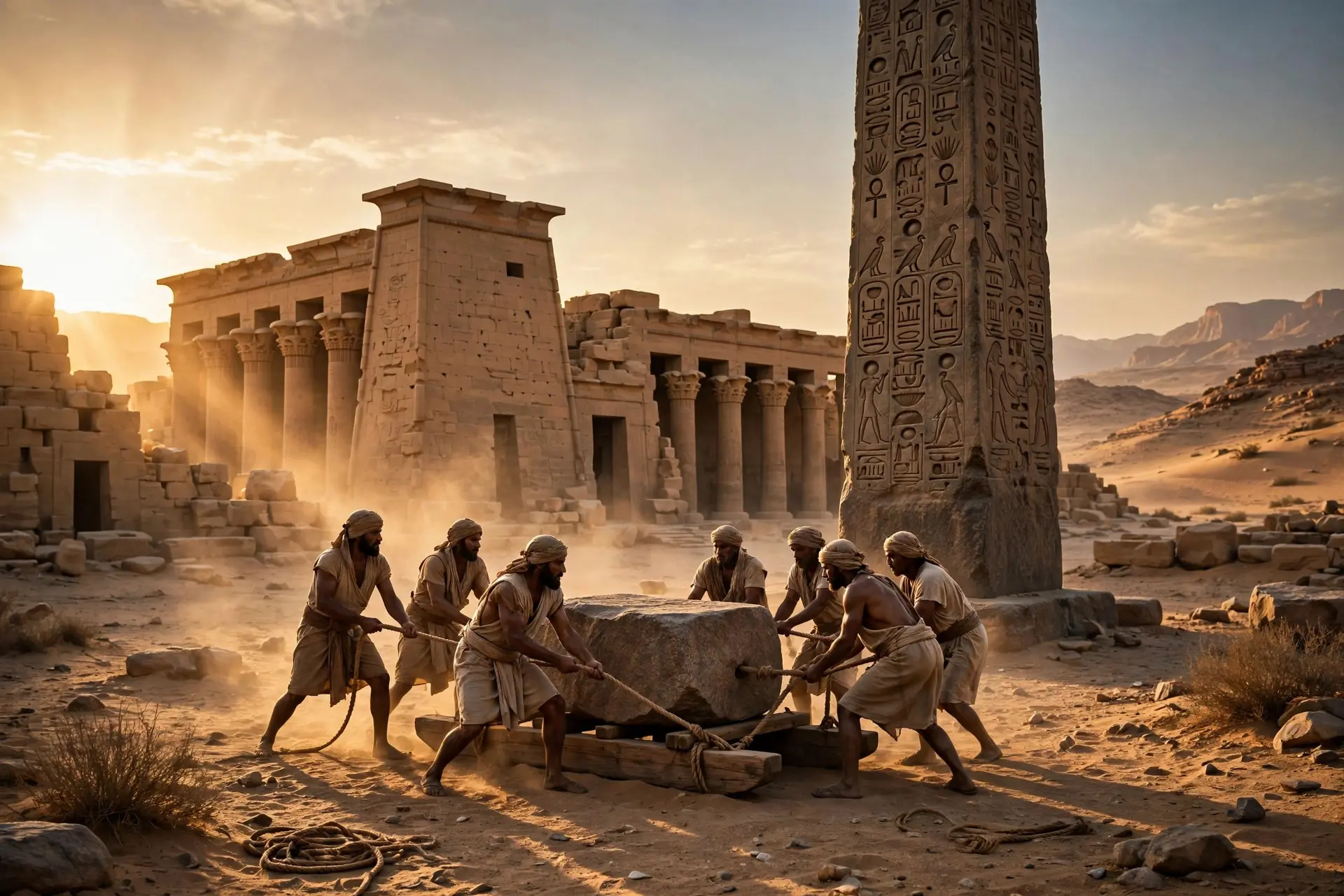
The food evidence fits big communal events. A 2019 study led by Laura Dietrich analysed more than 7,000 grinding tools, too many for ordinary daily use, and found abundant cereals, including einkorn and barley. Alongside bones of hunted gazelle and aurochs, the team read this as a sign of seasonal work feasts. Raising the pillars took organization, not mystery. The quarries lie on the limestone plateau within a few hundred metres of the enclosures, where the bedrock splits naturally into beds up to 1.5 metres thick; workers cut channels around each pillar with flint picks and probably levered it free with wooden beams and wedges. The largest standing pillars weigh roughly 8 to 10 tonnes, according to the excavation team, and an unfinished 7-metre pillar left in the quarry would have weighed about 50 tonnes. Sledges and timber are the best guess for moving them, as with Egyptian pyramid blocks thousands of years later; the wheel was still some 6,000 years away. The layout may have been planned, too. In 2020 Gil Haklay and Avi Gopher reported in the Cambridge Archaeological Journal that the centre points of Enclosures B, C and D form a near-perfect equilateral triangle about 19 metres a side, a sign, they argued, of a single design. Other archaeologists note that one enclosure could have come first and the others been laid out to match.
Did anyone actually live at Göbekli Tepe?
Schmidt thought not. The ridge had no reliable water, there were none of the ordinary houses found at other sites of the period, and special buildings seemed to be everywhere. Foragers, he concluded, came, built, feasted and left. Work since 2015 has eroded that picture. Deep trenches dug to anchor the site's protective roofs exposed clusters of small round buildings, probably from the earliest phase, beside a work area with hearths and debris from bead-making. Rectangular buildings followed, some remodelled from round ones, and beneath one floor lay a burial of at least three people, a custom typical of Neolithic homes. The stone tools look domestic, and a pit about 8 metres wide and 2.8 metres deep, cut into the bedrock near carved channels, may have been a cistern for rainwater. In 2020 Lee Clare, who leads the DAI's research there, wrote that revising the temple story was now unavoidable, noting that the archaeologists themselves had promoted it. The Turkish-led project that has directed the excavations since 2019 now says people lived at Göbekli Tepe throughout its history.
The ritual reading keeps its defenders. Schmidt's colleagues Oliver Dietrich and Jens Notroff argued that the dense cluster of special buildings, and the near absence of everyday finds such as clay figurines, mark a cult centre. Water remains a sticking point: Edward Banning of the University of Toronto, who proposed in 2011 that the enclosures could be houses, notes that nobody has yet shown the cisterns could supply a large population. How big any community was, and whether it stayed all year, remains open.
Were the enclosures buried on purpose?
Schmidt was convinced that the builders filled the enclosures in on purpose once their use had ended. The fill is largely broken limestone, laced with flint tools, animal bones and occasional scraps of human bone, and his team pointed to carved stone heads set carefully into it, often beside pillars, as signs of an intentional act. The current team reads the same deposits differently. Clare's 2020 review suggested that the low-lying buildings of the main excavation area were swamped by settlement debris sliding down from higher ground in repeated slope slides. That would explain why the fill mixes early and later material, and why radiocarbon dates from it scatter so widely. Moritz Kinzel, who studies the buildings for the DAI, has pointed to slope damage on the walls nearest the hillside, and the team sees hints that the occupants tried to protect them. Dating has shifted too. Radiocarbon measurements on organic matter in the buildings' mud mortar show the big enclosures stayed in use far longer than thought, in some cases more than five centuries, overlapping with rectangular buildings once assigned to a later phase. Schmidt's three-layer sequence, with grand round enclosures first and smaller rectangular rooms after, has been abandoned. How the slides unfolded is still being studied, so the burial question remains open.
Was Göbekli Tepe one of a kind?
No, and that may be the biggest revision of all. Karahan Tepe, in the Tek Tek mountains about 55 km from Şanlıurfa, was identified in a 1997 survey and has been excavated by an Istanbul University team since 2019. It has a circular communal building 23 metres across inside, a room cut 3.5 metres into bedrock with a human head carved from its wall, and nearby what look like houses holding grinding stones, mortars and pestles. Both sites belong to Taş Tepeler ("Stone Hills"), a regional project studying settlements of the 10th to 7th millennia BCE. Surveys have logged at least a dozen sites with similar pillars, and Karahan Tepe has raised the possibility that Göbekli Tepe does not even hold the oldest T-pillar buildings. Nor is Göbekli Tepe exhausted: a 2003 geophysical survey led Schmidt to estimate at least 20 enclosures, and radar scans in 2025 found more, plus smaller structures that may be early houses. Göbekli Tepe never proved that religion invented farming, and the evidence cannot show it. What it does show is that people who still hunted and gathered could quarry 10-tonne stones, share an elaborate set of symbols and keep rebuilding monuments for centuries. Its newest chapter, in which people may have lived among the pillars, is no less remarkable than the temple story it is replacing.
Frequently asked questions
How old is Göbekli Tepe?
UNESCO dates its monuments to about 9600-8200 BCE, so the oldest enclosures are roughly 11,600 years old. That is more than 6,000 years before work began at Stonehenge.
Was Göbekli Tepe really a temple?
Klaus Schmidt saw it as a sanctuary that hunter-gatherers visited and then left. Since 2015 the excavators have found houses, hearths and a possible cistern, and they now describe a community built around special communal buildings, although some researchers still favour a mainly ritual role.
Was Göbekli Tepe buried on purpose?
Klaus Schmidt believed the builders filled the enclosures in on purpose. A 2020 review by the German Archaeological Institute suggests that much of the fill slid down from higher slopes in repeated slope slides, and the details are still under study.
How heavy are the Göbekli Tepe pillars?
According to the excavation team, the largest standing pillars, about 5.5 metres tall, weigh roughly 8 to 10 tonnes each. An unfinished 7-metre pillar left in the quarry would have weighed around 50 tonnes.