How the Colosseum Worked: Crowds, Awnings and Trapdoors
Numbered gates, a sailor-rigged awning and up to 28 animal lifts made the Colosseum a machine for 50,000-plus people. How it worked and why so much is gone.
Key takeaways
- Vespasian began the Colosseum around AD 70-72, Titus opened it in AD 80 with 100 days of games, and Domitian later added the hypogeum beneath the arena.
- Spectators entered through about 80 ground-floor arches, 76 of them numbered for the public, and were seated by social rank.
- A linen awning hung from more than 200 masts and worked by sailors from the fleet at Misenum shaded the seats while the arena stayed open to the sun.
- Researcher Heinz-Jürgen Beste found evidence of up to 28 lifts in the hypogeum, worked by capstans, that raised caged animals up through trapdoors into the arena.
- The pockmarks on the facade are holes left by scavengers who dug out the iron clamps that once held the travertine blocks together.
The Colosseum worked like a machine built around a crowd. Numbered arches and stairways sorted tens of thousands of spectators into seats by rank, sailors stretched a linen awning over their heads, and an underground maze of cages, ramps and lifts sent animals and scenery up through trapdoors onto the sand. What stands in Rome today is the shell of that machine, cracked by earthquakes and stripped for centuries by people who treated it as a quarry. Its official name was the Amphitheatrum Flavium, after the Flavian family of emperors who built it. Vespasian began the work around AD 70–72 on ground once taken up by Nero's palace gardens and their artificial lake. His son Titus opened it in AD 80 with games that ran for 100 days, and his younger son Domitian finished the job. The nickname "Colosseum" arrived centuries later, most likely borrowed from a colossal bronze statue of Nero that stood nearby.
How did tens of thousands of Romans find their seats?
Estimates of how many people the Colosseum held range from about 50,000 to more than 70,000, and moving that many people needed a system any stadium-goer would recognise. The ground floor of the outer wall was a ring of roughly 80 arches. Seventy-six of them carried numbers for the general public, while the four unnumbered gates were kept, by most accounts, for the emperor, dignitaries and performers. A ticket named a gate. From there, staircases and passages called vomitoria led each spectator to a section, a row and a seat. Those gate numbers are not a modern guess. In 2015, restorers cleaning the facade reported traces of red paint on the Roman numerals carved above the arches, evidence that the signage had once been picked out in colour for the crowd. Where you sat depended on who you were. Senators and the elite had the rows closest to the arena, ordinary male citizens filled the middle, and women and the poorest Romans were sent to the top, where some sat or stood on wooden benches. Entry was free; status decided the view.
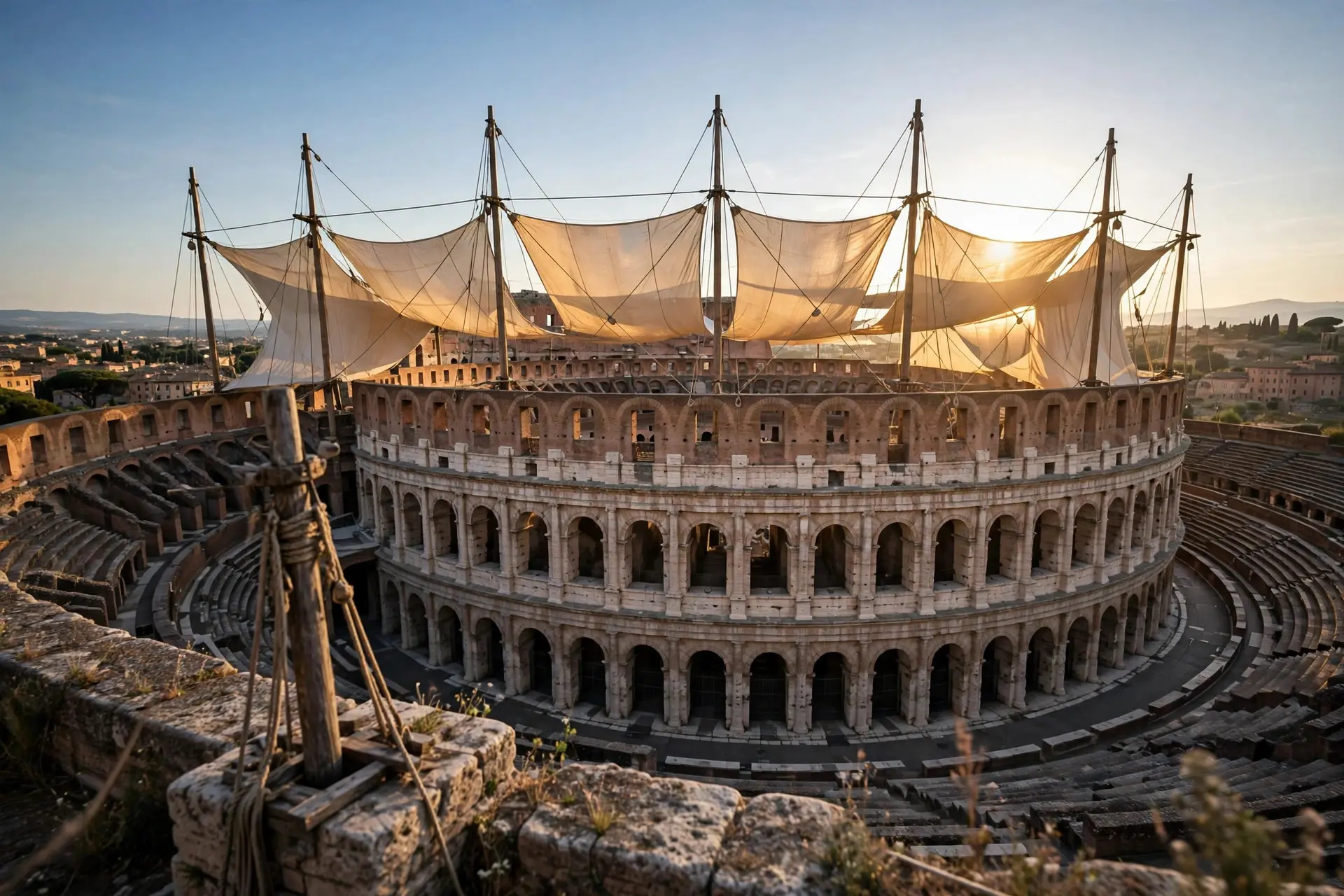
Shade came from the velarium, a vast awning of linen strips rigged on more than 200 wooden masts, each set in a socket near the top of the outer wall. Ropes, pulleys and winches drew the cloth across the seating, and the job of handling it fell to hundreds of sailors from the imperial fleet at Misenum, men who knew how wind behaves on canvas. The awning shaded the seats while the arena stayed open to the sun. Its open centre left the fighters in full sun and, by some accounts, let hot air escape so that a breeze moved through the stands.
How was a building this big put together?
The Colosseum is an ellipse of about 190 by 155 metres, wrapped in three storeys of arches framed by Doric, Ionic and Corinthian half-columns and topped by a tall attic storey. Its outer skin is travertine, a pale limestone hauled from quarries near Tivoli, east of the city. Masons tied the blocks together with iron clamps, and one estimate puts the metal used in the building at roughly 300 tonnes. Behind the stone face, walls of tuff, brick and concrete carried the vaults and staircases that held up the seating. Even the funding left a trace. The metal letters of the dedication inscription were prised out long ago, but in 1995 the epigrapher Géza Alföldy reconstructed the text from the pattern of peg holes they left behind. His reading, widely accepted though recently questioned, says the amphitheatre was built from the spoils of war, which scholars link to the treasure seized after Roman troops captured Jerusalem in AD 70. The Dead Sea Scrolls are generally thought to have been hidden in caves near Qumran during that same war.
What happened beneath the arena floor?
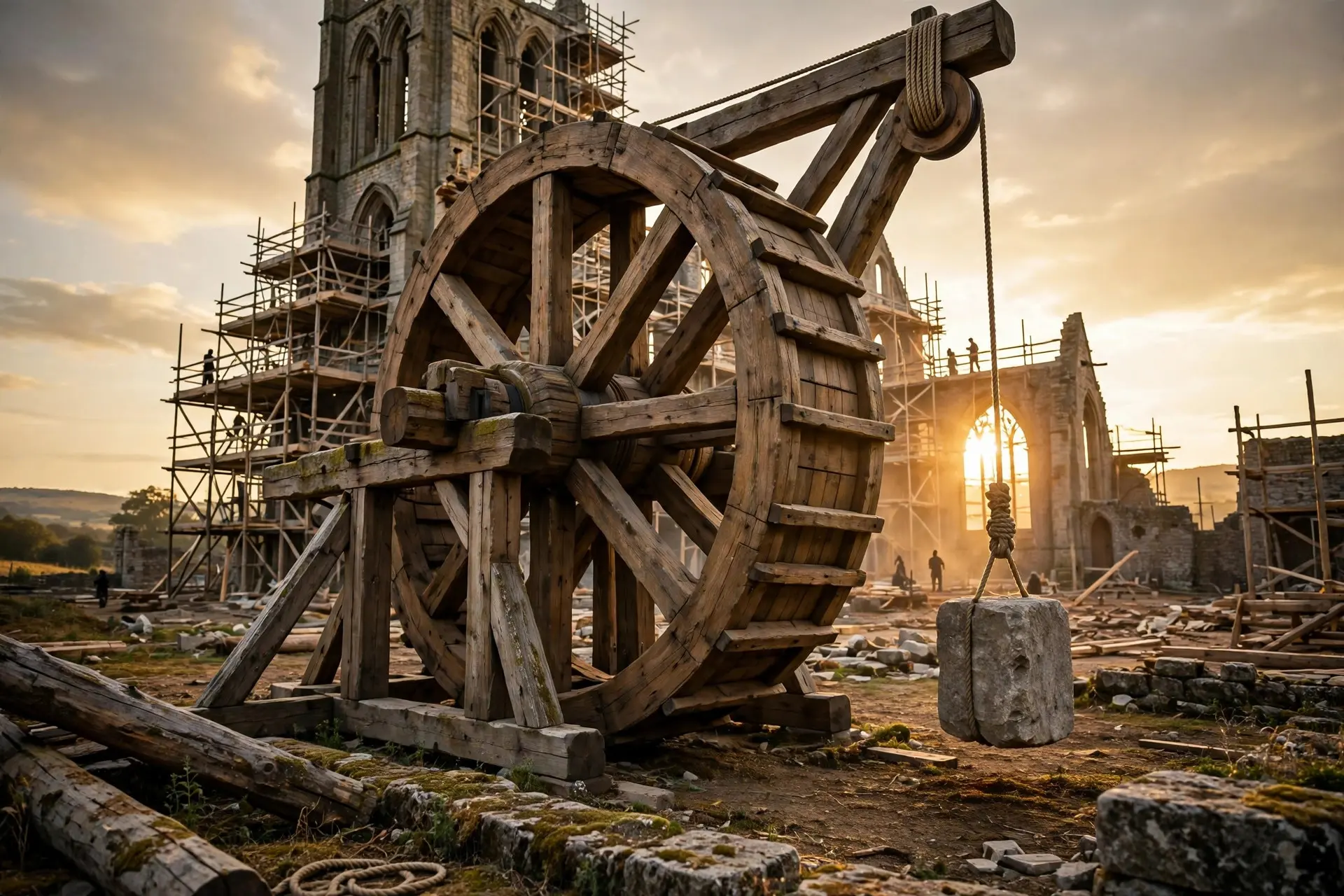
Under the wooden, sand-covered floor lay the hypogeum, a grid of corridors, animal pens and machinery that Domitian added after the building opened. Today most of it lies open to the sky, a maze of broken walls, but those walls kept a record of what once moved inside them. Starting in the late 1990s, the German Archaeological Institute's Heinz-Jürgen Beste drew every stone of the hypogeum and spent years decoding its holes, notches and grooves. He concluded they were the fixings of a lift system: vertical channels for cages, capstans turned by teams of men, and hinged trapdoors that dropped open to form ramps up to the arena. He found evidence of as many as 28 such lifts. Other platforms could raise trees and scenery, so a hunt might suddenly appear to be taking place in a forest.
In 2015, a team installed a full-scale working replica in the hypogeum. The capstan would not budge until they added a set of pulleys, after which eight men could hoist the cage. They then released a wolf onto the arena floor, the first animal to enter the Colosseum that way in about 1,500 years. The hypogeum also undercuts one of the building's most famous stories. The historian Cassius Dio wrote that Titus suddenly filled the amphitheatre with water for a sea fight, and the poet Martial, who seems to have been there, celebrated water where there had lately been land. Suetonius, though, places Titus's naval battle in an old basin built by Augustus. Modern estimates suggest aqueduct water could have filled the arena, though no complete flooding system has ever been found. Once the hypogeum existed, however, flooding would have ruined the machinery. If sea battles happened here at all, they belong to the building's first few years.
Why is so much of the Colosseum missing?
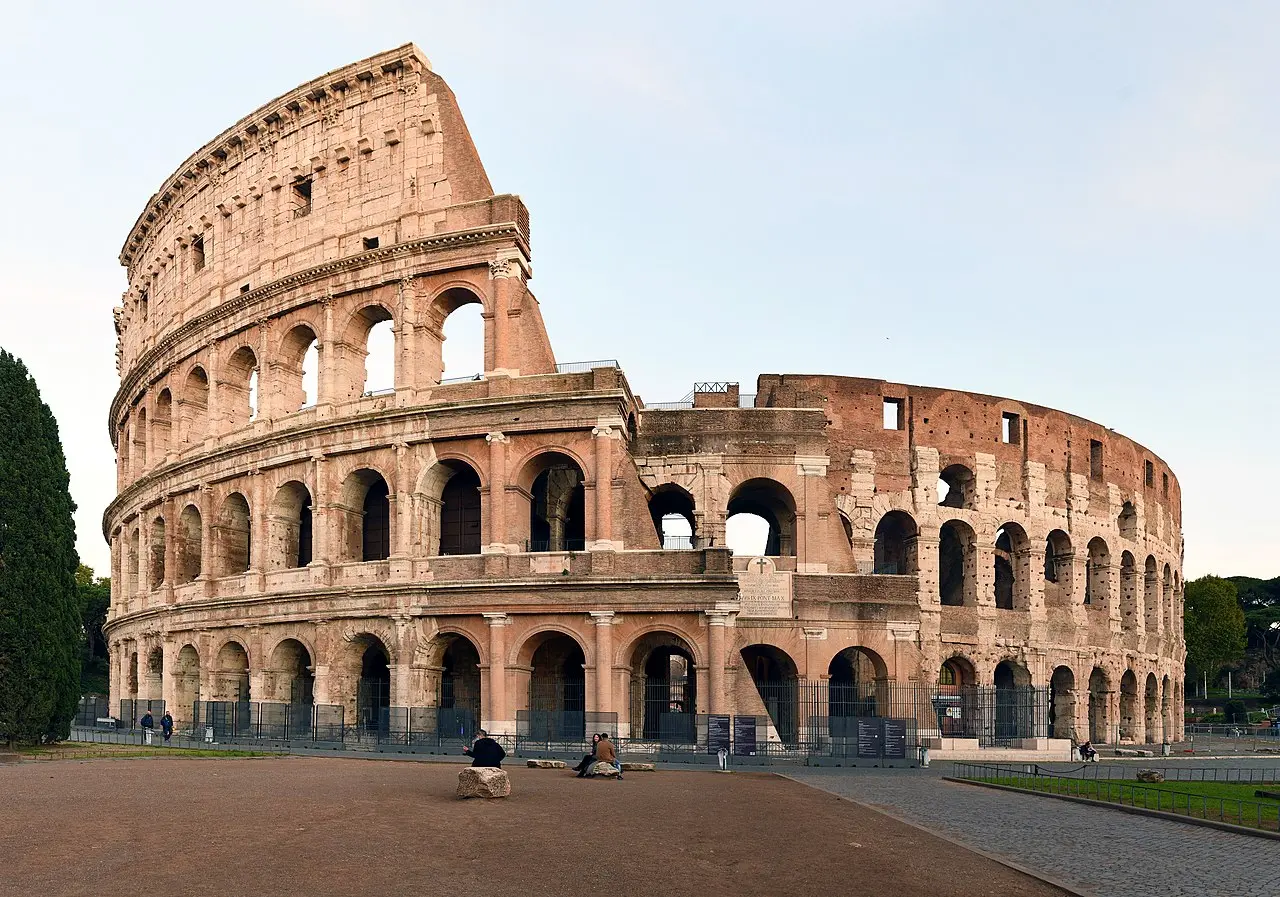
Two forces took the Colosseum apart: the ground beneath it and the city around it. Earthquakes damaged the building repeatedly from the fifth century onward, and the worst of them brought down much of the outer ring on the south side. That collapse is traditionally blamed on the earthquake of 1349, although some historians argue the great fall came earlier, in 1231. Geology helps explain why the damage landed where it did. The southern half stands over a buried valley of soft sediment left by an ancient tributary of the Tiber, and computer models suggest that such ground shakes harder and longer than the terrain beneath the northern half. Rome did the rest. Fallen travertine was too useful to leave lying around, and for centuries the amphitheatre served as a quarry for churches, palaces and fortifications. The stripping went on, in waves, into the 18th century. Even the stone left standing was robbed. The pockmarks that cover the surviving facade are the holes where scavengers chiselled out the iron clamps, which were worth more as scrap than as fastenings. Read that way, the ruin is a diagram of its own history. The pockmarks show where the iron went, the missing southern arc shows where the ground was soft, and the open hypogeum exposes the machinery that once ran the show. The Colosseum is remembered for blood and spectacle, but what made it work was organisation: a building engineered to fill, seat, shade, entertain and empty a small city's worth of people, then do it all again at the next games.
Frequently asked questions
Why is it called the Colosseum?
Its official name was the Amphitheatrum Flavium, after the Flavian emperors who built it. The nickname came much later and most likely refers to a colossal bronze statue of Nero that stood nearby.
How many people could the Colosseum hold?
Estimates range from about 50,000 to more than 70,000 spectators. They entered through numbered arches and were seated by rank, with the elite nearest the arena and women and the poor at the top.
Did the Romans flood the Colosseum for naval battles?
Possibly, but only in its first years. Cassius Dio says Titus flooded the arena for a sea fight, Suetonius places that battle in an old basin of Augustus, and once the hypogeum was built, flooding would have wrecked the machinery.
Why are there holes all over the Colosseum?
They are where scavengers dug out the iron clamps that tied the travertine blocks together. In the centuries after Rome fell, that iron was worth more to scavengers as scrap than as fastenings.
Sources
- Colosseum, Encyclopaedia Romana, University of Chicago
- Colosseum, Britannica
- Lifting Wild Animals Into the Colosseum, Providence Pictures (Smithsonian reprint)
- Evidence of a Seating Plan Discovered at the Colosseum, Smithsonian Magazine
- Travertine: A Tie That Binds Two Great Structures, Geotimes (American Geosciences Institute)
- Naval Battles In The Colosseum: Did the Romans Really Flood the Arena?, My History Club