Why Do We Say 'OK'? The True Origin Story
OK is the most used word on the planet — born as a Boston newspaper joke in 1839, spread by a losing presidential campaign, proven true only in the 1960s.
Key takeaways
- The first printed 'o.k.' appeared in the Boston Morning Post on March 23, 1839, as 'oll korrect' — a joke misspelling of 'all correct.'
- Martin Van Buren's 1840 supporters spread it nationwide through Democratic O.K. Clubs — 'O.K.' for 'Old Kinderhook,' his hometown nickname.
- Columbia professor Allen Walker Read proved the true origin in five American Speech articles in 1963–64.
- Dozens of rival theories — Andrew Jackson, Choctaw, Wolof, German, French — have no documented proof.
OK is the most successful word ever coined. It crossed every border, survived two centuries, and became the default signal for "yes," "fine," and "good enough" in languages around the world. It also has the strangest biography of any word in English — born as a newspaper joke, boosted by a losing presidential campaign, defended against a hoax, and proven true only in the 1960s by a detective-minded linguist. The reader's question is really two: how did two letters become a global word, and which of the many origin stories is actually true? Few words have attracted as many confident false etymologies — which is exactly why Read's investigation mattered.
Where did the first "o.k." appear in print?
On Saturday, March 23, 1839, the Boston Morning Post printed "o.k." in an item mocking the Providence Journal. It stood for "oll korrect" — a deliberate misspelling of "all correct." Boston newspapers in the summer of 1838 had fallen into a craze for joke abbreviations with twisted spellings: O.W. for "oll wright" (all right), K.G. for "know go" (no go), K.Y. for "know yuse" (no use), O.F.M. for "our first men." The gag was the misspelling; the abbreviation was the punchline. OK was the only one that lived. Most joke abbreviations die with the fad. OK escaped Boston — and the reason was a presidential campaign.
How did a losing campaign make OK immortal?
In the 1840 presidential election, supporters of Democrat Martin Van Buren formed Democratic O.K. Clubs. "O.K." stood for "Old Kinderhook," Van Buren's nickname, taken from his hometown of Kinderhook, New York. The pun — "O.K. is o.k." — was irresistible, and it gave the word a second life entirely separate from the Boston joke.
Van Buren lost the election to William Henry Harrison. But the campaign had national reach, and OK rode it across the country. Crucially, the campaign did not invent the word; it was the dissemination mechanism, not the origin. The modern scholarly consensus holds that the 1839 "oll korrect" origin is the true one, and 1840 spread it. This is the pattern behind so many everyday phrases: a specific moment gives a word wings, and history remembers the wings, not the launch pad.
What about the Andrew Jackson story?
The 1840 campaign also produced OK's most famous false origin — an intentional hoax by Van Buren's detractors. The story claimed that Andrew Jackson, supposedly a poor speller, marked documents "OK" meaning "oll korrect" in his own rustic fashion. It had a certain plausibility, and it lingered for over a century. In the 1960s, Columbia professor Allen Walker Read demolished it — and, in five articles published in American Speech between 1963 and 1964, established the real origin. Read showed that Jackson spelled perfectly well and never marked documents "OK." The Jackson theory was propaganda, not etymology. Read's investigation is one of the great detective stories in linguistics: he catalogued and disproved the competition one by one. Choctaw oke ("it is so") — long-lived enough that President Woodrow Wilson spelled it "okeh." Mandingo oke ("certainly"). Wolof waw kay ("yes indeed"). Scottish och aye. Finnish oikea ("correct"). French aux quais. German Oberst Kommandant. The initials of Obadiah Kelly, Orrin Kendall, or "Open Key." "Old Keokuk," a Fox chief. None of them had documented proof. Only the Boston joke did.
How long was the list of false origins?
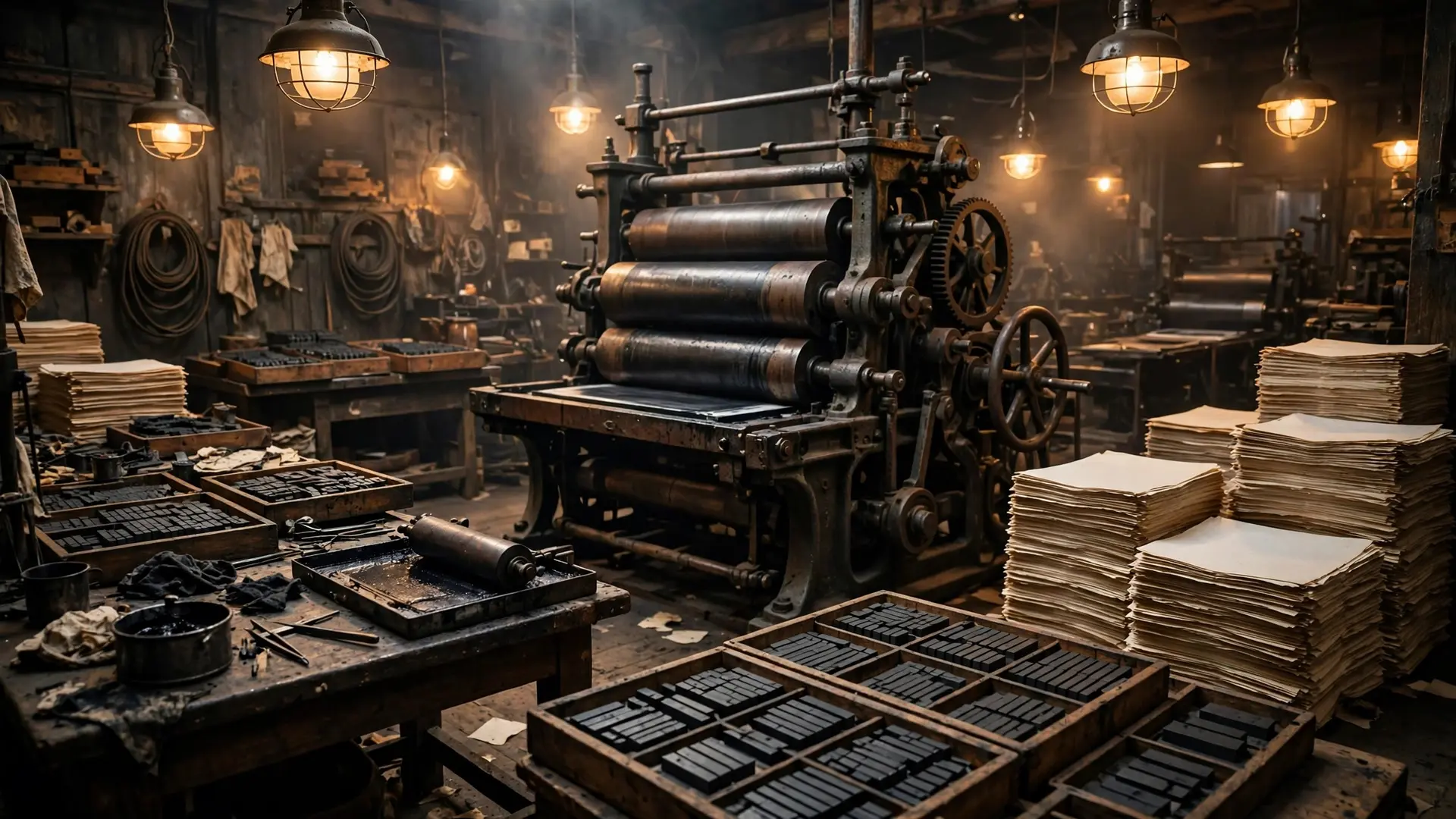
Impressively long. Linguists catalogued a parade of theories, and each one shows how hungry people were for a better story than a newspaper joke. From Native American languages: Choctaw oke ("it is so") — long-lived enough that President Woodrow Wilson spelled it "okeh" — and Mandingo oke ("certainly"). From Africa: Wolof waw kay ("yes indeed"). From Europe: Scottish och aye, Finnish oikea ("correct"), French aux quais, German Oberst Kommandant. From initials: Obadiah Kelly, Orrin Kendall, or "Open Key." From a person: "Old Keokuk," a Fox chief. None of them had documented proof — only the Boston joke did. The false theories are instructive. Each one tried to give OK a dignified birth: an indigenous root, a presidential origin, a military acronym. The real birth — a typesetter laughing at a misspelled pun — was too humble. Read's work proved that language does not need dignity to succeed. It needs distribution, and OK got it from a campaign that lost. Read's proof itself is worth a word. Over five articles in American Speech, the journal of the American Dialect Society, published in 1963 and 1964, he chased every claim through newspapers, letters, and campaign records. It took one stubborn professor, a century and a quarter after the word's birth, to settle what two letters meant — and his evidence was not a theory but paper: the 1839 Boston Morning Post, in black and white.
Why did serious writers avoid it for so long?
For decades, OK was considered too low to print. No instance of OK appears in the works of Mark Twain. Louisa May Alcott used "okay" in Little Women — and changed it to "cozy" in the second edition. Respectable literature kept its distance from a word born as a pun in a satirical newspaper column. That resistance is part of what makes OK's victory so complete. It won without the establishment. Like the phrases we all use without knowing why — the kind examined in why we say "cheese" for photos — OK crept from a joke into the furniture of language, until it felt inevitable. Today, OK is the rare word that belongs to everyone. It was never planned, never designed, and never meant to last. A typesetter's joke in Boston in 1839, carried across a continent by a losing candidate in 1840, and confirmed as history's truth by one stubborn professor in 1964 — that is the whole story of the two letters you used today without thinking. Every text message that ends in "ok" is a small inheritance from a joke nobody meant to keep.
Frequently asked questions
What does OK originally stand for?
'Oll korrect,' a deliberate joke misspelling of 'all correct,' first printed in the Boston Morning Post on March 23, 1839. It was part of a Boston newspaper craze for funny misspelled abbreviations.
How did OK spread across America?
Martin Van Buren's supporters in the 1840 presidential campaign formed Democratic O.K. Clubs — 'O.K.' for 'Old Kinderhook,' Van Buren's nickname. Van Buren lost, but the campaign carried the word nationwide.
Was OK invented by Andrew Jackson?
No. A hoax during the 1840 campaign claimed Jackson marked documents 'OK' because he spelled poorly. Linguist Allen Walker Read disproved it: Jackson spelled well and never used OK that way.
Is OK the most used word in the world?
It is often described that way, and it is genuinely among the most widely recognized and used words on the planet, crossing languages and cultures.