Why We Clink Glasses: The Real Story Behind Toasting
The famous poison theory is almost certainly wrong. The real story mixes ancient health pledges, actual toasted bread in wine, and evil spirits.

Key takeaways
- The popular poison theory — clinking to splash wine into a companion's cup — is almost certainly false, debunked by both Snopes and Ripley's.
- Drinking to someone's health is ancient: Homer's Ulysses drank to Achilles, and the Roman Senate ordered diners to toast Emperor Augustus before meals.
- The word 'toast' comes from the 17th-century practice of dropping spiced toasted bread into drinks as a flavoring.
- A leading theory: clinking adds the sense of hearing to sight, touch, smell, and taste, completing the full sensory experience of the drink.
Everyone knows the story. In the dangerous Middle Ages, nobles clinked their goblets hard enough to slosh wine into one another's cups — proof that nobody had poisoned anyone's drink. It's a clever story, full of daggers and intrigue, and it sounds exactly right. There is just one problem: it is almost certainly not true. The real story of the clink is older, stranger, and more interesting — and it involves Homeric heroes, the Roman Senate, actual bread floating in wine, and the devil.
Where did "drinking to someone's health" come from?
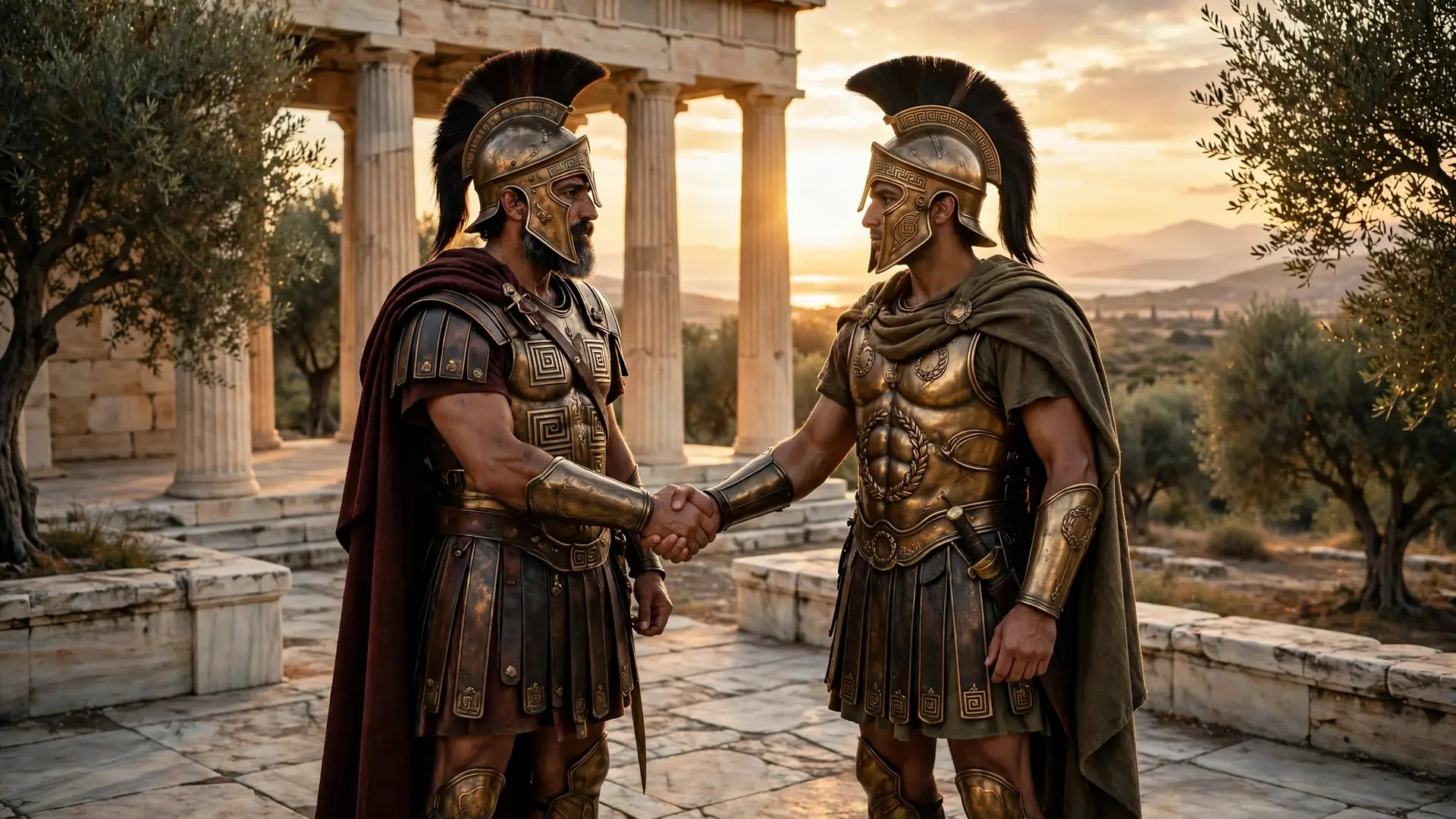
Toasting is far older than glassware. References to ritual drinking appear in literature as far back as Homer, whose Ulysses drinks to the health of Achilles. In Rome, drinking to someone's health was so important that the Senate decreed that all diners must drink to the health of Emperor Augustus before every meal. The practice was nearly universal. According to historian Paul Dickson, author of Toasts: Over 1,500 of the Best Toasts, Sentiments, Blessings and Graces, the Hebrews, Egyptians, Persians, Saxons, and Huns all had their own versions of pledging honor with a drink. The drinking vessels were often shared — a single cup passed from hand to hand around the table. "There's a thin line between history and folklore," Dickson says of toasting's beginnings. "But toasting definitely goes back to the ancient world." That shared-cup detail matters, because it quietly demolishes the poison story. In the ancient world, everyone drank from the same vessel; producing your own private glass at a communal table would have raised suspicion rather than guarded against it. As Snopes has pointed out, toasting to health predates individual glasses by millennia — the "ritual of mutual poisoning checks" couldn't have caused a custom that already existed.
Why is it called a "toast"?
Here is the part of the story that sounds like a joke and isn't. The word "toast" really did refer to bread — the kind you brown.
In the late 17th century, it became fashionable in England to drop a piece of spiced, cooked bread into a drink. The toast worked as a flavoring device, roughly the way a lime wedge works in tequila — mellowing or livening the drink. Revelers would pass the cup around, drinking until they reached the host, who got the soggy bread along with the last drops. Over time, the person being honored became "the toast": as Dickson notes, virtually anything found floating in a drink was referred to as toast, and the metaphor stuck. This is the same period when young Englishmen performed elaborate drinking rituals to profess love — one 17th-century custom had a man stab himself in the arm and mix his blood into his wine before drinking to his lady's health. The bread, by comparison, seems downright sensible. So when you "raise a toast" today, you're preserving a fossil: a snack that dissolved into a verb. It sits comfortably alongside other everyday words whose literal origins surprise us — the same way why actors never say "good luck" preserves a theatrical fossil, or why photographers shout "cheese" keeps a stranger's instructions echoing through time.
Why do we clink the glasses?
This is where the theories multiply — and where folklore keeps outshining evidence. The poison theory. The most common story: clinking sloshes liquid between cups, so a poisoned drink would kill the poisoner too. Beyond the debunking — both Snopes and Ripley's have concluded all versions of this explanation are false — the logistics fail on inspection. Even if cups were filled to the brim, most spilled liquid lands on the floor, not in your companion's cup. And would a few drops of diluted poison do much harm? Perhaps not. A medieval French variant had drinkers clink and then actually swap glasses — but that looks like a later flourish on a legend, not a practice anyone documented. The evil-spirits theory. Dickson points to an older explanation: the clink popularized in the early Christian era, when many believed the bell-like ring would drive off the devil — who was thought most dangerous during drinking and revelry. The logic mirrors the belief about church bells: noise sends dark things fleeing. It can't be proven, but it's at least contemporary with the era it claims, which the poison theory isn't. The five-senses theory. Another elegant idea: drinking wine naturally involves four senses — sight, touch, taste, smell — and the clink completes the harmony with hearing. The Farmer's Almanac and others have popularized this one, and it's honestly the most poetic of the bunch. Whether anyone in antiquity articulated it, nobody knows.
The shared-cup theory. Perhaps the most touching explanation: clinking briefly reunites the wine. Once, all the drinkers shared a single cup; now each has their own, but bringing the glasses together recalls that the wine was one before it was divided. The sameness of the wine in every glass emphasizes friendship and sharing — the clink is a momentary reunion of what was once communal. None of these has documentary proof. The honest position, shared by historians, is that the origin of clinking is unknown. But "unknown" doesn't mean "anything goes" — the poison theory fails where the others merely lack evidence, because it contradicts what we know about how people actually drank.
Why did the poison story win if it's wrong?
Because it's the best story. Medieval courts were full of real poisoners — arsenic, belladonna, hemlock, and mercury were the era's quiet weapons — so a ritual of mutual poison-checking flatters our sense of how dangerous those rooms must have been. It turns every toast into a tiny spy thriller. The five-senses theory, however lovely, never stood a chance against daggers at a banquet. The poison story also flatters the teller. It implies the ancients were as clever and cynical as we imagine ourselves to be. But cleverness is not evidence. Not a single historical source describes anyone sloshing wine between cups to test for poison. The custom of toasting was already ancient when individual glasses became common — the "explanation" arrived centuries after the thing it explains. This is a pattern worth watching for. Customs collect retrofitted origins the way ships collect barnacles: knocking on wood got a Viking legend it doesn't deserve, and the clink got a poisoning plot. The best stories survive; the true ones have to fight for it.
The toast that remains
So what do we actually know? That drinking to health is one of humanity's oldest gestures, older than the word for it. That the word came from bread floating in 17th-century wine. That people have clinked glasses for reasons ranging from exorcism to aesthetics to friendship. And that the story you'll hear most often — poison — is the one you can most confidently dismiss. The next time you lift a glass, listen for the ring. Four senses are already awake in the wine; the clink wakes the fifth. Or it startles the devil. Or it remembers a time when everyone drank from the same cup. The beauty of the ritual is that you don't have to choose — but you can stop checking for poison.
Frequently asked questions
Did people clink glasses to check for poison?
Almost certainly not. Snopes and Ripley's have both debunked the theory: spilled liquid would land on the floor, not in the other cup, and ancient toasters shared vessels anyway.
Why is it called a 'toast'?
In the late 17th century it became customary to drop spiced toasted bread into drinks as a flavoring. The honored person was 'the toast' — anything found floating in a drink was called toast.
Is clinking glasses to ward off evil spirits real?
It's one of the oldest theories: historian Paul Dickson notes that the bell-like sound was believed to drive off the devil, just as church bells did.
How far back does toasting go?
To the ancient world. References appear in Homer, and Rome's Senate required all diners to drink to the emperor's health before every meal.