Why Is the Ocean Salty? Earth's Ancient Salt Trap
Rivers pour four billion tons of dissolved minerals into the sea each year, yet the ocean's salinity has barely changed for hundreds of millions of years.
Key takeaways
- The ocean averages about 35 grams of salt per liter, and sodium and chloride make up roughly 85 percent of the dissolved minerals.
- Rain, slightly acidic from dissolved carbon dioxide, weathers rock on land, and rivers carry about four billion tons of dissolved salts to the sea every year.
- Evaporation removes only pure water, leaving salts behind, which is how the ocean concentrates its minerals over geologic time.
- Ocean salinity stays roughly constant because salt is also removed through sediment burial, evaporite deposits, and biological uptake by marine life.
A glass of seawater contains about 35 grams of dissolved salt per liter — nearly a tablespoon in every glassful. But rivers pour into the ocean constantly, and rivers are fresh. So where does all that salt come from — and if rivers keep delivering more of it every year, why isn't the ocean turning into brine? The answer is that the ocean is a trap four billion years in the making: minerals check in, but they never check out. The real mystery isn't why the sea is salty. It's why it stopped getting saltier hundreds of millions of years ago.
Where Does Ocean Salt Come From?
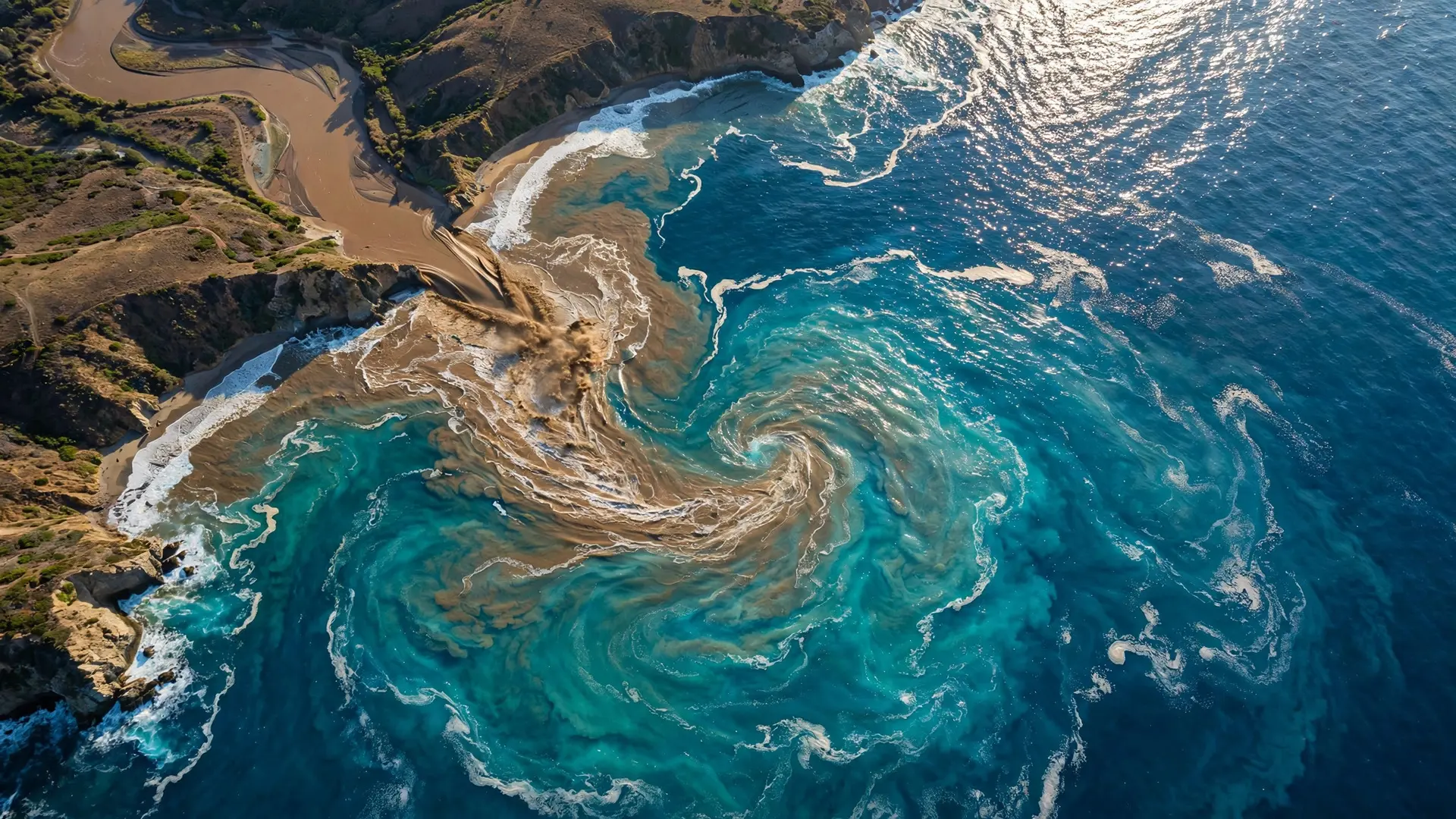
The main source, according to the U.S. Geological Survey, is the land itself. Rain is naturally slightly acidic because it absorbs carbon dioxide from the air. When it falls on rock, that faint acidity begins dissolving the stone — a slow, relentless chemical weathering that frees sodium, chloride, magnesium, and other ions. Rivers collect this mineral-laden water and carry it to the sea. The numbers are staggering. The USGS estimates that the world's rivers deliver about four billion tons of dissolved salts to the ocean every year. Spread over millions and then billions of years, that riverine freight is the foundation of ocean salinity. If you removed every gram of salt from the oceans and spread it over the continents, NOAA calculates it would form a layer roughly 150 meters — 500 feet — thick. But rivers aren't the only input. On the seafloor, hydrothermal vents circulate seawater through hot oceanic crust: water seeps into cracks in the rock, is heated by magma, dissolves minerals from the basalt, and jets back into the ocean carrying a heavy mineral load. Submarine volcanoes add dissolved minerals the same way. As the USGS notes, estimates suggest the entire volume of the world's oceans could circulate through these vent systems every 10 to 20 million years. The vents are a significant part of the salt budget — though they also run in reverse, as we'll see.
Why Don't Rivers Taste Salty?
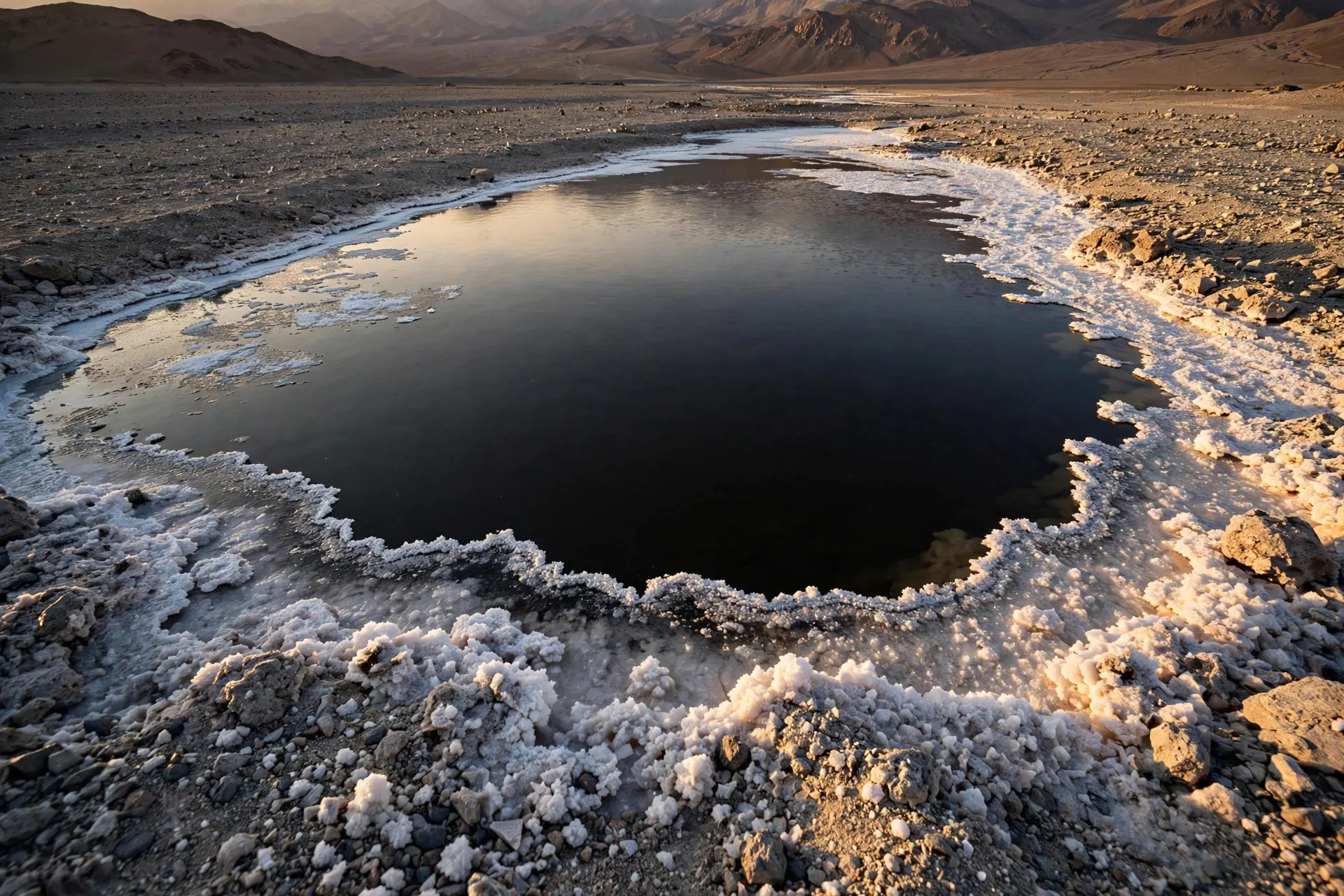
This is the question that unlocks the whole puzzle. Rivers carry dissolved salts constantly, yet a river drink tastes fresh. The difference is time and trapping. A river is a conveyor belt: water flows in, water flows out, and the dissolved minerals ride along, never lingering long enough to accumulate. The ocean is the end of the line. Water arrives carrying its load of ions and then has only one way out: evaporation. And evaporation takes pure water — the salts stay behind. This is also why the first oceans were probably never "fresh" to begin with. The earliest seas condensed from volcanic outgassing, which already carried dissolved salts, and rain had been leaching minerals from bare rock since long before rivers existed. The trap has been filling for roughly four billion years. This one-way flow is why enclosed seas with no outlet become hypersaline. The Dead Sea, for instance, sits at about 34 percent salt — roughly ten times the open ocean's 3.5 percent — because the Jordan River delivers minerals and the desert sun evaporates the water, with nowhere for the salt to go. To see how extreme that endpoint gets, read Why Is the Dead Sea So Salty?. Open-ocean evaporation works the same way, more slowly; in warm, enclosed basins like the Red Sea and the Persian Gulf, salinity climbs to about 40 parts per thousand, well above the global average. Conversely, evaporation's opposite processes dilute seawater: heavy rainfall, river runoff, and melting ice all lower local salinity, which is why polar seas and coastal waters near big river mouths run fresher than average. For more on what drives ocean water to move, see What Causes Ocean Tides?.
Why Isn't the Ocean Getting Saltier Forever?
Here's the problem with the simple trap story: if rivers deliver four billion tons of salt a year and evaporation keeps removing only water, the ocean should have become a brine pond eons ago. Geologists call this the "salt clock" paradox — and its resolution tells us something profound about Earth's balance.
The ocean's salinity is roughly constant, and has been for hundreds of millions of years, because salt has exits too. Calcium, magnesium, bicarbonate, and silica are partly pulled out of solution by biological organisms — marine creatures build shells and skeletons from them, which eventually settle to the seafloor. Chemical precipitation forms evaporite deposits, like the great salt beds left when ancient shallow seas dried up. Burial in sediments locks minerals away in the crust. Even the hydrothermal vents run two ways: while hot seawater dissolves minerals from basalt, some dissolved salts also react with the rock and are removed from the water. In other words, the ocean is a dynamic system at steady state, not a static reservoir. Rivers pour salt in; sediments, biology, and geology bury it at roughly the same pace. The 35-parts-per-thousand figure isn't a coincidence — it's an equilibrium maintained by the whole Earth system, from rain chemistry to deep-sea vents.
What Is the Salt in Seawater, Exactly?
Salt, as we taste it, is mostly sodium chloride — and the ocean agrees. Sodium and chloride together account for about 85 percent of the dissolved solids in seawater, which is why a mouthful of ocean tastes like table salt rather than something exotic. Magnesium chloride comes next at around 10 percent, then magnesium sulfate and a handful of trace minerals. But "salty" isn't the whole story. Those dissolved minerals are the chemical scaffolding of marine life and, through their effect on water density, one of the engines of global ocean circulation — and therefore of Earth's climate. Salinity differences drive the great deep-ocean currents that carry heat around the planet, a reminder that the four-billion-ton-a-year mineral delivery isn't just a curiosity. It's part of the machinery that keeps the planet livable. The next time a wave breaks on shore, consider what you're really tasting: mountains, dissolved grain by grain by rain, carried down rivers, concentrated by the sun — and held in a balance so precise it has lasted longer than complex life itself.
Frequently asked questions
Why are rivers fresh if they carry salt to the ocean?
Rivers do carry dissolved minerals, but the flow constantly replaces the water, so salts never build up. The ocean is a closed trap: water leaves only by evaporation, while salts stay.
What are the main sources of the ocean's salt?
Weathered rock carried by rivers is the main source, followed by hydrothermal vents on the seafloor, which both add and remove minerals through reactions with oceanic basalt, plus submarine volcanism.
How salty is the ocean compared to the Dead Sea?
The open ocean averages 35 parts per thousand (3.5 percent). The Dead Sea is about 34 percent salt — roughly ten times saltier, because it has no outlet and intense evaporation concentrates its minerals.
Why isn't the ocean getting saltier forever?
Salt reaches a balance: rivers add it, but burial in sediments, deposits left behind by evaporating seas, and uptake by marine organisms remove it at roughly the same rate.