Why Do Some Countries Have Two Capitals Instead of One?
South Africa has three capitals and Bolivia two, so why do some countries have two capitals? War, compromise and congestion split the job across cities.
Key takeaways
- South Africa is the only country with three capitals: Pretoria runs the government, Cape Town hosts Parliament and Bloemfontein holds the top appeal court.
- Bolivia's two capitals come from a civil war: Sucre kept the title and the Supreme Court, while La Paz took the government in 1899.
- Amsterdam is the Netherlands' capital by constitution, yet parliament, ministries and the Supreme Court all sit in The Hague.
- Twelve countries split their capitals, usually because of a war, a political compromise or a city that grew too crowded.
- Moving a capital on paper often fails in practice: Tanzania named Dodoma its capital in 1996, but much of government still works from Dar es Salaam.
Some countries have two capitals because a capital is not one job but three, and a war, a compromise or a crowded city can split those jobs across different places. South Africa goes further than any other country: it has three capitals, with Pretoria running the government, Cape Town hosting Parliament and Bloemfontein holding the top appeal court.
- South Africa is the only country in the world with three capitals: Pretoria (executive), Cape Town (legislative) and Bloemfontein (judicial). Britannica
- Twelve countries have more than one capital city, according to a ThoughtCo count updated on May 13, 2025. ThoughtCo
- Bolivia's split dates to the Federal War of 1898 to 1899, when La Paz won the seat of government and Sucre kept the title and the Supreme Court. Geographys
- Malaysia built the planned city of Putrajaya in 1995 to house its federal government, 25 km (15 miles) south of Kuala Lumpur. ThoughtCo
- Tanzania decided to move its capital to Dodoma in 1974, but Dodoma only gained official capital status in 1996, 22 years later. WorldAtlas
What does a capital actually do?
A capital does three different jobs, and most countries keep all three in one city. The executive runs the country from the president or prime minister's offices. The legislature makes the laws in parliament. The judiciary settles disputes in the top courts. The split usually has a cause. Sometimes a war ends in a deal where each side keeps something. Sometimes a new country forms from rival regions, and no region will accept another region's city as the single capital. Sometimes the old capital grows so crowded that the government builds a new city for itself, while the old one keeps the title. Each split capital tells the story of a moment when one city could not hold the whole country.
Why does South Africa have three capitals?
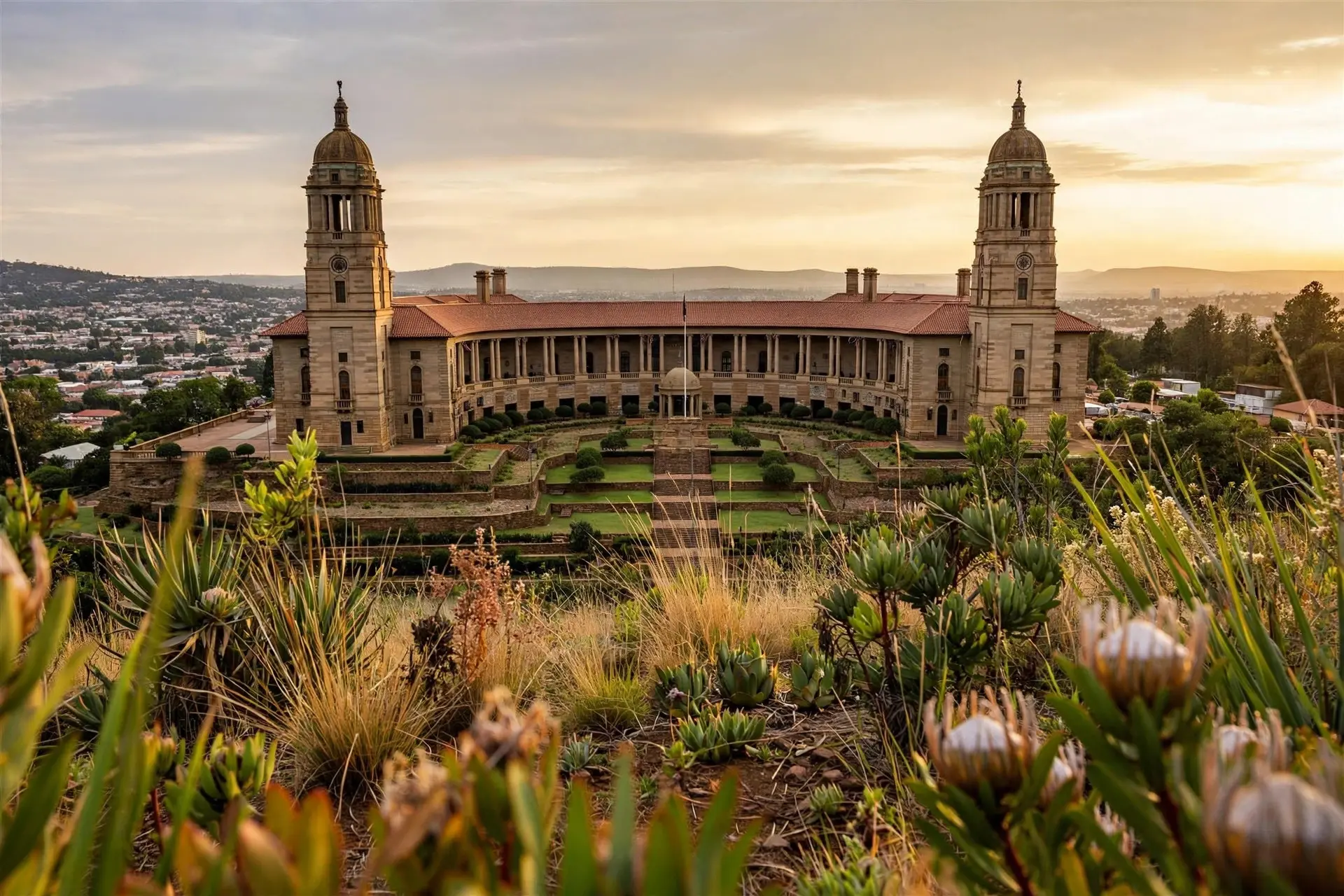
South Africa's three capitals are the result of a bargain struck when the country was born. On May 31, 1910, four colonies, the Cape, Natal, Transvaal and the Orange River Colony, joined to form the Union of South Africa. Each colony wanted the capital, and none would accept another's city. The South Africa Act of 1909, which created the union, settled the argument by dividing the work. Geographys The Act, which became law on September 20, 1909, spelled it out in three sections. Section 18 made Pretoria "the seat of Government of the Union". Section 23 made Cape Town "the seat of the Legislature". Section 109 placed the new Appellate Division in Bloemfontein.
Each city built for its role. The Union Buildings in Pretoria, designed by Herbert Baker, had their cornerstone laid on November 26, 1910 and were finished in October 1913. Cape Town's Parliament building had been occupied since 1885 and became the seat of the union's Parliament in 1910. The arrangement survived the end of apartheid in 1994, though proposals to consolidate everything in Pretoria or build a brand new capital went nowhere. A fire gutted Parliament's buildings in Cape Town in 2022 and revived the debate, but the three-way split remains.
Why do Bolivia and the Netherlands split the job?
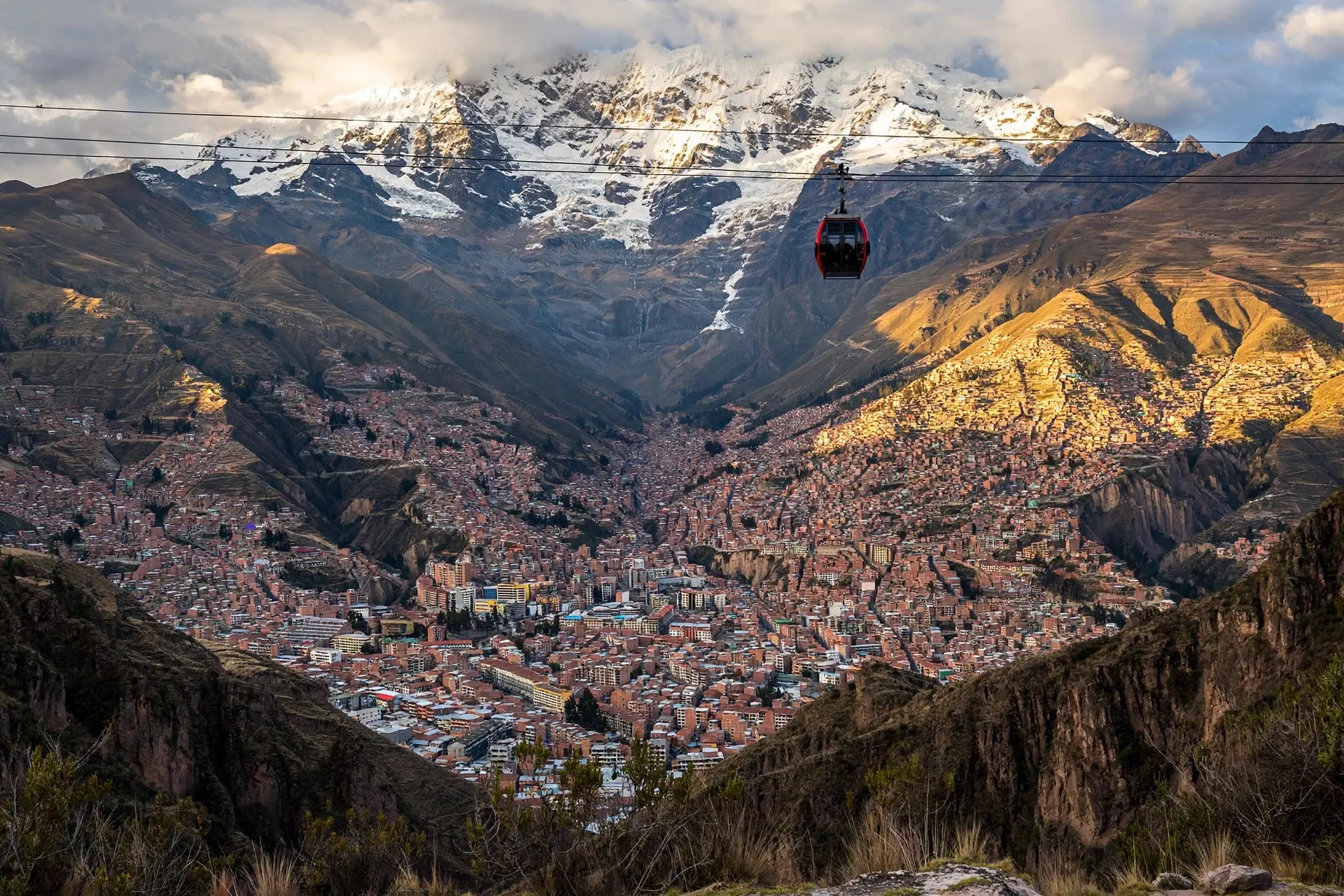
Bolivia's two capitals come from a civil war. Sucre was founded by the Spanish in 1538, became the seat of the Audiencia of Charcas in 1559, and was declared the capital in 1839, renamed after Antonio Jose de Sucre, the country's first president. Bolivia's Declaration of Independence was signed in Sucre's Casa de la Libertad on August 6, 1825. Geographys The trouble began in 1898, when Sucre's delegates forced through a law making Sucre the permanent seat of government. La Paz's delegates walked out, a junta declared for federalism, and in April 1899 Liberal leader Jose Manuel Pando defeated Conservative president Severo Fernandez Alonso at the battle of the Segundo Crucero near Oruro. La Paz became the seat of government, while Sucre kept its title and the Supreme Court. The 2009 Constitution still says, in Article 6, "Sucre es la Capital de Bolivia", and does not mention La Paz as the seat of government at all. The argument has never fully died: in 2007 groups in Sucre demanded full capital status again during the drafting of the new constitution, and three people were killed in the clashes that followed. The Netherlands split its capital for a different reason: a king who moved in, and a government that never followed. In 1806 Napoleon made his brother Louis Napoleon king of the Kingdom of Holland. Louis moved his court to Amsterdam in 1808 and made it the capital of his kingdom. Governing never left The Hague. Holland City Tours The Constitution of 1814 named Amsterdam as the capital, but the line was dropped a year later when the kingdom merged with present-day Belgium. Amsterdam only returned to the Constitution in 1983: Article 32 says the King is sworn in and inaugurated "in the capital, Amsterdam", the only place the Constitution calls Amsterdam the capital. The Hague's role is older than the kingdom itself. Around 1230 Count Floris IV of Holland bought a court at Die Haghe, which became the Binnenhof, and the States General of the Dutch Republic met there. Amsterdam was deliberately not chosen, because it was already the richest city and The Hague was the more neutral meeting place. Today The Hague also hosts the Peace Palace and the International Court of Justice.
What happens when a capital moves?
Several countries have tried to move their capital and learned that a decree does not move a government. Tanzania decided in 1974 to shift its capital from Dar es Salaam to the inland city of Dodoma, yet Dodoma only acquired official capital status in 1996. Dar es Salaam remains the largest city and commercial hub, and it still houses the state house, many agencies and foreign embassies. WorldAtlas
Malaysia took the building approach instead. Kuala Lumpur remains the official capital, home to the monarch and the national legislature, while Putrajaya was constructed in 1995 as a planned city around an artificial lake to house the federal government and judiciary and ease overcrowding, 25 km (15 miles) south of Kuala Lumpur. ThoughtCo Other splits are quieter. In Eswatini, Mbabane is the administrative capital while Lobamba is the royal and legislative one. In Benin, Porto-Novo is the official capital, while Cotonou is the seat of government. Some moves were personal. In 1983 President Felix Houphouet-Boigny moved the capital of Cote d'Ivoire from Abidjan to his hometown Yamoussoukro, yet many government offices and embassies remain in Abidjan. In Myanmar, civil servants were ordered on November 6, 2005 to move from Rangoon, now Yangon, to the new capital Nay Pyi Taw, about 200 miles north, and both cities retain capital status. Nigeria officially moved its capital from Lagos to Abuja on December 2, 1991, but some offices remain in Lagos.
| Country | Capital(s) | Why the job is split |
|---|---|---|
| South Africa | Pretoria, Cape Town, Bloemfontein | 1910 compromise between four colonies |
| Bolivia | Sucre, La Paz | Civil war of 1898 to 1899 |
| Netherlands | Amsterdam, The Hague | Royal court moved in 1808; government stayed put |
| Tanzania | Dodoma, Dar es Salaam | Planned move in 1974; government never fully followed |
| Malaysia | Kuala Lumpur, Putrajaya | Planned administrative city built in 1995 |
| Chile | Santiago, Valparaiso | Legislature moved in 1990 to decentralise power |
| Myanmar | Nay Pyi Taw, Yangon | New capital ordered in 2005; old one kept its role |
What most people get wrong about capitals
The common mistake is to assume the capital is where the government is. In the Netherlands, the capital is where the King is crowned, while the government works in The Hague. In Bolivia, the capital is where independence was declared, while the president works in La Paz. In South Africa, asking for "the capital" gets you three answers. A second mistake is to assume a country has exactly one capital. Twelve countries split the job, and the split is usually the most interesting thing about them, because it records the moment a war, a merger or a building project forced a compromise. Borders are full of these compromises, from places where three countries meet at a single point to enclaves like Baarle, where Belgian and Dutch territory interlock street by street. Takeaway: A capital is three jobs in one word, and twelve countries have split those jobs across cities. South Africa divided them between three colonies in 1910, Bolivia's civil war left Sucre with the title and La Paz with the government, and Amsterdam kept the crown while The Hague kept the work. The next time a map names one capital, check whether the government actually lives there. How we made this article: FactSpire researched and drafted it with AI assistance and checked every fact against the sources listed above.
Frequently asked questions
Which country has three capitals?
South Africa is the only country with three capitals. Pretoria is the administrative capital and seat of the executive, Cape Town is the legislative capital where Parliament sits, and Bloemfontein is the judicial capital, home to the Supreme Court of Appeal. The split dates to the Union of South Africa in 1910.
Why does Bolivia have two capitals?
Bolivia's split comes from the Federal War of 1898 to 1899. Sucre's delegates tried to lock the capital in place by law, La Paz's delegates walked out, and Liberal forces won the war. La Paz became the seat of government in practice, while Sucre kept its constitutional title and the Supreme Court. The 2009 Constitution still names Sucre as the capital.
Is Amsterdam or The Hague the capital of the Netherlands?
Amsterdam is the capital, because the Dutch Constitution names it as the city where the King is sworn in. But the government sits in The Hague, where parliament, the ministries, the Supreme Court and the King's working palace are all located. The split dates to the early 1800s, when Amsterdam became the royal capital while governing stayed in The Hague.
Can a country change its capital?
Yes, and several have tried. Tanzania decided to move its capital to Dodoma in 1974 and made it official in 1996, yet Dar es Salaam remains the commercial hub and much of government still operates there. Malaysia built the planned city of Putrajaya in 1995 for its federal administration, 25 km (15 miles) south of Kuala Lumpur, which kept the title of capital.
Sources
- Cape Town | History, Population, Map, Climate, & Facts, Encyclopaedia Britannica
- Why South Africa has three capitals, Geographys
- Why Bolivia has two capitals, Geographys
- Why The Hague is not the capital, Holland City Tours
- Countries With Multiple Capital Cities, ThoughtCo
- Countries With More Than One Capital City, WorldAtlas