What Is Upward Lightning, and Why Does It Climb From Towers?
Upward lightning climbs from a tower toward the cloud, reversing the usual strike. Here is what triggers it and why wind turbines suffer most.
Key takeaways
- Upward lightning is a discharge that starts at a tall structure and travels upward toward an electrified cloud, the reverse of ordinary lightning.
- It comes in two kinds: self-initiated, sparked by the structure itself under a charged cloud, and lightning-triggered, set off by a nearby flash.
- A nearby flash can trigger upward lightning by shifting the electric field above a tower, even from a tower as short as about 30 metres.
- Tall, slender structures on high ground, especially wind turbines, are the most frequent sources, and their blades are especially vulnerable.
- Upward lightning can appear without any nearby downward strike, so an absence of ordinary lightning does not mean the sky is safe.
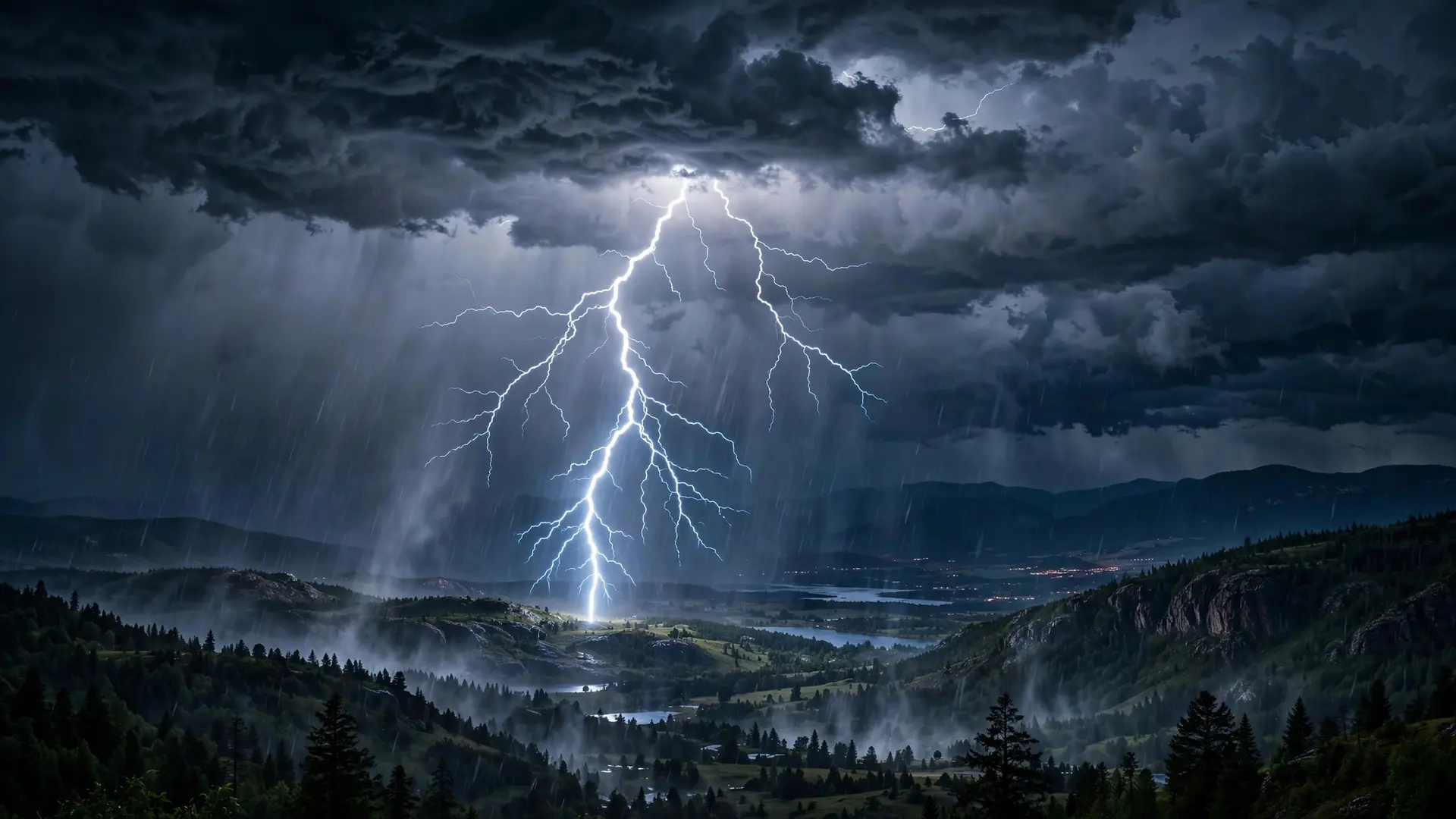
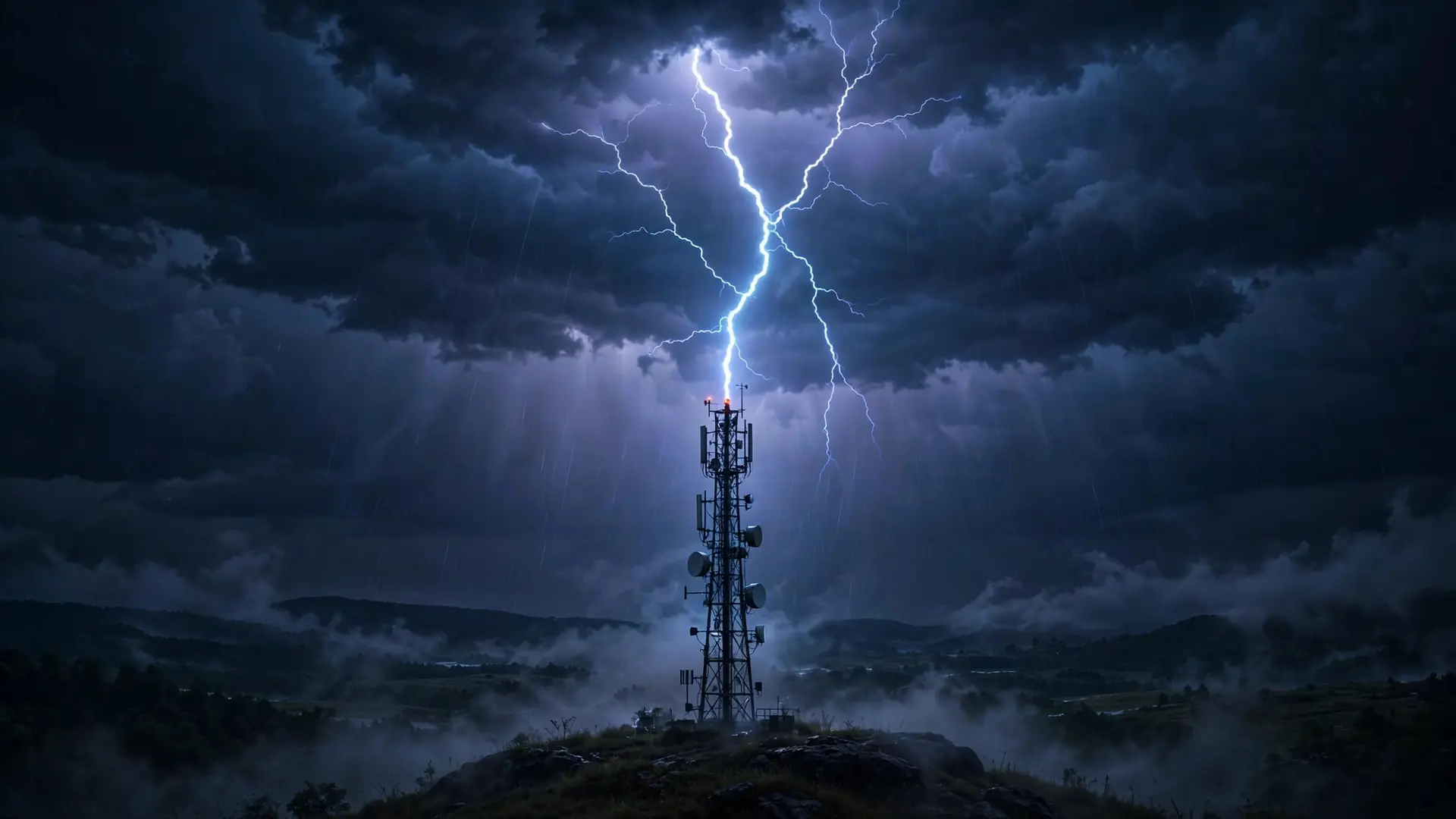
Upward lightning is a discharge that starts at the top of a tall structure and climbs toward the cloud, reversing the direction most people picture when they think of a strike. Instead of a bolt descending from the sky, a leader of ionized air grows upward from a tower, turbine or skyscraper and reaches for the charged cloud above. It is uncommon, poorly understood, and a serious engineering problem — because the structures that attract it are getting taller every year.
How is upward lightning different from ordinary lightning?
In ordinary cloud-to-ground lightning, the process begins inside the storm cloud. A stepped leader works its way downward in a jagged, branching path until it connects with the ground, and the bright return stroke follows the channel back up. Upward lightning flips the starting point. Researchers define it as the development of a self-propagating leader from a tall object that travels upward toward the overlying electrified storm cloud. The giveaway is in the shape: the branches of an upward discharge point toward the clouds rather than toward the ground, the mirror image of a normal strike. The reason tall objects can start a strike at all is their shape. A tall, slender structure under a charged cloud distorts the electric field around it, concentrating the field at its tip. When that local field grows strong enough, air at the tip breaks down and a leader begins to grow upward on its own. The taller the object, the stronger this effect, which is why upward lightning is a creature of towers, masts, skyscrapers and wind turbines rather than houses or trees. That flipped geometry also changes what an observer sees: the branching pattern alone can reveal whether a flash climbed from a structure or descended from a cloud.
What triggers an upward leader to climb?
Upward lightning comes in two varieties, and telling them apart has occupied researchers for years. In self-initiated upward lightning, no earlier flash is involved. The storm cloud becomes sufficiently electrified, the field at the tower tip crosses the threshold, and a leader climbs on its own. In lightning-triggered upward lightning, a nearby flash does the triggering: its activity changes the electric field above the tower enough to push a waiting structure over the threshold.
Studies of more than a hundred upward flashes recorded in Rapid City, South Dakota, and São Paulo, Brazil, during summer thunderstorm seasons from 2011 to 2016 traced exactly how that triggering works. The researchers concluded that the most effective trigger was the spread of an in-cloud negative leader during the continuing current that follows a positive cloud-to-ground return stroke. In plain terms, after a powerful positive strike hits the ground elsewhere, its flash keeps crawling through the cloud, and that crawling activity rearranges the electric field above nearby towers until one of them fires upward. Modelling has shown how sensitive this trigger can be. Simulations of the scenarios observed near towers found that both the relatively slow leader discharge passing above a tower and the much faster return stroke of a nearby flash could strengthen the field above the structure enough to set off upward lightning from towers as short as about 30 metres, roughly ten storeys high. That is far shorter than the mountain-top transmitters where the phenomenon was first studied, which means a great many ordinary tall buildings sit within reach of the effect.
Why do wind turbines and towers suffer most?
If upward lightning needs height, altitude and exposure, wind turbines offer all three at once. Turbines are built tall to catch stronger winds, and they are usually placed on ridges and crests where the wind is best. That combination of a tall structure and high ground is exactly the recipe for ground-to-cloud lightning, and researchers studying mountaintop transmitters in Austria and Switzerland found that in a single year, those high structures could record up to 100 more upward strikes than downward ones. The damage is unevenly distributed. Metal communication antennas and skyscrapers, equipped with lightning rods, conduct the discharge harmlessly from tip to ground. Wind turbines are a different story. Their blades are long, light and fragile, and they are made of non-conductive composite materials rather than metal, so the extreme electrical charge often damages or destroys them outright. As turbines grow taller, the share of their lightning exposure that comes from below only increases, turning upward lightning from a curiosity into a major maintenance cost for wind power.
The history of the phenomenon underlines how recently it became a practical concern. Ground-to-cloud strikes have been observed since the 1930s, but they were largely a scientific oddity until wind turbines spread across exposed ridgelines. Only then did a discharge that climbs from a tower tip become something engineers had to design against rather than simply photograph.
Can upward lightning strike without a thunderstorm overhead?
This is the most counterintuitive part of the story, and the answer needs care. At the Alpine transmitter sites, researchers checked whether a downward strike had occurred within 50 kilometres less than a second before each upward strike, and found that this was true in only about 15 percent of cases. More than 80 percent of the ground-to-cloud strikes there were initiated independently, with no nearby downward flash at all. To an observer on the ground, the sky might show no ordinary lightning — and then a tower fires upward anyway. That does not mean upward lightning comes from a clear blue sky. A charged cloud must still be overhead to supply the electric field; without it, there is nothing for the tower tip to reach toward. What the Alpine result shows is that the trigger need not be a visible storm nearby. The electrified cloud can be present without producing downward strikes in the area, and the first discharge anyone sees may be the one climbing out of a tower. The balance between the two kinds of upward lightning also varies by site. At Austria's Gaisberg Tower, only about 13 percent of more than 200 upward flashes recorded between 2005 and 2009 were triggered by preceding lightning, with the rest self-initiated. In the summer campaigns in the United States and Brazil, by contrast, the flashes studied were dominated by triggered events. The difference is a reminder that upward lightning is not one fixed recipe: the same physics plays out differently depending on the tower, the terrain and the storm. Upward lightning, then, is best understood not as lightning striking a tower, but as a tower striking the sky. A tall structure under a charged cloud does not wait passively to be hit. Its tip concentrates the storm's own electric field until the air itself gives way, and a leader climbs from metal and concrete toward the cloud. Sometimes a nearby flash tips the balance; sometimes the tower does it alone. Either way, the bolt travels the wrong way up — and the taller we build, the more often the sky answers from below. What causes lightning in the first place explains the charge separation inside storm clouds, while red sprites show another form of electricity that plays out above, rather than below, the storm, and ball lightning is yet another rare electrical oddity.
Frequently asked questions
How is upward lightning different from ordinary lightning?
Ordinary cloud-to-ground lightning starts in the cloud and works downward. Upward lightning starts at the top of a tall, grounded structure and climbs toward the cloud, and its branches point upward toward the sky rather than downward toward the ground.
Does upward lightning need another lightning strike to trigger it?
Not always. Some upward flashes are self-initiated, sparked by the charged cloud and the structure's own shape with no preceding flash. Others are lightning-triggered, set off when a nearby flash changes the electric field above the tower.
Why are wind turbines hit by upward lightning so often?
Turbines combine the two ingredients upward lightning needs: great height and exposed, high-altitude sites, often on ridges and crests. Their long, light blades are made of non-conductive composite material, so they are easily damaged or destroyed by the discharge.
Can upward lightning strike when there is no thunderstorm overhead?
It can appear without any downward strike nearby, which surprises many observers. A charged cloud still has to be present overhead, but upward lightning can be the first and only visible discharge in the area.
Sources
- On the Triggering Mechanisms of Upward Lightning, Scientific Reports
- Upside-down lightning strikes, EPFL
- How Upward Lightning is Triggered by Nearby Storm Activity, Eos / American Geophysical Union