What Is St. Elmo's Fire? The Physics of the Glow
Sailors watched it dance on masts; pilots see it on windscreens. St. Elmo's fire is glowing plasma, not fire — here is the physics behind the phenomenon.
Key takeaways
- St. Elmo's fire is a continuous corona discharge — glowing ionized air — not actual fire.
- It forms when thunderstorm electric fields grow strong enough to ionize air around pointed objects.
- The glow is blue-violet because Earth's nitrogen-and-oxygen atmosphere emits those colors when electrified.
- Sailors took it as a good omen, since it often appears toward the end of a storm.
- It is not related to ball lightning, which drifts freely while St. Elmo's fire stays attached to its object.
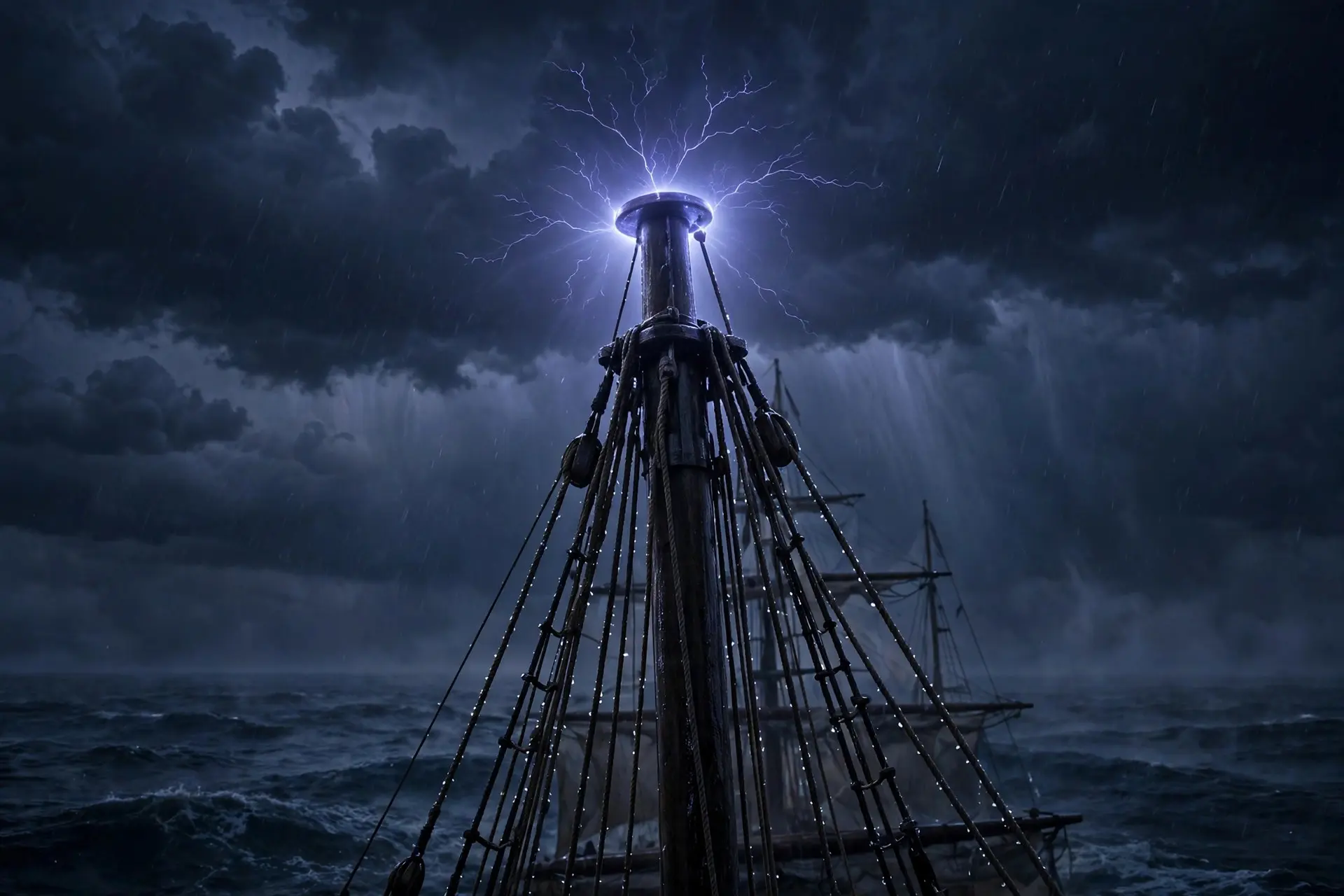
St. Elmo's fire is not fire at all. It is a faint, blue-violet glow of ionized air that clings to pointed objects — the tops of ship masts, church steeples, the noses of aircraft — when thunderstorms electrify the air. The mast looks as though it is burning, but nothing burns: the glow is a continuous electric discharge, the same kind of discharge that lights a fluorescent tube.
What causes St. Elmo's fire?
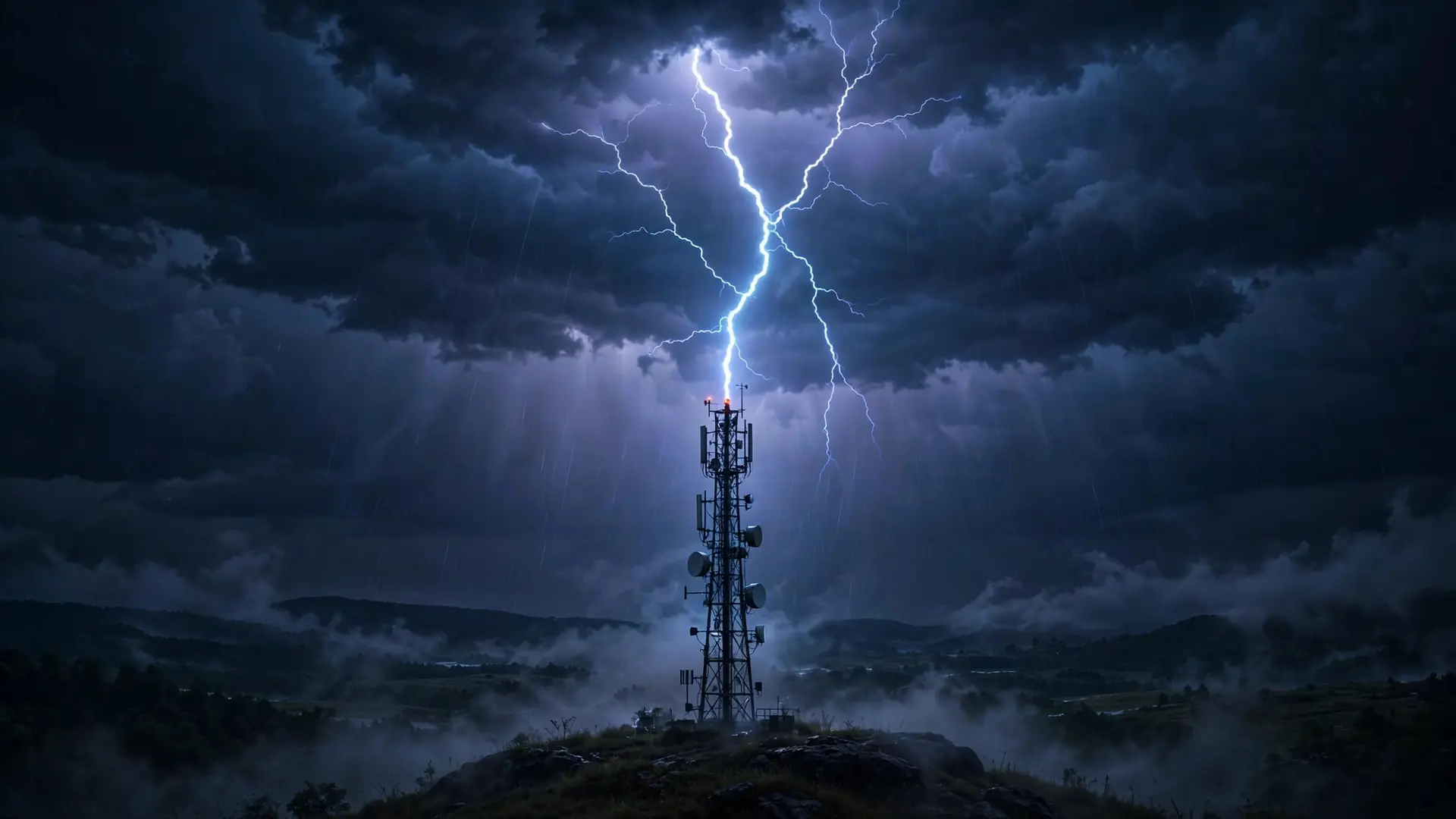
It begins with the enormous charge a thunderstorm builds between cloud and ground. When the electric field in that air grows strong enough, air molecules near a pointed object are torn apart — ionized — and charges stream off the tip. Electrical engineer William Beaty, writing in Scientific American, puts the threshold at about 30,000 volts per centimeter to start the glow, though sharp points can set it off at lower levels. The shape of the object matters as much as the storm. Atmospheric scientist Steven Ackerman of the University of Wisconsin-Madison explains the geometry: air itself is a poor conductor, but near the tip of a metal rod the electric field is far more concentrated, because fields always intensify around sharp curvature. The air there ionizes, charge leaks off the point, and the faint discharge becomes visible in darkness — often with a hissing, buzzing or crackling sound. The color is a signature of our atmosphere. Earth's air is mostly nitrogen and oxygen, and electrifying that blend produces the characteristic blue-violet hue. Fill the air with neon instead, Beaty notes, and the same discharge would burn red-orange — with lightning edged in orange. You have met this glow before, in fact — inside fluorescent tubes, street lamps and old calculator displays, which all run on the same kind of discharge. When it happens inside a glass tube we call it a neon sign; when it happens in the sky, we call it St. Elmo's fire.
Why did sailors call it a good omen?
The name honors St. Erasmus of Formia, known as St. Elmo, the patron saint of sailors. Mariners took the dancing light to be a sign of his protection, and the name stuck. They also read it as a forecast. St. Elmo's fire often appears as a storm is fading, and sailors traditionally read it as a good omen — a sign that clearer weather was on the way. NOAA describes it the same way: it often produces crackling noises and luminous displays, and its arrival is often taken as a good sign because it comes at the end of thunderstorms. Centuries of famous witnesses recorded it. Christopher Columbus and Charles Darwin both observed it at sea, and it is name-checked by Julius Caesar, Pliny and Melville — and most memorably in Shakespeare's The Tempest, where the spirit Ariel describes flaming across a ship during a storm:
I boarded the king's ship; now on the beak, Now in the waist, the deck, in every cabin, I flamed amazement; sometime I'd divide, And burn in many places; on the topmast, The yards and bowsprit, would I flame distinctly, Then meet and join.
— William Shakespeare, The Tempest, Act I, Scene 2
Where has St. Elmo's fire been seen?
The classic sighting is a ship's mast glowing at night beneath electrified clouds — it only looks ablaze; the wood itself is untouched. Mariners also knew it as corposant, from the Old Spanish for the saint's body. The glow has been described as resembling fireworks, jets, stars and streaming sparks — and it can disturb radio reception. But the phenomenon is not bound to the sea. It has been observed atop tall steeples, and Ackerman recalls his own brother once seeing it envelop metal pipes outside his home.
It also visits aircraft. On February 15, 2020, the crew of NOAA42 "Kermit" — an aircraft used for hurricane hunting — recorded St. Elmo's fire while flying the North Atlantic for the Ocean Winds research project, as Storm Dennis bore down on Ireland and the UK. During data collection, the crew saw flashes they first took for lightning strikes — the discharge turned out to be St. Elmo's fire, captured in a photograph by Lt. Josh Rannenberg of the NOAA Corps. The event produced a crackling sound along with blue-and-white streaks of light. It is harmless to witness. AccuWeather senior meteorologist Dave Samuhel noted that the discharge itself poses no real danger — especially not to people inside an aircraft's metal shell. His summary of the physics is worth repeating: "It happens when the charge of an object is much different than the charge of the air. Unlike lightning when huge bolts of electricity jump across a large distance from one charge to another, St. Elmo's fire happens on a very small scale."
Is it related to ball lightning — and should you worry?
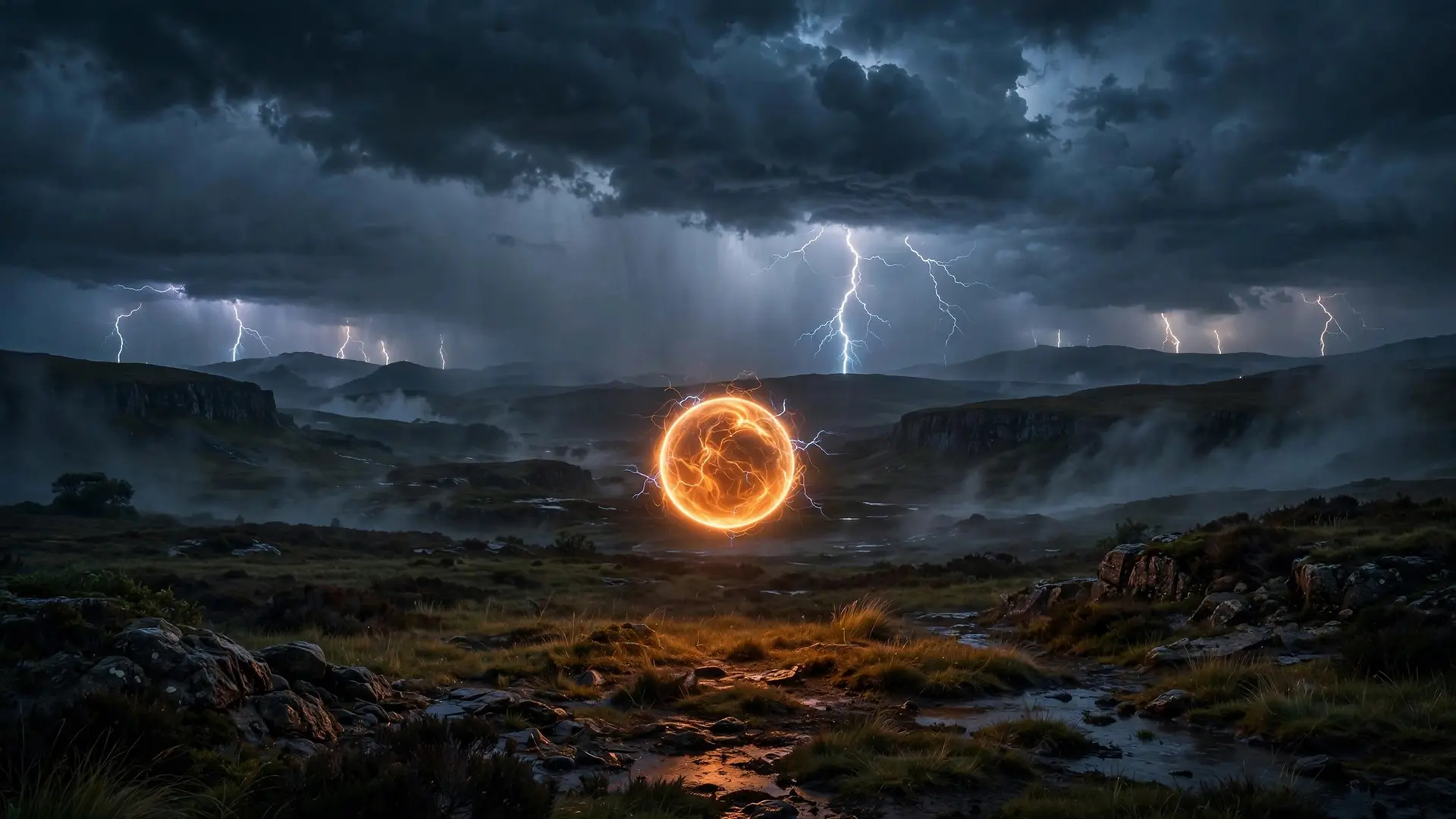
Is this phenomenon related to ball lightning? Beaty is blunt: "No one knows, because no one knows what ball lightning is." St. Elmo's fire is sometimes mistaken for ball lightning, the drifting glowing spheres reported during storms, but the two behave differently: ball lightning wanders free like a soap bubble, while St. Elmo's fire is pinned to whatever it clings to. As for safety: St. Elmo's fire is not necessarily dangerous, but it can warn that stormy weather is approaching. Treat the glow as a warning to stay alert — the storm around it deserves your respect, even if the light itself is harmless. An aircraft windshield glowing faintly at night, or a church spire haloed in blue, is the same small-scale discharge made visible where geometry concentrates the field. For centuries the glow was a mystery that sailors read as a saint's visit. Today we know it as plasma — the fourth state of matter — forming quietly on the tips of masts and wings. It is the atmosphere itself, glowing where the storm's charge grows strong enough to make air conduct.
Frequently asked questions
Does St. Elmo's fire burn anything?
No. The mast or steeple only looks as though it is burning; nothing ignites and nothing is damaged. It is light from ionized air, not flame.
Why is St. Elmo's fire blue?
The color comes from the gas itself. Earth's air is mostly nitrogen and oxygen, and that mixture glows blue-violet when exposed to high-voltage electric fields.
Is St. Elmo's fire dangerous?
The glow itself is harmless — a small-scale discharge, not a lightning bolt. But it shows up where thunderstorms are active, so take it as a warning to be alert.
Sources
- "What causes the strange glow known as St. Elmo's Fire? Is this phenomenon related to ball lightning?", Scientific American
- Rare weather phenomenon 'St. Elmo's Fire' captured by hurricane hunting plane over the North Atlantic, The Watchers
- St. Elmo's Fire, inamidst (National Oceanic and Atmospheric Administration)