Why the Titanic Sank So Fast and So Many People Died
An iceberg opened six compartments in a matter of seconds, and 1894 lifeboat rules left room for barely half of those aboard. Here is how the disaster unfolded.
Key takeaways
- The Titanic struck an iceberg at about 11:40 pm on 14 April 1912 and was gone by 2:20 am, less than three hours after the impact.
- The impact opened six forward compartments along about 90 metres of hull in a matter of seconds; she was built to float with any two adjoining compartments flooded.
- Her 20 boats held 1,178 people, more than the Board of Trade's 1894 rules required, yet barely half of the roughly 2,200 aboard.
- The first lifeboat lowered, No. 7, left with 27 people in a boat built for 65, and only about 652 people escaped in boats.
- The British inquiry found that the nearby Californian, which saw eight distress rockets, might have saved many if not all of those lost.
The Titanic sank in two hours and forty minutes because the iceberg opened six watertight compartments in the forward hull in a matter of seconds, and she was designed to stay afloat with two flooded. So many people died because her lifeboats, legal under rules dating from 1894, had room for 1,178 of the roughly 2,200 aboard, many boats left far from full, and a ship close enough to help watched her distress rockets and did not come. No single one of those failures produced a death toll of around 1,500. Together, on one cold and unusually calm night, they turned an accident into a catastrophe.
Why did the Titanic sink in under three hours?
On the night of 14 April 1912, the Titanic was crossing the North Atlantic at about 22 knots, a speed that was never reduced before the collision. A little before 11:40 pm, a lookout in the crow's nest struck three warning strokes on the bell and phoned the bridge: "Iceberg right ahead." First Officer William Murdoch had the helm put hard over, signalled the engine room for full astern and closed the watertight doors. Turning trials later run with her sister ship Olympic suggested the berg had been sighted only about 460 metres (500 yards) away, leaving well under a minute to react. The ship did not hit the iceberg head-on. Her bow had swung about two points to port, and she scraped along the berg on her starboard side, below the waterline, where most of an iceberg's bulk lies hidden; only about a tenth of floating ice rides above the surface. The British inquiry found damage running about 90 metres (300 feet) along the bottom of the starboard side, roughly 3 metres (10 feet) above the keel. It opened the forepeak, three cargo holds and two boiler rooms to the sea. That was the fatal arithmetic. The Titanic was divided by 15 watertight bulkheads and designed to stay afloat with any two adjoining compartments flooded. Six were open. The bulkheads were not topped by a watertight deck, so as the bow settled, water spilled over each one into the next. The inquiry heard that if the bulkheads had been carried up to C deck, the ship might have been saved. Instead her designer, Thomas Andrews of the Harland and Wolff shipyard, reportedly gave her an hour to an hour and a half. She lasted until 2:20 am.
Did brittle steel or weak rivets doom the ship?
Metallurgy has added a second layer to the story. In 1998, Tim Foecke of the US National Institute of Standards and Technology (NIST) published tests on steel and rivets recovered from the wreck. The hull plate was strong enough, but it lost its toughness in the cold: tests showed a high ductile-to-brittle transition temperature, so the steel was brittle in the -2°C seawater that night, unlike a comparable modern steel. Some three million rivets held the hull together, and the wrought-iron ones that were tested carried far more slag than they should have; one sample contained 9.3 percent, more than three times the normal amount for wrought iron. That matters because a forensic panel concluded that the damage was not one long gash but a series of hull seams that parted as rivets failed. Even so, Foecke stopped short of blaming the builders. Judged by what engineers knew in 1911, he wrote, no obvious metallurgical mistakes were made, and the brittle steel was more likely a factor in how the ship broke apart at the surface than in the first damage. The breakup itself was disputed for decades. The British inquiry concluded in 1912 that the ship had gone down in one piece. When the wreck was found on the seabed in 1985, it lay in two sections, vindicating the survivors who described the hull tearing apart as the stern rose.
Why was there lifeboat space for only half?
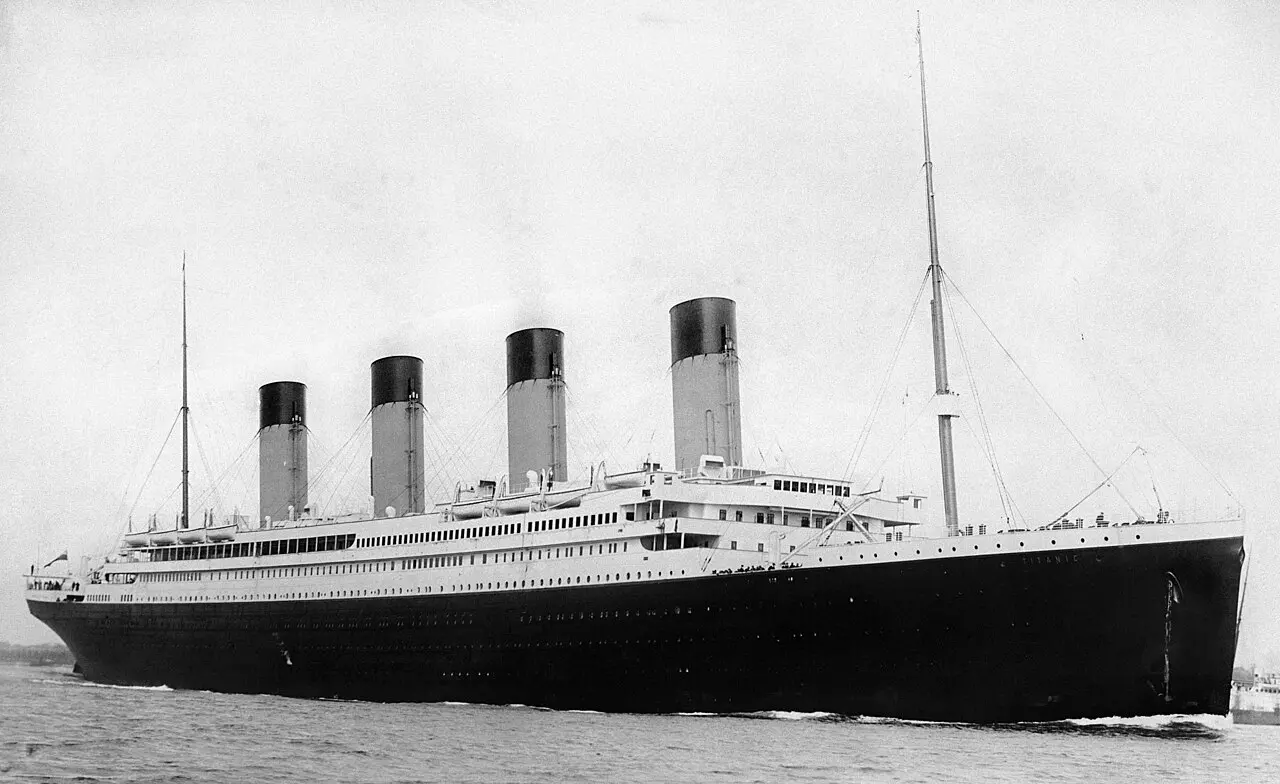
Because the law did not ask for more. The Board of Trade's lifeboat table, in force since 1894, tied the number of boats to a ship's gross tonnage, and its top category was simply "10,000 tons and upwards". Any vessel in that class needed 16 boats under davits. With an extra rule for emigrant ships, the Titanic, at 46,328 gross tons, was required to carry boat and raft space for about 962 people. She carried 20 boats with room for 1,178: 14 lifeboats for 65 people each, two emergency cutters for 40 and four collapsibles for 47. She beat the legal minimum and still had seats for barely half of those aboard. Even those seats went unused. The first boat lowered, No. 7, went down at about 12:45 am with 27 people in a boat built for 65. No. 1, a cutter for 40, left with 12. The inquiry estimated that only about 652 people got away in boats, an average of roughly 36 per boat. Its explanations are revealing. There had been no proper boat drill. Many passengers felt safer on a brightly lit liner, one the trade press had called "practically unsinkable", than in a small boat hanging about 20 metres (65 feet) above a black sea. Some officers feared that full boats would buckle as they were lowered, a fear that proved groundless.
The order to put women and children in the boats first shaped who lived. About 74 percent of women and 52 percent of children were saved, against 20 percent of men. Class mattered too: roughly 62 percent of first-class passengers survived, compared with 41 percent in second class and 25 percent in third.
Could anyone have reached them in time?
The Titanic had been warned. On 14 April her wireless room received ice reports from five ships. The Caronia's warning reached Captain Edward Smith that morning. The Baltic's, received at 1:42 pm, was handed to J. Bruce Ismay, managing director of the White Star Line, who held on to it until 7:15 pm. At 9:40 pm the Mesaba reported heavy pack ice and large icebergs in the Titanic's immediate area, but the operator, swamped with passengers' private messages, apparently never passed it to the bridge. The officers knew they were entering an ice region. On a moonless, flat-calm night, with no waves breaking at the foot of a berg to give it away, they kept up their speed. Help was closer than anyone aboard knew. The Leyland Line steamer Californian had stopped at 10:20 pm, hemmed in by field ice. Around 11 pm her wireless operator warned the Titanic that she was stopped and surrounded by ice, and the Titanic's operator, straining to hear a distant shore station, told him to keep out. The Californian's operator went to bed at 11:30. Over the next hours, her officers watched a ship's lights and counted eight white rockets, but no one woke the operator until morning. The British inquiry judged the ships no more than about 8 to 10 miles apart and concluded that the Californian could have pushed through the loose ice and "might have saved many if not all of the lives that were lost." Rescue came instead from the Cunard liner Carpathia. Her captain, Arthur Rostron, turned her around as soon as the first distress call arrived and drove her at about 17 knots, well above her rated 14, weaving between icebergs. She picked up the first lifeboat at 4:10 am, nearly two hours after the Titanic went down, and by about 8:30 am had taken 712 people from the boats, one of whom died soon afterwards. The disaster rewrote the rules it had exposed. The British inquiry called for lifeboat space for everyone on board, based on people rather than tonnage, regular boat drills, wireless watches kept day and night, and moderate speed after dark when ice was reported. US Navy cruisers began patrolling the ice off the Grand Banks soon after the sinking, the start of what is now the International Ice Patrol, and in 1914 maritime nations adopted the first SOLAS treaty, an international agreement on the safety of life at sea. The Titanic did not sink because of one mistake. It sank because a string of ordinary decisions all pointed the same way on a single cold, calm night.
Frequently asked questions
How long did it take the Titanic to sink?
About two hours and forty minutes. She struck the iceberg at about 11:40 pm on 14 April 1912 and disappeared at 2:20 am on 15 April.
Why did the Titanic not have enough lifeboats?
Board of Trade rules dating from 1894 set lifeboat numbers by tonnage, and their top category lumped together every ship of 10,000 tons or more. The Titanic beat the legal minimum with 20 boats for 1,178 people, but about 2,200 were aboard.
Did weak rivets sink the Titanic?
They may have contributed. NIST tests found unusually high slag in the wrought-iron rivets and brittle hull steel at icy temperatures, but the investigator concluded no obvious metallurgical mistakes were made by the standards of 1911.
Sources
- TIP | British Wreck Commissioner's Inquiry | Report | Description of the Damage to the Ship and its Gradual Final Effect — Observations, Titanic Inquiry Project
- TIP | British Wreck Commissioner's Inquiry | Report | Circumstances in Connection with the SS Californian, Titanic Inquiry Project
- Failure of Tiny Rivets May Have Sunk 'Unsinkable' Liner, National Institute of Standards and Technology
- Timeline of the Titanic's Final Hours, Encyclopaedia Britannica
- Titanic Disaster: Text of Safety Recommendations from Lord Mersey's Report, anesi.com
- Discovery of Wreck of Titanic: Robert Ballard, HISTORY