
The Archives
385 enduring inquiries, newest first. Browse by topic or explore chronologically.
Page 16 of 17
 curiosities4 min read
When a City Danced to Death: The Plague of 1518
In the summer of 1518, hundreds of citizens in Strasbourg began to dance uncontrollably for days on end. Was it mass hysteria, or something more sinister?
Read Article technology5 min read
Beyond Bits: How Quantum Computing is Reshaping our Reality
An exploration into the mechanics of quantum computing, its potential to solve complex global challenges, and what it means for the future of technology.
Read Article discoveries3 min read
Digital Rosetta: How AI Unlocks Lost Ancient Languages
How machine learning algorithms are reading ancient scrolls that were completely destroyed by volcanic ash, revealing texts unseen for millennia.
Read Article technology5 min read
Edge Computing and Smart Cities: Processing at the Source
Instead of sending data to distant clouds, edge computing processes it where it's created. See how this shift is quietly powering smarter, faster cities.
Read Article discoveries3 min read
JWST Finds Galaxies Too Old for the Early Universe
Webb's telescope found massive, mature galaxies far earlier than theory allows. Explore the discovery challenging what we thought we knew about cosmic dawn.
Read Article science4 min read
Quantum Biology: When Nature Plays by Planck's Rules
Discover how biological processes like photosynthesis and bird navigation rely on the strange rules of quantum mechanics — and where the evidence stands.
Read Article science4 min read
The Dark Matter Enigma: Mapping the Invisible Universe
Dark matter makes up most of the mass in our universe, yet we can't see it. Here is how astrophysicists are mapping the invisible forces shaping our cosmos.
Read Article geography5 min read
The Disappearing Aral Sea: A Geographical Cautionary Tale
Once the fourth-largest lake in the world, the Aral Sea's dramatic shrinking offers a profound lesson on human impact — and a fragile hope of recovery.
Read Article discoveries3 min read
The Ocean Beneath Our Feet: Earth's Deep Mantle Secrets
Scientists have discovered evidence of a vast reservoir of water locked inside the Earth's mantle, containing three times the volume of all surface oceans.
Read Article science4 min read
The Physics of Time: Why the Arrow Only Points Forward
The thermodynamic reasons behind the arrow of time: how entropy drives our reality, and what modern physics says about our perception of past and future.
Read Article technology5 min read
The Privacy Paradox: Identity in an AI-Driven World
As artificial intelligence becomes deeply integrated into our daily lives, we examine the delicate balance between hyper-personalization and personal privacy.
Read Article geography5 min read
The Silent Migration of the Magnetic North Pole
Earth's magnetic north is on the move, drifting towards Siberia at unprecedented speeds. How does this affect our navigation, technology, and wildlife?
Read Article geography5 min read
Urban Heat Islands: Why Our Cities Are Baking
Concrete, asphalt, and steel have turned our cities into heat traps. Discover the geography of urban heat islands and how we can cool our metropolises.
Read Article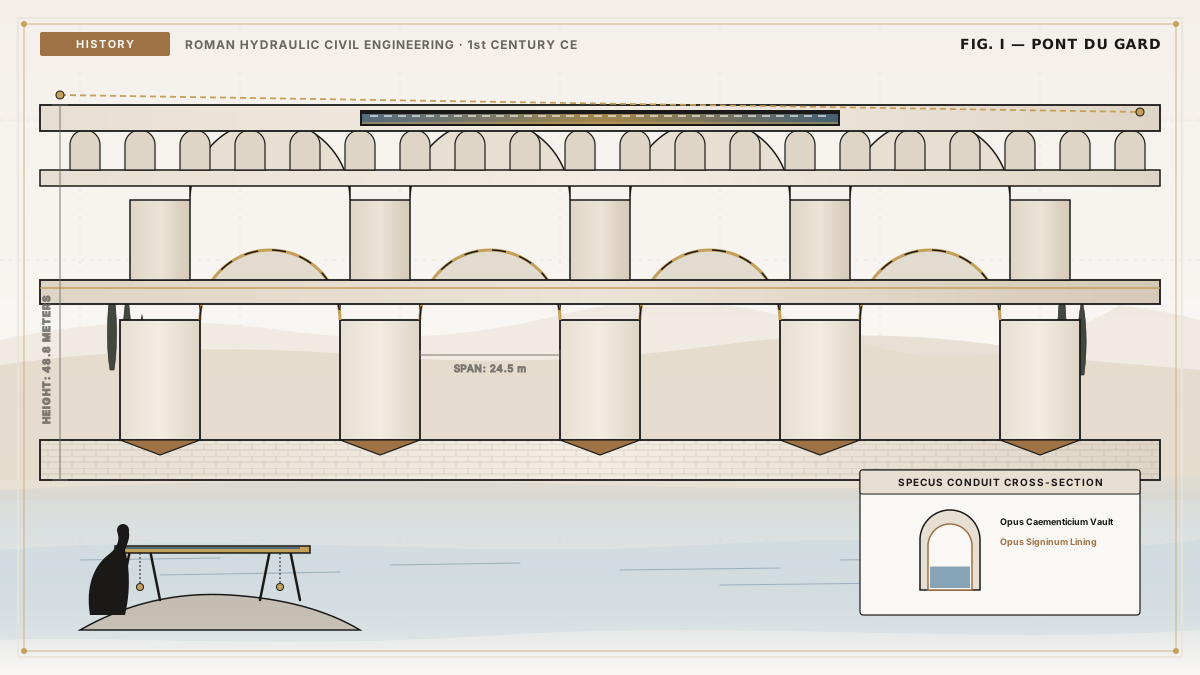 history8 min read
Ancient Roman Aqueducts: Gravity Engines of the Empire
How Romans moved water without pumps: buried channels with barely perceptible slopes, arches and lead siphons to cross valleys, and crews to keep it flowing.
Read Article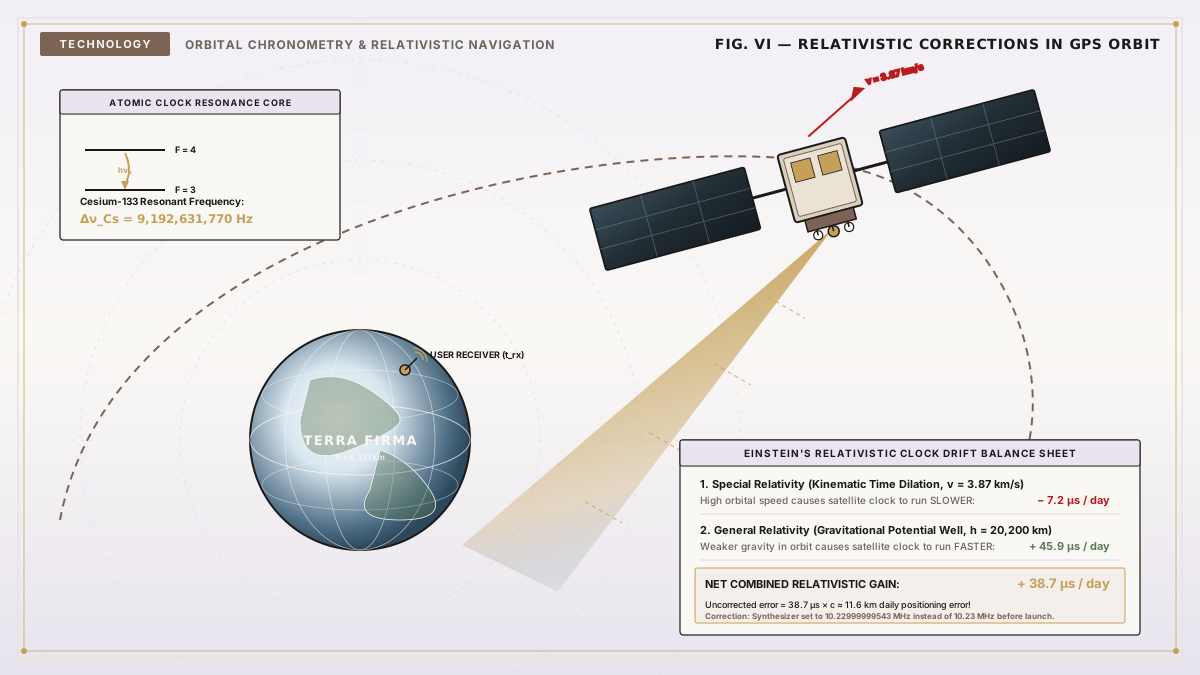 technology7 min read
How GPS Satellites Keep Atomic Time Against Relativity
GPS is really a global clock, not just a navigator. Learn how atomic clocks in orbit correct for Einstein's relativity to keep your position accurate to meters.
Read Article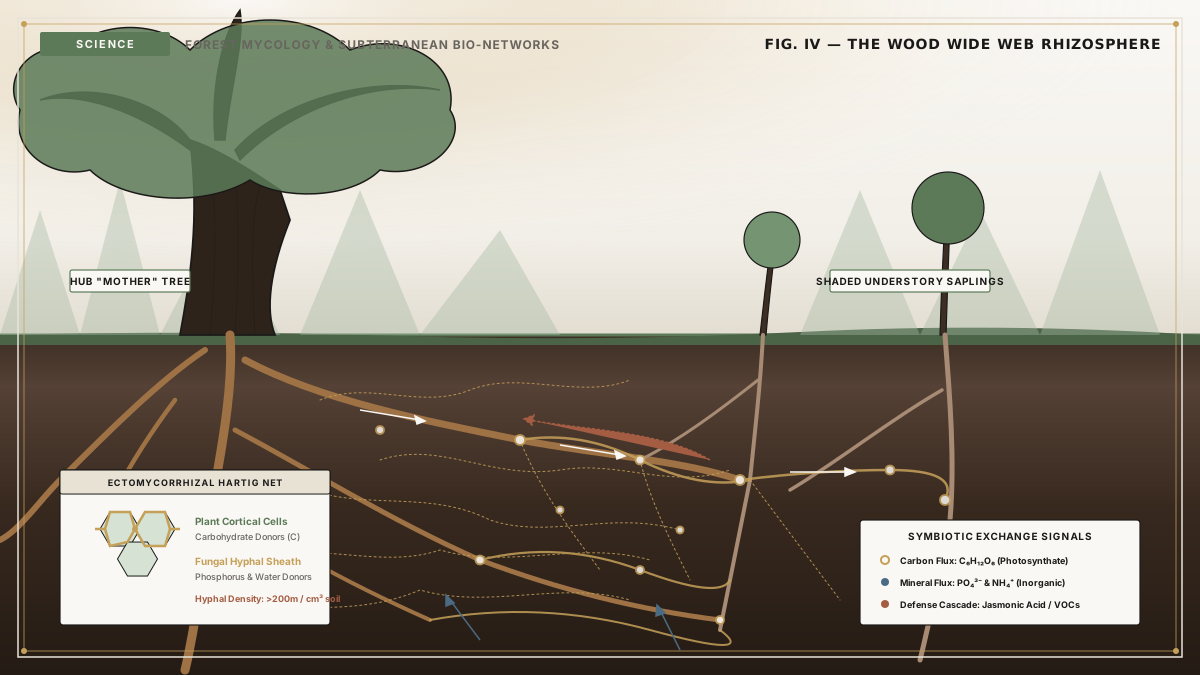 science7 min read
How Trees Communicate: The Wood Wide Web Underground
Beneath the forest floor, fungal networks trade carbon and warning signals between trees. Explore the mycorrhizal wood wide web connecting the canopies.
Read Article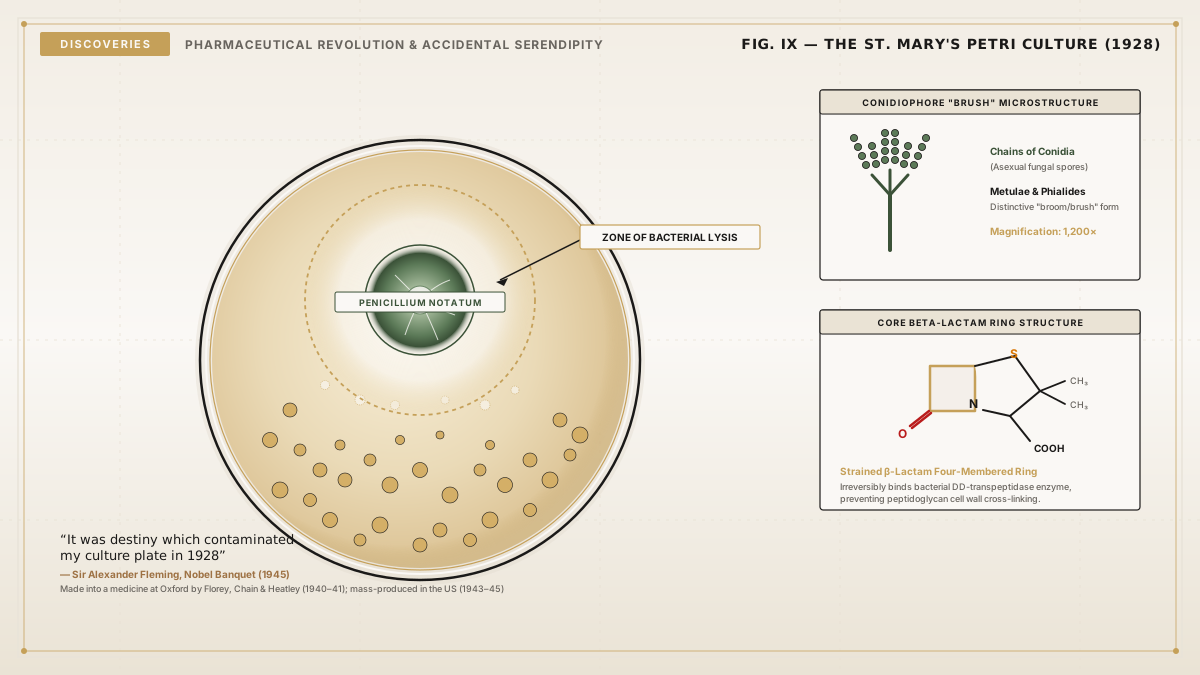 discoveries8 min read
Penicillin: The Accidental Spore That Changed Medicine
A mold spore on Alexander Fleming's culture plate began the antibiotic era in 1928. Why it worked, why it stalled and how Oxford and Peoria finished the job.
Read Article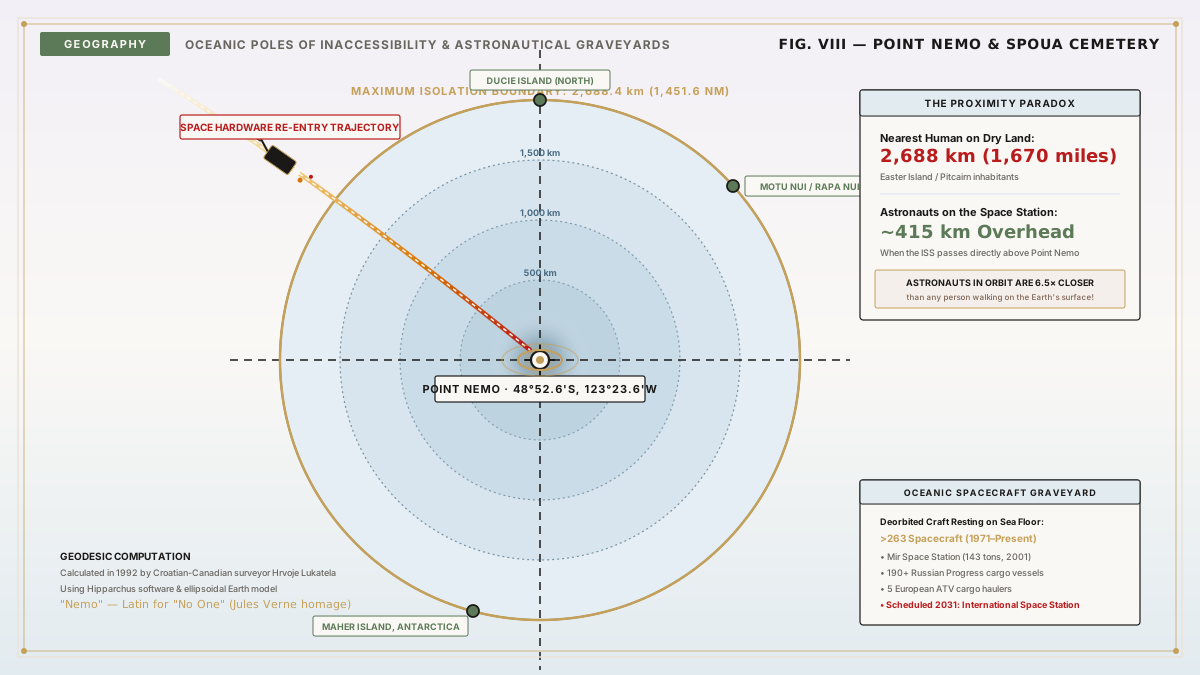 geography7 min read
Point Nemo: Earth's Loneliest Place in the Ocean
The most remote point on Earth sits 2,688 kilometers from land, where astronauts overhead are the closest humans. Journey to the ocean's loneliest coordinate.
Read Article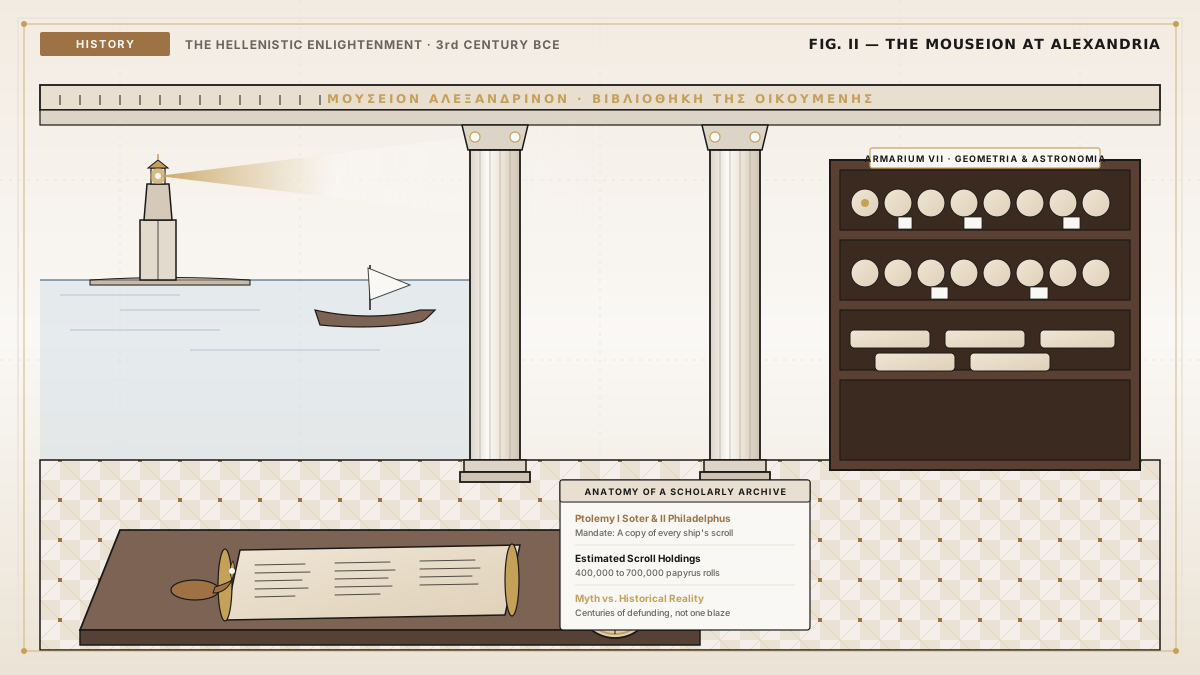 history6 min read
The Library of Alexandria: What Really Destroyed It?
No single fire destroyed the Great Library. Discover how centuries of budget cuts, purges, and decay quietly extinguished antiquity's greatest archive.
Read Article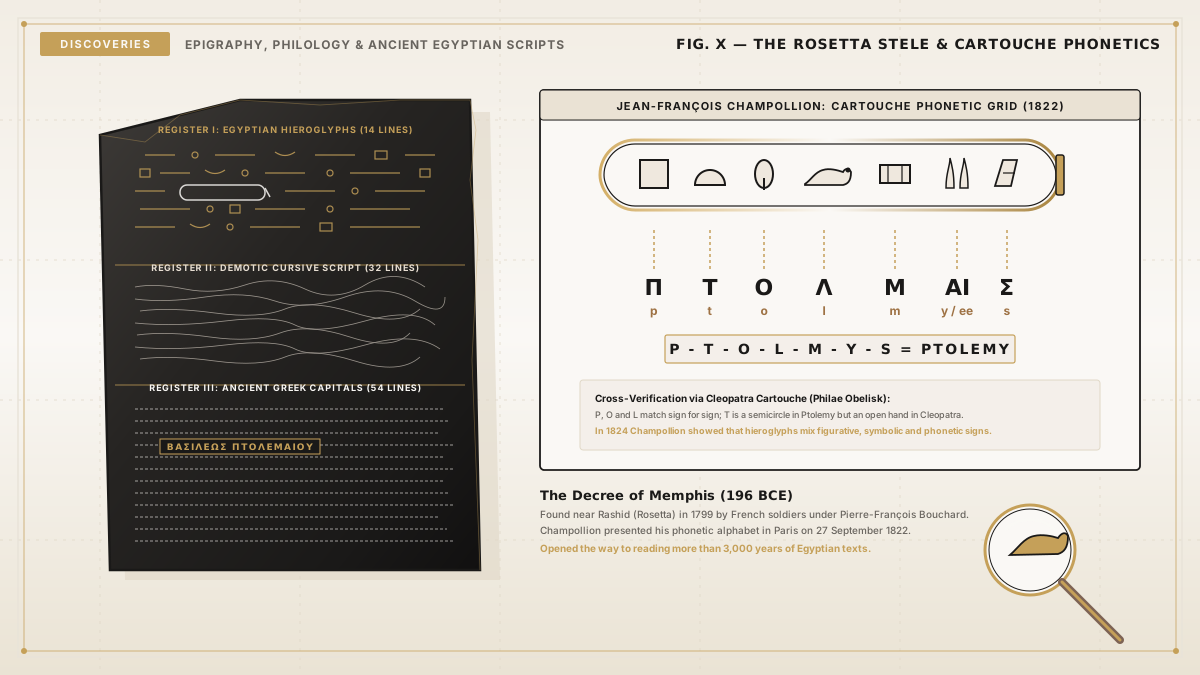 discoveries7 min read
The Rosetta Stone: How a Lost Script Was Deciphered
For 1,400 years nobody could read Egyptian hieroglyphs. How the Rosetta Stone's three scripts let Thomas Young and Jean-François Champollion break the code.
Read Article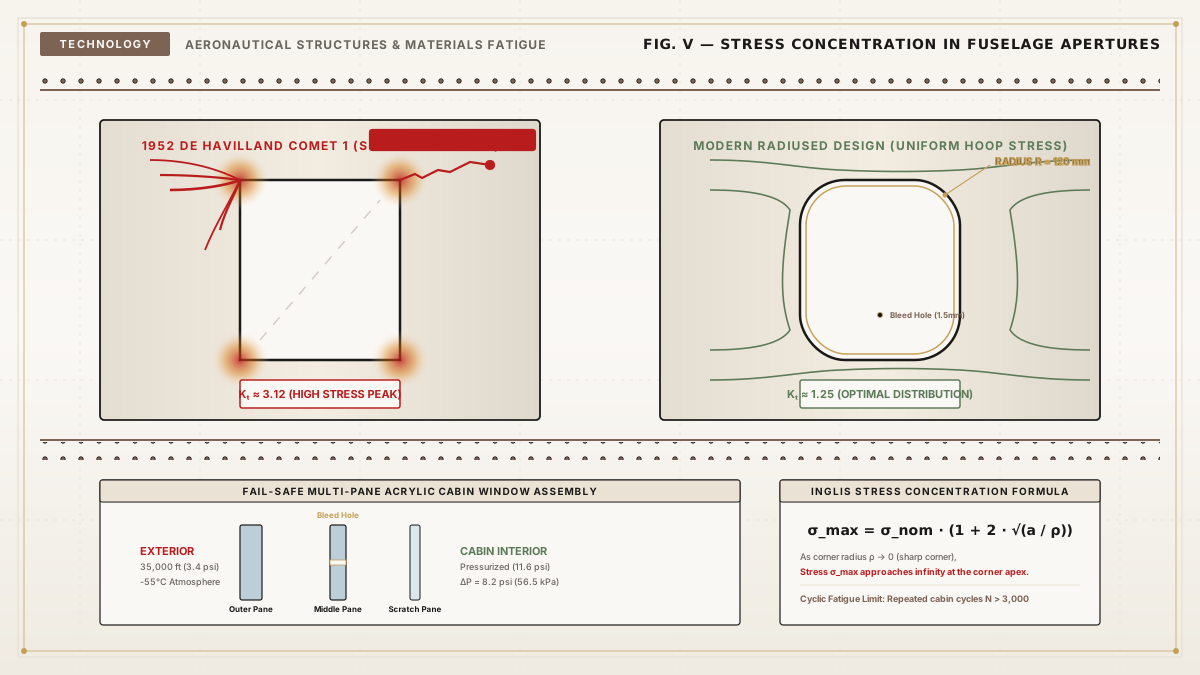 technology7 min read
Why Airplane Windows Are Rounded: Lessons From the Comet
Rounded airliner windows aren't a design choice - they're a safety lesson. Discover how the de Havilland Comet's crashes revealed the danger of square corners.
Read Article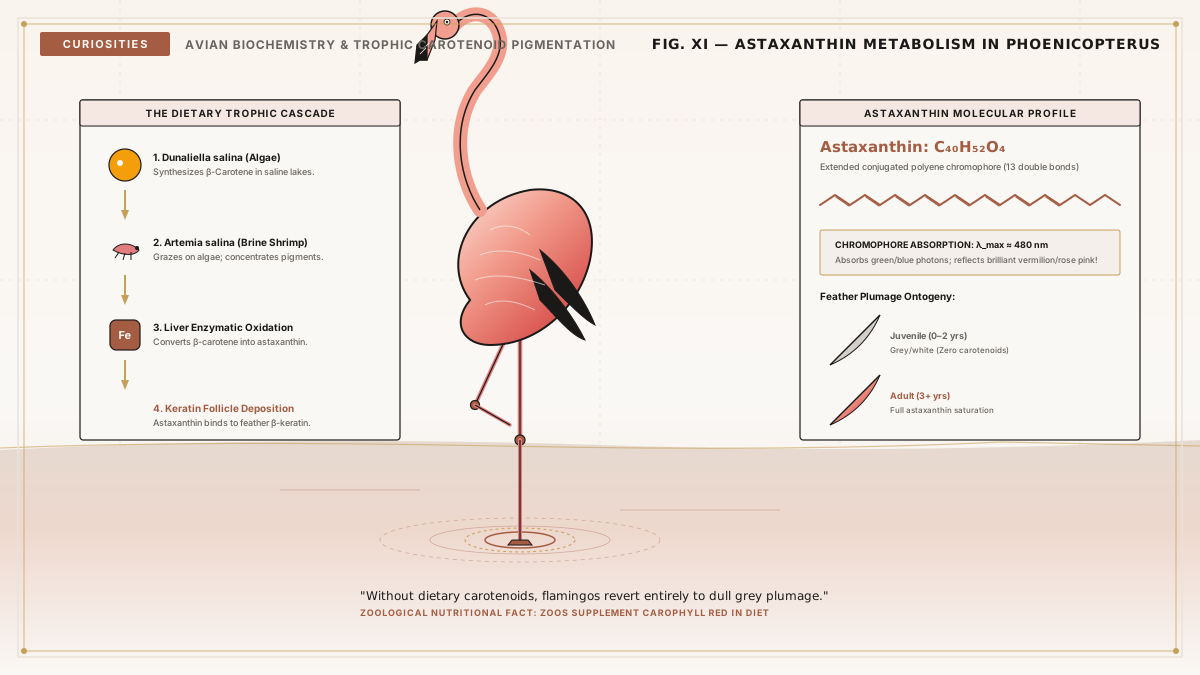 curiosities6 min read
Why Flamingo Feathers Turn Pink: Diet, Carotenoids, Color
Flamingos hatch in drab gray and white; their famous pink comes from carotenoid pigments in algae and brine shrimp - without that diet, they fade back to white.
Read Article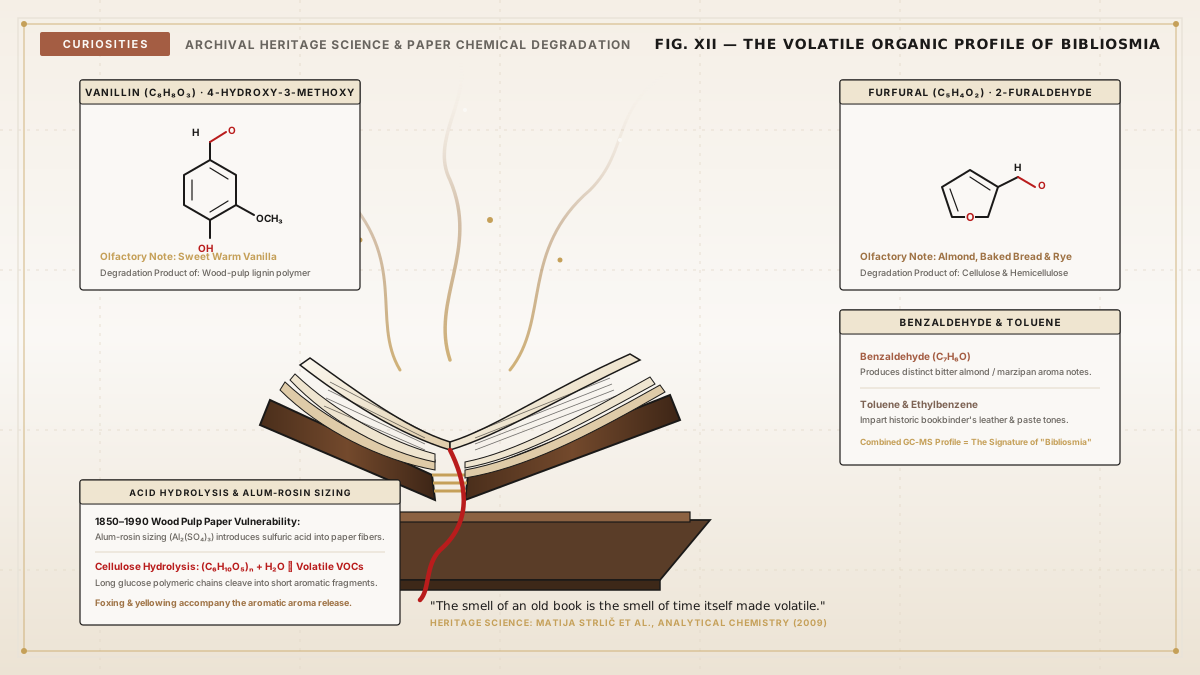 curiosities7 min read
Why Old Books Smell Distinctive: The Chemistry of Decay
That warm vanilla-and-almond scent of antique books is chemistry in action: degrading paper releases vanillin and other compounds that bibliophiles treasure.
Read Article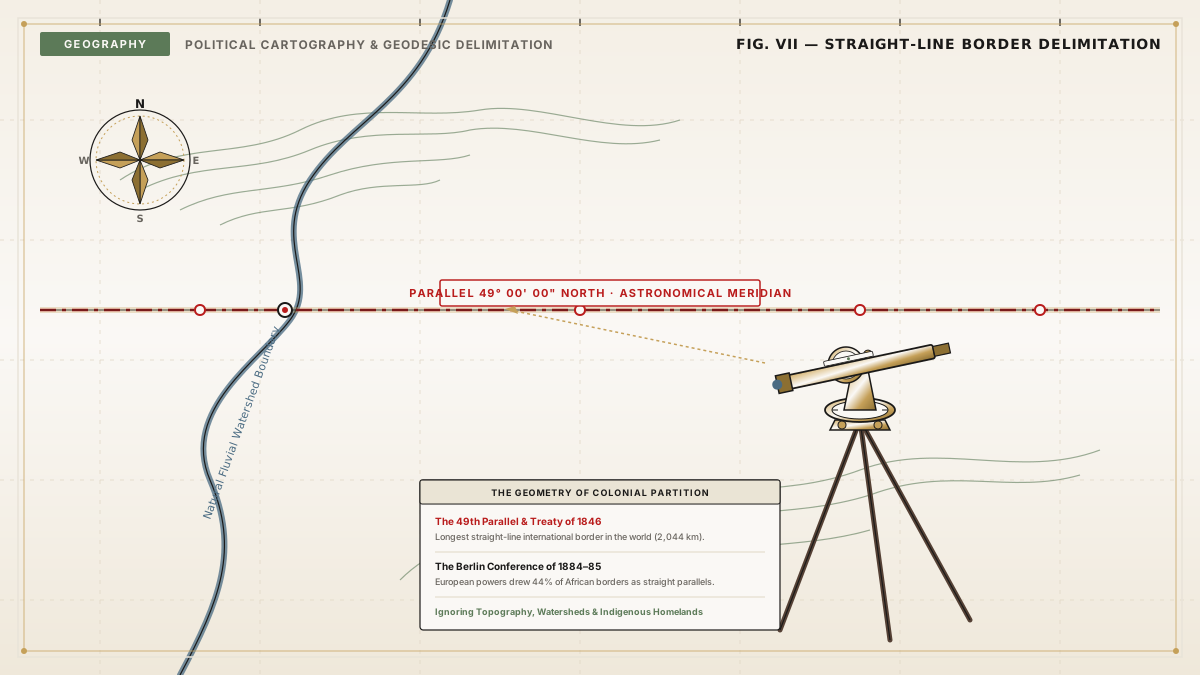 geography7 min read
Why Some Borders Are Straight Lines: A Colonial Legacy
From the Sahara to the American Midwest, ruler-straight borders reveal where colonial powers carved up continents - see how these lines shaped nations.
Read Article