How Did Neutral Moresnet Work as a Country of Its Own?
What was Neutral Moresnet? For 104 years a tiny zinc-mining triangle belonged to no country at all, with no army, no taxes and an Esperanto dream.
Key takeaways
- Neutral Moresnet was a 900-acre triangle that belonged to no country from 1816 to 1920, created because two powers could not agree who owned its zinc mine.
- Two royal commissioners ran it jointly under the Napoleonic Code, with no army, no conscription, no taxes and no court of its own.
- Its population grew from 256 people in 1816 to about 4,500 by the early 1900s, drawn by jobs, low taxes and exemption from military service.
- In 1908 residents tried to save the territory by turning it into Amikejo, the world's first Esperanto-speaking state.
- The Treaty of Versailles gave Moresnet to Belgium, and on January 10, 1920 it became the Belgian municipality of Kelmis.
Neutral Moresnet was a triangle of land about 900 acres in size that belonged to no country at all for 104 years, from 1816 to 1920. Two rival powers could not agree who owned its zinc mine, so they left the mine and its village under joint rule, with no army, no taxes and no court of its own.
- The territory was created by agreement on June 26, 1816, after the Netherlands and Prussia failed to agree on a border at the Congress of Vienna. TheCollector
- It covered about 900 acres, roughly twice the size of Monaco, and held 256 people at its founding in 1816. Atlas Obscura
- Its population grew to about 4,500 by the early 1900s, an increase of roughly 18 times. The Low Countries
- The zinc mine was exhausted and closed in 1885, but the mining company carried on as a smelting factory and stayed the main employer. The Low Countries
- The Treaty of Versailles awarded Moresnet to Belgium, and the transfer took effect on January 10, 1920. The Low Countries
Why did two countries leave a mine to nobody?
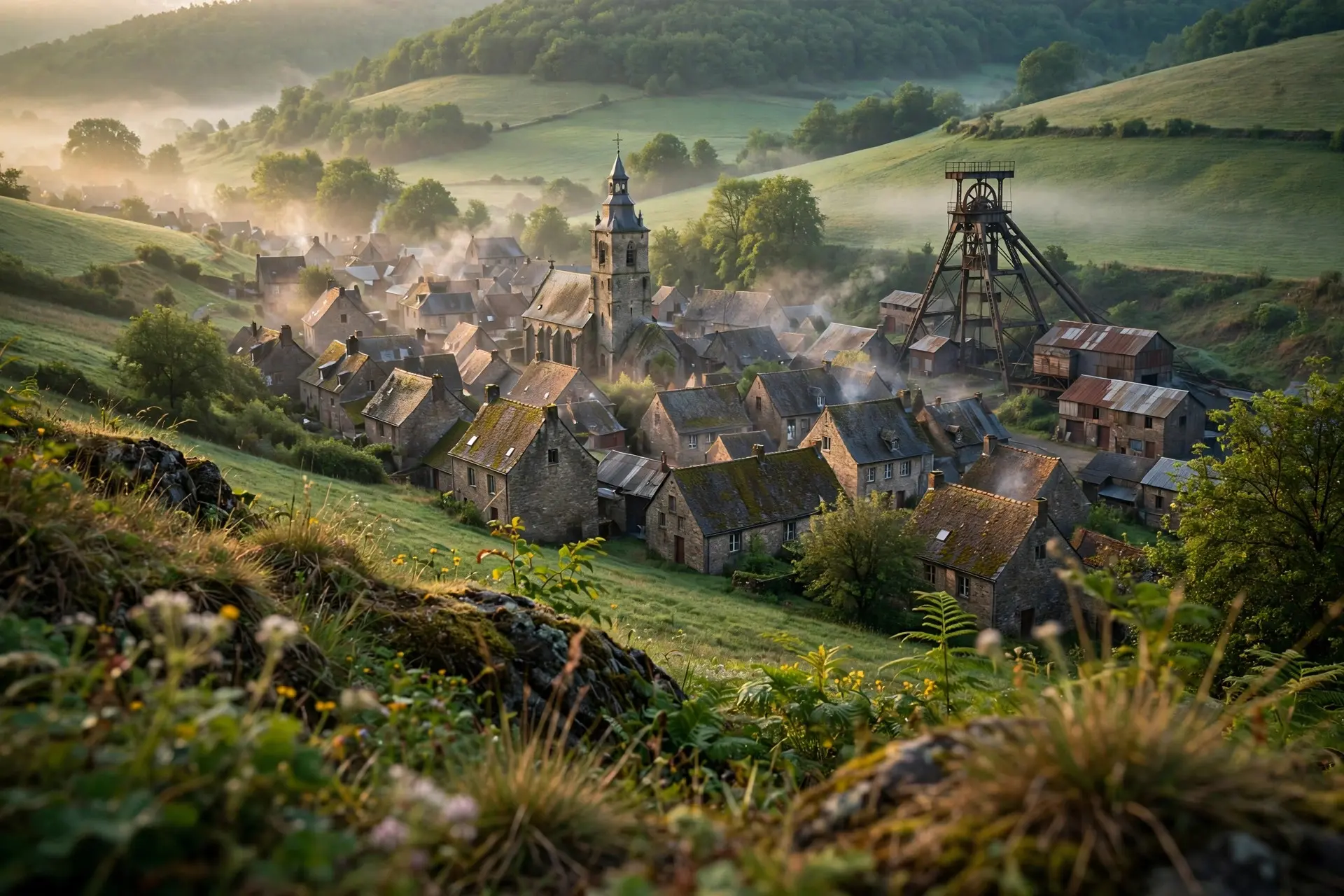
After Napoleon was defeated at Waterloo in June 1815, the Congress of Vienna redrew the map of Europe between September 1814 and June 1815. The new border between the United Kingdom of the Netherlands and Prussia ran through the village of Moresnet, and it stalled there because of the village's valuable zinc spar mine, known as Altenberg in German and Vieille Montagne in French. Zinc mattered because it was needed to make brass, including ammunition and military equipment, and at the time Bristol in England was one of the only other places in Europe where zinc was processed. TheCollector Dutch and Prussian representatives met in Aachen from December 1815, and on June 26, 1816 they agreed to split Moresnet into three parts. The village of Moresnet went to the Netherlands, Prussian Moresnet went to Prussia, and the mine plus the adjacent village became a neutral territory under joint administration, pending a future agreement that never came. Article 17 of the 1816 Treaty of Aachen stated that the town "will be subject to a joint administration and shall not be militarily occupied by any of the two powers." TheCollector At its founding the territory held about 50 houses, a church, the mine and 256 people. Nobody expected the arrangement to last. It lasted 104 years.
How was a country with no government run?
Neutral Moresnet was a condominium, a territory ruled jointly by two powers. Royal commissioners from Prussia and the Netherlands administered it together and could elect a mayor. After Belgian independence in 1830, Belgium took over the Dutch side. Geographys
The territory was ruled under the Napoleonic Code, and it had no law court and no prison. Prussian and Dutch judges came in when they were needed. A ten-member city council was founded in 1859, but it had only an advisory function, so the real decisions stayed with the commissioners and, in practice, with the mining company. TheCollector It had no army and no military service, and that exemption, along with low taxes and no voting rights, made it a magnet for newcomers. Belgium asked its citizens who had moved there to serve in 1854, and Prussia followed in 1874, after which the exemption applied only to descendants of the original inhabitants. Even so, the population passed 500 by 1830 and kept growing, reaching about 4,500 by the early 1900s. Daily life ran on loopholes. There was no currency of its own: the French franc was the main legal tender, with Prussian, Belgian and Dutch coins also in circulation. Local coins were minted in 1848 but were never legal tender. Trading was tax-free, with no import tariffs or customs checks, and duty-free imported goods made it a haven for smugglers and escaped convicts, since there were no extradition procedures. Atlas Obscura The real power in the territory was the Societe des Mines et des Fonderies de la Vieille Montagne, founded in 1837, which took over the Altenberg mine. The company ran banks, schools, houses, shops and hospitals, provided free medical care and preferential housing loans, and some of its directors were appointed mayors. The communal centre sat in company premises. In a place with no real state, the mining company was the state. VMZINC
What happened when the zinc ran out?
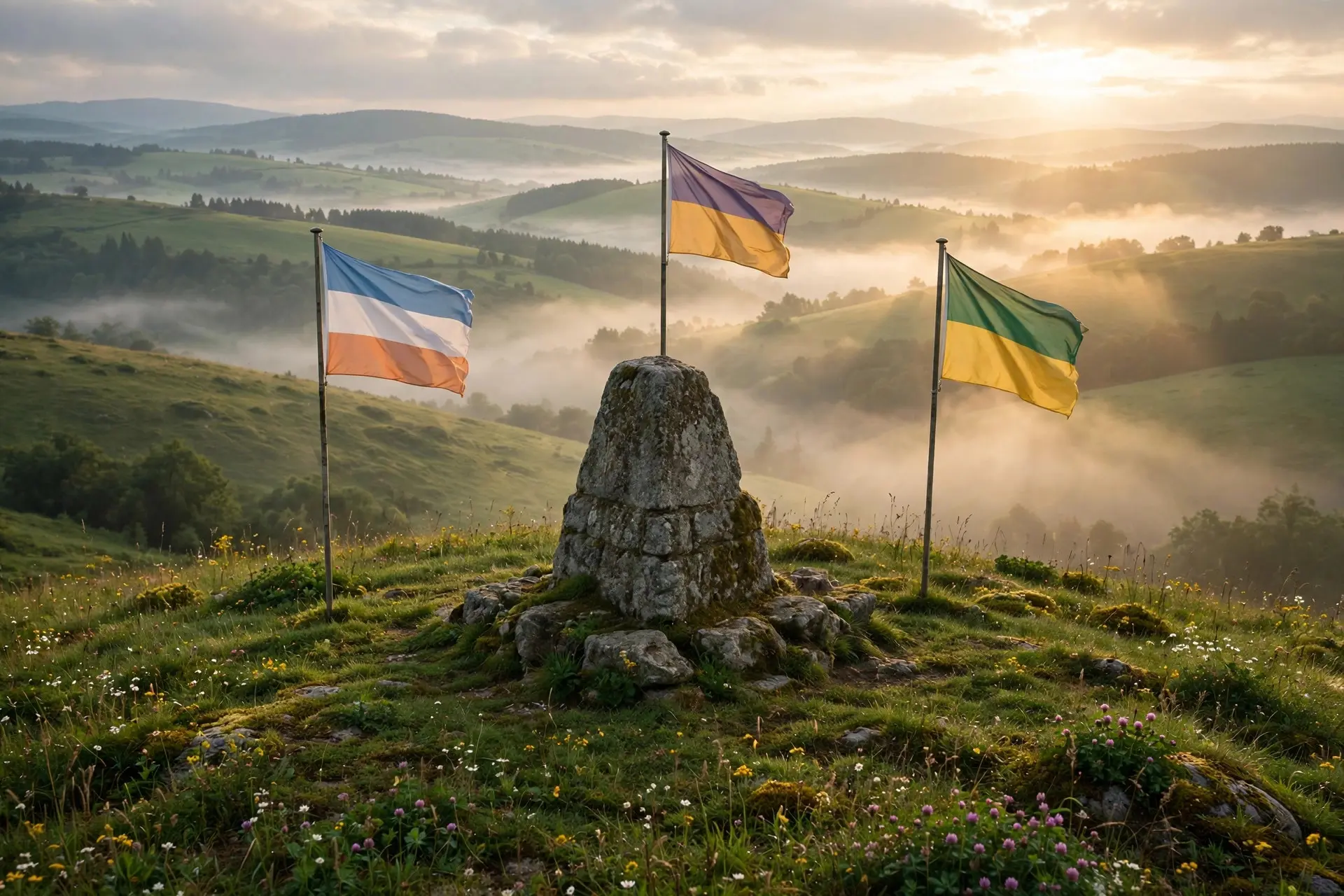
The mine was exhausted and closed in 1885. The company carried on as a smelting factory, and the territory kept going on trade and its odd legal status. But without the mine, the reason for neutrality was gone, and both neighbours began to wonder what to do with the triangle. The Low Countries The residents answered with imagination. Dr. Wilhelm Molly, the mine's chief medical doctor, designed a flag, an anthem and postage stamps from 1895 onward, founded a local postal service and issued stamps that were never put into official circulation. The flag was a horizontal tricolour inspired by the mining company's emblem. Then, in 1908, Molly proposed making Neutral Moresnet the world's first Esperanto-speaking state, named Amikejo. Residents learned Esperanto, and the World Congress of Esperanto in Dresden in 1908 declared Neutral Moresnet the capital and world centre of the Esperanto community, preferring it over The Hague. The plan never materialised, but it remains the most charming rescue attempt in border history. VMZINC A casino opened in 1903 after Belgium closed its own casinos, but Kaiser Wilhelm II threatened to partition the territory, and Prussia forced it to shut down. Atlas Obscura
How did Neutral Moresnet end?
The First World War ended it. In August 1914 German troops took Moresnet without a fight and claimed control during the war without international recognition. When the war ended, the Treaty of Versailles, signed on June 28, 1919, awarded Neutral Moresnet to Belgium. The decision took effect on January 10, 1920, when it became the Belgian municipality of Kelmis, known in French as La Calamine, and all its residents received Belgian citizenship. The Low Countries Germany annexed the area again by decree in May 1940, but it returned to Belgium when the war ended. The company outlived the territory: Vieille Montagne continues today as VMZINC, part of Umicore. The traces are still there. Of the 60 border markers installed for the territory, more than 50 are still standing. Kelmis is the only place on earth where the yellow zinc violet grows, a flower that thrives in zinc-rich soil. Atlas Obscura
| Year | What happened in Neutral Moresnet |
|---|---|
| June 1815 | Napoleon defeated at Waterloo; Congress of Vienna redraws Europe |
| June 26, 1816 | Treaty of Aachen creates the neutral territory |
| 1830 | Belgium takes over the Dutch side after independence |
| 1837 | Vieille Montagne company founded, takes over the mine |
| 1885 | Zinc mine exhausted and closed |
| 1903 | Casino opens, then forced to shut by Prussia |
| 1908 | Amikejo, the Esperanto-state plan, proposed |
| August 1914 | German troops take Moresnet without a fight |
| January 10, 1920 | Territory becomes the Belgian municipality of Kelmis |
What most people get wrong about Neutral Moresnet
The first mistake is to call it a micronation, a country someone declared on a whim. Neutral Moresnet was created by a treaty between two great powers and recognised by both, which is more legitimacy than most self-declared micronations ever get. It survived because neither neighbour could take it without giving the other a reason to object. The second mistake is to think it had no rules. It had a legal code, commissioners, a mayor, a council, a flag, an anthem and a postal service. What it lacked was the machinery of a state: an army, a court, a prison and a currency. That gap was the point, and smugglers, deserters and gamblers all found uses for a place where no single law applied. The third mistake is to treat it as a curiosity with no modern relatives. Europe is still full of shared and disputed edges, from Baarle, where Belgian and Dutch land interlock house by house to the points where three countries meet at a single marker. Neutral Moresnet was the extreme case: a place where the border itself became the country. Takeaway: Neutral Moresnet lasted 104 years because two powers wanted the same zinc mine and neither would yield. It had no army, no taxes and no court, yet it grew from 256 people to about 4,500, ran its own flag and postal service, and nearly became the world's first Esperanto-speaking state. It ended when the war that redrew Europe gave it to Belgium, but its border markers and its museum keep the story on the ground. How we made this article: FactSpire researched and drafted it with AI assistance and checked every fact against the sources listed above.
Frequently asked questions
What was Neutral Moresnet?
Neutral Moresnet was a tiny neutral territory on the border of present-day Belgium and Germany that existed from 1816 to 1920. It was created when the Netherlands and Prussia could not agree who owned the village of Moresnet and its valuable zinc mine, so they left the mine and the village under joint administration, belonging to neither side.
How big was Neutral Moresnet?
It was a triangle about 1 mile wide and 3 miles long, covering about 900 acres, roughly twice the size of Monaco. At its founding in 1816 it held about 50 houses, a church, the zinc mine and 256 people. By the early 1900s the population had grown to about 4,500.
Did Neutral Moresnet have its own government?
It was a condominium run jointly by royal commissioners from Prussia and the Netherlands, later Belgium, who could elect a mayor. It had no army, no military service, no law court and no prison, and it was ruled under the Napoleonic Code. A ten-member city council was founded in 1859 but had only an advisory role.
What happened to Neutral Moresnet?
German troops took it without a fight in August 1914, during the First World War. The Treaty of Versailles, signed on June 28, 1919, awarded it to Belgium, and the decision took effect on January 10, 1920, when it became the Belgian municipality of Kelmis and all its residents received Belgian citizenship.
Sources
- The History of Neutral Moresnet, Europe's Forgotten Micronation, TheCollector
- Neutral Moresnet in La Calamine, Atlas Obscura
- 100 Years Ago, Tiny Country Neutral Moresnet Became Part of Belgium, The Low Countries
- History of VMZINC - 4. The Moresnet mine, VMZINC
- Neutral Moresnet, Geographys