What Is the Most Isolated Tree on Earth? A Spruce
The most isolated tree on Earth is a lone Sitka spruce on Campbell Island, 222 km from its nearest fellow tree, and a marker of the human age.
Key takeaways
- The world's loneliest tree is a Sitka spruce on Campbell Island, more than 222 km (138 miles) from its nearest companion on the Auckland Islands.
- A 2017 study confirmed it is a Sitka spruce, planted in the early 1900s, probably by New Zealand's then-governor Lord Ranfurly.
- Its wood records radiocarbon from atmospheric nuclear tests, peaking in late 1965, a proposed marker for the start of the Anthropocene.
- The previous record holder, the Tree of Ténéré in Niger, was the only tree for 400 km until a truck driver killed it in 1973.
- Guinness notes the record is soft: some native shrubs over 5 meters tall could reasonably count as trees too.
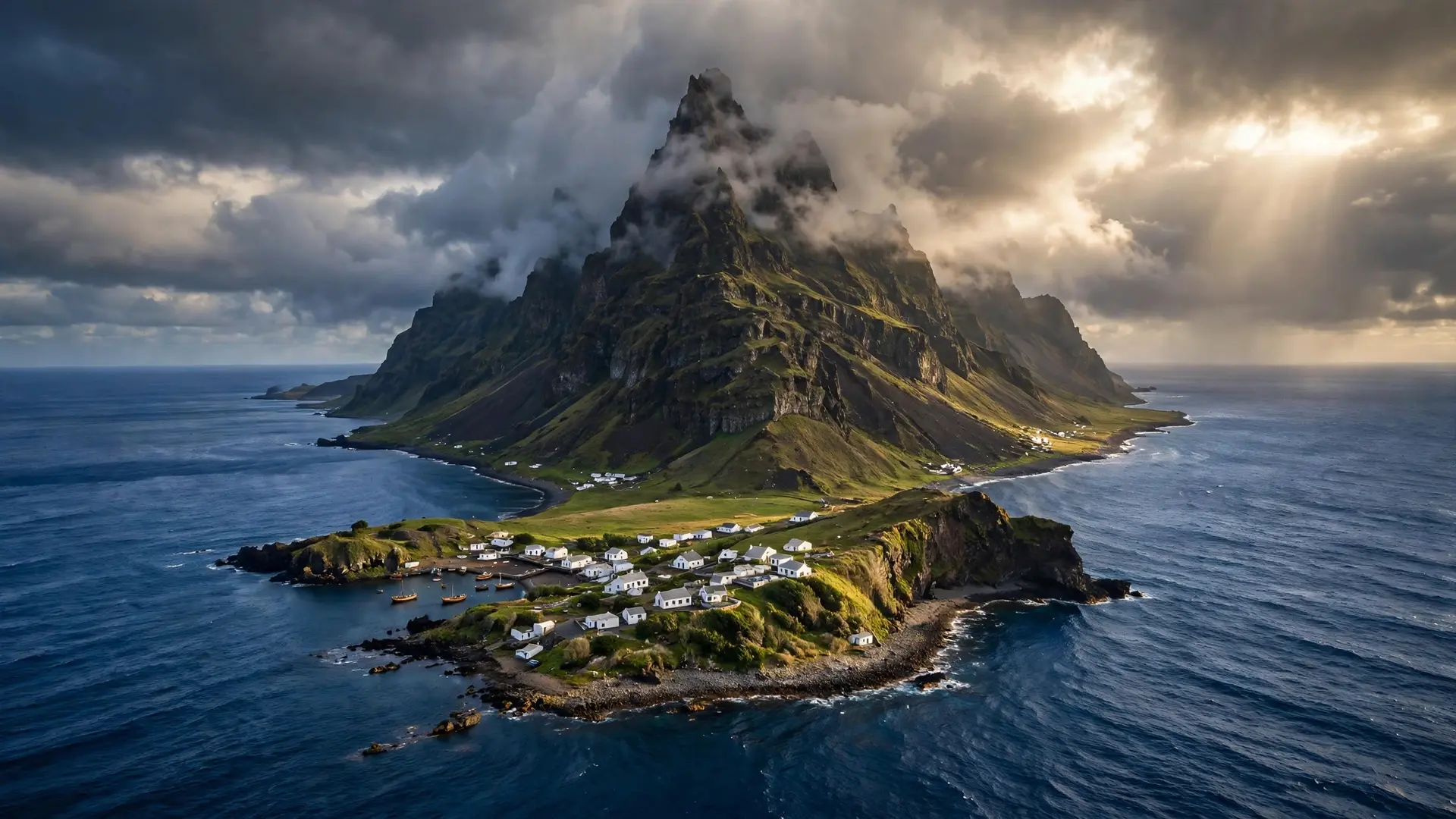
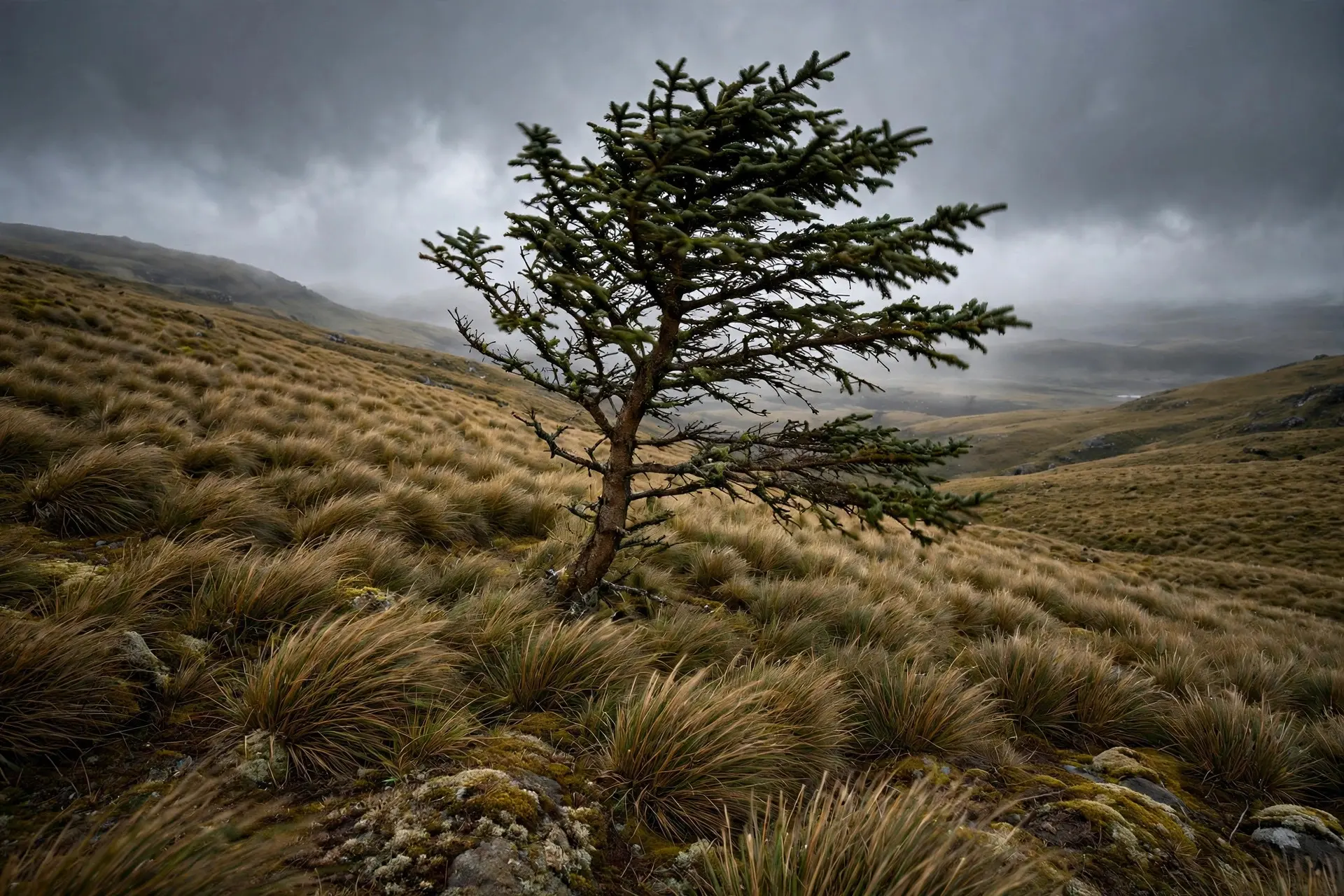
The most isolated tree on Earth is a solitary Sitka spruce on Campbell Island in the Southern Ocean, whose nearest companion of any kind stands more than 222 kilometers (138 miles) away on the Auckland Islands. It should not be there at all: the species is native to North America's Pacific coast, and the tree's own rings record the radiocarbon of the atomic age.
- The remotest tree is believed to be the solitary spruce on Campbell Island, with its nearest companion over 222 km (119.8 nautical miles) away. (Guinness World Records)
- A 2017 multi-researcher study in the New Zealand Journal of Ecology confirmed the specimen is a Sitka spruce (Picea sitchensis), not a Norwegian spruce as sometimes reported. (Guinness World Records)
- Locally called the Ranfurly tree, it is credited to Lord Ranfurly, Governor of New Zealand, who supposedly planted it in 1901, though the 2017 study judged a later, possibly post-1910, planting date more likely. (Guinness World Records)
- Members of the Australasian Antarctic Expedition 2013-2014 found a radiocarbon "golden spike" in the tree's heartwood, dating the proposed start of the Anthropocene to between October and December 1965. (UNSW Sydney)
- The radioactive carbon came from mostly Northern Hemisphere atmospheric thermonuclear bomb tests of the 1950s and 1960s, fixed in the wood by photosynthesis at the bottom of the world. (UNSW Sydney)
- Although about 100 years old and 10 meters tall, the tree has never produced cones, suggesting it has remained permanently juvenile. (UNSW Sydney)
How did a Pacific-coast spruce end up in the subantarctic?
Humans put it there. Campbell Island was discovered in 1810 and exploited for whaling, sealing, and farming, and in the early 1900s someone, tradition says Lord Ranfurly himself, planted a spruce seedling in a sheltered cove. The island's climate is famously brutal: the cloudiest in the subantarctic, with rain on 325 days and gale-force winds on 100 days of the year, and nothing naturally grows taller than a few feet. (Atlas Obscura) The spruce survived by staying small and strange. Instead of the classic cone-shaped crown of its species, it grew into a poofy, cauliflower silhouette, thought to be because the central trunk was removed to serve as a Christmas tree when the island hosted year-round meteorological staff. (Atlas Obscura) The station closed in 1958, and the tree has been left alone since. Spruce is not native to Campbell Island or anywhere else in the Southern Hemisphere, and because introduced spruce can threaten native biodiversity, it is officially deemed an invasive alien species. Getting there is not casual. Campbell Island is a UNESCO World Heritage site and nature reserve, and landing requires a permit.
Why does the loneliest tree matter to geologists?
Because it is a perfect witness. When researchers drilled a core from the tree, they found the radiocarbon peak from atmospheric nuclear testing preserved ring by ring, peaking in late 1965 just after the tests were banned. In the Northern Hemisphere the same peak occurred in 1964; it took until late 1965 to reach the Southern Hemisphere atmosphere. With the Campbell Island spruce, the signal became global, precise, and detectable in the geological record. That is what a new geological epoch needs: a clear, global, precisely dated signal. Lead author Prof. Chris Turney of UNSW Sydney said the team was thrilled to find the signal in the Southern Hemisphere on a remote island, because for the first time it gave a well-defined global signature for a new epoch. Co-author Prof. Mark Maslin of University College London added that it was further evidence that in this new epoch, no part of the planet remains untouched by humans. The tree the world forgot became a candidate for the Anthropocene's golden spike.
In 2014, scientists took core samples from the 100-year-old tree to examine the climate information stored in its rings. Despite its remote location at the bottom of the world, the rings record radiocarbon from above-ground nuclear testing, a finding that helped turn the lonely spruce into a candidate marker for the advent of the Anthropocene, the geological age of humans. (Atlas Obscura)
Loneliest trees, then and now
| Ranfurly tree (current) | Tree of Ténéré (former) | |
|---|---|---|
| Species | Sitka spruce (Picea sitchensis) | Acacia |
| Location | Campbell Island, Southern Ocean | Sahara, Niger |
| Isolation | over 222 km to nearest tree | 400 km of empty desert in every direction |
| Reign | since 1973 | about 300 years |
| End | still standing | run over by a drunk truck driver in 1973 |
| The Tree of Ténéré had been fabled for three centuries as the most isolated tree on the planet, a lone acacia used as a landmark by Saharan travelers, its roots reaching 36 meters (118 feet) down to water. Its death by truck in 1973 was the kind of absurd tragedy that makes headlines: the one obstacle in 400 kilometers, hit anyway. The remains now sit in the Niger National Museum. |
What do people get wrong about the loneliest tree?
First, the certainty of the record. Guinness itself flags the softness: there is no universally recognized definition of what counts as a tree, and some large native shrubs of Dracophyllum on Campbell Island can top 5 meters in sheltered spots, so they could reasonably be called trees too. "Loneliest tree" is a popular title, not a botanical fact. Second, the planting date. The 1901 story comes from a 1989 plaque, not from records. The growth-rate evidence points later, and "supposedly planted by Lord Ranfurly" is doing honest work in the official account. Third, the idea that isolation protected it. The tree's greatest wounds came from people: whalers, sealers, farmers, and station staff with saws. It survived a century of the Southern Ocean's weather and recorded the atomic age in its wood, making it a monument to two kinds of human reach at once. For even more remote geography, Tristan da Cunha is the most remote inhabited island, and the Eurasian Pole of Inaccessibility is the farthest point from any ocean. How we made this article: FactSpire researched and drafted it with AI assistance and checked every fact against the sources listed above.
Frequently asked questions
Where is the loneliest tree in the world?
On Campbell Island, a subantarctic World Heritage site in the Southern Ocean administered by New Zealand's Department of Conservation. The solitary Sitka spruce stands in a windswept cove, and its nearest companion of any kind is more than 222 kilometers away on the Auckland Islands. Sitka spruce does not grow naturally anywhere in the Southern Hemisphere.
Who planted the loneliest tree?
Credit goes to Lord Ranfurly, Governor of New Zealand, who supposedly planted it in 1901; a plaque saying so was placed beside the tree in 1989. But a 2017 study in the New Zealand Journal of Ecology judged from its fast growth rate that it was probably planted later, possibly after 1910. The exact planter and year are not certain.
How does the tree mark the atomic age?
Members of the Australasian Antarctic Expedition 2013-2014 found a radiocarbon 'golden spike' in the tree's heartwood: carbon-14 from Northern Hemisphere atmospheric thermonuclear tests, fixed in the wood by photosynthesis, peaking between October and December 1965. Because the signal is global and precisely dated, researchers proposed it as the marker for the start of the Anthropocene.
Why is the loneliest tree still a juvenile?
The oceanic climate has had an unusual effect on the spruce. Although it has grown to about 10 meters tall, it has never produced cones, suggesting it has remained in a permanently juvenile state. Its stunted, cauliflower-like shape is partly the climate's doing and partly because meteorological station staff routinely cut its trunk for Christmas trees until the station closed in 1958.
Sources
- Remotest tree, Guinness World Records
- Loneliest tree in the world marks new age for our planet, UNSW Sydney
- World's Loneliest Tree, Atlas Obscura