Who Built Machu Picchu? An Inca Emperor's Mountain Estate
Machu Picchu was a royal estate for the Inca ruler Pachacuti, lived in from about 1420. Here is how it was engineered, who really found it, and why it emptied.
Key takeaways
- Machu Picchu was a royal estate and country palace built for the Inca emperor Pachacuti, not a fortress or a lost capital.
- A 2021 radiocarbon study of 26 people buried there, led by Yale archaeologist Richard Burger, shows the estate was occupied from about AD 1420 to 1530.
- Engineer Kenneth Wright estimates the Inca put 50 to 60 percent of their building effort underground, into foundations, site preparation and drainage.
- Two farming families were living on the terraces when Hiram Bingham arrived in 1911, and Agustín Lizárraga had reached the ruins by 1902.
- A 2022 study argues the Inca called the site Huayna Picchu, or simply Picchu, after the peak that rises beside it.
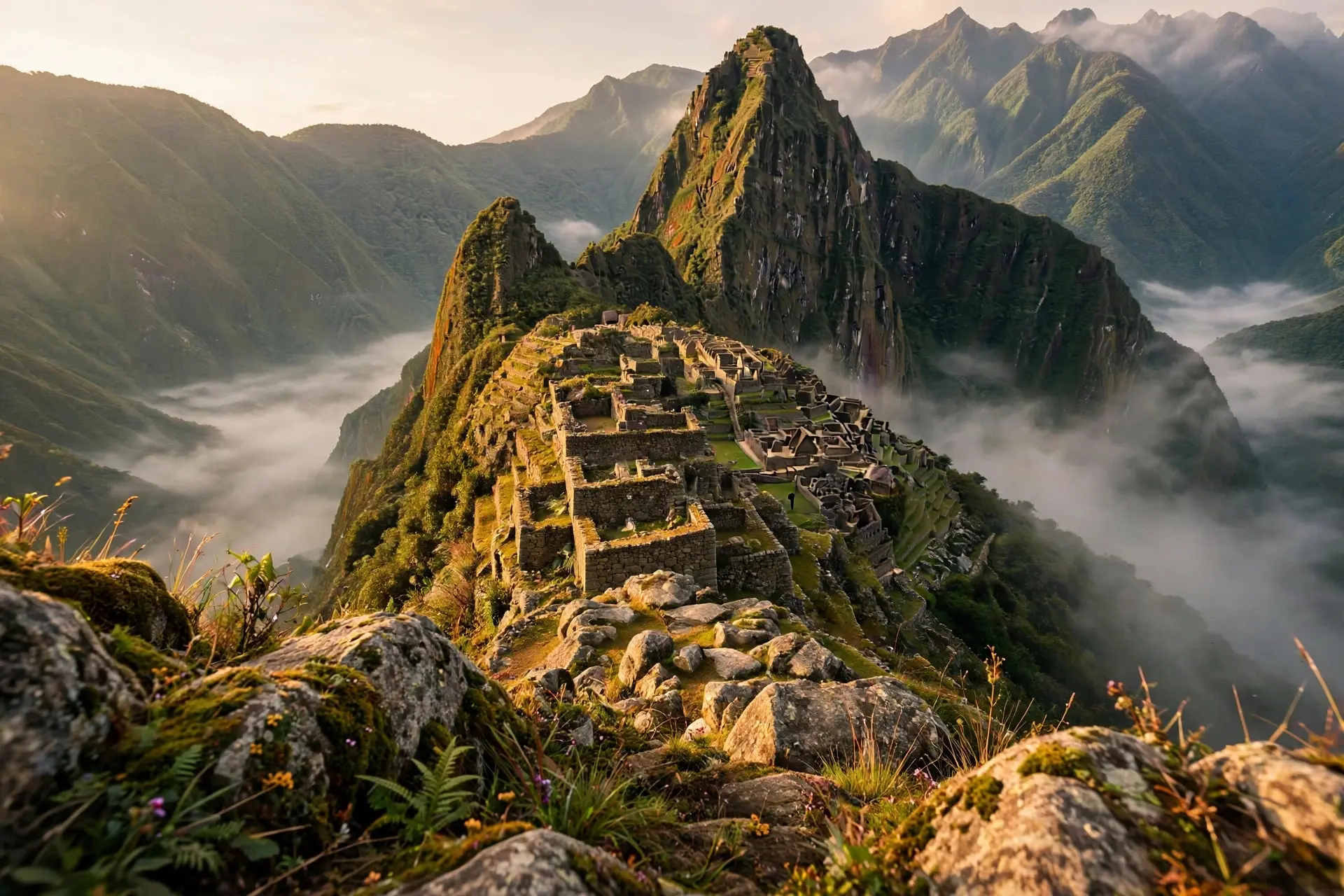
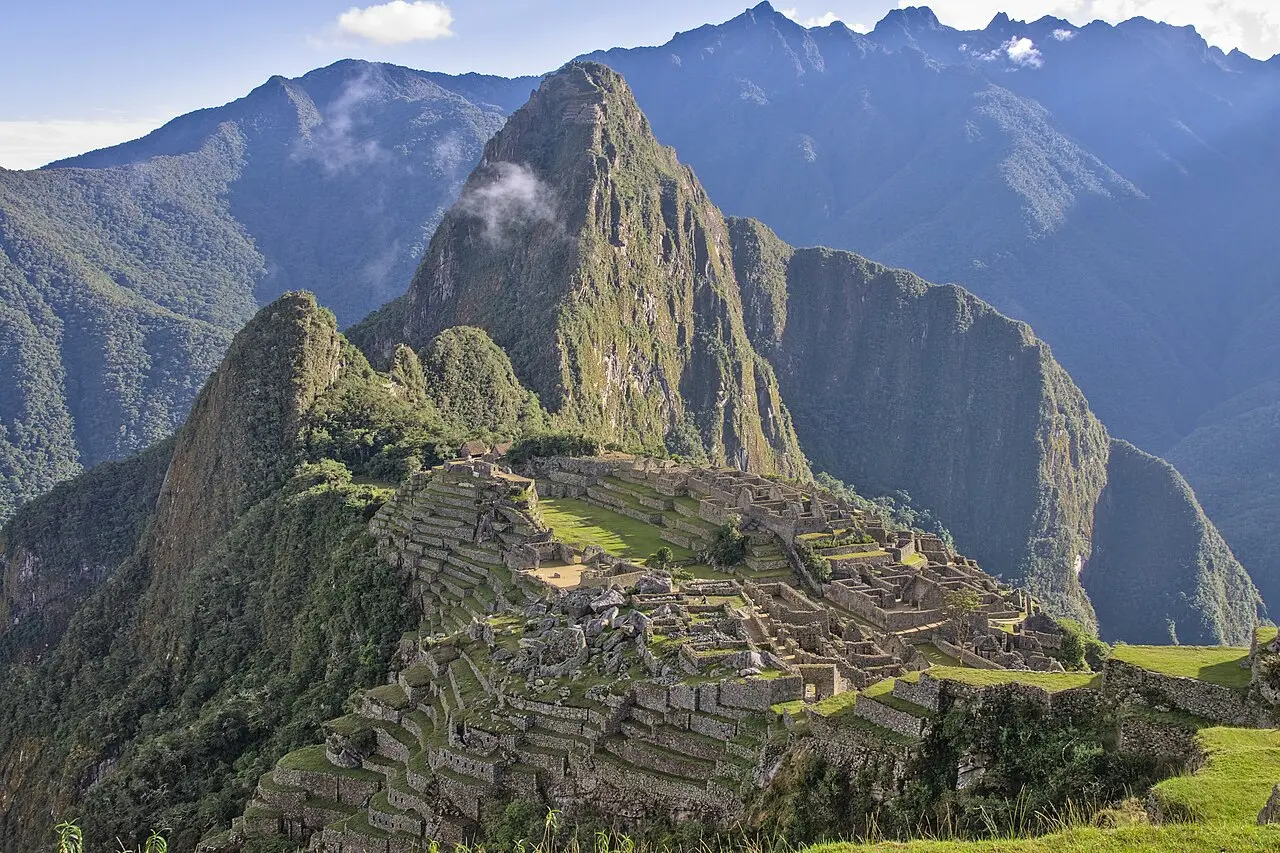
Machu Picchu was built by the Inca as a royal country estate for Pachacuti, the emperor most responsible for creating their empire, rather than as a fortress or a lost capital. Radiocarbon dates show people living there from about AD 1420 until around 1530, on the eve of the Spanish conquest. Nor was it ever truly lost: farmers were working its terraces when an American explorer was led up the mountain in 1911. That makes the "lost city" label doubly misleading. Machu Picchu was a working palace with a resident staff, perched on a ridge roughly 2,400 metres (about 8,000 feet) up in the Andes and engineered to survive torrential rain. Its rediscovery is a story of local knowledge that a foreign expedition made famous.
Who built Machu Picchu, and what was it for?
According to chronicles written after the Spanish arrived, Pachacuti took the throne in 1438 and afterwards brought the lower Urubamba Valley, where Machu Picchu stands, under Inca rule. Following those texts, historians long assumed construction began in the 1440s at the earliest. The bones disagree. In 2021, a team led by Yale archaeologist Richard Burger published radiocarbon dates, obtained with a sensitive technique called accelerator mass spectrometry, for 26 people buried at Machu Picchu whose remains had been excavated in 1912. The results show the estate was in use from about AD 1420 to 1530. If Pachacuti built it, he came to power earlier than the chronicles claim, and the timeline of the Inca rise needs adjusting. The same burials help explain what Machu Picchu was for. The skeletons show little sign of heavy labour, which suggests these were retainers, the attendants assigned to serve at the estate, and the burials belong to its life as a palace rather than its construction. This was a country retreat for the emperor and his court, ringed by peaks such as Huayna Picchu and Putucusi that local Quechua communities still treat as sacred.
How did the Inca keep a mountaintop estate from sliding away?
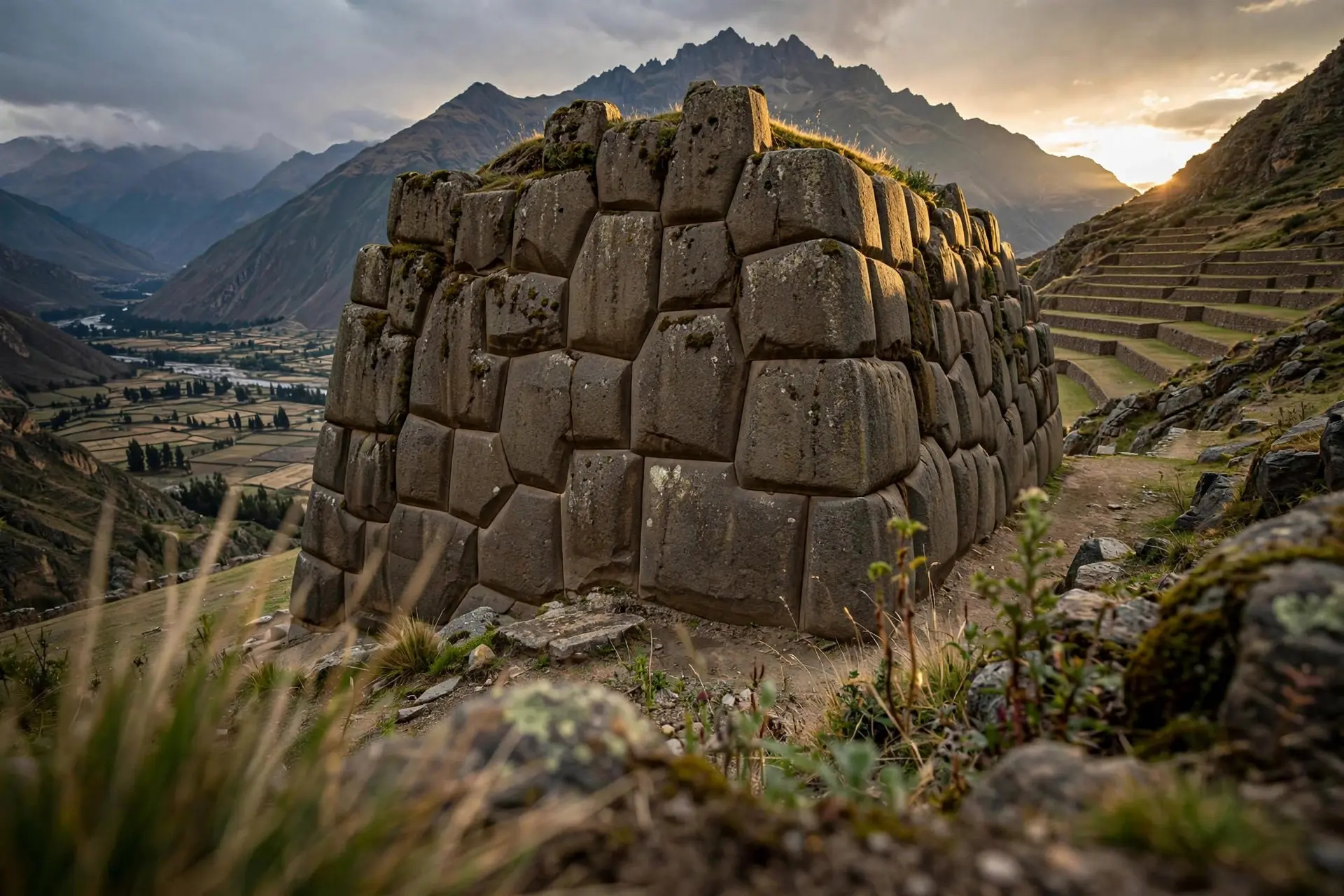
Building on a narrow ridge meant fighting water and gravity at once. The site receives about 1,930 millimetres (76 inches) of rain a year, most of it in the wettest seven months, about twice Chicago's total. The civil engineer Kenneth Wright, who began studying Machu Picchu in 1994, estimates that its builders put 50 to 60 percent of their effort underground, into foundations, site preparation and drainage. His team's excavation in the main plaza showed what that meant. Under roughly a metre of rich topsoil lay a band of sandy gravel, and beneath that a drainage bed of white granite chips, the waste of years of stone cutting, packed in to lead water away. Around the buildings, some 700 terraces hold the slopes in place. They are permeable, so rain sinks through them rather than sheeting off, and they doubled as farmland. Wright's team also counted about 130 drainage holes built into walls as they went up, part of the original plan rather than later fixes. The water supply shows the same foresight. A spring above the site feeds a stone canal about 760 metres (2,500 feet) long, set at an average slope of around 3 percent, which supplies a chain of 16 fountains. The first fountain sits beside the emperor's residence, so the ruler drew the cleanest water. The canal is sized to the spring's yield and the fountains to the canal, a gravity system built on the same principle of a carefully judged gradient as Rome's aqueducts, only on a mountainside. All of this was achieved without iron or steel, without writing and without the wheel in practical use. Like Egypt's pyramid builders, the Inca got their results from organised skilled labour, local stone and a sharp understanding of the ground. The tightly jointed granite of the Temple of the Sun, a wall Bingham called one of the finest pieces of stonework in all of the Americas, has now come through some 500 years of earthquakes.
Was Machu Picchu ever really lost?
Not to the people who lived below it. On 24 July 1911, the Yale historian Hiram Bingham, who was looking for Vilcabamba, a lost Inca city he had heard about, was guided up the mountain by a local farmer, Melchor Arteaga, with a Peruvian police sergeant named Carrasco along as escort. At the top he found two families, the Rechartes and the Álvarezes, growing crops on the old terraces and drawing water from an Inca channel that still ran. A boy, Pablo Recharte, led him into the overgrown buildings.
Others had come before him. Peruvian accounts record that Agustín Lizárraga, a Cusco-born tenant farmer, reached the ruins on 14 July 1902 with three companions, and that the group wrote their names on an Inca wall. Several people saw that inscription before Bingham had it erased. Lizárraga may even have visited as early as 1894. What Bingham did do was put Machu Picchu in front of the world. He led excavations there between 1912 and 1915, cleared the vegetation, opened tombs and announced the site in a 1913 National Geographic article. His expeditions also took excavated objects and human remains back to Yale. In November 2010, Yale and the Peruvian government agreed on their return, and in 2011 Yale agreed with Cusco's Universidad Nacional de San Antonio Abad to set up a centre to display and study the collection. All of it, human remains included, has since gone back to Cusco, where it is kept at the Museo Machu Picchu.
What did the Inca call it, and why did they leave?
Possibly not Machu Picchu. In a 2022 paper in the journal Ñawpa Pacha, historian Donato Amado Gonzales of Peru's Ministry of Culture and archaeologist Brian Bauer of the University of Illinois Chicago argued that the Inca knew the place as Huayna Picchu, or simply Picchu. Huayna Picchu is the sharp peak that rises beside the ruins in nearly every photograph. Their evidence includes a 1904 atlas, published seven years before Bingham arrived, that marks ruins of that name; reports that Bingham himself heard of ruins called Huayna Picchu before he left Cusco; and Spanish documents from the late 16th century. There are no plans to rename the site. Why it emptied is harder to pin down, because no surviving document records it. The dates simply stop around 1530. A royal estate existed to serve a ruler and his court, run by attendants who had been assigned to it. Once the empire that assigned them fell apart under the Spanish conquest, the estate had no one to serve and no system to sustain it. That is an inference rather than a recorded fact, but it fits what the burials and buildings show. Seen clearly, Machu Picchu is more impressive than its legend. It was not a hidden city waiting for an explorer, but a palace engineered against rain, earthquakes and steep ground, used for little more than a century and then left to the farmers and the forest. Its builders' real secret lies mostly out of sight, in the drainage beds and foundations that have kept the mountain still for five hundred years.
Frequently asked questions
Who built Machu Picchu?
It was built for Pachacuti, the Inca emperor most responsible for creating the empire in the 15th century. Radiocarbon dates show it was occupied as a royal estate from about AD 1420 to 1530.
Why was Machu Picchu abandoned?
No document records the decision. Its occupation ends around 1530, on the eve of the Spanish conquest, and an estate that existed to serve the Inca court had little reason to survive once that state collapsed.
Did Hiram Bingham discover Machu Picchu?
Not really. A local farmer, Melchor Arteaga, guided him there in 1911, two families were already farming its terraces, and Agustín Lizárraga had reached the site in 1902. Bingham made it famous worldwide.
Sources
- Study: Machu Picchu older than expected, phys.org (Burger et al., Antiquity 2021)
- Study reconsiders name of Peru’s Machu Picchu, phys.org (Gonzales & Bauer, Ñawpa Pacha)
- Peru-Yale Partnership for the Future of Machu Picchu Artifacts, Yale News
- In the wonderland of Peru—rediscovering Machu Picchu, National Geographic
- Water stains: That usually means something, right?, University of Colorado Boulder
- Machu Picchu, Peru, Mad Traveller