Why India and Bangladesh Traded 162 Enclaves in 2015
Why did India and Bangladesh swap enclaves? In 2015 they traded 162 enclaves at midnight, ending nearly 68 years of statelessness for about 51,000 people.
Key takeaways
- India and Bangladesh exchanged 162 enclaves at midnight on July 31, 2015: 111 Indian enclaves inside Bangladesh and 51 Bangladeshi enclaves inside India.
- India transferred 17,160.63 acres and received 7,110.02 acres, giving up roughly 10,051 acres more than it gained.
- About 51,000 residents who had lived without recognized citizenship gained one; only 987 chose to move across the border.
- The swap completed a 1974 agreement and also resolved 6.1 km of undemarcated border plus territories held in adverse possession.
India and Bangladesh swapped enclaves to end nearly 68 years of statelessness. At midnight on July 31, 2015, the 111 Indian enclaves inside Bangladesh and the 51 Bangladeshi enclaves inside India changed hands, and roughly 51,000 people gained a recognized citizenship. Almost no one moved: all but 987 residents simply took the nationality of the country surrounding them.
- 162 enclaves changed hands at midnight on July 31, 2015, under the 1974 Land Boundary Agreement and its 2011 protocol: India's Ministry of External Affairs confirmed the transfer in a 2025 Lok Sabha answer, and celebrations began "one minute past midnight" according to Domain-b.
- 111 Indian enclaves covering 17,160.63 acres (26.8 square miles, 69.4 square kilometers) passed to Bangladesh, while 51 Bangladeshi enclaves covering 7,110.02 acres (11.1 square miles, 28.8 square kilometers) passed to India, with India transferring roughly 10,051 acres more than it received, per the Observer Research Foundation.
- About 51,000 people were affected: roughly 14,000 in the 51 Bangladeshi enclaves inside India and about 37,000 in the 111 Indian enclaves inside Bangladesh, all of whom now have a country of their own (Domain-b).
- Every resident got a choice of nationality: 987 people in the former Indian enclaves chose Indian citizenship and were relocated, while 14,221 people in the former Bangladeshi enclaves became Indian citizens, 15,208 new Indian citizens in all (Observer Research Foundation).
- The same deal resolved 6.1 km (3.8 miles) of undemarcated border in three sectors and sorted out territories in adverse possession: India received 2,777.038 acres (4.3 square miles) and transferred 2,267.682 acres (3.5 square miles) (Observer Research Foundation).
What Exactly Did the Two Countries Trade?
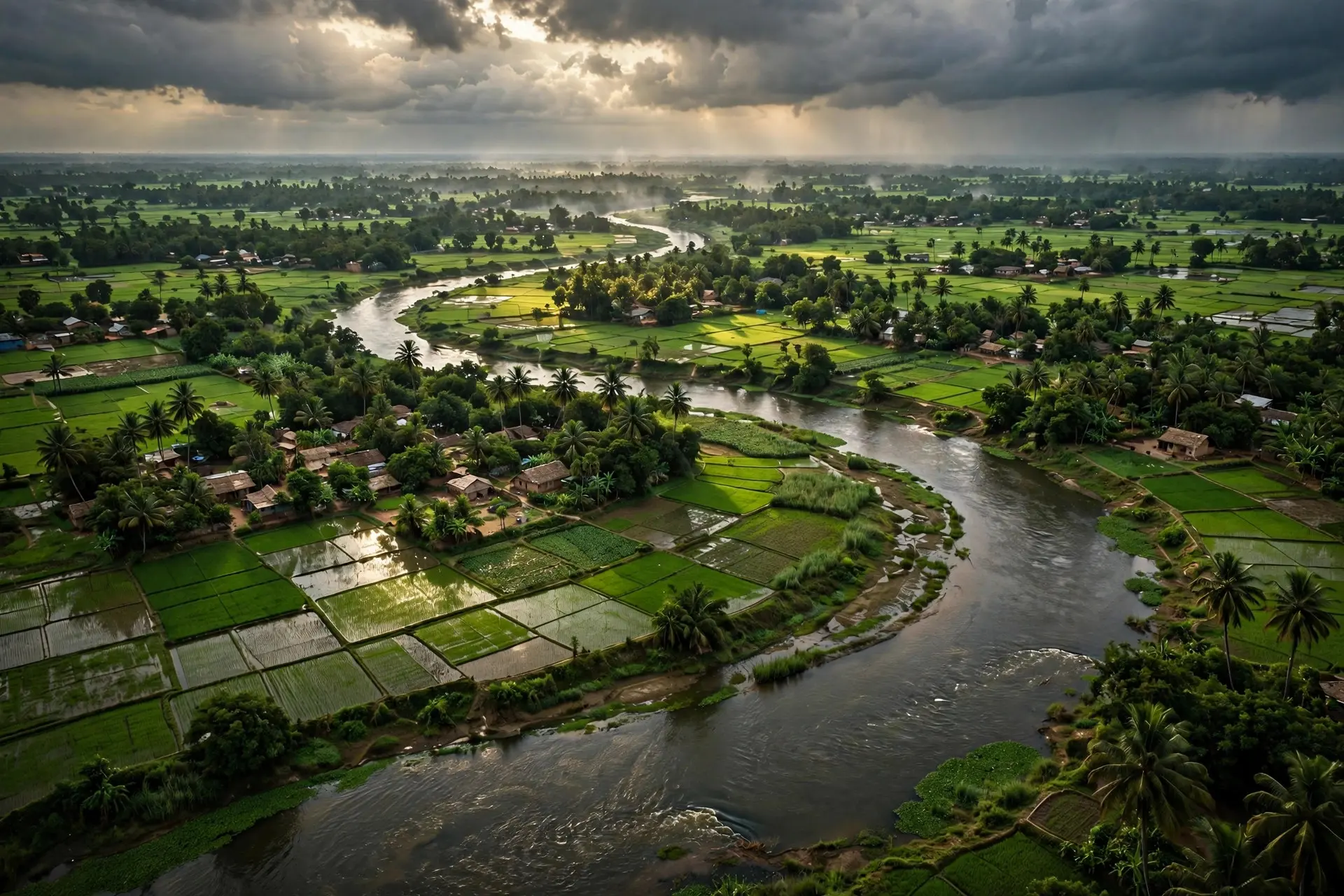
They traded chhitmahals, the Bengali word for these scattered enclave settlements. Each enclave was a pocket of one country entirely surrounded by the other: an Indian village ringed by Bangladeshi farmland, a Bangladeshi hamlet sitting inside the Indian state of West Bengal. Residents belonged to a country whose police, schools, and hospitals could not legally reach them, since entering the enclave meant crossing an international border.
| India's enclaves in Bangladesh | Bangladesh's enclaves in India | |
|---|---|---|
| Number of enclaves | 111 | 51 |
| Land area | 17,160.63 acres (69.4 km² / 26.8 sq mi) | 7,110.02 acres (28.8 km² / 11.1 sq mi) |
| People | About 37,000 | About 14,000 |
| Where | Lalmonirhat (59), Panchagarh (36), Kurigram (12), Nilphamari (4) districts | Cooch Behar district, West Bengal |
| After the swap | Part of Bangladesh | Part of India |
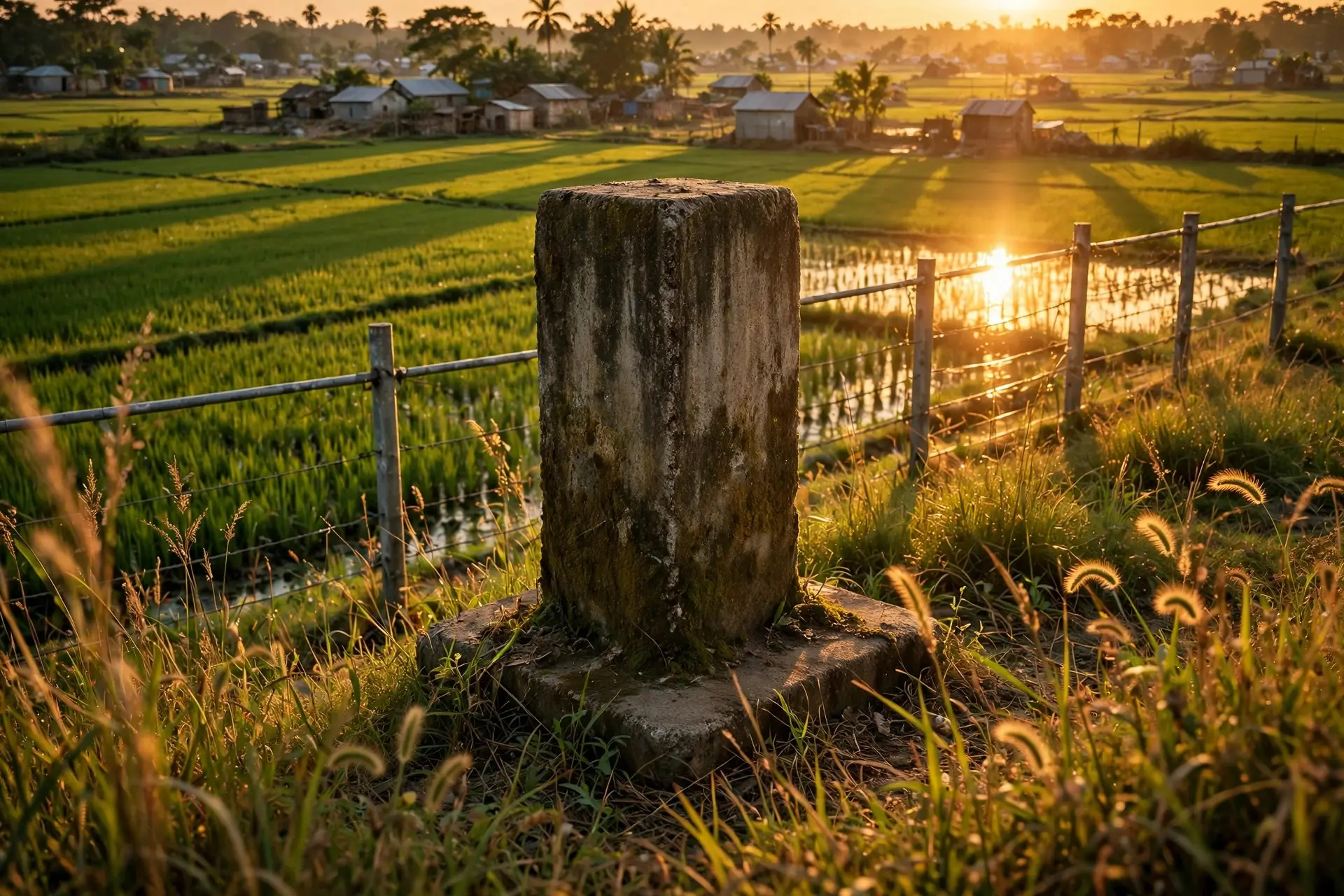
| The exchange simply dissolved each enclave into the country surrounding it, which is why most people did not have to move. National flags were hoisted in all the former enclaves the same night. |
How Did 162 Pockets of Land End Up in the Wrong Country?
This tangle is older than either modern country. The BBC notes that the enclaves date to the 18th century and were created by local peace treaties: land grants and compromises between regional rulers that later hardened into a permanent checkerboard (via NPR). When the British drew the partition line in 1947, the fate of these pockets was left unresolved, and they survived the 1971 war in which East Pakistan broke away as independent Bangladesh. The fix was attempted in 1974, when Indian prime minister Indira Gandhi and Bangladeshi prime minister Sheikh Mujibur Rahman signed the Land Boundary Agreement. But the deal sat unimplemented for decades (Domain-b). A 2011 protocol signed by Indian prime minister Manmohan Singh and Bangladeshi prime minister Sheikh Hasina revived it, setting out the enclave exchange, the adverse-possession adjustments, and the demarcation of the last 6.1 km (3.8 miles) of undrawn border in three sectors (Observer Research Foundation). The instruments of ratification were finally exchanged on June 6, 2015, in Dhaka, in the presence of Indian prime minister Narendra Modi and Hasina (Domain-b). Eight weeks later, at midnight on July 31, the exchange took effect — ending, as India's foreign ministry later put it, "68 years of stateless existence." The same border tangle has a partition-era backstory all its own. One pocket illustrates just how strange the geometry had become. Dahala Khagrabari, enclave number 51, was 1.7 acres of Indian land completely surrounded by a Bangladeshi village, which was in turn surrounded by an Indian village, inside Bangladesh, which Smithsonian called "the only third-order enclave in the world." To walk from it to the rest of India, a farmer would have had to cross four international borders, none with a checkpoint.
What Changed for the 51,000 People Inside?
For six decades, the BBC reports, enclave residents "have been treated as in effect stateless"; the agreement means "they will now finally gain a proper identity" (via NPR). That identity brought the things every state is supposed to provide: an official government statement said residents would now enjoy "civic services, education, healthcare and other facilities" from their new countries (Domain-b). The midnight handover felt like a second independence day. Residents burst crackers, hugged neighbors, and hoisted their new flags as the clock struck one minute past midnight; Bangladesh's Daily Star ran the headline "Free, finally" (Domain-b). In enclaves on the Indian side, young people ran across fields waving the Indian tricolour they had been hoisting unofficially for years: for the first time, they reported, "rightfully" (NPR). The choice itself was revealing. A joint survey asked every resident to pick a nationality. None of the people living in the Bangladeshi enclaves inside India chose Bangladesh, and only about 979 on the Bangladesh side chose to relocate to India (NPR). One of those who moved was Chapala Barman, a 60-year-old Hindu from the Dahala-Khagrabari enclave, who crossed the border with her three sons but had to leave behind three married daughters and her grandchildren. The 987 who kept their Indian nationality were settled in camps in Cooch Behar district, while the rest simply became citizens of the land they were standing on.
What Do Most People Get Wrong About the Swap?
First, it was not an equal trade. India handed over 17,160.63 acres and received 7,110.02 acres, roughly 10,051 acres (40.7 square kilometers, 15.7 square miles) more out than in. The imbalance made the deal politically difficult in New Delhi and is one reason it took decades of negotiation. Second, it was not a population transfer. No one was forced across the border; the 2011 protocol guaranteed that nobody would be moved against their will. The overwhelming majority changed nationality without leaving home. Third, the blame does not belong with the British map-makers of 1947. The enclaves predate partition by more than a century; they were produced by 18th-century local treaties, and partition simply froze them into an international border. Belgium and the Netherlands still live with a similar patchwork in Baarle-Nassau's interlocked enclaves, though theirs never stranded tens of thousands of stateless people.
Why It Still Matters
The 2015 exchange closed one of the world's longest-running border disputes without firing a shot — a rarity among territorial settlements. It also fixed a quiet moral absurdity: tens of thousands of people had been born, worked, married, and died in places that no government officially governed. After midnight on July 31, 2015, those places had addresses, those people had passports, and the border finally ran in a single line, a strange mirror image of Bir Tawil, where the anomaly is a land no one will claim at all. How we made this article: FactSpire researched and drafted it with AI assistance and checked every fact against the sources listed above.
Frequently asked questions
How many enclaves did India and Bangladesh exchange?
The 2015 exchange covered 162 enclaves: 111 Indian enclaves inside Bangladesh went to Bangladesh, and 51 Bangladeshi enclaves inside India went to India. They changed hands at midnight on July 31, 2015, under the 1974 Land Boundary Agreement and its 2011 protocol.
Why did India and Bangladesh swap their enclaves?
Around 51,000 residents lived in pockets of one country surrounded by the other, effectively stateless and cut off from schools, clinics, and voting. Swapping the enclaves absorbed each one into the country surrounding it, giving every resident a citizenship and access to government services.
Could enclave residents choose which country to belong to?
Yes. A joint survey asked every resident to choose. Almost everyone stayed where they were and took the new nationality of their surroundings. Only 987 people in the former Indian enclaves chose Indian citizenship and were relocated to India in late 2015.
When was the original Land Boundary Agreement signed?
The Land Boundary Agreement was signed in 1974 by Indian prime minister Indira Gandhi and Bangladeshi prime minister Sheikh Mujibur Rahman. It took 41 years to implement: a 2011 protocol revived it, India ratified it in 2015, and the physical exchange happened that July.
Sources
- India, Bangladesh complete historic exchange of enclaves, Domain-b
- From stateless to new citizens: A quest for more pro-active rehabilitation policies, Observer Research Foundation
- Decades Of Limbo Ends For Some Indians, Bangladeshis Along Border, NPR Illinois
- GOVERNMENT OF INDIA MINISTRY OF EXTERNAL AFFAIRS LOK SABHA, Ministry of External Affairs, Government of India
- This Was the Turducken of Border Disputes, Smithsonian Magazine