How Contactless Payments Complete in Half a Second
A tap hides a full cryptographic handshake: NFC radio, an EMV chip, a one-time cryptogram, and tokenization. The half-second journey of a contactless payment.
Key takeaways
- A tap is not a data read — it is a full cryptographic handshake between your card and the banking network, compressed into about half a second.
- NFC runs at 13.56 MHz and only works within a few centimeters, which is why you must physically tap the terminal.
- Each transaction uses a one-time cryptogram bound to the amount and a counter, so there is nothing static for a thief to copy or reuse.
- Phone wallets use tokenization: a Device Account Number stands in for your real card number, and the merchant never sees the original.
- Contactless payments began with Hong Kong's Octopus card in September 1997, decades before Apple Pay brought the tap mainstream in 2014.
It looks like magic: you tap, it beeps, you walk away with coffee. But a contactless payment is not a wireless reading of your card number, and it is certainly not the terminal just trusting your phone. What actually happens in that half second is a full cryptographic handshake between your card and your bank's network — a sequence so precisely choreographed that a global standards body wrote the rules for it, and every card, phone, and terminal on Earth follows the same script. Here is the part most people get backwards: your card never broadcasts its number. Instead, it generates a one-time mathematical proof that it is genuine, valid only for that exact amount at that exact moment. The whole payment is less like showing your ID and more like solving a puzzle that can only be solved once.
What actually happens during the half-second tap?
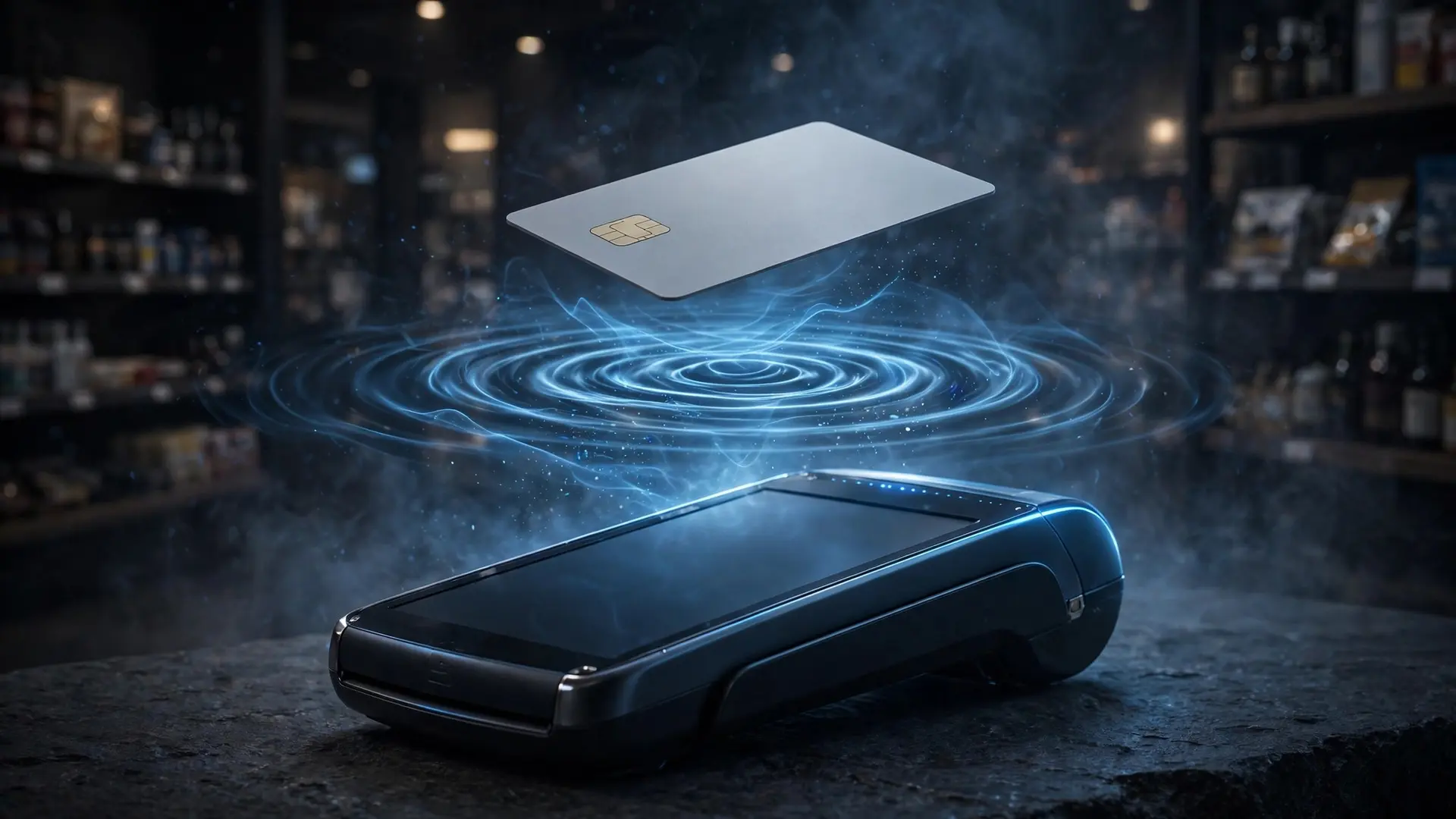
The moment your card or phone enters the terminal's field, the first thing that happens is invisible: power. Your contactless card has no battery. The terminal transmits electromagnetic waves, and the card harvests energy from those waves through its antenna to wake up the EMV chip inside — EMV being the global standard created by Europay, Mastercard, and Visa. Once powered, the card and terminal negotiate which payment application to use, then the card's chip performs its signature move: it generates a cryptogram, a one-time code mathematically bound to the purchase amount and an internal transaction counter that ticks up with every payment. The terminal cannot approve the payment itself. It routes the cryptogram through the acquiring bank (the merchant's bank) and the card network to your issuing bank, which verifies the math and approves or declines the transaction in seconds. Only then does the screen light up with approval, accompanied by the familiar beep.
The radio technology carrying all of this is NFC — near-field communication, running at 13.56 MHz under the ISO/IEC 14443 standard. Its range is deliberately tiny: the optimum distance is about four centimeters or less, and the signal dies beyond roughly ten centimeters. That is why you must physically tap rather than wave from across the checkout. NFC supports true two-way communication, letting the card and terminal exchange several messages back and forth, which is what makes it practical for payments while plain RFID tags are mostly one-directional.
Why can't thieves skim your card number?
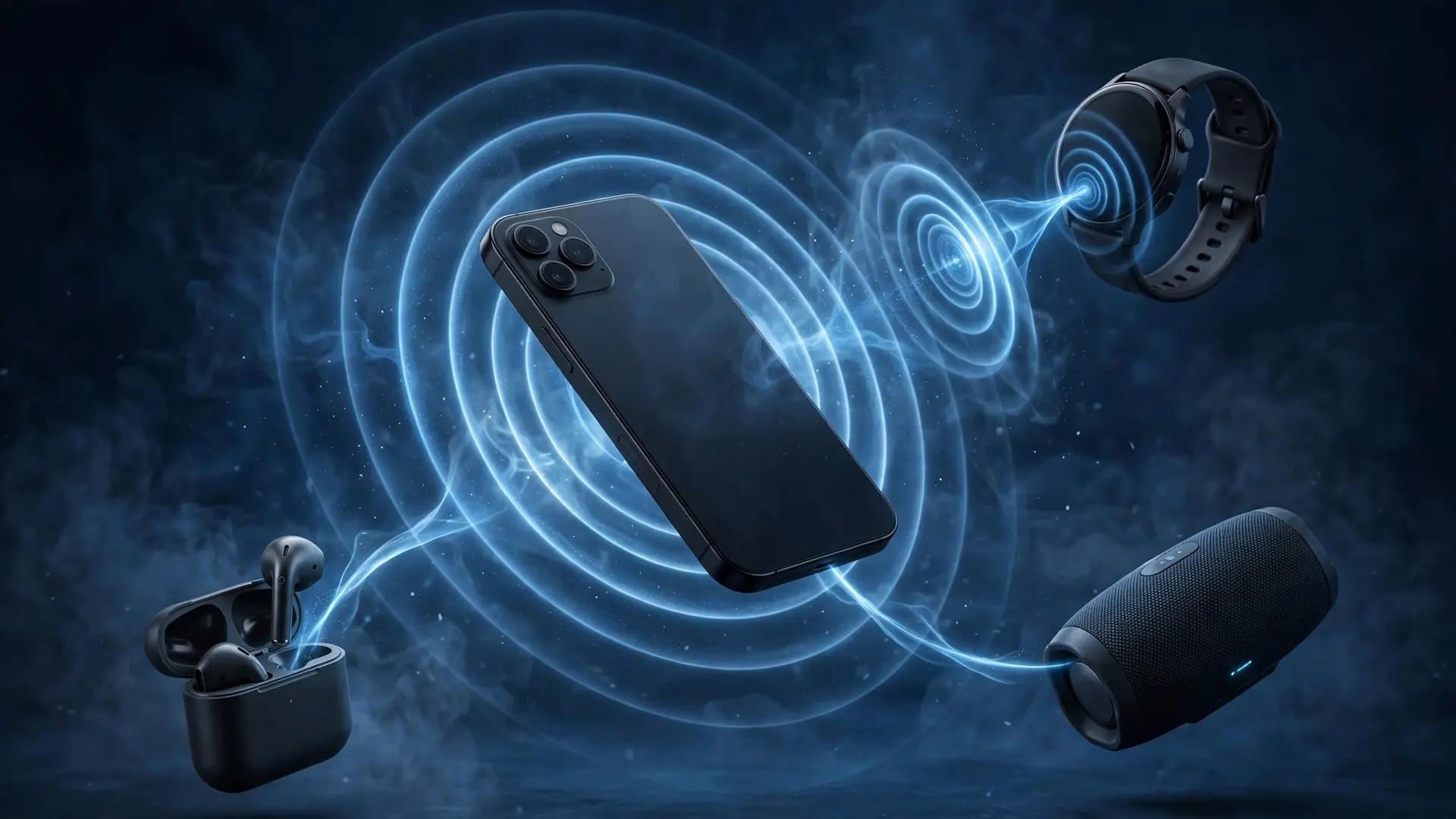
The fear around contactless payments is intuitive: if my card talks to the air, can't someone eavesdrop? The answer is built into the design. Because each tap generates a fresh cryptogram bound to that amount and that transaction counter, there is nothing static in the conversation to steal. A thief who records the radio exchange captures a code that has already been spent and can never be used again. Your actual card number is not part of what travels through the air in the first place. Phone wallets take this further with a technique called tokenization. When you add a card to Apple Pay or Google Wallet, the card issuer generates a Device Account Number — a token that looks like a card number and is stored on your phone alongside a private key. From then on, the merchant and the payment network see only the token, never your real card details. Tokenization, which you can read more about in our explainer on how encryption works, is the reason mobile wallets survive even a fully compromised merchant terminal: the stolen data is a random string with no value anywhere else. There is a related technology worth distinguishing here: QR payments, which encode payment details in a visual code your camera scans. They solve a similar "pay without touching" problem by a completely different mechanism — see how QR codes work for that half of the story. NFC's advantage is speed and its built-in cryptographic handshake, which is why it won the checkout lane.
How did the tap take over the world?
Contactless payments did not begin with smartphones. They began with subways. Hong Kong's Octopus card launched in September 1997 as a fare card for the territory's transit system, making it the world's second contactless smart card system after Korea's Upass. It succeeded for a brutally practical reason: in theory, transit turnstiles need each transaction to complete within 300 milliseconds to keep commuters moving — the MTR was pushing about 28 passengers through a gate every minute. The Octopus system spread from trains to convenience stores, ferries, parking, and even school attendance, and by 2016 it was used by 98 percent of Hong Kong residents aged 15 to 64, processing more than 14 million transactions worth over HK$180 million every single day. The idea of the tap spent the next decade spreading through card networks as Visa payWave and Mastercard PayPass. Then came the phone. Apple Pay launched in September 2014, pairing NFC with tokenization and the fingerprint sensor, and the combination finally made the tap feel native to everyday life. London's Oyster card, Sydney's Opal, and transit systems worldwide followed the Octopus playbook, and contactless became the default way to pay for a coffee in city after city. The technology behind it barely changed from the 1997 original — the same short-range radio, the same one-time cryptography, just miniaturized into the phone you were already carrying.
What are the limits and risks?
For all its cleverness, the tap has boundaries. Card networks set per-transaction contactless limits — below the threshold you just tap, above it the terminal asks for a PIN or another verification method. Those limits are the main reason a lost card is less dangerous than it looks: a thief gets a handful of small anonymous taps before the terminal starts demanding proof of identity. The realistic risks are mundane rather than cinematic. The "skimming" stories that occasionally go viral ignore the physics: at four centimeters of effective range, a thief would have to press a reader against your pocket without you noticing, and would still end up with nothing but unusable one-time codes. The more honest vulnerabilities live in the human layer — distracted users approving payments on phones with weak passcodes, or merchants whose systems leak metadata around the transaction. But the cryptography itself, defined by the EMV contactless specifications and executed on the chip inside your card, has held up remarkably well. That is the quiet marvel of the tap. It looks like the simplest possible interaction — a gesture, a beep — yet it contains a powered-up chip, a two-way radio negotiation, a one-time cryptographic signature, and a real-time authorization traveling from the checkout to your bank and back, all inside half a second. You never see any of it. You just get your coffee, which was the entire point.
Frequently asked questions
Can someone skim my card number by standing near me?
No. Contactless transactions transmit a one-time cryptogram, not your card number, and NFC only works within a few centimeters. A captured cryptogram is useless because it can never be spent twice.
How far does contactless payment range reach?
The optimum distance is about four centimeters or less, and the signal can never exceed ten centimeters. The terminal must be practically touching your card or phone.
Why do some contactless payments ask for a PIN?
Card networks set per-transaction contactless limits. Above the limit, the terminal asks for a PIN or another verification method as an extra layer of authentication.
Is Apple Pay safer than a physical contactless card?
Generally yes. Phone wallets add biometric or passcode authentication and tokenization, so the merchant never receives your real card number at all.