ENIAC and the Six Women Who Programmed It
ENIAC filled a room with nearly 18,000 vacuum tubes and was programmed by hand with cables and switches. How it worked, and the six women who first ran it.
Key takeaways
- ENIAC, built at Penn's Moore School for the US Army, had nearly 18,000 vacuum tubes, weighed 30 tons and could add 5,000 numbers a second.
- It could not store a program: every new problem was set up by running cables between units and setting switches, work that could take days.
- Its first programmers were six women from the Army's human computers: Kathleen McNulty, Jean Jennings, Betty Snyder, Marlyn Wescoff, Frances Bilas and Ruth Lichterman.
- The six were left out of ENIAC's 1946 press debut; after Kathy Kleiman revived their story, all six joined the Hall of Fame of Women in Technology International in 1997.
- In 1973 a federal judge invalidated the ENIAC patent, ruling that Eckert and Mauchly had derived the electronic digital computer from John Atanasoff's work.
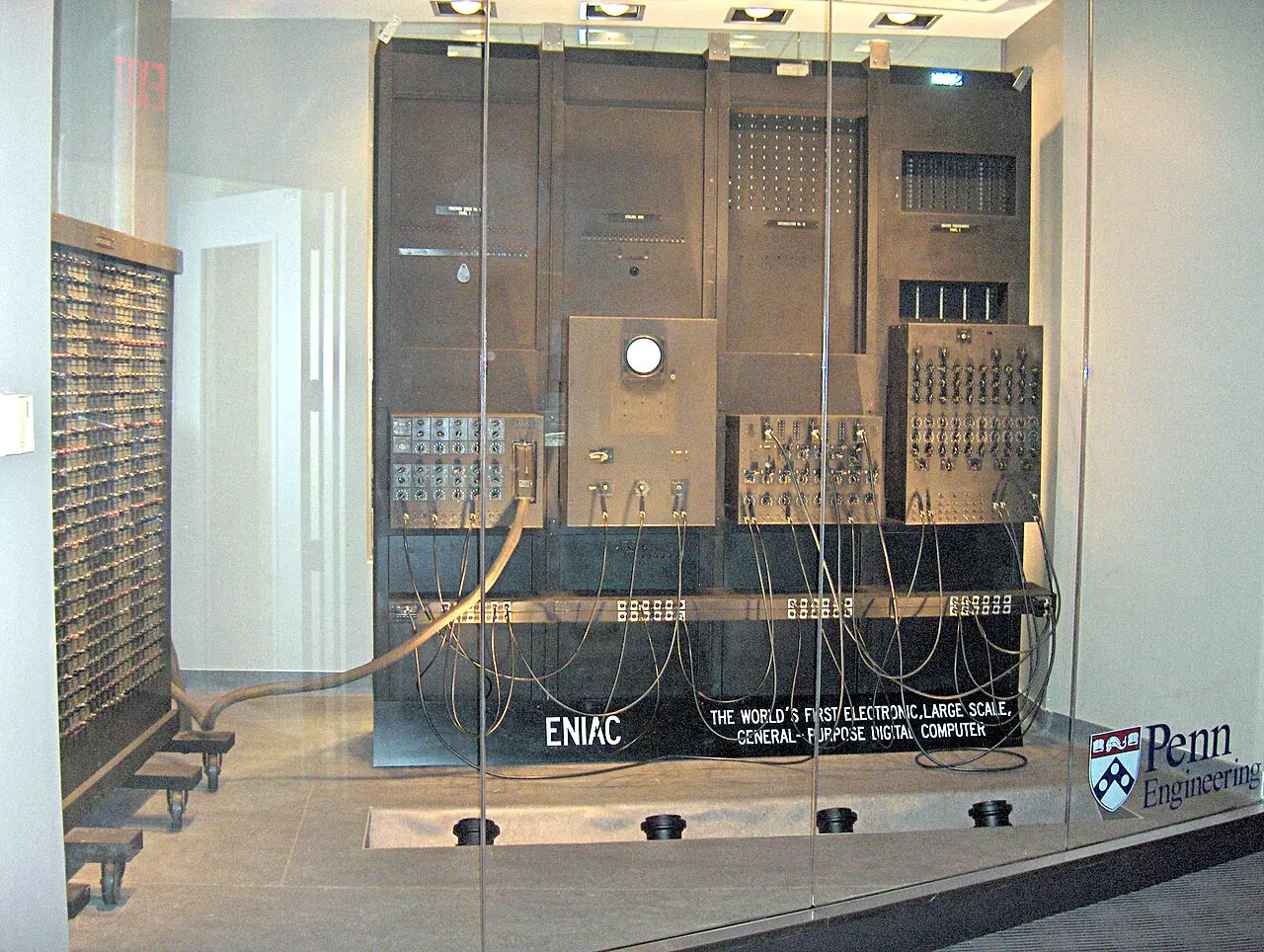
ENIAC was the first large, general-purpose electronic computer: a 30-ton machine of nearly 18,000 vacuum tubes, built at the University of Pennsylvania for the US Army and revealed to the public in February 1946. It had no keyboard and no software. Every problem it solved was set up by hand with cables and switches, and the first people to master that work were six women: Kathleen McNulty, Jean Jennings, Betty Snyder, Marlyn Wescoff, Frances Bilas and Ruth Lichterman. For decades almost nobody knew their names. When the Army unveiled its new "electronic brain", the engineers did the talking and the programmers were never introduced. Putting them back in the story took a curious student, a misidentified photograph and half a century.
Why did the US Army need ENIAC?
The Second World War ran on firing tables. Every new combination of gun and shell needed printed tables telling gunners how to aim, and each table demanded a long series of trajectory calculations. At the Army's Ballistic Research Laboratory, a close partner of Penn's Moore School of Electrical Engineering, about 100 human "computers" did that arithmetic by hand and on desk calculators. Most of them were women, many with mathematics degrees, because computing was classed as clerical work. The Army wanted something faster. John Mauchly proposed an all-electronic calculator in 1942, and with J. Presper Eckert as chief engineer, construction began in secret in 1943. Penn's engineering school says a ballistics calculation that took a person about 12 hours by hand took the finished machine around 30 seconds. When it was done, ENIAC filled a room of about 9 by 15 metres (30 by 50 ft) with some 40 panels arranged in a U. It drew 150 kilowatts through its own power lines and could add 5,000 numbers in a second. It also lost a vacuum tube every day or two, and its maintenance crews eventually learned to find and fix a fault in about 15 minutes. It arrived too late for the war. Instead, one of its first real jobs, late in 1945, came from Los Alamos: physicists Nicholas Metropolis and Stan Frankel used it for calculations tied to the hydrogen bomb, work whose details remain classified.
How did six women program a machine with no software?
ENIAC could not store a program. To change what it did, someone had to rebuild its logic physically: run cables between its units, set thousands of switches and prepare the punched-card equipment that fed it numbers. Planning and wiring a new problem could take days. That job went to six of the Army's human computers, picked by Herman and Adele Goldstine, who ran the laboratory's computing operation. There were no manuals and no programming languages. At first the women were not even cleared to see the machine, so they learned it from its blueprints and wiring diagrams, working out how each unit behaved. They chopped each trajectory problem into a long chain of small arithmetic steps and spread the work across the machine so that several operations could run at once. They also learned to repair it. Knowing the hardware that intimately, they could trace a wrong answer to a failed tube or a bad connection, and sometimes they crawled inside the machine to replace one. Jean Jennings Bartik later said the programmers could diagnose problems "as well as, if not better than, the engineer."
Why were the ENIAC programmers forgotten?
The machine's public debut set the pattern. Penn announced ENIAC on 14 February 1946, and The New York Times carried it on the front page the next day. At the demonstration, Arthur Burks of the ENIAC team showed reporters the machine adding 5,000 numbers in a second and computing a trajectory faster than a real shell would fly. The women whose set-ups made those feats possible were neither introduced nor mentioned in the coverage. Programming was seen as subprofessional work, and ENIAC was presented, and reported, as a brain that thought for itself. Their story came back almost by accident. In the mid-1980s Kathy Kleiman, then a Harvard undergraduate, found an old black-and-white photograph of two women at ENIAC in a library book. A historian told her they were probably models, "refrigerator ladies" hired to pose beside the machine. Kleiman kept digging and identified them as Jean Jennings Bartik and Frances Bilas Spence, two of the original six. She recorded long interviews with four of the programmers, lobbied for them to be included in ENIAC's 50th anniversary in 1996, and later produced a documentary, The Computers (2013), and a book, Proving Ground (2022). In 1997, half a century after the unveiling, all six joined the Hall of Fame of Women in Technology International.
Their later careers show what had been overlooked. Jennings Bartik went on to program the BINAC and UNIVAC I computers, and Snyder Holberton wrote the first program built to sort large files of data. The last of the six, Frances Bilas Spence, died in 2012.
Was ENIAC really the first computer?
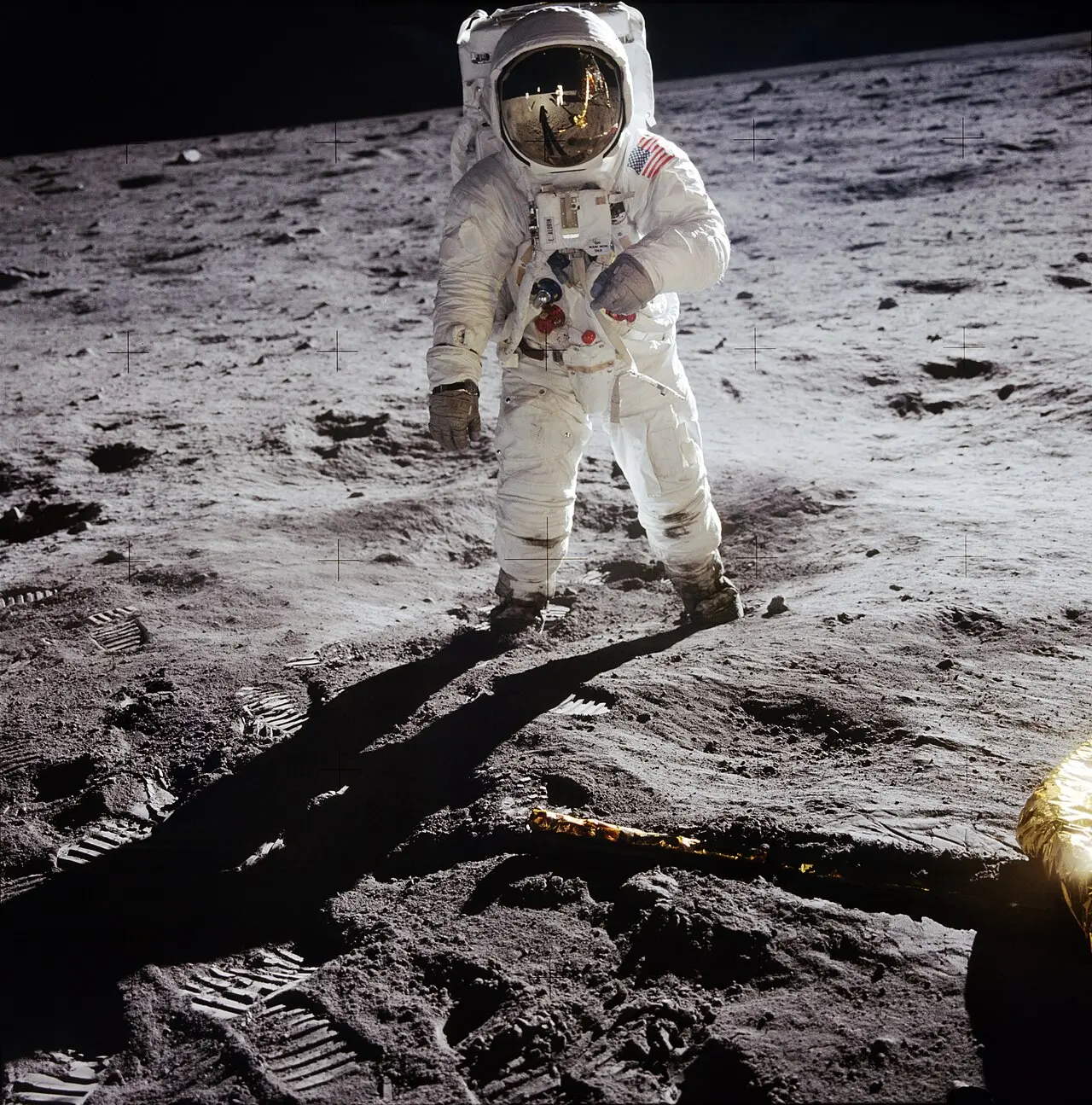
It depends on the adjectives. Britain's Colossus machines at Bletchley Park, designed by the Post Office engineer Tommy Flowers, were working from early February 1944. They were electronic, but they were built for one purpose, attacking the German Lorenz cipher, and although ten were eventually built, their existence stayed secret until 1975. ENIAC took the public credit by default. Relay-based machines of the same era, such as Harvard's Mark II, remembered for the moth found in one of its relays, clicked along at mechanical rather than electronic speed. The legal answer is messier still. Eckert and Mauchly patented their work, but in October 1973 federal judge Earl Larson ruled the ENIAC patent invalid in Honeywell v. Sperry Rand. He found that the two men had not first invented the automatic electronic digital computer but had derived it from John Vincent Atanasoff, who had built an electronic computing device at Iowa State with his graduate student Clifford Berry. How much Mauchly actually borrowed is still debated. The machine itself kept working. After moving to the Army's Aberdeen Proving Ground in Maryland, it was reconfigured in 1947-48 so that programs could be set up as coded instructions rather than webs of cables, and the historians behind the book ENIAC in Action argue that a Los Alamos simulation it then ran was the first modern computer program ever executed. ENIAC was decommissioned in 1955. Four of its 40 panels now stand behind glass at Penn. ENIAC is usually remembered as hardware: the tubes, the tons, the room. Yet it could do nothing until someone translated a problem into its language of cables and switches, and the first people to do that well were six women hired to do arithmetic. Two decades later, a team led by another woman, Margaret Hamilton, wrote the software that helped land Apollo 11 on the Moon. The history of computing was always a history of programmers, even when the photographs left their names out.
Frequently asked questions
What was ENIAC built to do?
It was built for the US Army to speed up artillery firing tables, which human computers at the Ballistic Research Laboratory were calculating by hand. It was finished too late for the war, and one of its first jobs was a classified calculation for Los Alamos linked to the hydrogen bomb.
Who programmed ENIAC?
Six women recruited from the Army's human computers: Kathleen McNulty, Jean Jennings, Betty Snyder, Marlyn Wescoff, Frances Bilas and Ruth Lichterman. They learned the machine from its blueprints and wiring diagrams and set up each problem with cables and switches.
Was ENIAC the first computer?
It was the first large, general-purpose electronic computer made public. Britain's Colossus was electronic and working by 1944 but built only for code-breaking and kept secret until 1975, and a 1973 court ruling credited John Atanasoff with key earlier ideas.