Why Concorde Stopped Flying, and Why Nothing Replaced It
Concorde crossed the Atlantic at Mach 2 for 27 years, then lost to fuel costs, sonic booms and a fatal crash. Why it retired in 2003, and what may come next.
Key takeaways
- Only 20 Concordes were built and just 14 carried fare-paying passengers, seven each with British Airways and Air France, after airlines dropped options on 74 aircraft.
- Concorde cruised at about Mach 2, some 17 to 18 km up; air friction heated its nose to about 127°C and stretched the airframe by as much as 25 cm.
- A typical London to New York flight took a little under three and a half hours; the record, set on 7 February 1996, was 2 hours 52 minutes 59 seconds.
- A 1973 US rule banned civil supersonic flight over land, confining Concorde's boom to the oceans; in July 2026 the FAA proposed replacing it with a noise limit.
- NASA's X-59, which first went supersonic in June 2026, is designed to make a thump of about 75 perceived decibels, against more than 100 for Concorde's boom.
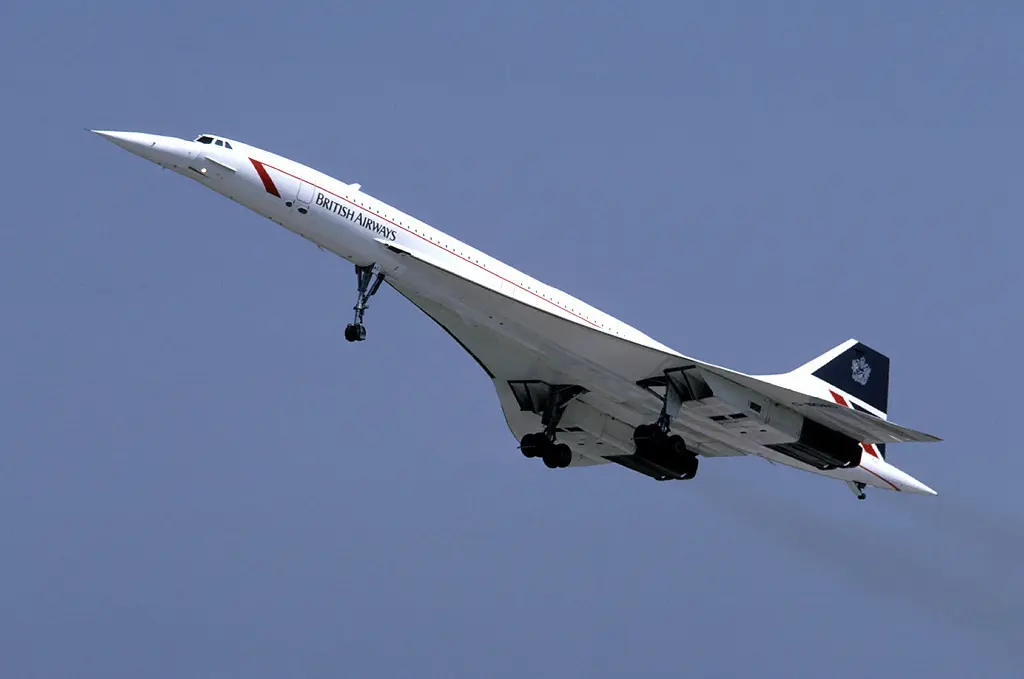
Concorde stopped flying in 2003 because a small, ageing fleet had become too costly to keep in the air. Passenger revenue was falling, maintenance bills were rising and the manufacturer decided to stop supporting the aircraft, so British Airways and Air France retired it within months of each other. Nothing has replaced it because the problems that boxed it in from the start, a thirst for fuel and a sonic boom that kept it over the oceans, have never been solved at a price airlines will pay. That is an odd fate for one of the most accomplished machines of the twentieth century. For 27 years Concorde carried paying passengers at Mach 2. A typical London to New York crossing took a little under three and a half hours, against about eight for an ordinary jet. On 7 February 1996, helped by the jet stream, British Airways' G-BOAD flew from New York to London in 2 hours 52 minutes 59 seconds, a record for a commercial aircraft that still stands.
What made Concorde such a hard machine to build?
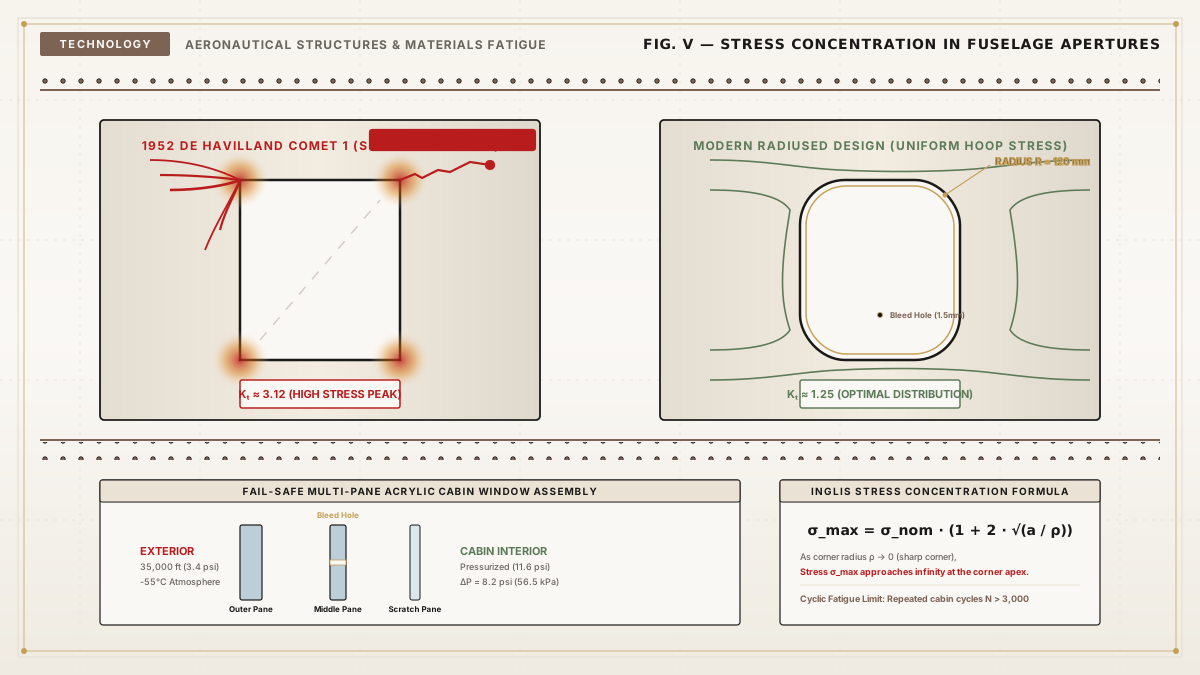
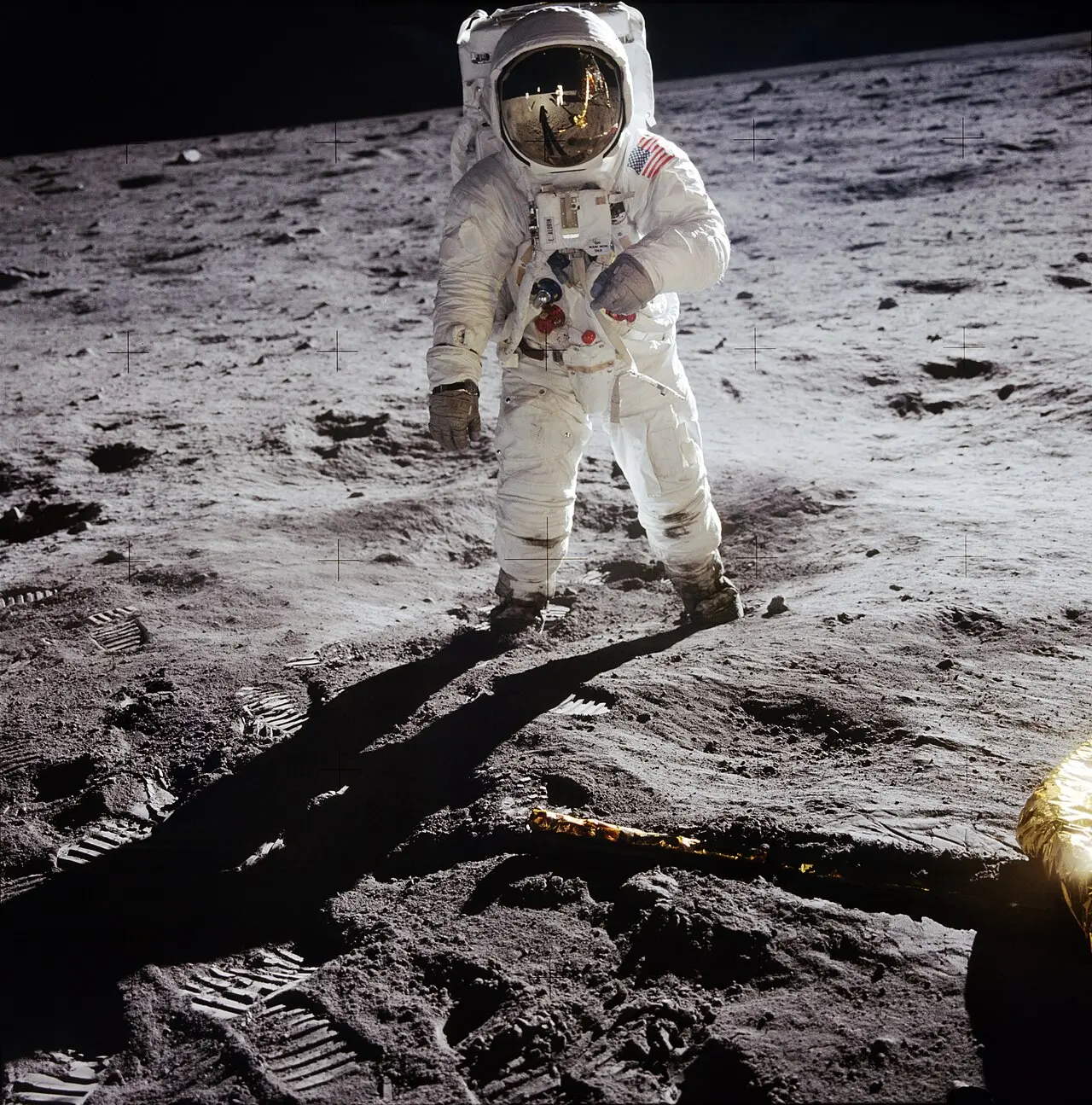
Concorde began as a pact between two governments. In November 1962 Britain and France agreed to share the cost and the risk, and the British Aircraft Corporation and France's Sud Aviation, later reorganised as Aérospatiale, set about building it. The first prototype lifted off on 2 March 1969, at Toulouse, the same year Apollo 11 landed on the Moon. The performance target was brutal. Concorde cruised at about Mach 2, roughly 2,180 km/h (1,350 mph), some 17 to 18 kilometres (55,000 to 60,000 ft) up. Flying that fast heats an aircraft, because air piles up against the nose and rubs along the skin. The nose reached about 127°C (260°F), and the whole airframe grew by as much as 25 centimetres (10 in) in flight, then shrank back as it cooled. Like every pressurised airliner designed after the de Havilland Comet disasters, its fuselage had to survive thousands of pressure cycles; Concorde added a heat cycle on top of each one.
Almost everything else followed from the speed. The slender delta wing was efficient at Mach 2 but flew nose-high when slow, so the nose was hinged to droop for takeoff, landing and taxiing, giving the pilots a view of the runway. Four turbojets, each producing more than 38,000 pounds of thrust, used afterburners for takeoff and for the push through the sound barrier. Before accelerating to supersonic speed, the crew moved roughly 20 tons of fuel into tail and wing tanks to keep the aircraft balanced. All that machinery served a narrow cabin of 100 seats in British Airways service and 92 at Air France.
Why did the airlines walk away?
On paper, demand looked healthy. At one stage 16 airlines, many of them American, held options on 74 Concordes. Then the operating costs came into focus. On 31 January 1973, Pan Am said it would not take up its options, and TWA quickly did the same; other carriers drifted away after them. It is often said that the oil crisis killed Concorde's order book. The timing says otherwise. The American cancellations came months before the Arab-Israeli war of October 1973 and the oil shock that followed it. Soaring fuel prices made a weak business case worse, but the airlines had already done their arithmetic. Concorde, after all, burned fuel faster than a Boeing 747 while carrying a fraction of the passengers. Noise did the rest. Washington had abandoned its own supersonic airliner in 1971, when the House of Representatives voted 215 to 204 to cut its funding. In 1973 the United States banned civil supersonic flight over its territory, a rule aimed squarely at the sonic boom. Concorde could fly supersonic only over water, which shut it out of overland routes such as New York to Los Angeles. Protests also delayed its landing rights in New York, and it did not begin flying to JFK until 1977. In the end only 20 Concordes were built, six of them prototypes and development aircraft. The remaining 14 were the only ones to carry fare-paying passengers, seven with British Airways and seven with Air France.
What finally grounded Concorde?
Concorde had been carrying passengers for 24 years when Air France Flight 4590, a charter taking cruise passengers from Paris to New York, crashed into a hotel at Gonesse shortly after takeoff on 25 July 2000. All 109 people on board and four on the ground were killed. French investigators traced the disaster to a 43-centimetre strip of titanium alloy, dropped on the runway five minutes earlier by a departing Continental Airlines DC-10. One of Concorde's tyres ran over it and burst. A 4.5-kilogram chunk of rubber hit the underside of the wing, and the energy of the impact, passed on through the fuel in a nearly full tank, ripped a large piece out of the tank. The leaking fuel ignited.
The fleet was grounded. Engineers lined fuel tanks with Kevlar-reinforced rubber, fitted new Michelin tyres designed to shed only small fragments if damaged, and armoured vulnerable wiring. Concorde returned to New York on 7 November 2001, two months after the September 11 attacks had shaken the airline industry. On 10 April 2003, British Airways and Air France announced the end. Revenue was falling, maintenance costs were climbing, and the manufacturer was withdrawing support for an aircraft whose parts were getting harder to find. Air France's final commercial Concorde service came on 31 May; British Airways' last commercial flights landed at Heathrow on 24 October 2003. On 26 November, G-BOAF made the last Concorde flight of all, to Filton near Bristol, the airfield where it had been built.
Why is there still no supersonic airliner?
Physics is the first obstacle. Anything flying faster than sound drags a shock wave behind it, and on the ground that wave arrives as a boom along the whole flight path, not as a single bang. NASA puts Concorde's boom at more than 100 perceived-loudness decibels. Its X-59 research jet, built with Lockheed Martin's Skunk Works, is designed so its shock waves reach the ground as a softer thump of about 75 decibels on the same scale. The X-59 first flew on 28 October 2025 and went supersonic on 5 June 2026, reaching about Mach 1.1 at 13,200 metres (43,400 ft) over California. NASA plans to fly it over several US communities and share how people perceive the thump with regulators. The rulebook is moving too. A June 2025 executive order told the Federal Aviation Administration to repeal the 1973 ban, and on 2 July 2026 the agency formally proposed a replacement: supersonic flight over land would be allowed if the boom reaching the ground did not exceed an overpressure of 0.11 pounds per square foot. It is still only a proposal. The second obstacle is money. A supersonic airliner has to sell enough expensive seats to cover the kind of fuel bill that dogged Concorde from the start. Boom Supersonic's XB-1 demonstrator broke the sound barrier over the Mojave Desert on 28 January 2025, and the company says its planned Overture airliner will cruise at Mach 1.7, slower than Concorde. Whether any new design can beat Concorde on cost per seat is the question every supersonic project still has to answer. Concorde was never really beaten by its engineering. Its designers solved problems of heat, balance and visibility that no airliner had faced, and the aircraft flew at twice the speed of sound for 27 years. What beat it was everything around the aircraft: fuel prices, a boom that kept it over water, a fleet too small to share its costs, and finally a crash that grounded it for more than a year. Whatever succeeds it will have to start where Concorde was weakest, with the noise it makes on the ground and the fuel it burns per seat, and only then think about speed.
Frequently asked questions
Why did Concorde stop flying?
Falling passenger revenue, rising maintenance costs and the manufacturer's decision to stop supporting the fleet led British Airways and Air France to announce its retirement in April 2003. British Airways flew the last commercial services on 24 October 2003.
What caused the Concorde crash in 2000?
A titanium strip dropped on the runway by another jet burst a tyre on Air France Flight 4590. Tyre debris hit the wing, the shock ruptured a fuel tank and the leaking fuel caught fire, killing 113 people.
Will supersonic passenger flights come back?
Not yet. NASA's X-59 is testing whether a supersonic jet can make a quiet thump instead of a boom, and the FAA has proposed allowing quiet supersonic flight over land, but no final rule exists and no supersonic airliner is in service.