The Siege of Baghdad: How 1258 Changed the World
In February 1258 Hulagu Khan's Mongols destroyed Baghdad, ending the Abbasid Caliphate and the House of Wisdom — yet the invaders built a new seat of learning.
Key takeaways
- Hulagu Khan's Mongol army besieged Baghdad for about 12 days in early 1258; the city surrendered on February 10 and was sacked for a week.
- The sack destroyed the House of Wisdom, the great Abbasid library where Greek, Persian, and Indian works had been translated and expanded for centuries.
- Caliph al-Musta'sim was executed by being rolled in a carpet and trampled by horses, since Mongol custom forbade spilling royal blood on the earth.
- Just a year later the Mongols founded the Maragha Observatory in Persia, relocating surviving scholars — the same empire that burned Baghdad became a patron of science.
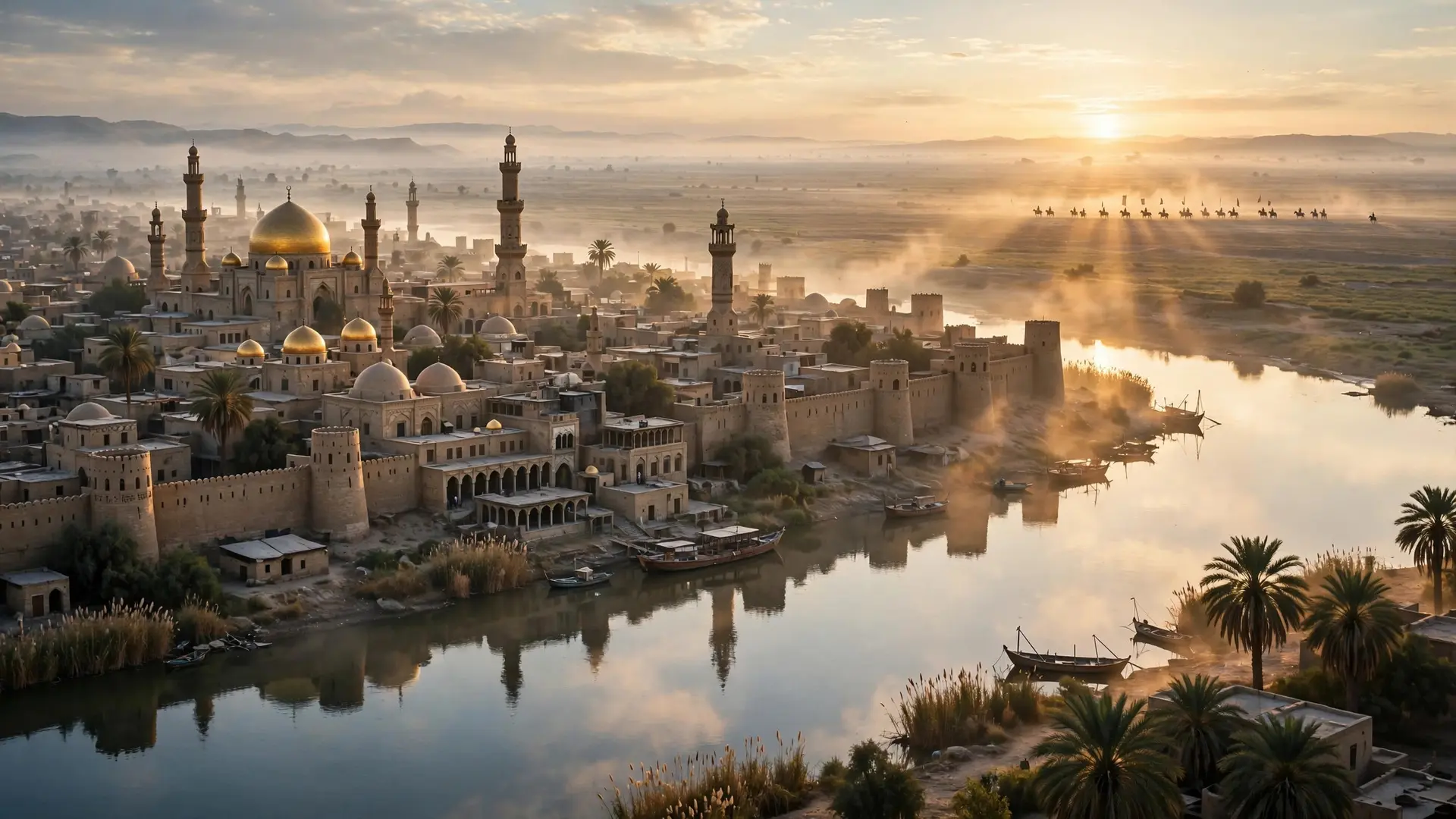
On February 10, 1258, the gates of Baghdad opened to Hulagu Khan's Mongol army, and one of the world's great cities began a week of destruction that medieval chroniclers would describe for generations. The Abbasid Caliphate, founded in 750 and the symbolic heart of Sunni Islam for five centuries, was extinguished in days. Its caliph was trampled to death inside a carpet. Its libraries were emptied into the Tigris. But the most interesting thing about the fall of Baghdad isn't the destruction. It's what the Mongols built the year after — and what that says about the familiar story that 1258 was simply the end of the Islamic Golden Age. The truth is stranger: the men who burned the House of Wisdom immediately hired its surviving scholars.
What Made Baghdad Worth Taking?
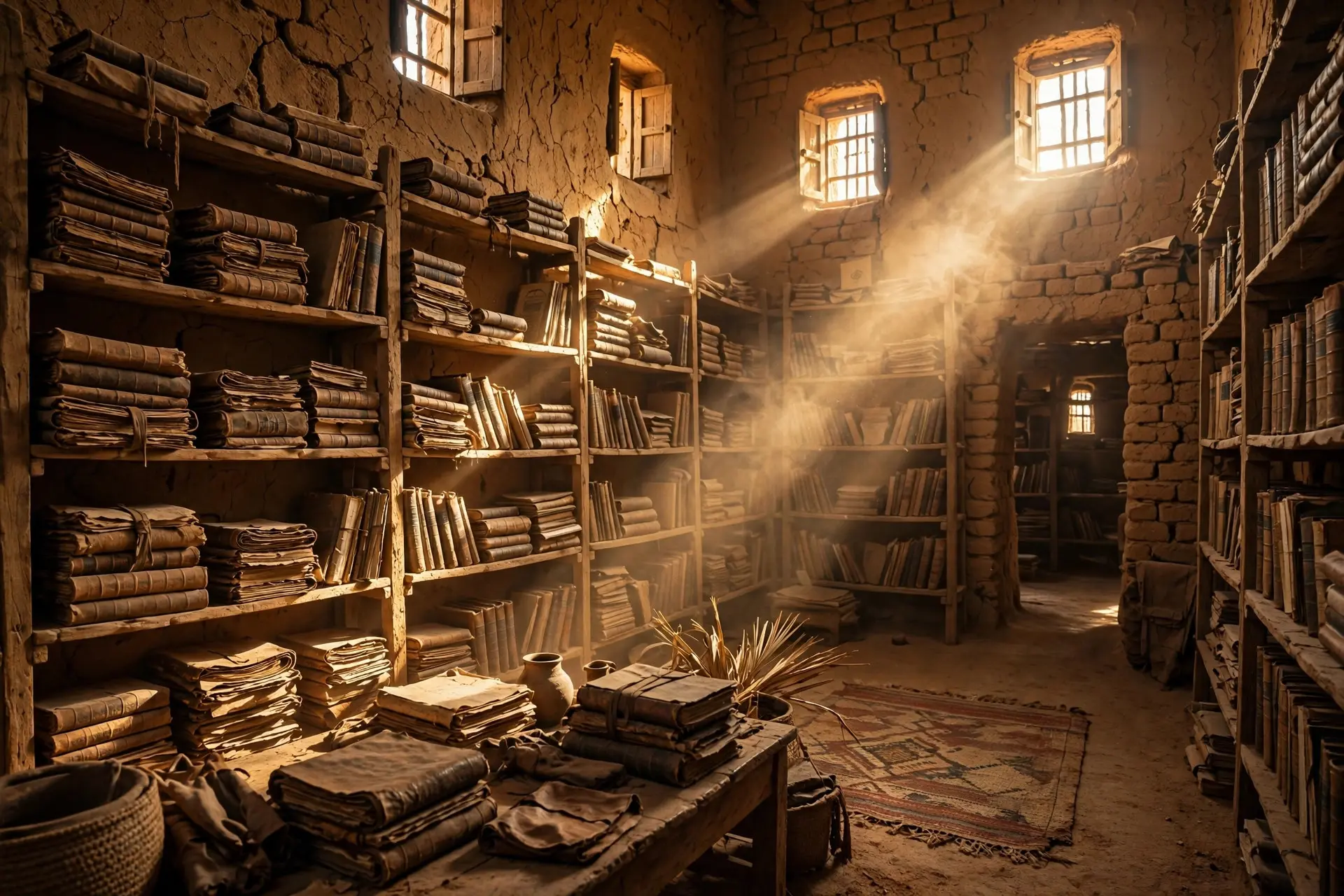
By 1258, Baghdad was past its peak — a 13th-century visitor would not have mistaken it for the million-strong metropolis of the Abbasid golden years — but it remained the spiritual and intellectual capital of the Islamic world, a rich and cultured city of libraries, schools, and scholars. The caliphs' temporal power had withered under Turkic and Mamluk warlords, yet the institution's prestige was intact, and the city still drew learned men from across the known world. The prize at its center was the House of Wisdom — Bayt al-Hikmah — founded in Baghdad during the eighth century under the Abbasid caliphs. It was less a single library than a whole intellectual institution: a translation house, research center, and repository where works from ancient Greece, Persia, India, and China were rendered into Arabic, then built upon in mathematics, astronomy, medicine, and philosophy. It was here that scholars like al-Khwarizmi, the father of algebra, worked. Destroying it meant striking at the memory of a civilization. For more on how other great libraries were lost, see The Library of Alexandria.
How Did the Siege Unfold?
Hulagu Khan — grandson of Genghis Khan — began his western campaign in Iran, destroying the Nizari Ismaili strongholds, including Alamut, before turning on Baghdad. The Mongol army began its advance in November 1257, and the siege commenced around January 29, 1258.
Caliph al-Musta'sim had fatally misjudged the situation. He believed the Muslim world would rally to Baghdad's defense and that the Mongols would not dare attack Islam's spiritual center, so he refused Hulagu's terms and refused to prepare. When the Abbasid army sallied out to meet the Mongols, it was surrounded and slaughtered. Baghdad then held out for about twelve days — but against Mongol siege engineering, its walls could not hold. What followed was not just a conquest but a cataclysm. The Mongols sacked the city for roughly a week: hundreds of thousands of residents were killed, according to contemporary accounts, palaces and libraries were burned, and the Tigris was said to run black with the ink of destroyed manuscripts. The caliph himself was executed in a manner designed to honor a Mongol taboo — the Mongols believed that spilling royal blood on the earth could bring disaster, so al-Musta'sim was rolled in a carpet and trampled by horses. For another account of a city overwhelmed by siege, read about The Fall of Constantinople in 1453.
What Was Actually Lost?
The losses were real and staggering — the House of Wisdom and Baghdad's other great libraries were gone, along with countless works of philosophy, mathematics, astronomy, medicine, and literature accumulated over five centuries. The ink-black Tigris became the emblem of the event, repeated by chroniclers on all sides. But modern historians urge caution with the legend. Some of what was destroyed likely survived in copies held in other cities — Cairo, Cordoba, and the Persian centers had their own great collections, and many Arabic works lived on in Latin and Hebrew translations made in earlier centuries. The "bridge of books" image — that so many volumes were thrown into the river that a horse could walk across them — reads as much like wartime propaganda as reporting. Medieval numbers for the dead, running into the hundreds of thousands, are similarly treated with skepticism.
What cannot be doubted is the symbolic wound. The Abbasid Caliphate, which had ruled since 750, ended in violence. A shadow caliphate would later be set up in Cairo under Mamluk protection, but the institution never recovered its former prestige.
The Paradox: The Mongols Built an Observatory
Here is where the familiar story breaks down. In 1259 — the very next year — the same Mongol regime founded the Maragha Observatory in northwestern Persia, under the direction of the great scholar Nasir al-Din al-Tusi. Surviving scholars and manuscripts were relocated there, and it became one of the most important astronomical research centers of the medieval world. This wasn't a contradiction; it was Mongol policy. The Mongols were voracious consumers of useful knowledge — they patronized astronomers, physicians, and engineers across their empire, from Karakorum to Tabriz. The Ilkhanate, the Mongol state Hulagu founded across Persia and Iraq, integrated Mongol rule with Persian bureaucracy and eventually converted to Islam, becoming a bridge for East-West trade along the great Silk Road network. So 1258 didn't end Islamic science. It moved it — from a Baghdad-centric golden age to a Persian and Central Asian one. Major advances followed under later rulers: the Timurid observatory at Samarkand, the medical and mathematical works of Cairo, the star catalogs of Ulugh Beg. The "end of the Golden Age" is a date that looks tidy in textbooks, but the golden age, like the ink in the Tigris, dispersed rather than vanished.
Why 1258 Still Echoes
The siege of Baghdad is remembered as a civilizational rupture — and it was. It was the high point of Mongol conquest in the Middle East, the end of a five-century-old caliphate, and a demonstration of what happens when a rich, proud city refuses to negotiate with an army it cannot defeat. Al-Musta'sim's miscalculation is studied to this day as a warning about the difference between prestige and power. But the deeper lesson may be the one the Mongols themselves embodied a year later at Maragha: destruction and learning are not opposites in history. They travel together. For another story of knowledge preserved against destruction, see The Timbuktu Manuscripts. Baghdad's fall changed the world not only because a great city was destroyed, but because the map of civilization was redrawn — and redrawn again — by the very hands that drew the first line.
Frequently asked questions
How long did the siege of Baghdad in 1258 last?
The Mongol siege began around January 29, 1258 and lasted roughly 12 to 13 days before Baghdad's gates opened on February 10. The city was then sacked for about a week.
Was the House of Wisdom completely destroyed?
Yes — Baghdad's libraries, including the House of Wisdom, were burned and their manuscripts thrown into the Tigris. Chroniclers wrote that the river ran black with ink, though some scholars view that detail as wartime exaggeration.
Did Islamic science really end in 1258?
Not quite. The sack was devastating, but within a year the Mongols founded the Maragha Observatory and employed Muslim scholars, and major advances continued under later Islamic rulers — the 'end of the Golden Age' is an oversimplification.
Who was Hulagu Khan?
Hulagu Khan was a grandson of Genghis Khan and founder of the Ilkhanate, the Mongol state that ruled Persia, Iraq, and parts of the surrounding region after the conquest.