Why Does Lake Natron Seem to Turn Animals to Stone?
Lake Natron's brine mummifies dead birds and bats, encrusting them like statues. The true story of the 'petrified' animals is stranger than myth.
Key takeaways
- Animals at Lake Natron are mummified and mineral-encrusted, not petrified — feathers and flesh are still visible on the carcasses.
- The lake's pH has been measured as high as 10.5, nearly as alkaline as ammonia, and its water can reach 60 degrees Celsius.
- Natron salts dehydrate bodies the way ancient Egyptians preserved their dead, preventing decomposition.
- No one knows exactly how each animal dies; birds likely crash into the mirror-like surface and succumb to the caustic brine.
- Lake Natron hosts 1.5 to 2.5 million lesser flamingos — about 75% of the species' global population.
No animal turns to stone on contact with Lake Natron's water. What really happens is stranger and slower: birds and bats that die in the caustic Tanzanian brine are mummified by natron salts, then gradually encrusted with mineral deposits until their hollowed remains look like statues. The lake does not petrify the living — it preserves the dead so perfectly that they seem frozen mid-flight.
A lake that mummifies instead of rotting
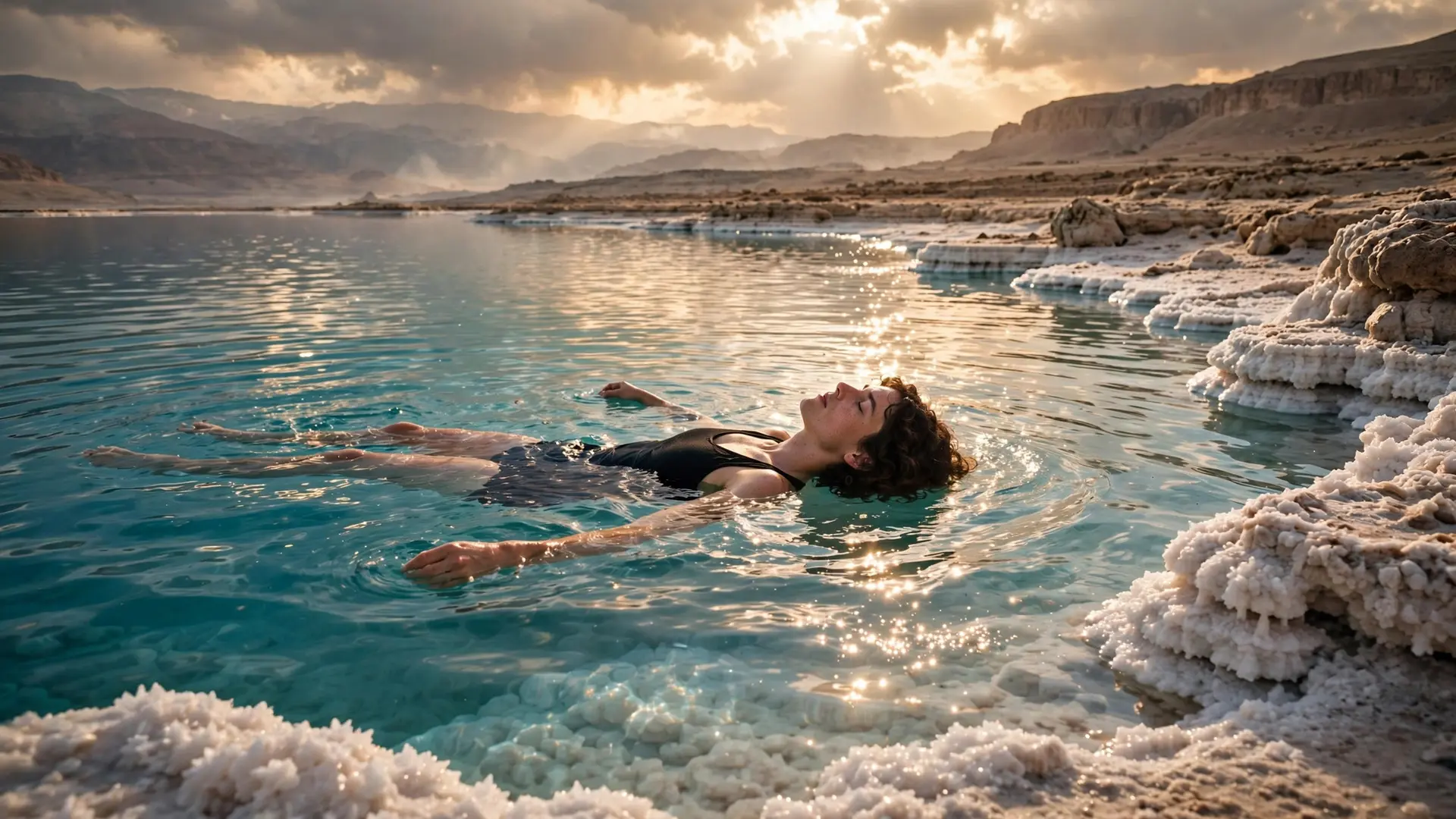
Lake Natron has no outflow. Water flows in from mineral-rich hot springs and rivers, and the only way out is evaporation under the equatorial sun. Every dissolved salt stays behind, concentrating year after year — the same mechanism that makes the Dead Sea so extraordinarily salty, and the reason Natron's chemistry has grown so extreme. The salts arrive from an unusual source. The active volcano Ol Doinyo Lengai — "Mountain of God" in the Maasai language — rises at the lake's edge, and molten mixtures of sodium and calcium carbonate salts reach the basin through faults and more than twenty hot springs, according to NASA's Earth Observatory. The dominant mineral is natron, a natural blend of sodium carbonate and baking soda, joined by relatives like trona. Natron is a desiccant: it absorbs moisture and fat. When an animal's body lies in the brine, the salts draw the water out of its tissues instead of letting it rot — the same chemical principle ancient Egyptians exploited to preserve their dead. What washes up on Natron's shoreline is not stone but a mummified carcass, its feathers and flesh still visible, slowly acquiring a crust of mineral deposits that gives it a statue-like finish. The preservation takes time; nothing about it is instant.
The chemistry of one of Earth's harshest lakes
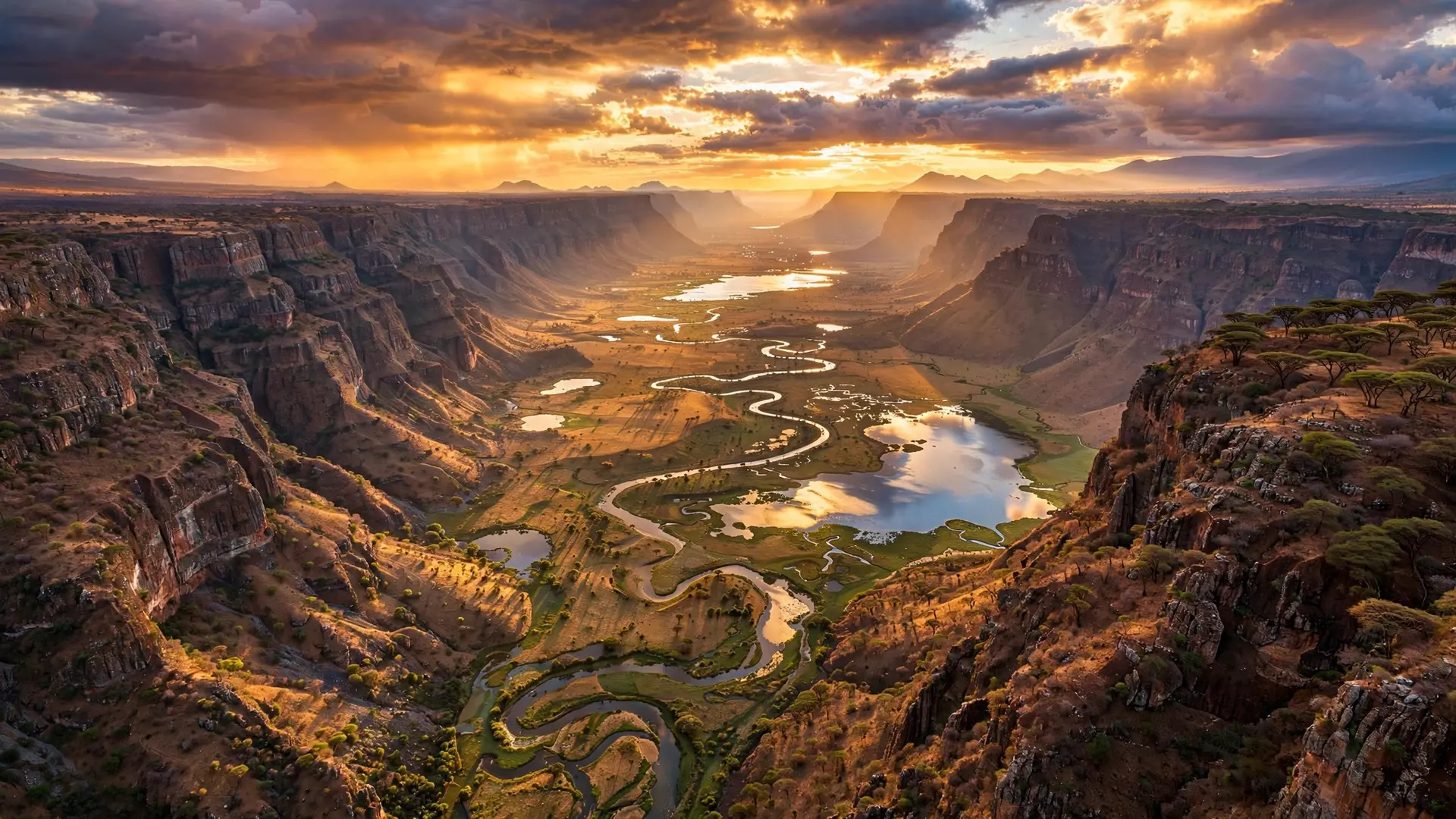
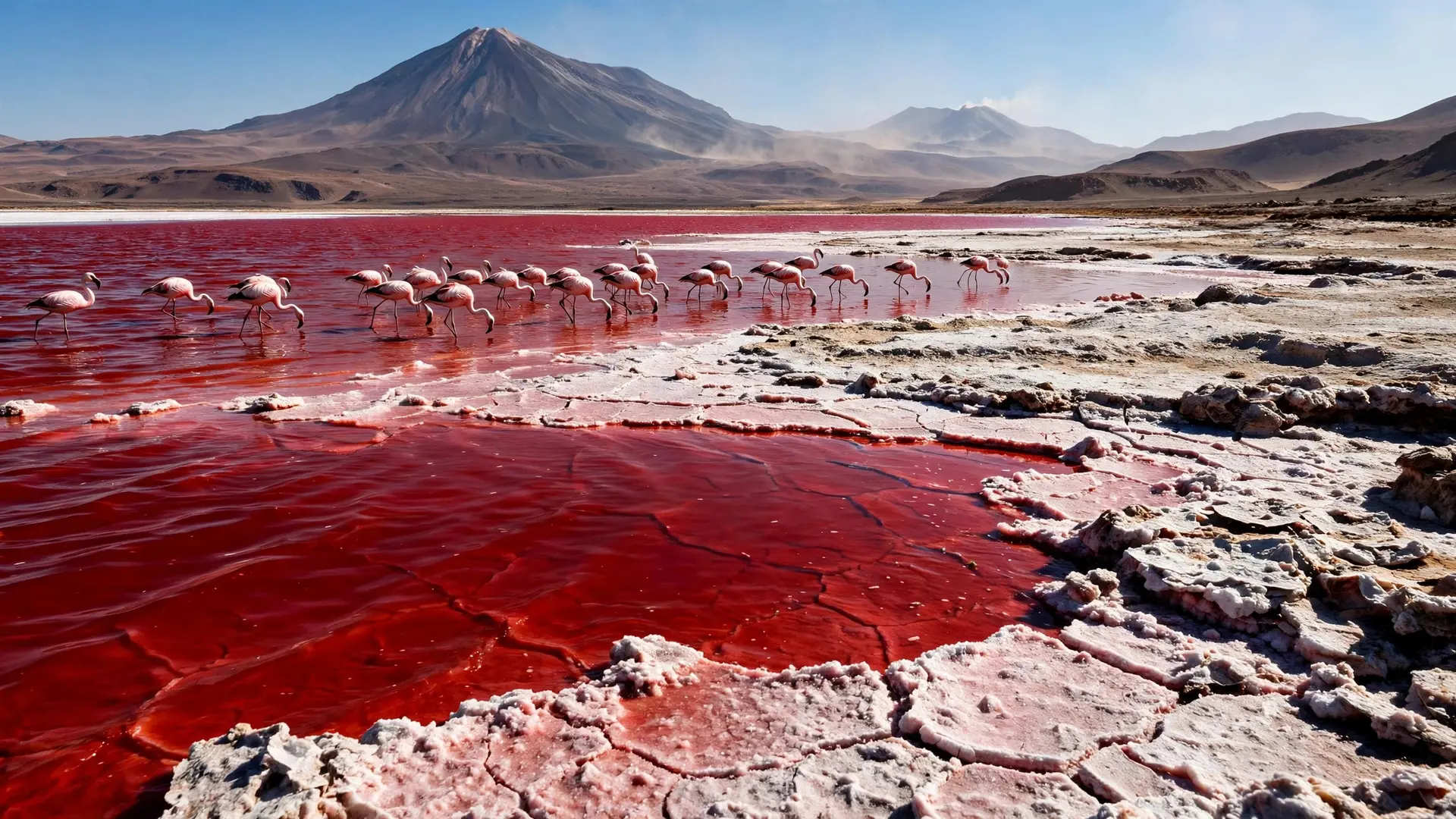
Lake Natron sits in northern Tanzania near the Kenyan border, in the Eastern branch of the East African Rift Valley — a landscape of escarpments and volcanic mountains that reads like the planet's geology laid bare. The basin is a Ramsar wetland of international significance, with water arriving mainly through the Southern Ewaso Ng'iro River and mineral-rich hot springs, and the lake itself is nowhere more than about three metres deep. The numbers are startling. The water's pH hovers around 10 and has been measured as high as 10.5 — nearly as alkaline as ammonia — with readings up to 12, comparable to household bleach, recorded in some surveys. Temperatures can reach 60 degrees Celsius, hot enough to cause serious burns within seconds. Photographer Nick Brandt, who made the lake famous, found the water caustic enough to strip the ink off his Kodak film boxes; even a small cut in the skin makes contact intensely painful. For a human, a quick dip would not be fatal, but swimming is effectively out of the question. The lake's eerie blood-red colour comes from salt-loving microbes — haloarchaea and cyanobacteria — thriving in the brine. From above, during the dry season, Natron looks less like water and more like a vast, cracked, rust-coloured wound in the rift floor.
Nick Brandt's photographs and the myth they built
In 2011, Brandt was in Tanzania shooting his book Across the Ravaged Land when he came across the calcified animals along Natron's shoreline. He found birds, bats, a dove, even a fish eagle — bodies washed up, desiccated and chemically preserved. He then did what photographers do: he posed them. Setting the bodies in lifelike positions on branches and rocks, he created the series The Calcified. When the images spread across the internet in 2013, they carried a sensational implication — a lake that turns living things to stone on touch.
Brandt himself was careful about what he claimed. The bodies were unaltered by him — he told Smithsonian magazine, "All I did was position them" — and in his book he admitted that no one knows for certain exactly how the animals die. The leading explanation is mundane and grim: migrating birds crash into the lake's glassy, mirror-like surface, seemingly fooled into flying through what looks like empty sky. A helicopter pilot fell for the same illusion in a 2007 crash, and the survivor reported that the water burned his eyes. Once in the brine, the caustic water and heat finish the job, and the dry season washes the preserved bodies ashore — Brandt reported finding around a hundred dead finches along a single fifty-yard stretch.
The flamingos that belong here
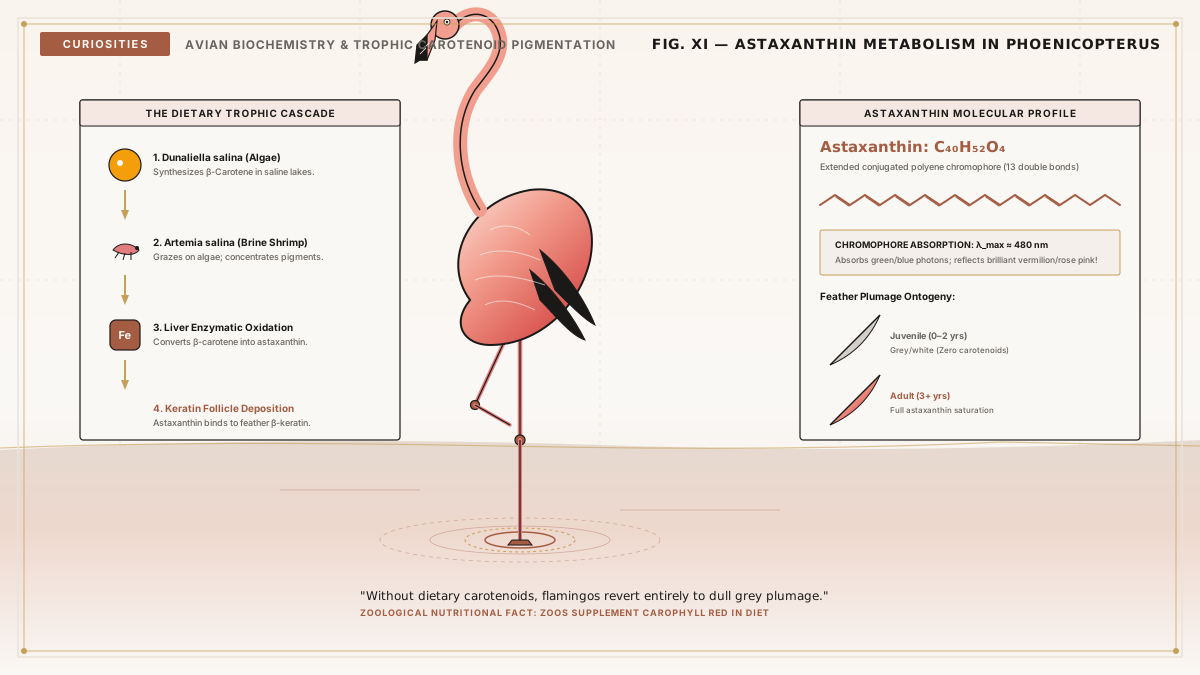
For all its hostility, Natron is one of the most important bird habitats on Earth. The lake is the only regular breeding site in East Africa for the lesser flamingo, which nests on the crusty surface during the dry season. BirdLife International puts the breeding population at 1.5 to 2.5 million birds — roughly three-quarters of the entire species' global population. The lesser flamingo is classified as Near Threatened, which makes this one harsh lake the stronghold of a vulnerable species. The flamingos succeed precisely because of the extremes. The brine blooms with Spirulina algae, an abundant food supply, while the caustic water and searing shallows keep predators away from the nests. A handful of other specialists cling on too: three species of alkaline-tolerant tilapia near the freshwater inflows, plus the salt-loving microbes that paint the water red. Natron's flamingo spectacle is the gentler mirror image of other flamingo gatherings, like why flamingos stand on one leg — a reminder that these birds are built for waters most animals cannot survive.
Not stone, not instant
The myth persists because it is more exciting than the truth, but the truth is better. Lake Natron does not reach out and petrify the living. It is a terminal soda lake in a volcanic rift, where evaporation has concentrated caustic salts to the edge of habitability — and where the dead, instead of rotting, are dried, preserved, and slowly dressed in minerals. What Brandt photographed was chemistry, not sorcery: mummies mistaken for statues, in a lake that kills with alkalinity and heat and then refuses to let its victims decay. The real marvel is not the stone birds, but the millions of flamingos that have turned this furnace of a lake into a nursery.
Frequently asked questions
Does Lake Natron turn animals to stone on contact?
No. Animals that die in the caustic brine are desiccated and mummified by natron salts, and mineral deposits slowly build up around the remains until they look like statues. Feathers and flesh remain visible, and no one has observed instant petrification.
Why is Lake Natron so alkaline?
The lake has no outflow, so evaporation concentrates salts washed in from mineral-rich hot springs fed by the nearby Ol Doinyo Lengai volcano. The result is a soda brine dominated by sodium carbonate — natron — with pH measured as high as 10.5.
How did the famous photos of the 'calcified' animals happen?
Photographer Nick Brandt found desiccated birds and bats washed up on the shoreline in 2011 while working on his book Across the Ravaged Land. He posed the preserved bodies in lifelike positions for his series The Calcified, which went viral in 2013.
What animals actually live at Lake Natron?
A few specialists: alkaline-tolerant tilapia near the freshwater inflows, salt-loving microbes that turn the water blood-red, and lesser flamingos — 1.5 to 2.5 million of them, roughly 75% of the species' global population, breed on the lake's crusty surface.