Bermuda Triangle: Fact and Fiction Behind the Mystery
Records show the Bermuda Triangle loses no more ships or planes than other busy seas. Here is how a 1964 magazine story and a 1974 bestseller built the legend.
Key takeaways
- NOAA finds no evidence that ships and planes vanish in the Bermuda Triangle more often than in other large, busy seas, and the US Coast Guard sees no special hazard there.
- Writer Vincent Gaddis coined the name in a 1964 Argosy cover story, and Charles Berlitz's 1974 bestseller turned it into a global legend.
- Librarian Larry Kusche's 1975 check of original records found storms left out of the stories and about half the 'mysteries' far outside the Triangle.
- Flight 19 was lost in December 1945 after its leader mistook the northern Bahamas for the Florida Keys and led his bombers out to sea.
- Ordinary hazards explain the losses that do happen: hurricanes, the turbulent Gulf Stream, shallow reefs and very heavy traffic.
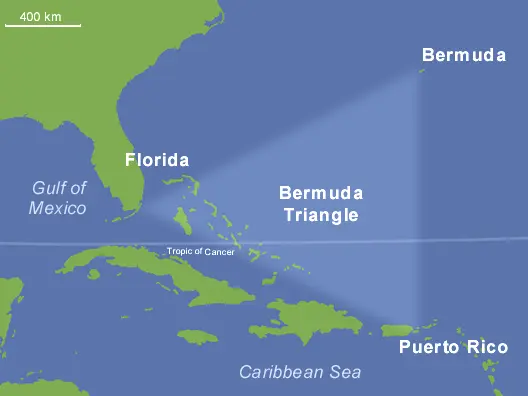
The Bermuda Triangle is not more dangerous than any other busy patch of ocean. NOAA, the US Coast Guard and the insurance market Lloyd's of London all reject the idea that its waters are unusually deadly. The mystery was largely assembled in print in the decade after 1964, out of real accidents stripped of their explanations. None of that means the area is harmless. The stretch of the western Atlantic usually drawn between Florida, Bermuda and Puerto Rico sits on a hurricane track, borders one of the ocean's most powerful currents and carries enormous amounts of traffic. Accidents happen there, as they do on any crowded sea. What the records fail to show is anything strange about how often they happen.
Is the Bermuda Triangle really more dangerous than other seas?
Start with the map, because no official one exists. The US Board on Geographic Names does not recognise "Bermuda Triangle" as a name, and NOAA notes that neither the Navy nor the Coast Guard defines its boundaries. Writers have been free to stretch the triangle to cover whichever incidents they wanted to include. NOAA's verdict is plain. It finds no evidence that mysterious losses are any more frequent in the Triangle than in other large, heavily used areas of ocean. The Coast Guard does not recognise the area as a special hazard to ships or planes, and says its reviews of losses there have never identified any extraordinary factor. Lloyd's, which would feel a genuine cluster of sinkings in its own accounts, does not regard the waters as especially risky. Independent rankings agree. When the conservation group WWF listed the world's most dangerous waters for shipping in 2013, the worst hotspots were the North Sea and British Isles, the South China Sea and East Indies, and the eastern Mediterranean together with the Black Sea. The Bermuda Triangle did not make the cut.
How did the Bermuda Triangle legend begin?
The name is barely 60 years old. Vincent Gaddis coined it in a 1964 cover story for Argosy, a pulp magazine, built around the loss of a flight of Navy bombers in 1945. Gaddis gave a scattered set of accidents one shape on the map and a name that sounded like a verdict.
A decade later Charles Berlitz turned the idea into an industry. His 1974 book The Bermuda Triangle became a bestseller reportedly sold in the millions and translated into dozens of languages. Berlitz offered readers exotic explanations rather than weather reports, and the Triangle settled into paperbacks, television documentaries and films. Each new telling leaned on the last. Dramatic details passed from book to book, and almost nobody went back to the original reports to check them.
What really happened to Flight 19 and the USS Cyclops?
Two cases anchor nearly every Triangle book. Both are tragedies, and both have explanations that need nothing supernatural. On 5 December 1945, a flight of five TBM Avenger torpedo bombers with 14 men aboard left Naval Air Station Fort Lauderdale for a navigation training exercise over the Bahamas. The flight leader, Lieutenant Charles Taylor, became convinced he was over the Florida Keys when he was actually over the northern Bahamas. Steering by that mistaken picture, he led the flight away from land as the weather deteriorated and daylight faded, and the bombers are presumed to have run out of fuel and ditched. A PBM Mariner flying boat sent to look for them, with 13 men aboard, vanished too. The crew of a merchant ship, the SS Gaines Mills, reported seeing an explosion and then an oil slick. The Navy's board of investigation first blamed Taylor. After his family protested, the finding was amended to "causes or reasons unknown", a bureaucratic compromise that later writers treated as an admission of mystery. The heavier loss came earlier. In March 1918 the Navy collier USS Cyclops left Barbados for Baltimore with more than 10,000 tons of manganese ore and roughly 300 people aboard, running on one of her two engines. She was never seen again, and no wreck has been found, so her exact fate is unknown. But an overloaded ship with engine trouble, crossing open ocean in wartime, does not need an exotic explanation for sinking.
What did Larry Kusche find when he checked the records?
The most thorough answer to the legend came from a library. Larry Kusche, a pilot working at the reference desk of Arizona State University's library, was swamped by student requests about the Triangle in the early 1970s. He decided to trace every famous incident back to its earliest legitimate source, reading contemporary newspaper reports on microfilm and writing to Lloyd's of London, the US Navy and the Coast Guard. His 1975 book, The Bermuda Triangle Mystery—Solved, showed the mystery falling apart on contact with evidence. Many supposedly mysterious losses had happened in storms, sometimes hurricanes, that the popular books never mentioned. Others left no trace in any contemporary record, so there was no proof they had happened at all. Kusche later wrote that about half of the supposedly unsolved cases had happened far from the Triangle, a few closer to Newfoundland than to Bermuda. His conclusion was that the legend was "a manufactured mystery", sustained by sloppy research and errors copied from author to author.
Why do ships and planes still get into trouble there?
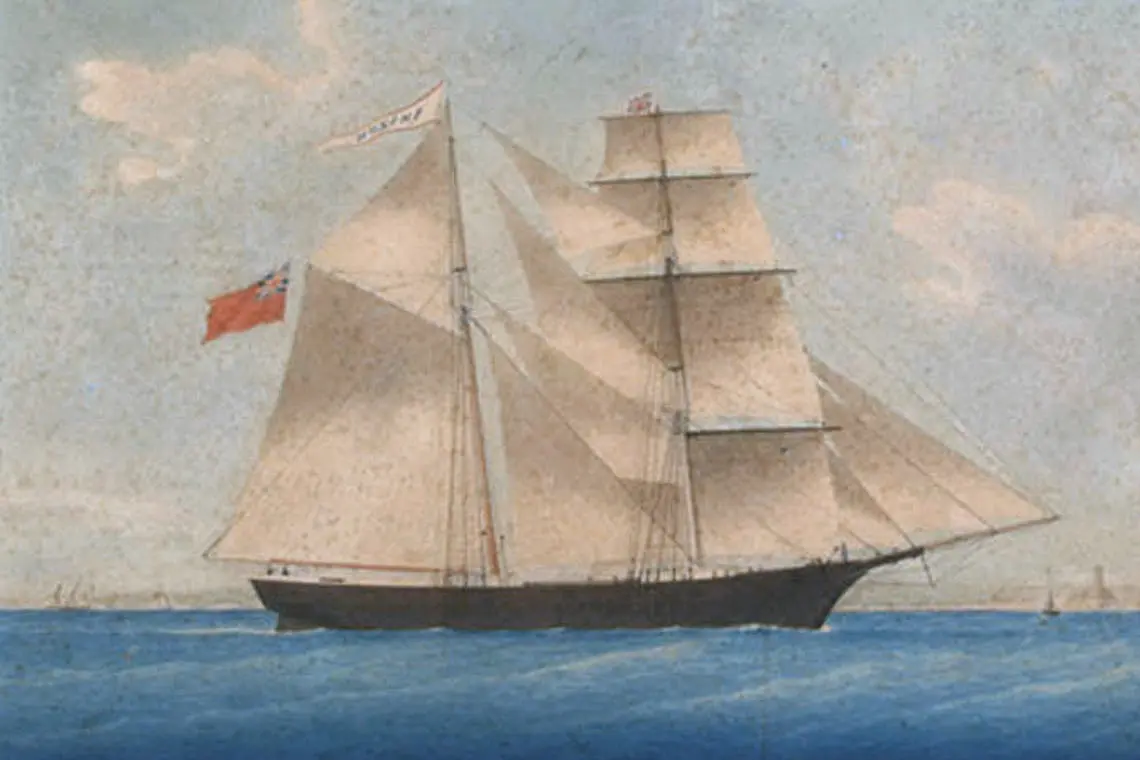
The real hazards are ordinary ones. NOAA notes that the region lies in the path of most Atlantic tropical storms and hurricanes, which sank many ships before modern forecasting. The Gulf Stream, which runs along the Triangle's western edge, can whip up sudden squalls and abrupt shifts in the weather. Around the Bahamas and the Caribbean islands, reefs and shoals rise close to the surface, unforgiving of any navigational slip. Then there is the compass. NOAA mentions some evidence that in parts of the area a magnetic compass points to true north instead of magnetic north. That sounds eerie, but it only means the usual correction between the two is close to zero, something every trained navigator allows for. The line where that happens is not even fixed: it drifts as Earth's magnetic field changes, the same slow shift that is carrying the magnetic north pole toward Siberia. Finally, there is traffic. The waters off Florida and the Bahamas carry cargo ships, cruise liners, fishing boats, private yachts and light aircraft in huge numbers. More journeys produce more accidents in total, even when the risk of any single journey is no higher than elsewhere. The Bermuda Triangle is a lesson in how a story can outrun its sources. Put the storms back into the reports, return each wreck to the place it actually happened, and the pattern disappears. The Atlantic does hold genuine puzzles, and the abandoned Mary Celeste still divides historians, but real sea mysteries are solved, or left open, one ship at a time.
Frequently asked questions
Is the Bermuda Triangle really more dangerous than other seas?
No. NOAA says there is no evidence that disappearances happen there more often than in any other large, well-travelled area of ocean, and the US Coast Guard does not treat it as a special hazard.
Who came up with the Bermuda Triangle?
Writer Vincent Gaddis coined the name in a 1964 cover story for Argosy magazine. Charles Berlitz's 1974 book, a bestseller reportedly sold in the millions, made the legend famous.
What happened to Flight 19?
Five Navy Avenger bombers carrying 14 men were lost on a training flight on 5 December 1945 after their leader became disoriented and the weather worsened. A flying boat sent to search for them was also lost, and a passing ship reported an explosion and an oil slick.
Sources
- What is the Bermuda Triangle?, NOAA National Ocean Service
- Bermuda Triangle - Location, Disappearances, Flight 19, HISTORY
- The Bermuda Triangle Mystery Delusion: Looking Back after Forty Years, Skeptical Inquirer
- Flight 19 the Lost Avengers, NAS Fort Lauderdale Museum
- South China Sea, Mediterranean and North Sea are shipping accidents hotspots, WWF
- USS Cyclops: What Happened to the Navy Ship That Vanished in 1918?, FORFOXS