Why Is Arica Called the Driest City on Earth?
Arica in northern Chile averages just 0.76 millimetres of rain a year, yet 260,000 people live there. Cold ocean water, high pressure and the Andes keep it dry.
Key takeaways
- Arica averages just 0.76 millimetres of rain a year, measured at its airport weather station.
- The World Meteorological Organization's longest recorded dry spell is Arica's 172 months without rain, from October 1903 to January 1918.
- Cold Humboldt Current water, a subtropical high-pressure system and the Andes together shut off Arica's rain.
- Coastal fog called camanchaca brings moisture even when rain does not fall, sustaining desert plants and wildlife.
- Despite the dryness, Arica is a mild, sunny port city of about 260,000 people, not a scorching furnace.
Arica, a port city in the far north of Chile, averages just 0.76 millimetres of rain a year. That is less than a millimetre of water falling from the sky across twelve months, in a city of roughly 260,000 people that sits right beside the Pacific Ocean. The title it carries, the driest city on Earth, is really a title about measured rainfall in an inhabited place, and the story behind it explains how a seaside city can stay almost rainless for years at a time. The first thing to clear up is what the number means. The 0.76-millimetre average comes from the weather station at Arica's airport, and it describes rain, not all moisture. Arica does get fog, and fog matters enormously here. But as far as rain gauges are concerned, the city is about as dry as a settled place gets. Some years pass without any measurable rain at all.
How can a coastal city get almost no rain?
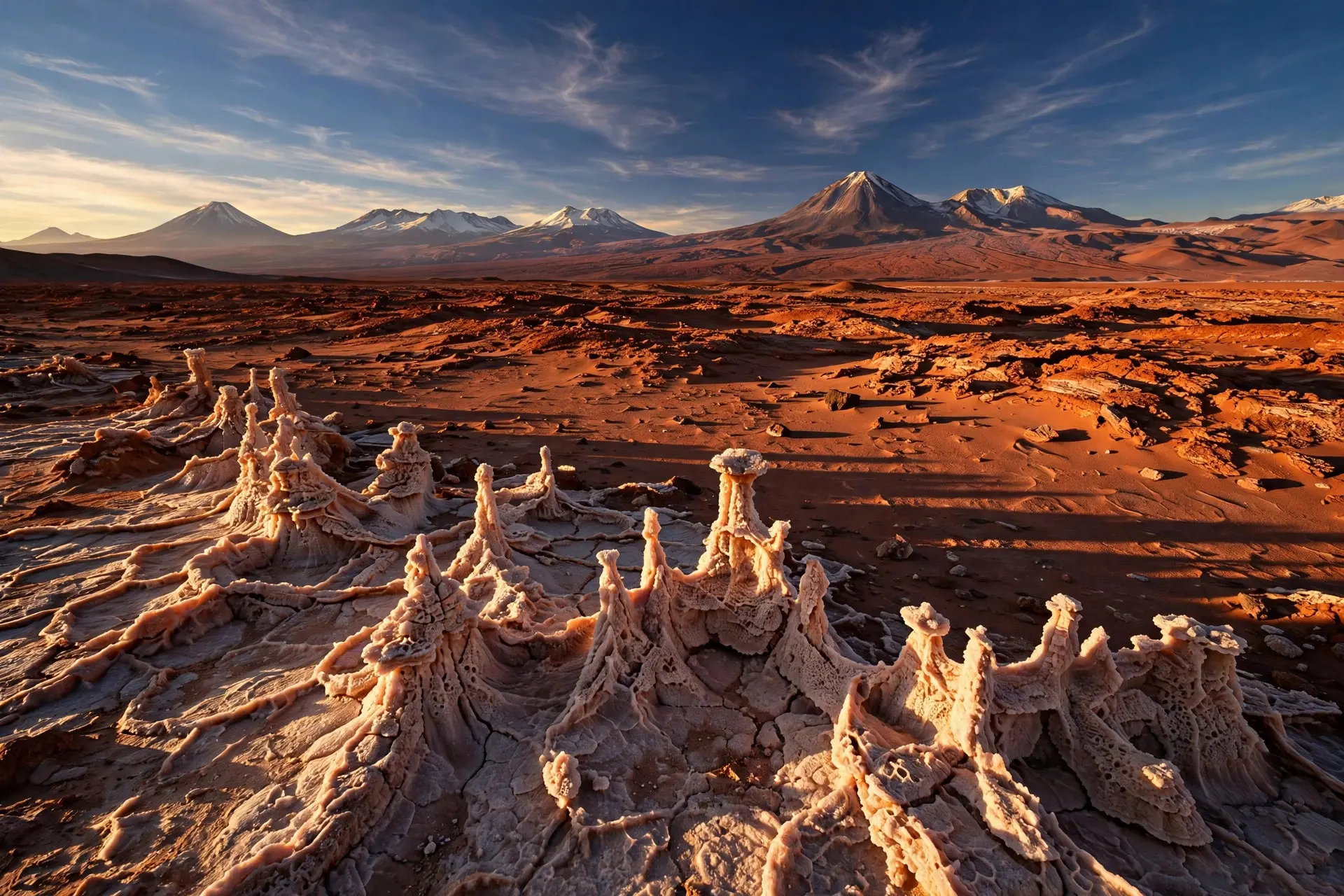
Arica's dryness is not one cause but three, stacked on top of each other. The first is the ocean itself. The Humboldt Current carries cold water northward along South America's Pacific coast, chilling the air above it. Cold air holds little water vapour and, crucially, it does not rise easily. Without rising air, clouds struggle to form, and without clouds there is no rain. Instead of downpours, the coast gets a low blanket of fog. The second cause sits overhead. A subtropical high-pressure system parks above the region for much of the year, and sinking air under high pressure warms as it descends, which further discourages cloud formation. The result is the clear, sunny sky that Arica is known for: more than 300 days of sunshine a year, according to local guides. The third cause is the mountains. To the east, the towering Andes block moist air travelling from the Amazon basin, creating a rain shadow. To the west, the lower coastal range intercepts what little moisture drifts in from the Pacific. Arica is caught between the two, in a double rain shadow where air arrives already wrung dry. NASA's Earth imagery of the region makes the same point in visual terms: green, wet Amazon forest gives way to brown desert as the air crosses the Andes, and some parts of the Atacama are touched by rain only a few times a century.
What does 0.76 millimetres actually look like?
It looks like a record that has stood for more than a century. According to the World Meteorological Organization, the longest sustained dry period ever recorded is Arica's own: 172 months, from October 1903 to January 1918, without a drop of rain. That is more than fourteen years in which the city's rain gauges stayed empty. The wider desert sets an even starker context. Guinness World Records notes that parts of the Atacama's hyper-arid core have no record of rainfall since observations began about 500 years ago. The desert as a whole typically receives only 10 to 15 millimetres of precipitation a year on average, most of it as condensation from coastal fog rather than rain. In that company, Arica's 0.76 millimetres is not an outlier produced by a faulty gauge. It is the low end of a region that is dry almost everywhere, with Arica standing out because it is a city, not an empty stretch of gravel. That distinction matters for the title itself. Arica is the driest inhabited place on Earth by rainfall, not the driest patch of ground. The town of Quillagua, also in northern Chile, averages about 0.5 millimetres a year, even less than Arica. But Quillagua is a small desert town, while Arica is a substantial city, and it is the combination of almost no rain and a large, settled population that makes Arica's case so striking.
How do a quarter of a million people live there?
They do not live on rain, and the city does not pretend otherwise. Arica draws its water from rivers and sources in the high Andes inland, where rainfall and snowmelt are far more generous, and channels it down to the coast. It is a reminder that a city's water supply and its local rainfall are two different things: one is a matter of climate, the other of engineering and geography. The climate itself helps. Arica's nickname is the City of Eternal Spring, and it is unusually well earned. Unlike many desert cities, Arica seldom suffers extreme heat. Daytime temperatures generally range between about 15 and 25 degrees Celsius, with an average annual temperature of about 18.8 degrees, and the ocean keeps nights mild as well. Residents get desert dryness without desert furnace conditions, which is one reason the city works as a beach destination as well as a working port.
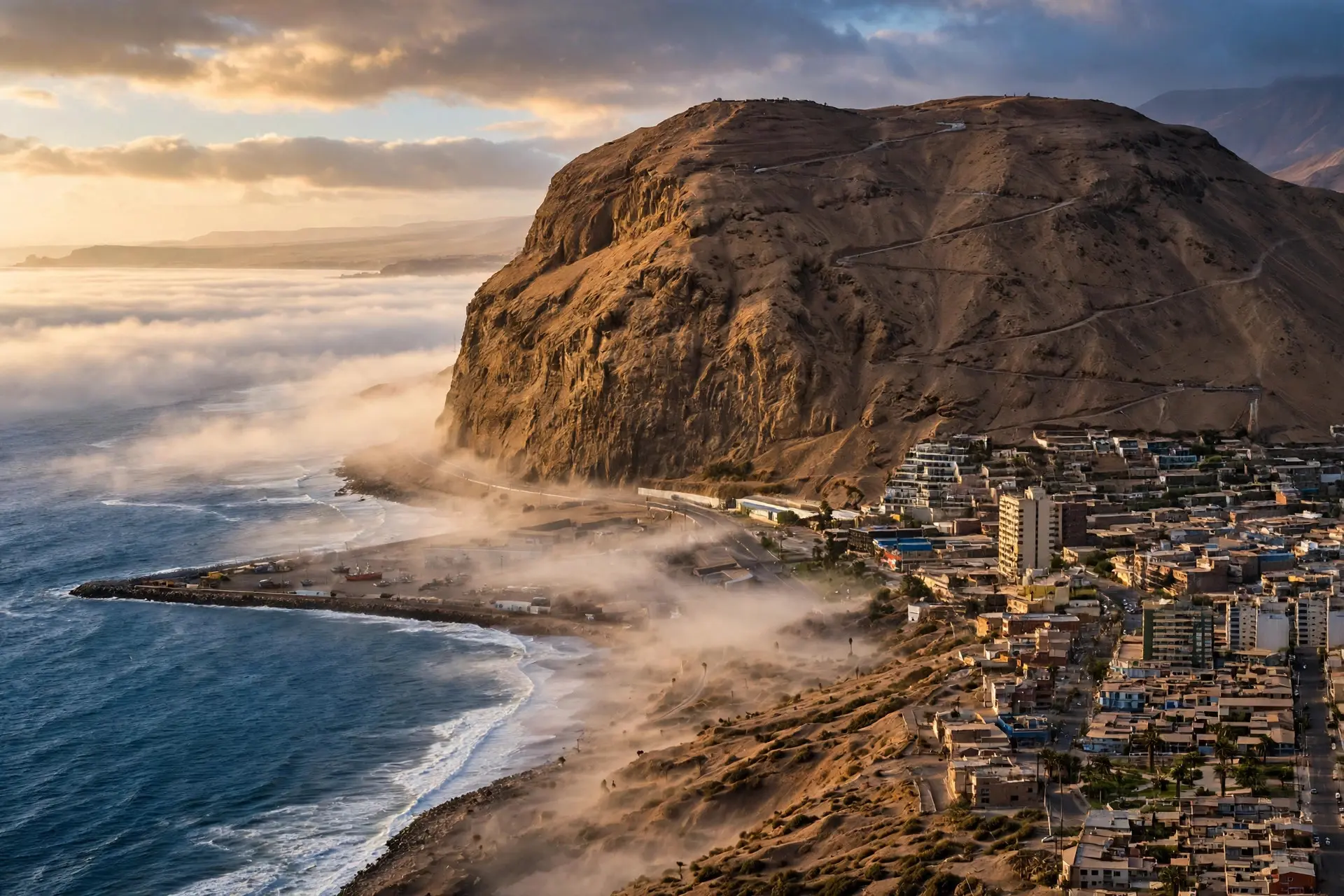
That port role matters too. Arica stands only about 18 kilometres from the Peruvian border and serves as northern Chile's gateway, handling trade with Peru and Bolivia and acting as a free port for Bolivian commerce. It is the capital of the Arica y Parinacota Region, and its position, rather than its rainfall, explains why a large city grew here at all. The landmark hill that dominates the city, the Morro de Arica, tells the same story of a strategic coastal perch: it was a key point in the War of the Pacific and now carries monuments and a museum above the harbour.
What else grows in a place with no rain?
Fog, for one thing. The camanchaca, the dense coastal fog that rolls in from the Pacific, is the desert's quiet water supply. It condenses on plants, rocks and specially designed fog nets, giving moisture to hardy desert life that rain never reaches. Tillandsia plants, which absorb water directly from the air, are among the specialists that make a living this way, and the fog shapes the whole coastal ecosystem even in years when the rain gauge reads zero. Human history has grown here too, for far longer than the modern city. The San Miguel de Azapa Archaeological Museum, about 12 kilometres from Arica in the Azapa Valley, holds the mummies of the Chinchorro culture, a fishing people who lived along this coast thousands of years ago. Radiocarbon dating puts some of these mummies at more than 7,000 years old, roughly 2,000 years older than Egypt's famous mummies. They were preserved in part by the same dry conditions that define the region today, a place where the dead could rest undisturbed in ground that almost never gets wet. That is the deeper answer to why Arica is called the driest city on Earth. It is not a curiosity of a single statistic. It is a city where three separate mechanisms, a cold current, a high-pressure sky and two mountain ranges, all push in the same dry direction, where a fourteen-year rainless stretch is on the books, and where people, fog-fed plants and ancient mummies have all found ways to live with almost no rain at all. The Atacama Desert around it is the wider story of that dryness, and at the opposite extreme, Mawsynram in India shows what happens when the same atmosphere delivers its water without restraint.
Frequently asked questions
How much rain does Arica get?
An average of just 0.76 millimetres a year at the airport weather station. That is less than the thickness of a coin, spread across twelve months, and some years bring no measurable rain at all.
Why is Arica so dry if it sits beside the ocean?
The cold Humboldt Current chills the air above the Pacific, so it cannot rise and form rain clouds, while high pressure above the region suppresses cloud formation. The Andes and the coastal range then block moist air arriving from the east and the west.
How do people live in a city with almost no rain?
Arica draws water from rivers and sources in the high Andes inland, and its mild coastal climate keeps temperatures comfortable. It also works as a busy port and gateway for northern Chile, Peru and Bolivia.
Is Arica the driest place on Earth?
It is the driest inhabited place by measured rainfall, but not the driest spot overall. Parts of the Atacama's hyper-arid core have no recorded rainfall in about 500 years of observations, and the town of Quillagua averages even less rain than Arica.
Sources
- Driest desert, Guinness World Records
- Atacama Desert, Earth Science Picture of the Day
- Discovering Arica, the City of Eternal Spring, Chile Travel and News